An easy way to get unstuck is to get up and take a walk.
We generate more creative ideas during and after walking outdoors—and even on a treadmill facing a blank wall.
Divergent thinking rarely happens when we're tethered to a desk. Moving our bodies frees our minds.
González Motos, S., & Bonal, X. (2026). Private schools, gentrification and escape circuits: the case of Barcelona. Educational Review, 1–21. https://t.co/zqlzh5hfif
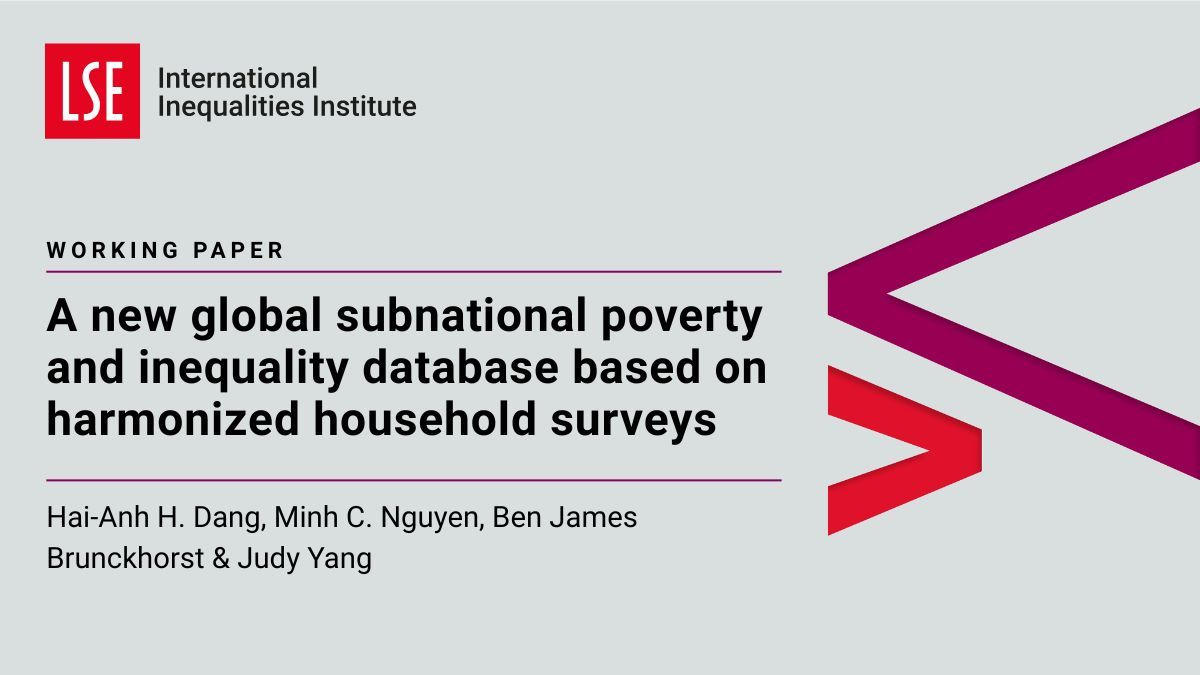
Subnational data on household welfare helps identify and monitor locations with high concentration of poverty and inequality.
This new III working paper presents two new global datasets that focus on poverty and inequality at the subnational level.
🔗 https://t.co/U8VC6kl9PJ
🚨NEW ARTICLE FROM EAP 📉📊📈
First fruits of our Varieties of Crises project, which tries to unite disparate literatures on economic, security, public health & natural disaster criese. More to come!
https://t.co/7OORGXbtvx
🚨New Working Paper!🚨
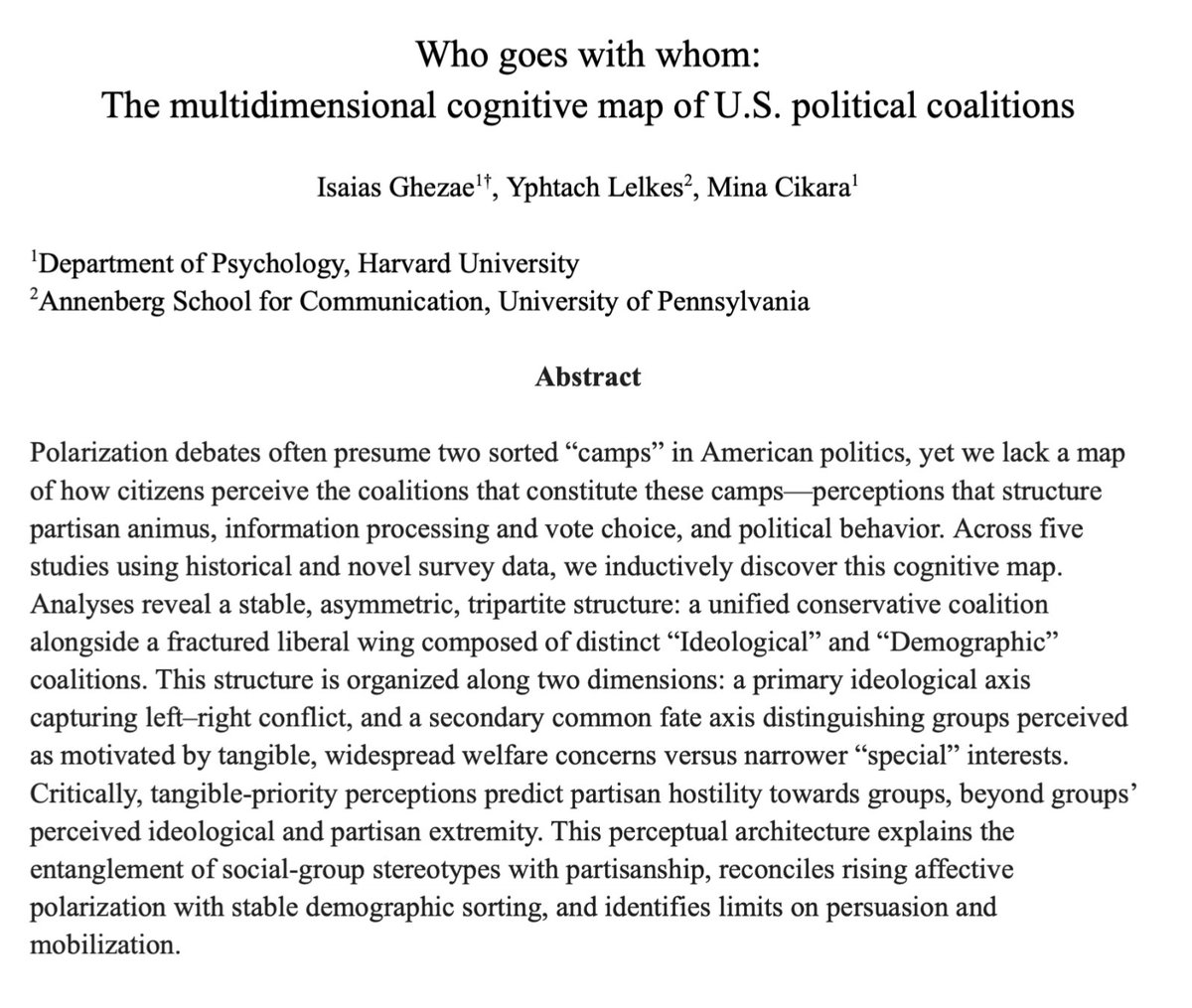
How do Americans mentally map political coalitions?
We often talk as if U.S. politics is just two sorted camps. But when people think about which groups go with which, the picture is more complicated.
🧵👇
📣We are hiring! The LOBBYMETRY project invites applications for a 2-3 year PostDoc / Assistant Professor.
Focus: understanding informational lobbying and evidence selection in policymaking through participant observation.
Deadline: 26 May
https://t.co/zBSDS2iQLa
Across 38 European countries, network analyses show that programmatic party–citizen linkages are linked to more coherent mass belief systems, especially where symbolic ideological identities anchor the attitude network.
Read more:
https://t.co/CgGBLFOBi3
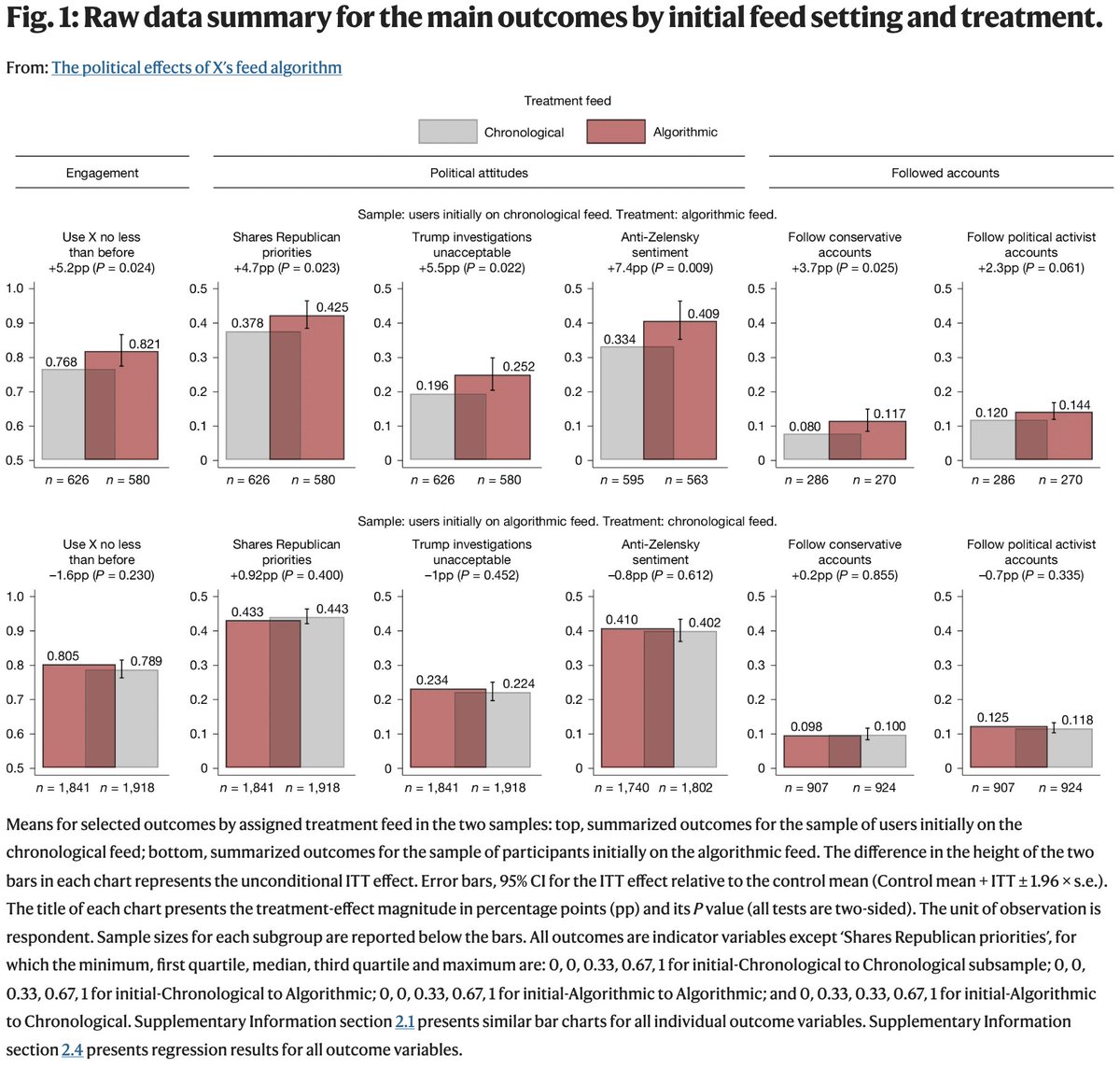
Can feed algorithms shape what people think about politics? Our paper "The Political Effects of X's Feed Algorithm" is out today in @Nature and answers "Yes".
https://t.co/2h4NgHZSmb
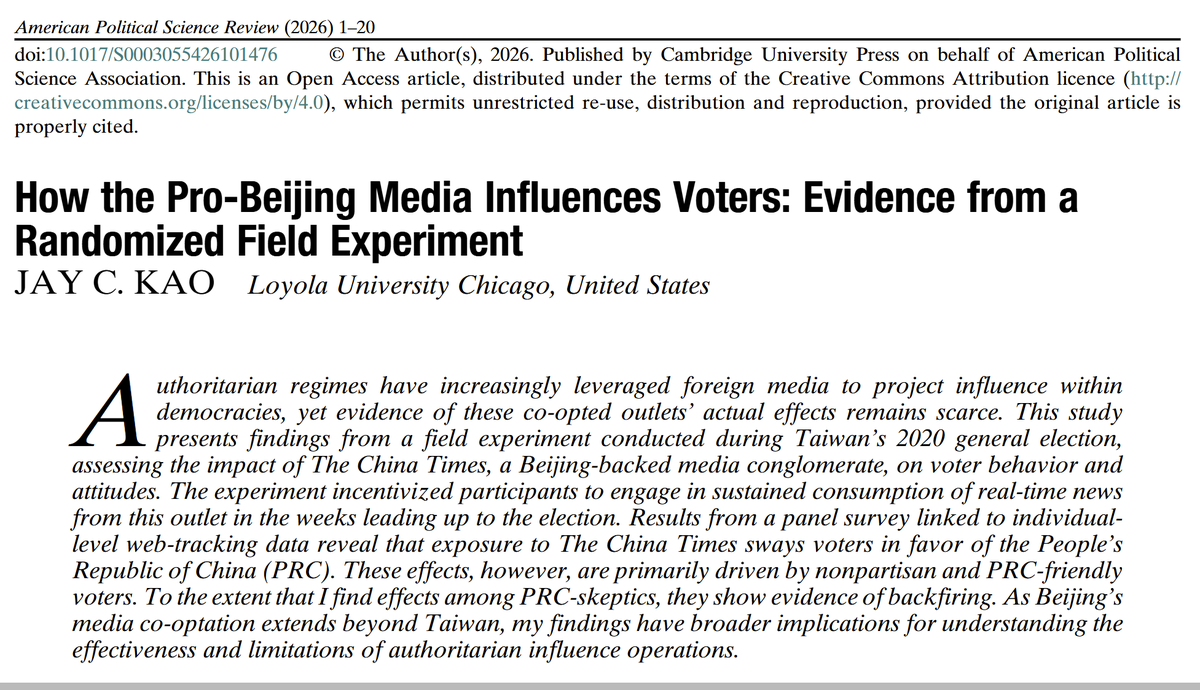
Very excited to share that my paper, "How the Pro-Beijing Media Influences Voters," is now live at @apsrjournal. I examine how a major Beijing-backed outlet affects voter behavior and attitudes in Taiwan. Happy to see Taiwan on the pages of APSR!
Article: https://t.co/cBv361ekVO
Liberal-Conservative ideological self-placement is an increasingly reliable summary of political views that increasingly predicts vote choice
https://t.co/kLlqvJNy1I
Published a few weeks ago in Comparative Political Studies, co-authored with @egocantos:
"Strong Partisans, Conditional Democrats?" shows how partisan affect fuels regime stereotyping & justifies illiberal measures, based on survey & focus gr in Argentina
https://t.co/JigbfSiDFt
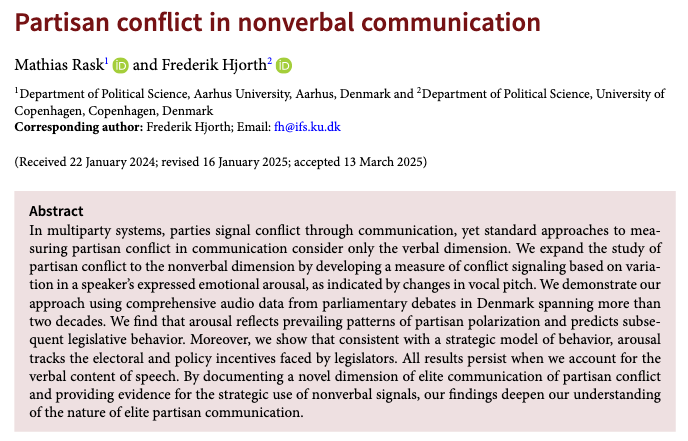
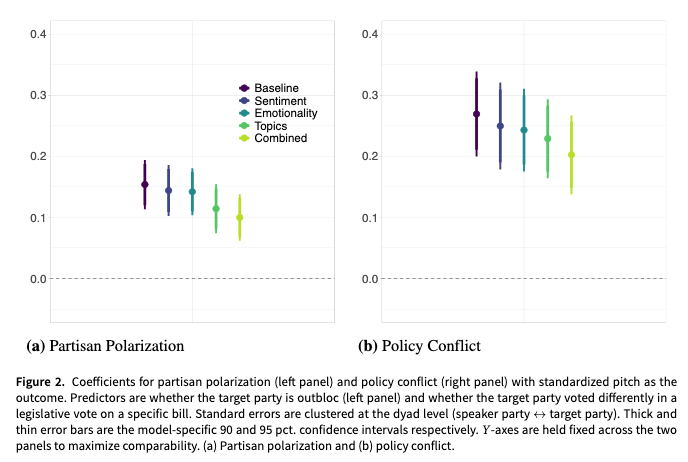
🪙Do politicians signal partisan conflict only through what they say?
➡️ Using Danish parliamentary debates, @MathiasRask95 & @fghjorth show that changes in vocal pitch signal partisan polarization, revealing the strategic use of nonverbal cues https://t.co/TlaPp7OLGT #FirstView
Now out in #EUP_TheJournal: Does more women in radical-right parties lead to more feminist policy? We analyzed over a decade of speeches in the European Parliament. The surprising answer: more women = more conservative gender discourse. /1
https://t.co/Z7gvoZpxxI
Female economists are less likely to receive letters of recommendation that emphasize their ability.
Female economists are more likely to receive letters of recommendation that can be called grindstone letters--that is, they emphasize their hardworking tendencies.
🚨Publication alert🚨
What motivates citizens to support redistributive policy proposals?
Find out in our new paper just accepted in the @JPubEcon (joint with @AljoshaHenkel, T.Epper, E.Fehr)
Paper link: https://t.co/alz9Si6yHr
A thread🧵
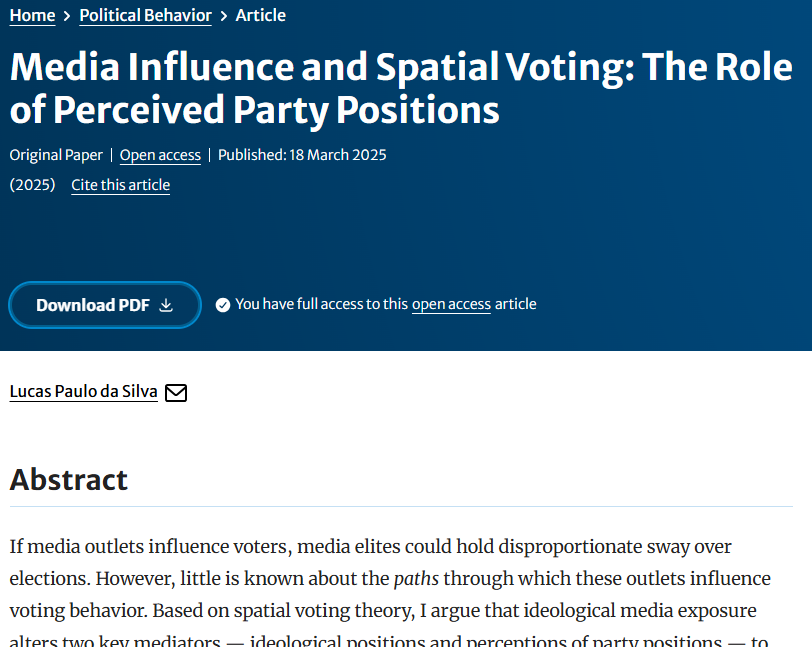
Thrilled that my paper is now published by @PolBehavior! Using a natural experiment—the Sun boycott—I show how media may shape our voting mostly by changing our perceptions of party positions. Media matters! 🗳️
Read here: https://t.co/cHumt69fU8
@tcddublin#MediaBias#Politics
Trending in #PoliSci:
https://t.co/jFnqX90ENy
1) Where You Earn Your PhD Matters (@ps_polisci)
2) Citizen-to-Citizen Efforts to Change Minds (@the_jop)
3) Far-Right & Obstruction of Solar Energy (@env_pol)
4) Factors behind green & radical right voting (@wepsocial)
New article - Open Access!
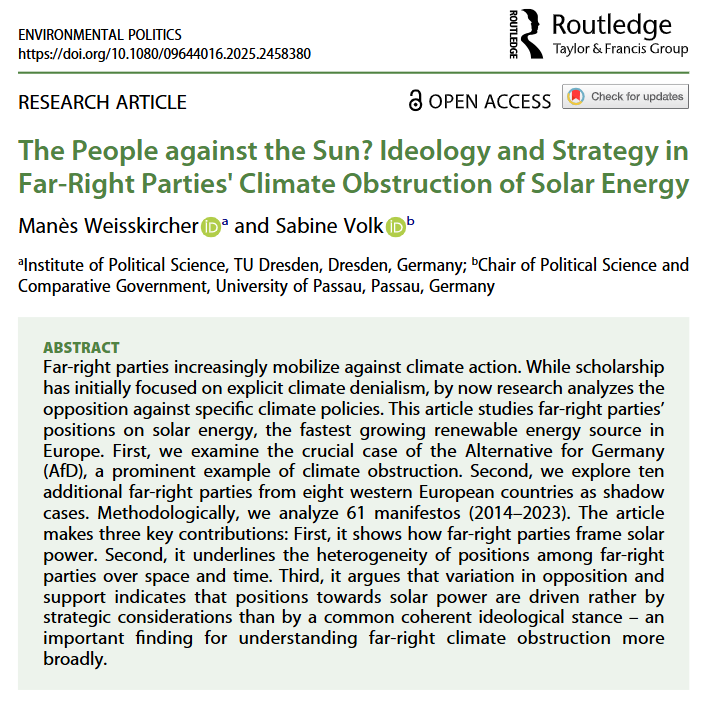
The People against the Sun? Ideology and Strategy in Far-Right Parties' Climate Obstruction of Solar Energy by @ManesWeissk@SabineDVolk.
https://t.co/OoKMzMvFyk