Molecular Biologist. Group leader at IFIBYNE-CONICET. Professor FCEN-UBA. Trying to understand how transcription factors work. Hard to do science nowadays...
🚨Pre-print alert!🚨
(1/7) Happy to share our latest work on glucocorticoid receptor (GR) biology, led by Cecilia De Rossi from @VLeviLab and @PresmanLab
https://t.co/VJeOHbB2DO
Svante Pääbo and colleagues used AlphaGenome as a time machine to reconstruct the evolution of human gene regulation. An impressive new bioRxiv preprint! 🧬⏩
Fifty years ago, scientists proposed that the differences between humans and chimpanzees might be driven less by changes in genes themselves and more by changes in how those genes are regulated.
The authors revisited this hypothesis using deep learning and identified more than 71,000 genomic regions predicted to have gained regulatory activity along the human lineage. But the most interesting finding is how these changes happened!
In 71% of cases, evolution repurposed existing regulatory elements rather than creating new ones. A single mutation could introduce a tissue-specific transcription factor binding site, activating an existing element in another tissue.
To investigate this, the researchers used AlphaGenome to predict the regulatory effects of 17 million nucleotide substitutions, linking them to gene expression differences between humans and other great apes.
Interestingly, the vast majority of these regions fell outside known Human Accelerated Regions, genomic regions that evolved unusually rapidly along the human lineage. This suggests that the rate of sequence evolution does not necessarily reflect its functional impact.
Comparisons with Neanderthal and Denisovan genomes revealed that 99.6% of the regulatory gains fixed in modern humans and successfully dated arose before our evolutionary split from these archaic lineages.
There are also fascinating examples involving individual genes. One is SLC47A1, which encodes a transporter involved in eliminating drugs and toxins. The researchers identified five regulatory gains associated with increased expression in the human liver. Reverting these changes to their ancestral states in silico reduced predicted gene expression by 60%.
Of course, many of these predictions still require experimental validation. But the broader idea is remarkable: ancient DNA has allowed us to discover which mutations occurred in the past. Now, deep learning is beginning to reveal how those mutations may have changed the way genes worked.
https://t.co/LIUmvkZr3J
#aDNA #evolution #regulation #AlphaGenome
Se viene la tercera edición de nuestro workshop de formación en microscopía de super-resolución. Una vez más con una impresionante lista de expertos invitados. Inscirpción abierta!
@JungmannLab@LabTinnefeld@LabRadenovic https://t.co/QFndYuTOvI
https://t.co/b5jiem3tAJ
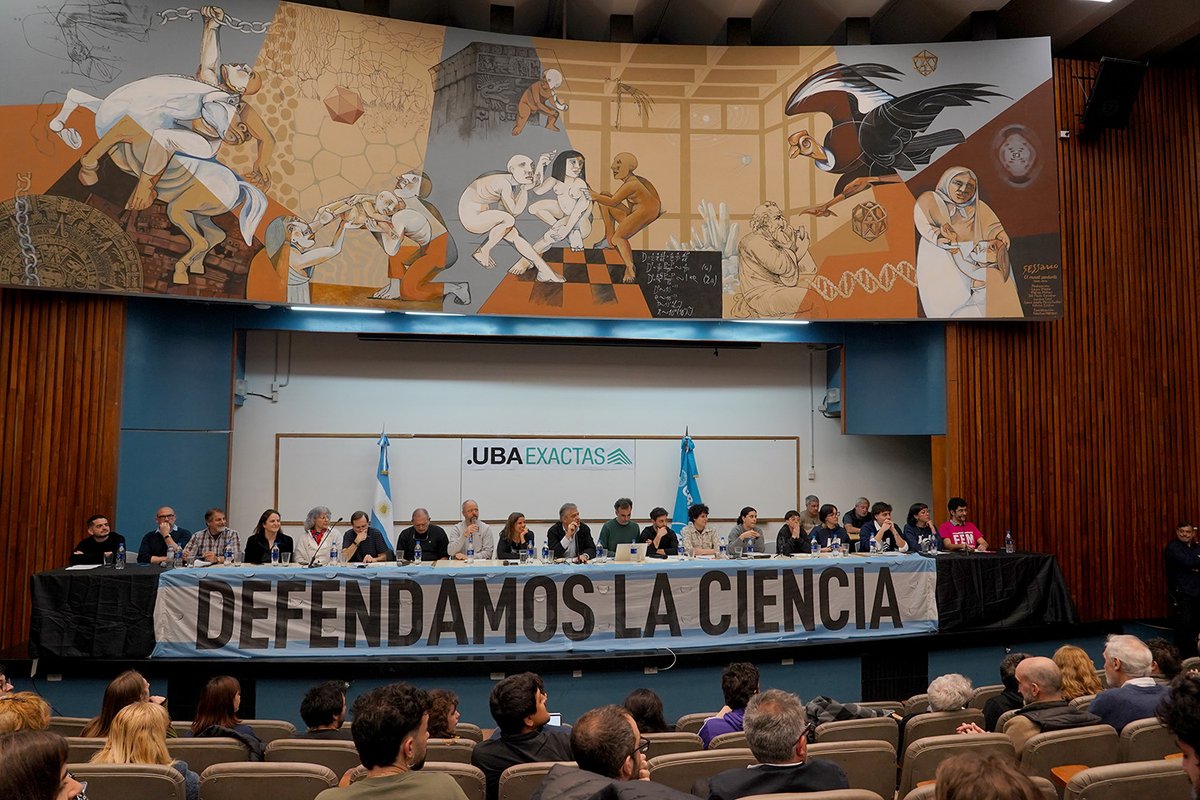
Una de las fotos más lindas del día ( o del mes?)
Orgullo de ser egresada de la UBA, orgullo de ser parte de @Exactas_UBA .
Viva la Universidad Pública!
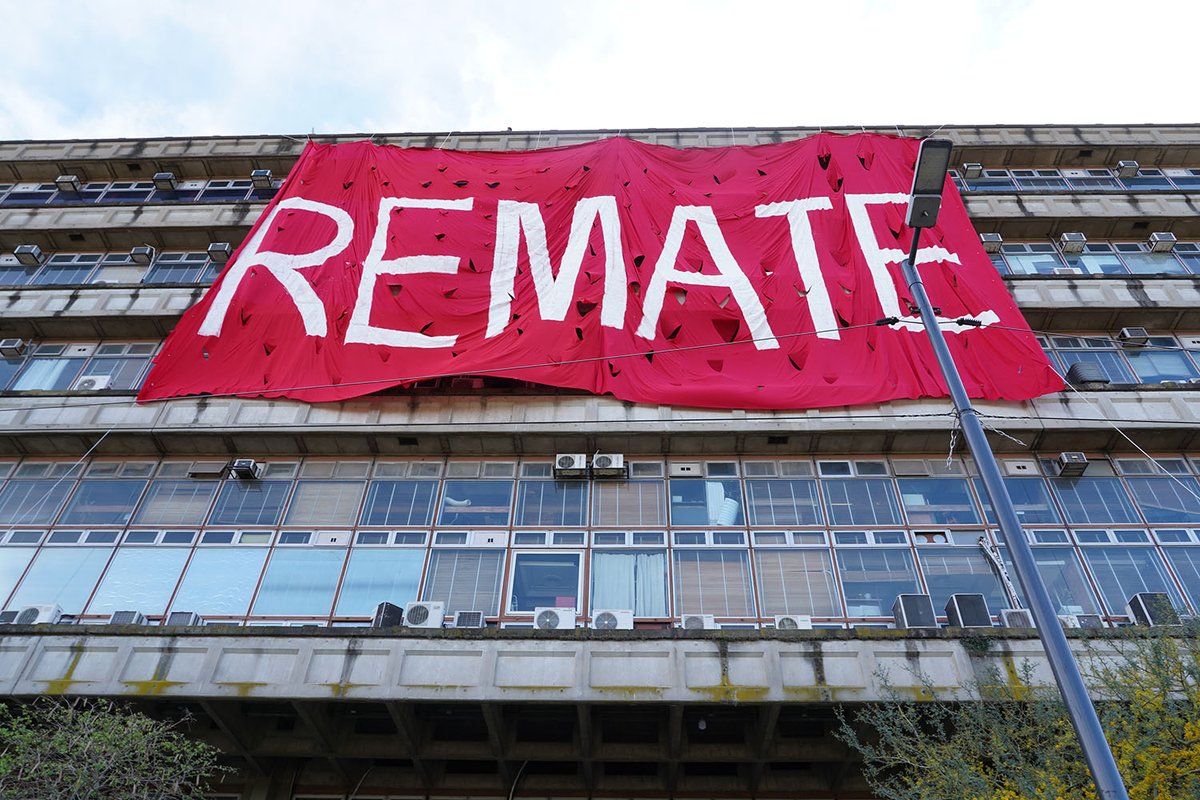
El Gobierno Nacional lleva 350 días sin aplicar la Ley de Financiamiento Universitario, ignorando al Congreso de la Nación, las resoluciones de Justicia y el reclamo permanente de las universidades nacionales.
Desde la Facultad de Ciencias Exactas y Naturales de la UBA exigimos su cumplimiento inmediato. La única posibilidad de sostener una universidad de calidad y que dé respuestas a nuestra sociedad es con presupuesto acorde y salarios dignos para sus trabajadores.
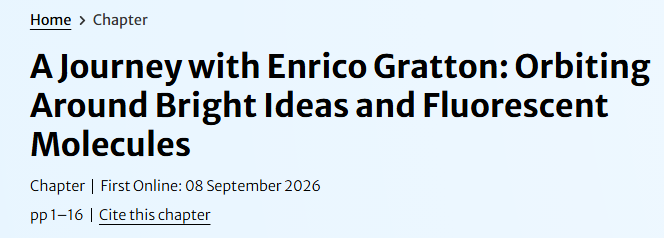
Enrico Gratton is one of the brightest minds I've known. His techniques literally changed my career path, and I am thrilled to have contributed to this humble tribute to his legacy, led by @VLeviLab
https://t.co/YlcgOwEbyg
New in @CellCellPress from Biohub Investigator @BoHuangLab: AI-designed proteins built from scratch (dubbed "Rhobins") work in living cells and match or even surpass fluorescent tags refined over decades of natural protein engineering.
Read the paper: https://t.co/yUziVyORa5
Postdoc opportunity in our lab!
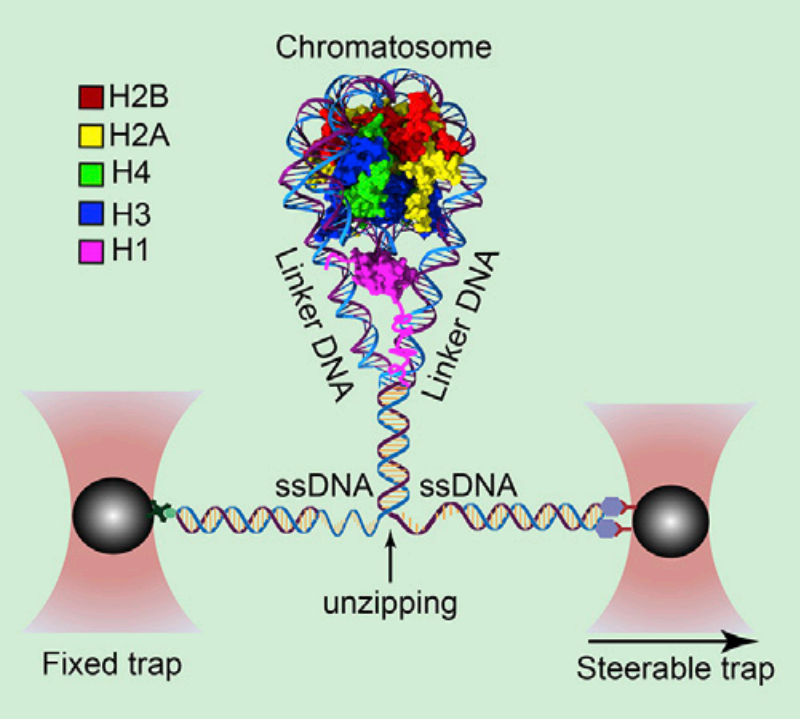
Use optical tweezers and single-molecule fluorescence to study protein-DNA interactions, transcription and chromatin dynamics.
Azrieli Postdoctoral Fellowship:
https://t.co/HHlnBLuYep
[email protected]
Prese share!
#Postdoc#Biophysics
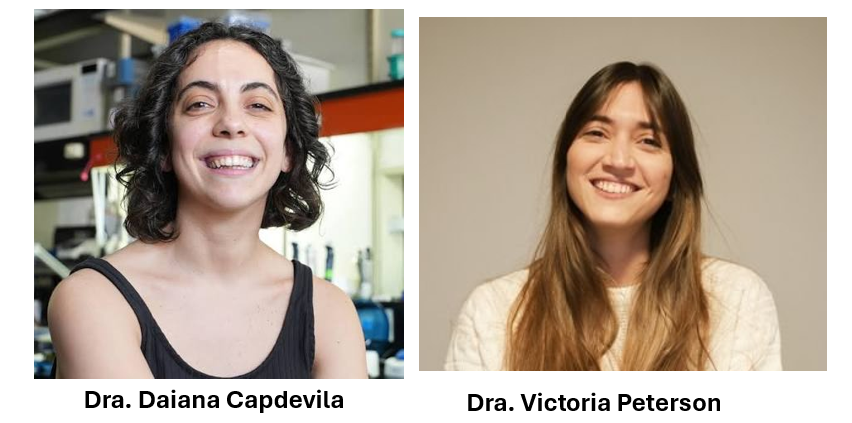
👉El matemático Guillermo Durán y la química Valeria Levi fueron reelegidos como decano y vicedecana de la Facultad para el período 2027-2031. Asumirán los cargos al frente de su segunda gestión el 1° de marzo del año próximo.
🗳️La elección se llevó a cabo hoy por la tarde en el Aula Magna del Pabellón 1, donde se reunió el Consejo Directivo, renovado hace pocos meses. Durante la sesión, los representantes por la mayoría del claustro de Profesores postularon para ocupar el decanato de la Facultad al actual decano y profesor del Departamento de Matemática, Guillermo “Willy” Durán; por su parte, los representantes por la minoría postularon a la profesora del Departamento de Física Andrea Braga.
☑️Tanto Durán como Levi obtuvieron 14 de los 16 votos del Consejo Directivo. En los momentos finales de la sesión, el decano reelecto destacó la importancia del acto “a 40 años de la democracia universitaria, aún en este contexto, reivindicando la democracia universitaria y la democracia en general. Que viva la universidad pública y que viva nuestro sistema de ciencia y tecnología”, cerró.
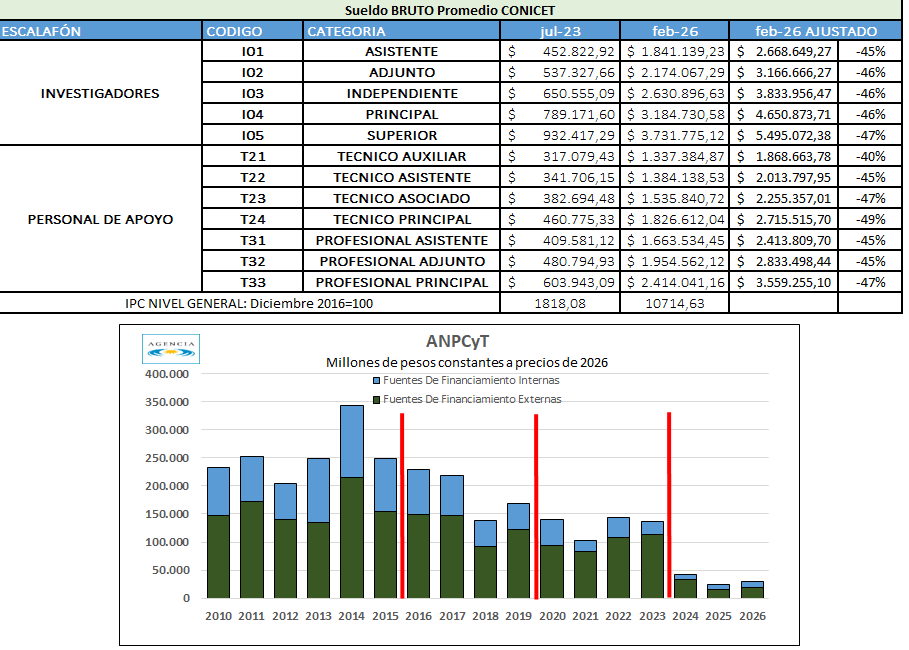
No me interesa discutir las palabras (cientificidio si o no) sino analizar los datos: evolución de salarios de CONICET y de presupuesto de la financiadora histórica de proyectos.
Llamenló como quieran, salarios casi a la mitad y sin plata para investigar.
Estimado @CorreoOficialSA,
Esperando todo el día el DNI para que en el seguimiento figure que nadie contestó en el domicilio cuando a la hora registrada estabamos presentes. O mienten, o no saben tocar el portero...sinceren la situación así no perdemos un día de laburo. Gracias!
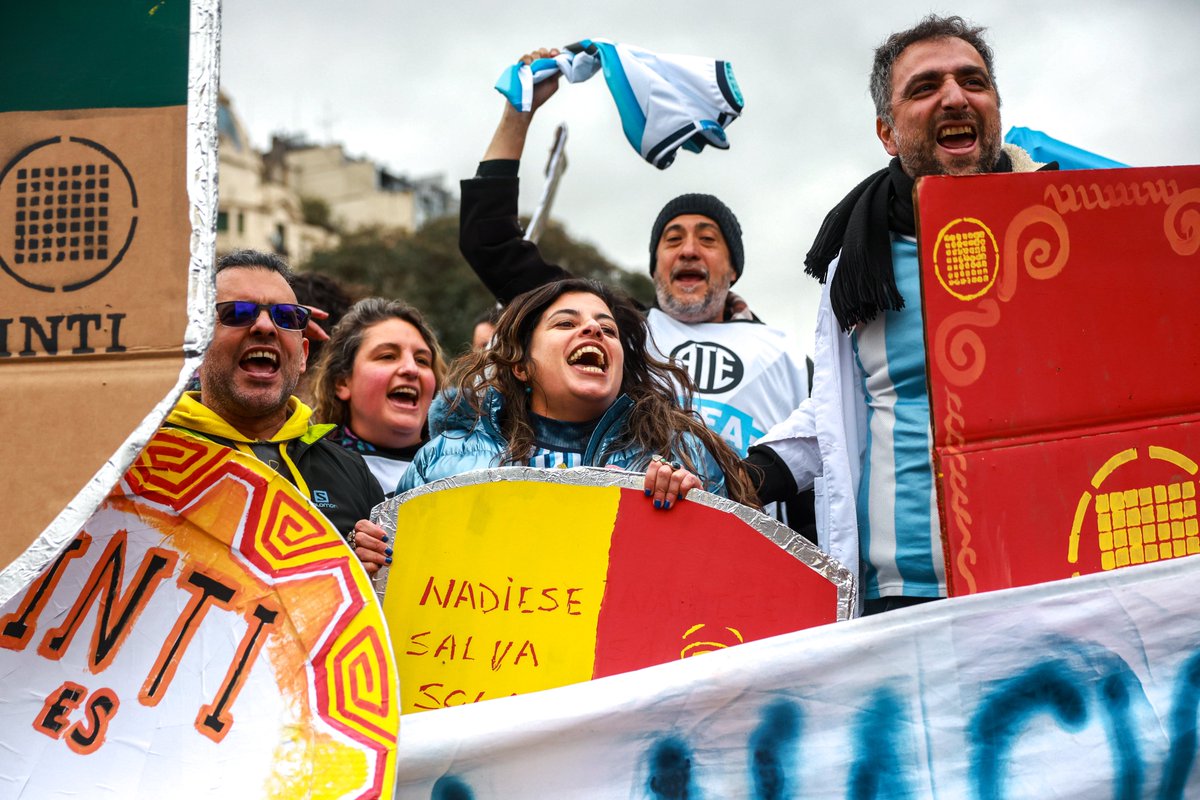
Nearly 400 Argentine researchers have been left jobless and uncertain about their future in science after a delay in the process for securing permanent research positions in the country.
On 12 August, researchers staged protests around the country, including in downtown Buenos Aires, calling on the National Scientific and Technical Research Council, Argentina’s main science agency, for support.
The case is one of the most visible consequences of the budget cuts implemented by President Javier Milei’s government, which have caused the loss of thousands of jobs in the science sector. Public investment in science and technology is at its lowest level in 54 years.
Learn more: https://t.co/fCHvXacabG @ScienceCareers
Glad to have contributed to this review article discussing the complex interactive network among steroid receptors in breast cancer.
Check it out!
https://t.co/XHLLi5i99t
@NAR_Cancer_EIC
🇦🇷 Nos unimos con un único objetivo: hacer ciencia en y para nuestro país.
La ciencia no es un gasto, es una inversión a futuro. La ciencia no se entrega, somos muchxs para defenderla. La resistencia colectiva sigue. Esto recién empieza.
#MePongoLaCamiseta#CienciaArgentina