@space_treasure8 It means the "indwelling" presence of God - the aspect of divinity placed within creation so as to experience itself. This also becomes a route back to the divine for humanity. In some ways, this is quite a gnostic concept.
@mudscryer Break down harder. You only get a few good ones, so really go all out. Full trainwreck. Then the building back afterwards part is the easy part.
I used to like micro dosing at slightly above threshold level. Everything took on a magical quality and I had a weirdly synchronistic few months. But I definitely got lost staring in the carpet a few times.
A big reason why I'm ambivalent about the microdosing model is that many seem to assume microdosers can go about all of their usual daily activities in that altered mode. I'm unconvinced that they're right to assume it's safe/good/fine to do that... 🤷♂️
On Strange Face Phenomenon studies: "The prevalence of illusions was also significantly greater in samples that were older, [and] had higher proportions of female participants".
I don't know what this means but I like it.
@embodiedthinkr If you believe it, so mote it be. People look down upon the placebo effect, when in reality we should be asking how we can make it stronger.
@InfamousStorm Coming at this from the opposite side, I did a Headless Way course a couple of years ago and found it profound. Recognizing that you don't have a head. Counterintuitive but very interesting!
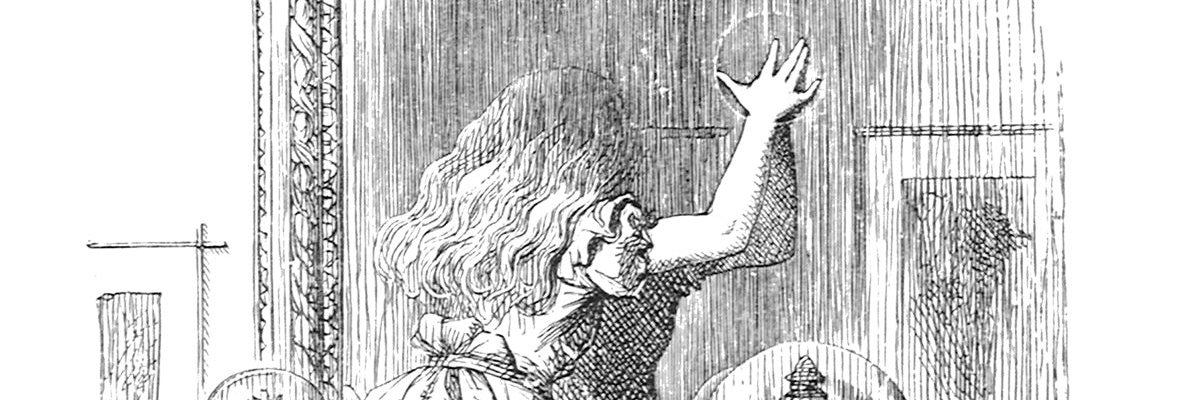
I remain enthralled by mirror gazing and The Strange Face Phenomenon. I've been compiling various notes and will put something up on the site soon. If you really dig into the literature there is a VAST corpus of techniques here, and I think it speaks to something right at the core of what it means to be human.
On the one hand, it's just apophenia, or pareidolia, but on the other hand it's something to do with faces specifically. Either your own face in the case of mirror gazing, or another's face in the case of dyadic experiments.
The human brain is particularly attuned to facial recognition, but exactly how and why is still murky. The fusiform face area of the brain was only named and fully described in 1997 (although I have to remind myself that the 90s were nearly 30 years ago now) and we keep learning about how it modulates our recognition of faces. Autistic individuals show less FFA activation for instance. Electrically stimulating the area will distort faces!
I think because the head/face is how we orient ourselves in the world and the window through which we perceive, any tech, meditation or experience that alters that will have a profoundly psychedelic/transformative/disturbing effect.