“Taking fees in exchange for knowledge is not part of our culture; guru-dakshina is our culture. I just want to ensure that no student ever turns away from my door because of a lack of money.”
Khan Sir makes sure that the fees are always set ‘according to one’s pocket’—meaning students can pay as much as they are able. On his app/platform, courses are available at very low prices so that even students with limited means can prepare. And of course, a large portion of his content on YouTube is completely free.
Since he himself faced many struggles during his own early years of study, he is determined that no child’s education should stop because of financial constraints. Both on his platform and in his public statements, his goal of providing “quality education at low cost” is very clear.
Along with running affordable and accessible coaching centers in Patna and other cities, he reaches millions of students through YouTube and his app. His teaching style—lighthearted examples, local sayings, and simplifying tough topics—makes him hugely popular among students. He believes that without truly understanding the minds of weaker and average students, real teaching is not possible.
There is no doubt that education is the greatest wealth. In today’s times, the country needs teachers like Khan Sir more than ever. If you too know of such a teacher, do share their story with us.
#QualityEducation #AffordableLearning #KhanSir #EducationForAll #InspiringTeachers #StudentSuccess #GuruDakshina
@kgs_live
Aboard an Indigo flight from Bhubaneswar to Chennai, captain Sumit Yadav deserves a special mention & kudos for his quirky & jovial style of announcement while cruising...relaying flight info with passion for life & wishing happiness & smiles for passengers.
❤️🙏 @IndiGo6E
@ANNELAMOTT My husband said something a few years ago that I often quote: Eighty percent of everything that is true and beautiful can be experienced on any ten-minute walk.....
The opening just floors you :)
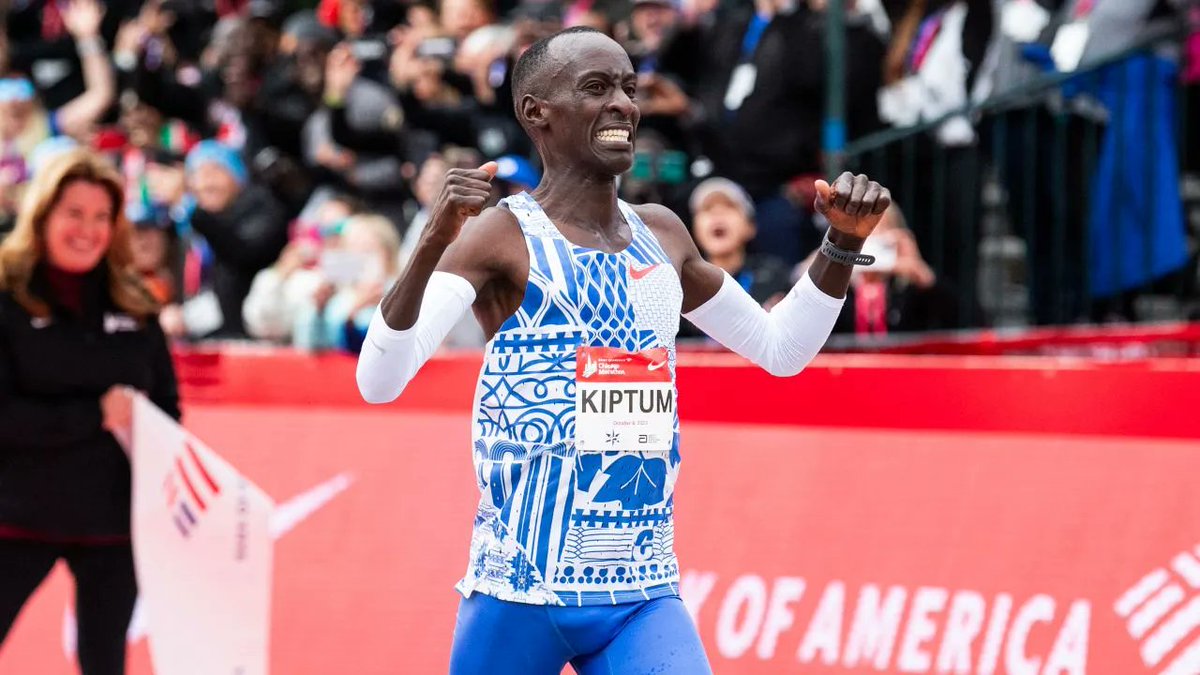
Kelvin Kiptum set a new world record last weekend with a time of 2:00:35 at the Chicago Marathon.
It was just his third marathon ever — and he ran an average pace of 4:36 per mile...for 26.2 miles.
But his shoes have become a topic of debate.
Here's what you need to know 👇
Many academic papers have been written on the increased performance of marathon runners over the last decade.
But the easiest way to explain the situation is that new “super shoe” technology emerged in 2016, and marathon times have vastly improved.
It started with Nike’s $250 Vaporfly 4% running shoe — but virtually all super shoes contain two elements:
1) Thick soles made with superlight, energy-returning foam, and 2) rigid plates, often made of carbon fiber, that create a springlike effect for runners.
These shoes helped Eliud Kipchoge obliterate the men’s marathon world record time by more than 1 minute in 2018 with a 2:01:39 finish in Berlin.
Kipchoge even became the first person in history to finish a marathon in less than two hours when he completed the INEOS 1:59 challenge in Vienna in 2019.
However, Kipchoge’s sub-2 hour time didn’t officially count because he used a rotating cast of 7 pacemakers in a V formation to shield him from the wind.
Eluid Kipchoge isn’t the only one to benefit from super shoes.
All of Nike’s competitors — Adidas, Brooks, Saucony, New Balance, Hoka, and Asics — now sell super shoes.
More than half of all sub-3 hour marathons are now completed by runners using some brand of super shoes, and Tigst Assesfa from Ethiopia recently shattered the women’s world marathon record by more than 2 minutes at the 2023 Berlin Marathon with a time of 2:11:53 wearing a pair of Adizero Adios Pro Evo 1.
For context, the Adizero Adios Pro Evo 1 shoes by Adidas weigh just 138 grams (60% of the weight in Adidas’ prior top running shoes) but cost $500 and are designed to be worn just once by professional runners. Aka, they are for the top 1% of runners.
And it’s not like this is all some superstition by runners — the data backs it up.
A 2017 Nike study found that running economy (the amount of oxygen needed to run a specified distance) increased by 4% when examining 18 runners using super shoes.
A 2019 New York Times study found runners wearing Nike’s super shoes ran 4% to 5% faster than runners who wore average running shoes and 2% to 3% faster than runners who wore the next fastest popular shoe.
And last but not least, each of the Top 10 all-time marathon records kept by World Athletics have happened between 2018 and 2023 during the super shoe craze.
But just because marathon times are improving doesn’t mean the shoes are illegal.
In fact, World Athletics (the sports governing body for track and field) released new “Athletic Shoe Regulations” in December 2021. These regulations included several stipulations for approving shoes, and they grandfathered in Nike’s line of super shoes.
• Shoes must have no sole thicker than 40mm
• Shoes must have no more than one rigid structure (e.g. a carbon fiber plate)
• Shoes must be available for purchase by consumers for at least 1 month
• Shoes can have a different timeframe for purchase outside of the Athletic Shoe Regulations 1-month sale period or for developmental use with prior approval
So while many people claim runners are receiving an unfair advantage, this is really just par for the course.
None of the shoes used to break records have been deemed illegal by World Athletics’ Shoe Regulations, and training and technology have increased human performance across every sport for decades.
That’s why it’s hard to compare different eras — like Mickey Mantle vs. Mike Trout, Larry Bird vs. LeBron James, or Mark Spitz vs. Michael Phelps.
Training methods have improved, and recovery techniques have gotten more advanced. This is ultimately good for sports, as it allows all athletes to make progress and creates a new performance standard for each generation to build upon.
Super shoes started as a cutting-edge technology that was only available to 1% of the world’s best runners.
But now these shoes are being made by several different companies, and virtually anyone can get them — as long as you have $200+ to spare!
This technological progress has continued to push the pace of innovation.
So while a sub-2-hour marathon was once believed to be impossible, it feels increasingly likely that 23-year-old Kelvin Kiptum will accomplish it in the near future.
** This breakdown is an excerpt from my 3x weekly podcast (top 50 in sports). Subscribe below so you don't miss any episodes in the future.
Apple: https://t.co/oxtjqN8JOE
Spotify: https://t.co/Vw9fe18KC8
PALM OIL IS IN EVERYTHING! From your biscuits, chips, noodles, ice creams, bread to even toothpaste and lipstick!
More than 50% of the heart attacks in India occur amongst those below 50 years of age. One of the reasons behind this is our high palm consumption.
Till the early 1990s, India was self-sufficient in edible oils. But today, India is the world’s largest importer of palm oil in the world and we import around Rs. 50,000 crore of palm oil every year.
Thankfully, there are 2 simple ways we can reduce palm oil usage which I have highlighted in this video.
Let us join hands and reduce our palm oil usage which will help 1) reduce India’s import burden 2) improve our health 3) protect the environment!
Please share!
Thank you @sohinichat and @moneycontrolcom for this engaging and erudite piece. Learnt so many new things. Very well written.
100 years of Mrinal Sen | Fearless cinema https://t.co/Qyajg6m39F
@rajshekharis Village deteriorating fast. 3am and I am wide awake due to multiple loudspeakers playing at once. Gone are the days where one could hear rustling leaves and dew drops from foggy trees.
(Playing now: गोरकी पतरकी गै मारे गुललवा...)