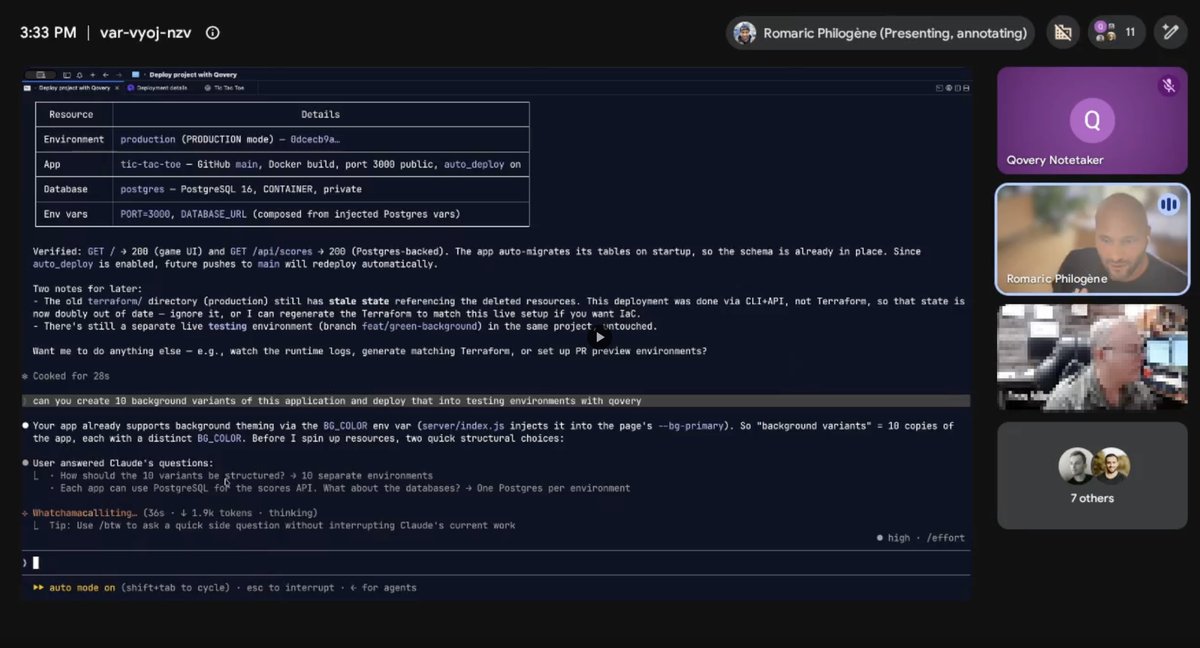
Migrating from Heroku to AWS is now a one-command job. It used to take weeks - and cost $20k with IT consulting partners. Now you just type “deploy this project with Qovery” from your repo, sit back, and all the grunt work is handled automatically.
If you’re interested, ask Claude to migrate with Qovery to the cloud provider of your choice.
In 2027, Platform Engineers should be AI Platform Engineers: delegate the grunt work to AI agents, then supervise them. That’s the way to go - and that’s what we deliver at Qovery for the best companies out there.
I demoed to a Fortune 500 what it means to manage infrastructure in an agentic way. They’re seriously considering modernizing their Platform Engineering approach.
Their biggest fear - the reason they came to us - is governance without compromising the SDLC. I showed these aren’t mutually exclusive; they can coexist very nicely. With Qovery, platform engineers provide agentic capabilities on their infrastructure, with full governance and auditability.
Something I see more and more: infrastructure teams are under heavy pressure to meet the demand from product engineering teams that are heavily using AI, but they fall short when it’s time to deploy and control their apps. That’s where the SDLC breaks - and DevOps needs to catch up.
It’s something we’ve solved for years at @qovery
Agentic infrastructure ≠ “just give the agent a sandbox.”
A sandbox lets an agent run code.
Agentic infrastructure lets the agent provision, deploy, observe, secure, and optimize - with RBAC, audit logs, budgets, and policy enforcement baked into every action.
Most stacks still force agents to navigate 5-8 human-shaped tools. That’s the bottleneck.
We’re building the control plane that fixes this at @qovery
Some news about @qovery : We’re building the infrastructure control plane for coding agents: one where every operation is policy-checked before execution, logged, attributable, and reversible. The missing piece for safely letting agents autonomously operate infrastructure.
AI agents still haven’t made it all the way to infrastructure. Platform engineers use them to check what’s going on - but not to take action. What’s missing is a trust layer that lets agents operate safely, with real guarantees and peace of mind.
My team had one more call this week with a platform engineer at a fast-growing company.
He spent 45 minutes asking them about Terraform state locks, cluster management, and whether he'd get "locked in" to a vendor.
Fair questions. Ten years ago 😬.
Great to finally meet @ivanburazin from @daytonaio in person at RAISE Summit last week. We shared the stage, and I’m genuinely energized by how our two companies approach agentic infrastructure in deeply complementary ways.
Glad to be tomorrow at @RaiseSummit for the AI infrastructure round table with Ivan from @daytonaio and Phil from Linkup - moderated by Clayton Petty from @GradientVC. Let’s meet in person - I’ll be there from 6pm to 8pm. @qovery
Learn how Alan went from NGINX to Envoy in production and what actually broke along the way 👀
From real issues to real lessons → no theory, just production reality.
https://t.co/Hlvyt7tfMY
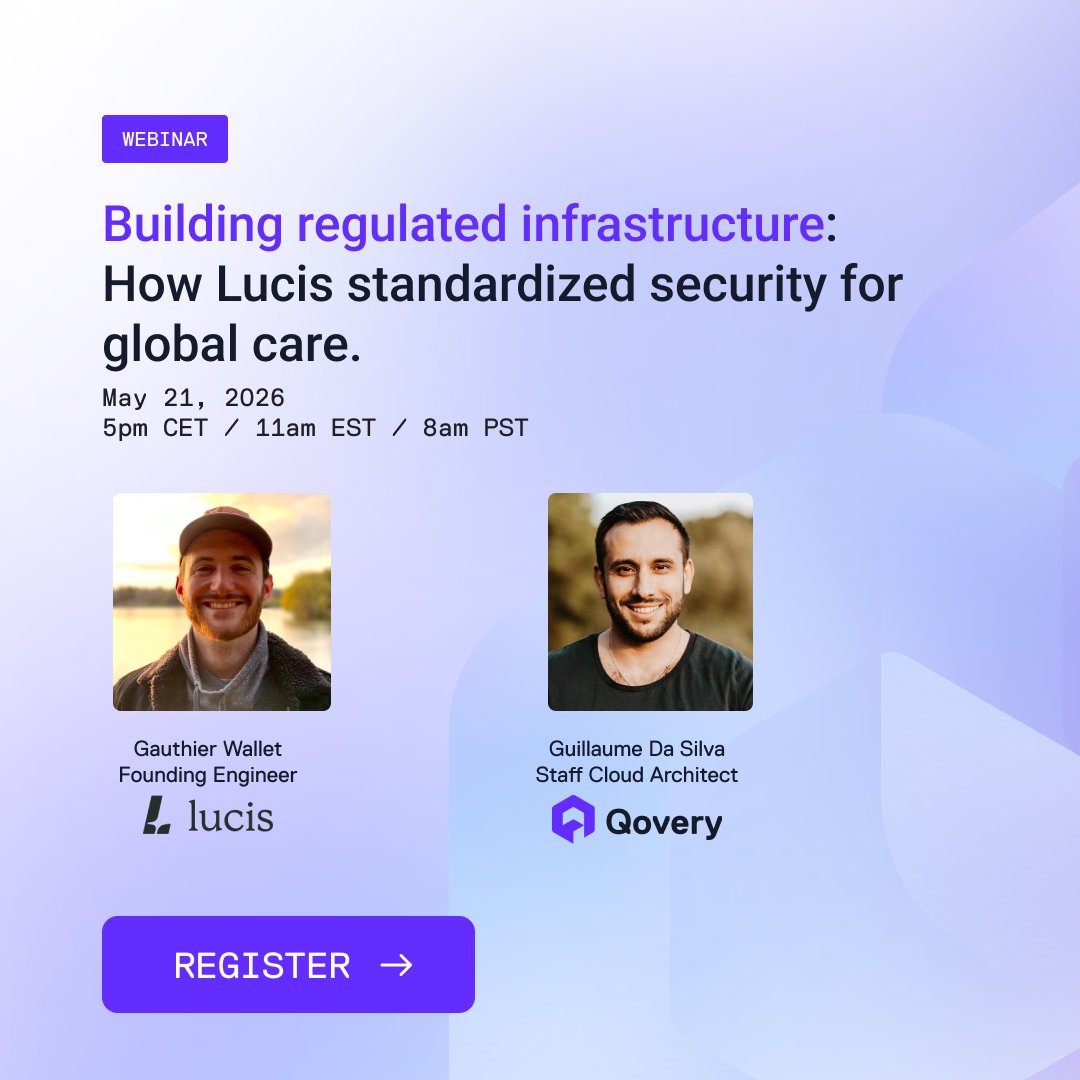
How do you stay compliant without killing engineering velocity?
Join our webinar with Lucis on May 21 | 5pm CET / 11am EST / 8am PST
Register 👉 https://t.co/xaugQxAJVd
#HealthTech#DevOps#Kubernetes#Compliance#Webinar
What if deploying an app was just a prompt?
We shipped the Qovery Skill for AI agents 🤖
Deploy production apps from a single instruction.
Intent → Deployed
No YAML. No pipelines. No infra wrangling.
👉 https://t.co/oSClEOm1TU
#AI#DevOps#AIAgents
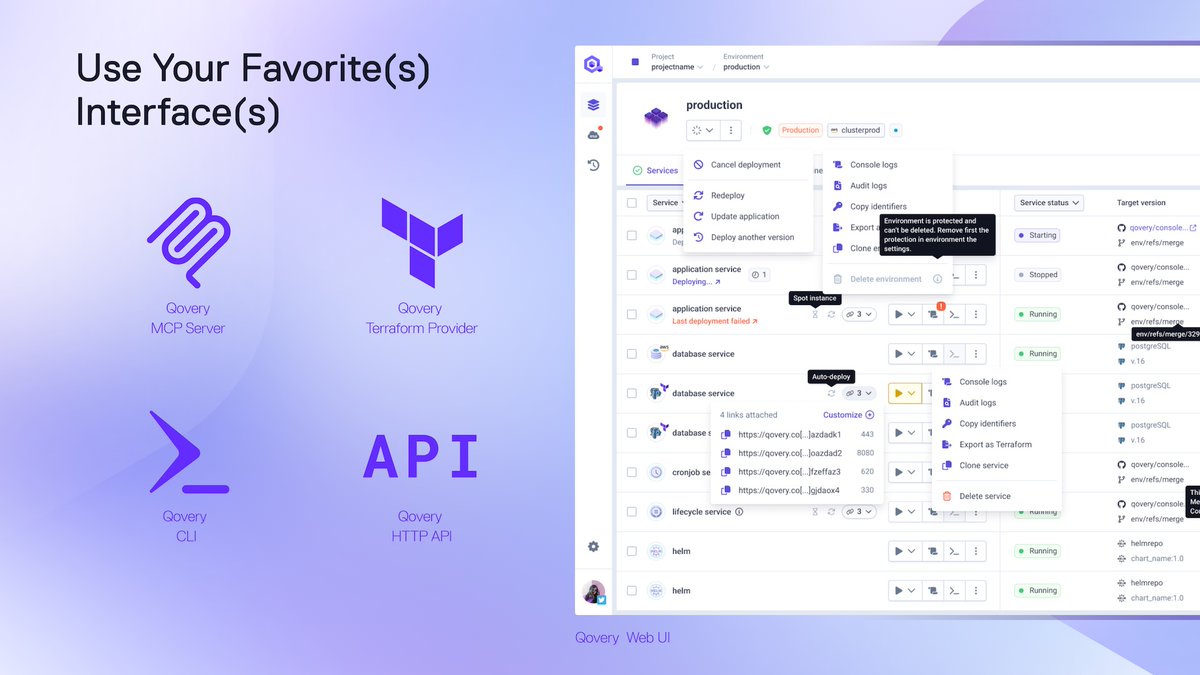
We have everything you need to engage with Qovery:
1. UI: https://t.co/Iq8r8XwR4k
2. Qovery Terraform Provider: https://t.co/tH0zVfyhXv
3. CLI: https://t.co/r4msBDuoSe
4. API: https://t.co/o8jGZ273cT
5. MCP Server: https://t.co/wOxuqNoeqM
Happy New Year's Eve ✨