The way Rudi Garcia has used De Ketelaere early and Lukaku late has been masterful.
Belgium are also extremely well drilled tactically.
4-4-2 with a central rotation to transition to man-to-man defending. Spain not making enough runs in behind Michele as he is the centre back who jumps to Olmo between the lines (Yamal in particular needs to exploit that space). The dynamics mean Belgium can get pressure on the ball but also suffer when they need to low.
Also some nice dynamics with the ball to confuse Spain with Raskin dropping into the first line from the #6 with the centre backs splitting wide. Trossard overloading the middle from the right. De Bruyne and Doku reintroduced for transitional qualities. Often direct from goal kicks to take advantage of Spain’s lack of physical dominance in the defensive line. Lots of bodies in central areas to land on second balls.
Rudi Garcia started this tournament badly, then he gave his team basic balance, then he got a huge slice of luck against Senegal, and then he has conducted tactical masterclasses back-to-back against USA and Spain.
Spain have their work cut out here… let’s see what they are truly made of. All eyes on Yamal. Has been sub-elite again so far. He’s due a big moment…
Norway's midfield fluidity is their crux
-simple 3-man midfield
-narrow or expansive depending on context
-proper technicians
-Haaland's gravity relieve pressure off them
Verstehe das Goretzka einen in Teilen zurecht schlechten Ruf beim DFB hat
Aber das Ding geht doch ganz klar auf Nagelsmann seine Kappe? Du kannst doch nicht Monate lang was von Rollengesprächen erzählen, Goretzka öffentlich zu Prime Yaya Toure machen und ihn dann kurz vor der WM fallen lassen?
Das ist für mich auch n ganz klarer weiterer kommunikativer Fehler von Nagelsmann
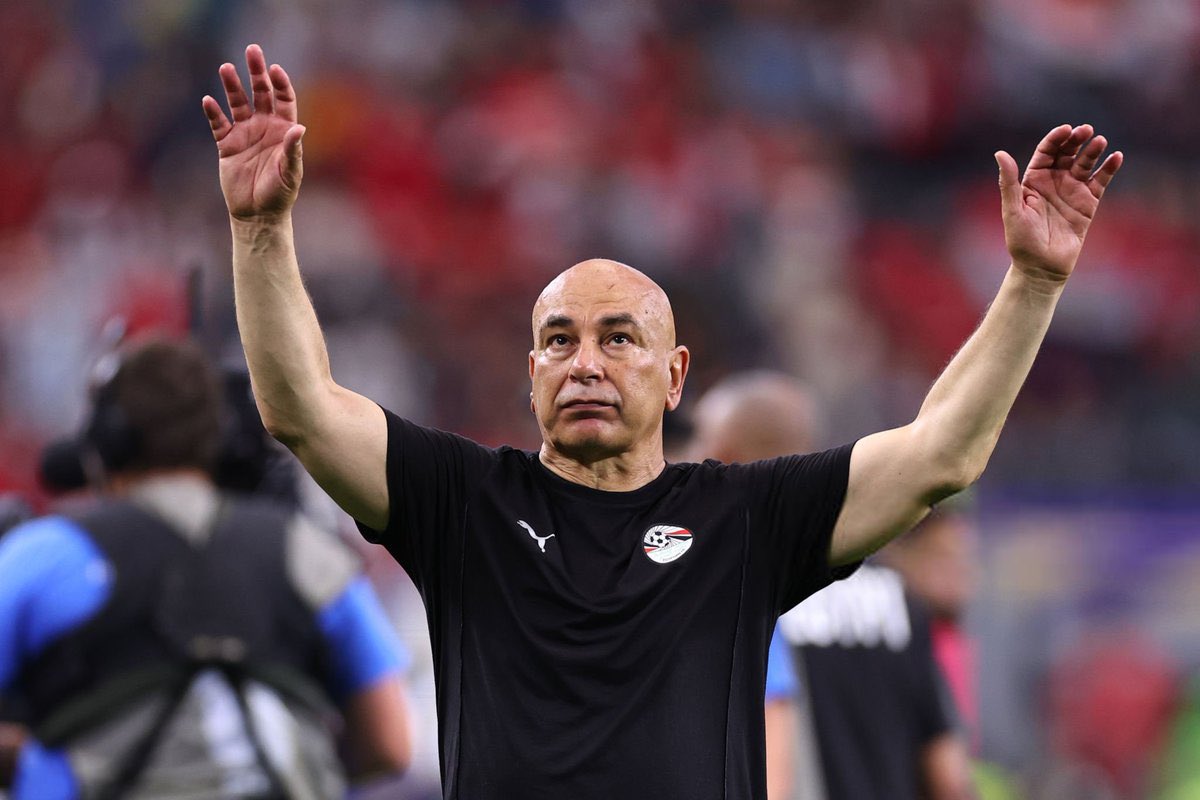
Egypt manager Hossam Hassan deserves immense credit for the World Cup that he coached. He ensured Emam Ashour was the player to get the most touches to knit their final third play together. He unearthed a link man/box threat in Mostafa Ziko (who did not have any caps) & even prioritised him ahead of Marmoush, to help maximise Salah. Even the inclusion of Haissem Hassan to bring dribbling width vs Argentina was an inspired pick. The balance of Egypt’s attacking play was the best it has ever been during Salah’s time. Look forward to seeing his future work.
Let's talk about Belgium.
Fair play to Rudi García, he got everything right tonight.
The starting lineup was a surprise, especially with players like Doku, De Bruyne, and Lukaku left out. But every change made sense.
Rudi García understood that, with the United States playing with three midfielders + Pulisic operating inside, using only two midfielders alongside De Bruyne would have been a nightmare defensively. It would have created a 4v2 overload centrally, as De Bruyne doesn't contribute consistently enough without the ball.
Using Tielemans as a #10 isn't ideal in possession, but it worked brilliantly defensively. Out of possession, Tielemans almost became a third central midfielder, giving Belgium much more protection in the middle of the pitch.
Starting Lukebakio instead of Doku also made sense for two reasons. First, his defensive work was outstanding. He consistently tracked Robinson's runs and dropped deep when needed, at times even helping Belgium form a back five. Second, he offered more threat in large spaces and transition moments than Doku.
De Ketelaere also had an excellent game, scoring twice and constantly causing problems with his intelligent movement and runs in behind.
Belgium's defensive plan was well organized and executed. They weren't overly aggressive or excessively passive, they found the right balance. The profiles García selected suited the game plan perfectly.
What I liked most, though, was Belgium's approach in possession. They clearly wanted to prevent the United States from using one of their biggest strengths: their aggressive high press and counter-press.
After recovering the ball, Belgium often played backwards to Courtois instead of forcing risky passes through the middle. Courtois would then play long over the first line of pressure. This stretched the United States, and Belgium had enough physical presence, (Onana, Vakanen, Lukebakio, and even Tielemans) to compete for and win the second balls.
The other option Belgium used was to immediately play forward into the space behind the US press after regaining possession. By doing this, they avoided giving the United States the opportunity to counter-press and instead attacked quickly in transition. The United States are one of the best teams at reacting immediately after losing possession, but Belgium simply didn't allow them to play to that strength.
To be honest, Belgium hadn't looked convincing recently. They struggled to create chances and often found it difficult to beat opponents they should have been dominating given the quality of their squad.
Tonight, however, they looked far more solid defensively, even without some of their biggest attacking stars.
The game plan was excellent, the player profiles fit it perfectly, and Belgium completely nullified the United States.
Ich habe heute versucht, die Chatkontrolle zu stoppen.
Am Wochenende mussten Sibylle Berg und ich Parlamentspräsidentin Metsola schriftlich mitteilen, dass das Durchprügeln der Chatkontrolle im Eilverfahren leider gegen die Geschäftsordnung des EU-Parlaments verstößt. Während Metsola der interessierten Presse daraufhin (fälschlicherweise) mitteilte, dass das schon alles seine Richtigkeit habe, warten wir immer noch auf ihre Antwort.
Deshalb wollte ich es ihr heute bei der Eröffnungssitzung in Straßburg noch einmal erklären. Und musste erstaunt feststellen, dass die Präsidentin doch Regeln kennt: Exakt nach 60 Sekunden hat sie mir das Mikrophon abgestellt. (regelkonform, wird aber selten gemacht)
Dabei hätte ich noch einiges zu sagen gehabt: "Frau Präsidentin, Sie wachen nach Artikel 22 über dieses Regelwerk (mit der ausgedruckten Geschäftsordnung wedelnd) - erklären Sie den Eilantrag für unzulässig. Wir sind hier schließlich nicht auf Malta! Die aktuelle Fassung der Geschäftsordnung überreiche ich Ihnen gerne persönlich. In der MEP-Bar."
Wie es nun weitergeht? Morgen wird über das Eilverfahren abgestimmt, obwohl diese Abstimmung gar nicht stattfinden dürfte. Wenn der Antrag erfolgreich ist, kommt die Chatkontrolle Donnerstagmittag zur Abstimmung ins Plenum. Um sie noch zu stoppen, müssten 361 Abgeordnete - eine qualifizierte Mehrheit - DAGEGEN stimmen.
Die schlechte Nachricht: Donnerstag ist der letzte Tag vor der Sommerpause und viele MEPs dürften bereits auf dem Weg in den Urlaub sein. Ein Schelm, wer Böses denkt bei dieser Terminierung... Smiley!
Wenn die Chatkontrolle durchgeht, dürfen die Plattformen (also die US-Tech-Bros) wieder & weiterhin fröhlich & ganz legal Ihre Nachrichten scannen. Schreiben Sie also gefälligst etwas unterhaltsamer in den kommenden Wochen... ZwinkerSmiley!
🔴 Drei Reporter von Apollo News wurden in Erfurt aus einer Antifa-Demo heraus gejagt und zusammengeschlagen.
Als sie die Demonstration filmten wurden sie von ca. einem Dutzend Personen verfolgt und zu Boden geschlagen, als sie am Boden lagen wurde immer wieder nachgetreten auch gegen den Kopf.
Erst das Eintreffen von Polizisten konnte das beenden. Die Kollegen wurden vor Ort von Rettungssanitätern versorgt: Platzwunden am Kopf, Schürfwunden, Prellungen.
https://t.co/ZvpyY4vN8i
That's gotta be peak World Cup?
- Dominant champion of 82
- Holding champion of 78 plus Maradona (Passarella, Kempes, Ardiles)
- Legendary 82 Brazil (Zico-Falcao-Socrates aka "the best team ever not to win it")
And then every game 3+ goals. Gotta watch these.
A look at how Austria's off-ball movements create spaces to access to the "red zone" - i.e. central areas in front of opp. defensive lines:
- Runs wide or away to clear frontal cover = passing lanes
- CMs/10s coming alive for sets underneath from the #9 https://t.co/Dhe1IIsUuy
New dynamics last night for Ancelotti and Brazil 🇧🇷
4-3-3 low, wide triangles on the sides, false #9 profile with Cunha often coming loose. Vinicius and Raphinha consistently played in the half spaces and in between the fullback + centre back to make runs beyond - think Salah, Mané, Firmino.
The fullbacks were much less static positionally than in Brazil's first game when they switched to a 4-3-3 which was imperative to ensure the wide triangles had balance and that the team had width, a player in the pocket, and a player at the base of the triangle knitting everything together positionally.
The fullbacks may not be the most dynamic in the world, but if they can get their foot on the ball on the side with Vinicius and Raphinha positioned inside in the half space with Cunha loose, they can play dangerous balls in behind for them to run on to. Again, think about the relationship Trent and Salah had or Robertson and Mané had.
Plus, when Vinicius and Raphinha are wide, the fullback can alternate positionally with the #8 to be in the pocket or at the base of the triangle (again, like Trent and Robertson).
Brazil are fluid with Vinicius, Cunha, and Raphinha all having license to roam, but the balance was better than in any moment against Morocco.
Vinicius often being inside also reduces the amount of he has to run defensively as the team transition into a diamond with him leading the defensive shape alongside Cunha with Bruno in the #10 and Raphinha + Paqueta digging in on the sides with Casemiro screening in the #6.
The defensive moment is far from perfect because of Vinicius' unwillingness to defend from the front along with the zonal approach from back to front, but Brazil being willing and able to defend low opens up space for them to kill teams in transition with Vinicius already positioned high, central, and closer to the goal than what he would be if he was positioned wide defensively.
It's far from perfect because Brazil's fullbacks lack quality and the defensive idea is sub-elite, but Ancelotti has found Brazil's best balance yet with this set-up. Their attacking quality makes them a threat in every moment.
There is already enough analysis about achieving collective organisation through positional principles: depth, width, half-spaces, 4-2-4s, 3-2-5s, 3-1-6s, and many other concepts that are now common knowledge. Using these principles, it becomes relatively easy to build a squad with a clear structural idea.
What we still do not have enough understanding of is how to achieve collective organisation in a functional attack/relational approach. Yes, concepts like diagonals, one-twos, tilting, and proximity are essential, but how do you sustain collective organisation on a macro scale while building a squad and maintaining long-term alignment?
For me, the best answer is the 4-midfielder approach that originally came from Brazil.
Do not think of the midfielders here as positions, but as functions. That is why the original name of the relational approach was Jogo Funcional, or Functional Play in English. The idea is exactly what it sounds like: you need four midfielders on the pitch.
Usually, the division of functions between these midfielders works like this:
The Primeiro Volante functions as the 6, providing the deeper circulation and control. The Segundo Volante functions as the connective 8, linking phases and sustaining circulation. The Ponta-Armador can start from the wing or centrally, but fundamentally functions as an associative midfielder within the structure. And the Meia-Armador functions as the primary creative organiser.
So what is a midfielder from this perspective?
A player who is comfortable on the ball under pressure, can operate in short spaces, can associate with teammates, and primarily plays in front of the opposition’s midfield and defensive lines.
What the 4-midfielder approach creates is a technical floor. It uses individual tendencies to facilitate the team’s intentions, creating team-level tendencies that maximise the relational idea and emphasise diagonals, one-twos, tilting, and proximity.
It is no surprise that Madrid, Argentina, and the great Brazil and Milan sides all utilised this concept. Naturally, the base structures these teams used, yes relational teams still have structures, were usually variations of a 4-diamond-2, 4-3-1-2, or 4-2-2-2, all of which created a four-man midfield.
And from this, we also understand why these structures have become so rare in possession at the elite level in European football.
Written by @MeiaArmador__
What I will say about Argentina though is it is hard to write them off.
Perfect goalkeeper profile for tournament football. Warriors with absurd technical quality at centre half. Runners at fullback. Elite pass volume + quality in midfield. De Paul a metronome. Martinez links well and Alvarez is a huge threat from the bench.
Almada is the one who I look at and think he lets the rest down dynamics wise. Replace him with Di Maria and it’s the same team who won the World Cup last time around.
Because of Di Maria’s absence, I see them losing out in a toe-to-toe affair with France and England, albeit tight games. Spain would be even closer because they don’t have as much firepower and goals in their team.
But I am cheering for Argentina, guys. Messi winning another World Cup would be the greatest sporting spectacle ever.
What does the FA Technical Guide have to say about the Escadinha | Three in a line?
• Deception - going against the flow
• Positioning & Scanning - body shape to receive
• Technique - weight of pass
• Timing & Movement- to attack the new space - on the blindside
Japan using diagonality & associative play in the final 3rd.
Active wide triangles to tilt the block & outplay the 3v3s before finding the inside passes.
However, players made the same runs & didn’t arrive in space. Countermovements could be key.