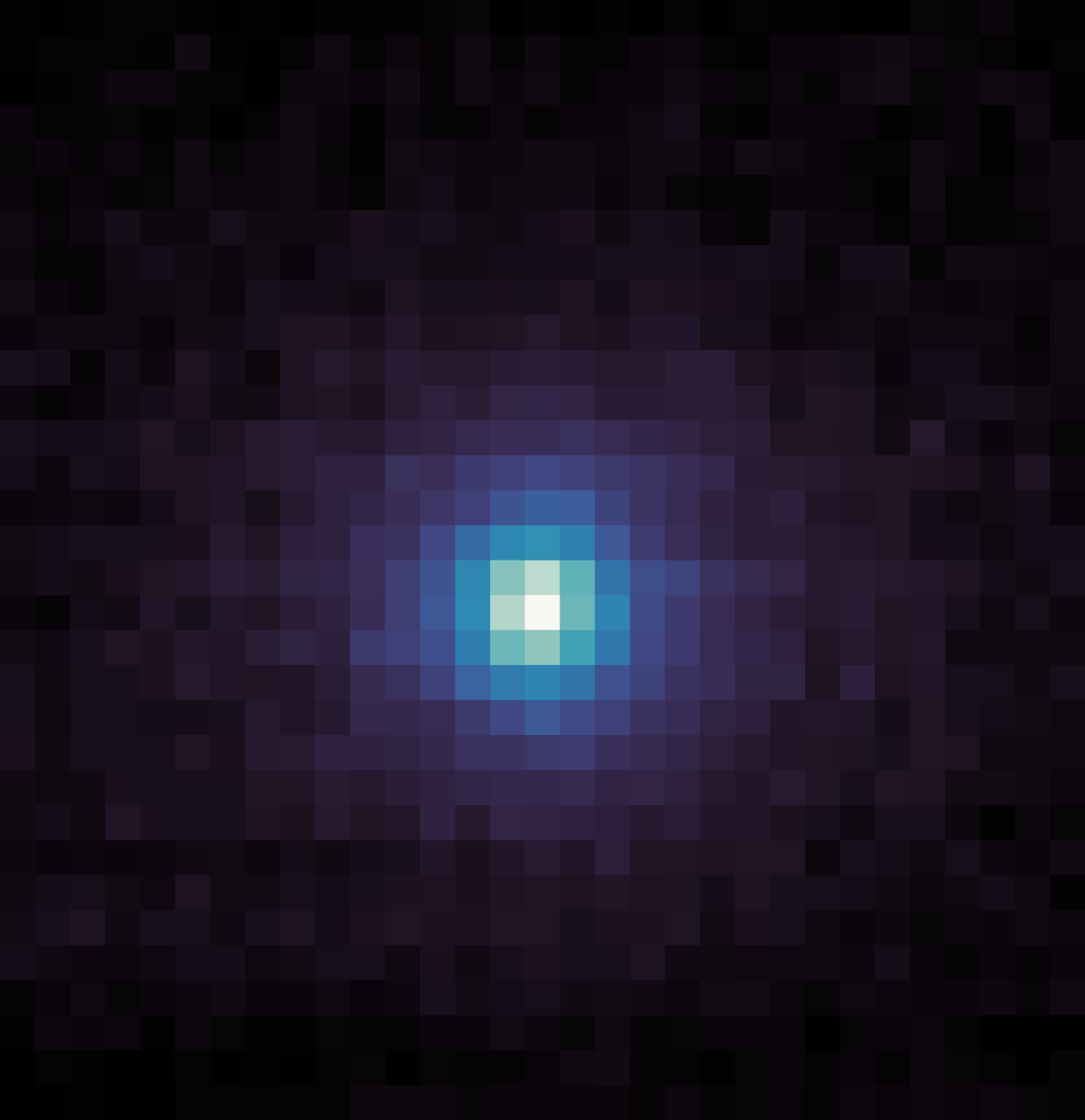
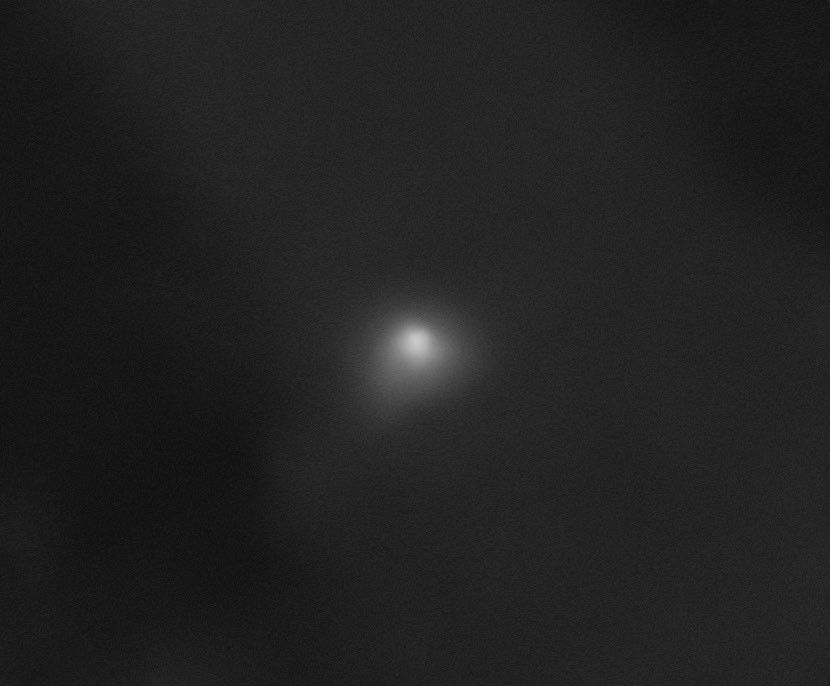
☄️Interstellar comet 3I/ATLAS! We found in it the most enriched concentrations of CH3OH (methanol) and HCN (hydrogen cyanide) of any comet, second only to C/2016 R2 (PanSTARRS).
➡️ Open review for all in the following paper https://t.co/sz2CFXjODw
Mientras el cometa interestelar 3I/ATLAS pasa velozmente por nuestro sistema solar, nuestras naves espaciales lo han estado observando. Un resumen de lo que hemos visto hasta ahora 👉 https://t.co/OlFMmaa1jG
On Wed., Nov. 19 at 3pm EST (20:00 GMT), we’re hosting a live event to share new imagery of the interstellar comet 3I/ATLAS, collected by our fleet of @NASA space missions! Use #AskNASA to submit questions for NASA leadership to answer on-air. Details: https://t.co/hcWn028A8D
Wonderful news. 🌟💫✨
Our two new VASCO papers are now peer-reviewed, accepted and published — and they reveal some extraordinary things:
- We find statistically significant correlations between short-lived transients on pre-Sputnik sky plates, UFO sightings, and above-ground nuclear tests.
- We show a 22σ deficit of transients inside Earth’s shadow — consistent with a fraction of these events originating from solar reflections from flat, highly reflective surfaces in orbit before the human Space Age began.
Together with our earlier MNRAS paper, these results form a triptych of new methods to investigate UAP using astronomical data. Three independent high-level journals — and three independent peer review processes.
These latest results raise a bold question.
And yes… you know which.
Press release (Stockholm University): https://t.co/zr2nvFUs8b
Scientific Reports: https://t.co/GE7TDo4HyN
PASP: https://t.co/6vnbOIJGqR
☄️ #3I/ATLAS comet update!
On 3 October, our ExoMars Trace Gas Orbiter (TGO) turned its eyes towards interstellar comet 3I/ATLAS as it passed close to Mars.
Together with Mars Express, ExoMars TGO had the closest view of the comet of all of our spacecraft. It looked towards the interstellar interloper from just 30 million km away during its closest approach to the Red Planet.
Read more: https://t.co/XGPNDmBfxD
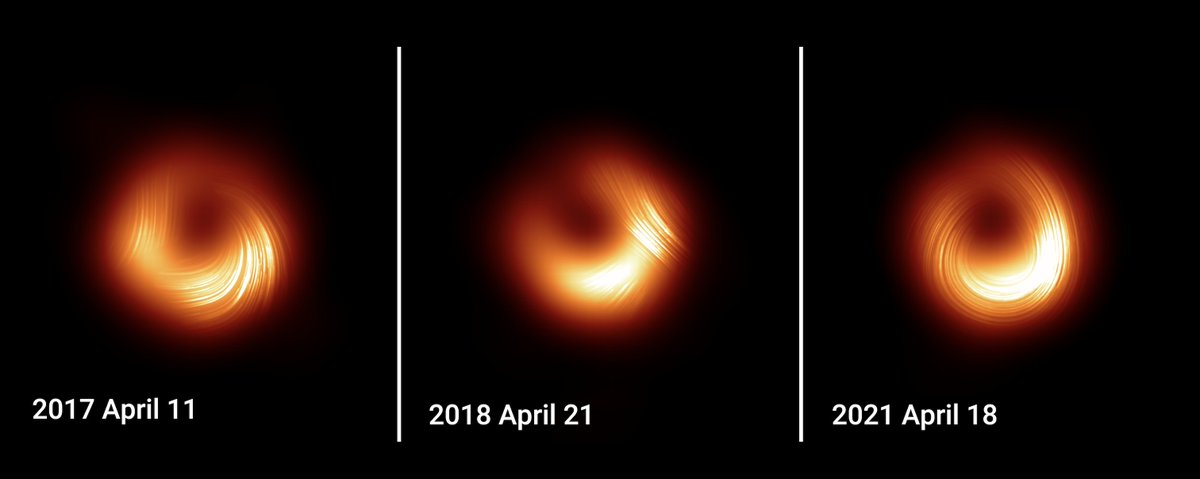
È lui, #M87*, il primo buco nero a essere stato “fotografato”. Gli scienziati di @ehtelescope non si sono però accontentati di quel primo storico “scatto”, e negli anni hanno continuato a riprenderlo. Scoprendo così che è un oggetto tutt'altro che statico.
https://t.co/7SnRncjuH0
Today in A&A: Multi-year #EHT observations of M87* reveal polarization flips. The ring’s size stays steady, but the plasma near the black hole’s edge is anything but static. Full story: https://t.co/5O9YRcTtdb #blackholes#eventhorizon#VLBI#astronomy
✔️ Nuevas imágenes del EHT revelan un entorno dinámico y turbulento alrededor del agujero negro supermasivo M87*
🌐 https://t.co/MTUxTqJlyl
@ehtelescope@iaavlbi
Groundbreaking new image! The EHT reveals the dynamic environment around black hole M87*.
The 2021 image shows a distinct shift in polarization patterns, tracing changes in magnetic fields near the event horizon.
https://t.co/LeX8z75PUI
The new image of M87* just released today comes to life in this stunning animation, revealing its incredible evolution over the years!
Watch closely and see how this mysterious supermassive black hole changes over time.
Credit: EHT Collaboration | Animation: Saurabh (MPIfR)
The search for life beyond Earth is a profound scientific quest. Today, that search is under threat. Challenges to federal funding that support science are putting future research at risk. Your voice can help ensure this work continues.
Since 1984, the SETI Institute has partnered closely with NASA to explore the cosmos. Together, we’ve advanced the study of distant exoplanets, planetary systems, and astrobiology, building the innovative technologies that help us understand our place in the universe.
The SETI Institute is home to more than 100 scientists. Much of their research is federally funded and advances our mission to drive discovery and inspire the next generation of explorers.
Potential budget cuts at NASA threaten key programs at the SETI Institute and our ability to continue this critical research is also at risk. Every discovery and insight into whether life might exist beyond Earth depends on sustained support for this work.
By signing the petition, you send a clear message: this search matters — to science, to education, and to the generations who will inherit the future of space exploration.
Sign the petition today and join people around the world committed to keeping the search alive.
Visit https://t.co/jKEvM7Hcb5 to make your voice heard and stand for science, exploration, and discovery.
Consulta en el diario El Universal, la nota “Art decó un estilo que vistió de modernidad a Ciudad de México”, donde Louise Noelle Gras investigadora del #IIEUNAM explica este movimiento artístico, que en 2025 celebra su centenario.
@El_Universal_Mx