The Climate Centre helps the Red Cross Red Crescent Movement worldwide address the humanitarian impacts of climate change. (Retweets do not equal endorsement.)
📍Somalia | Millions face a potential climate disaster as a record El Niño looms. Families risk losing their homes, and farmers their crops to floods or leave their fields unplanted, raising the risk of hunger next year.
📽️ Footage available for media 👇����
https://t.co/KrhhWAFH8B
.@RCClimate is looking for a Google Analytics consultant for a short scoping exercise (1-2 days) on audience metrics for https://t.co/6H1qdh9NV9 that may lead to a longer one. If interested, please send a covering email and CV + daily rate to [email protected]. Thankyou.
#ElNiño: 'The forecast is as good as it gets. The plans are largely written, financing mechanisms exist. Every day of delay is a choice – not a gap in knowledge,' argues @RodeKruis's Sirak Temesgen; @KenyaRedCross '24 file pic, what happened last time - https://t.co/n9pI1O2VFf
“If we want resilience to endure, we must invest in the local institutions and communities that remain when others cannot.”
The Climate Action Summit, hosted by the @IFRC and the @RCClimate, continues!
Hear from Mafalda Duarte, Executive Director of the Green Climate Fund @theGCF, on why investing in local institutions and communities is essential to building lasting climate resilience, and on the important role of the @theGCF and @IFRC partnership.
It’s still ongoing! Join here 👉https://t.co/3GaSAyEgch
A pleasure to join today’s High-Level Opening Plenary of the Climate Action Summit alongside @DAcconciaEU of DG CLIMA and @zfoundation Charlotte Stemmer.
We discussed how we can finance action earlier, scale locally led solutions and invest in lasting local institutions.
A school was destroyed. 900 children survived.
Today, @ifrc's SG @jagan_chapagain shared how Nepal headmaster Rajendra Dawadi evacuated all students before floodwaters struck, thanks to @NepalRedCross Cross school safety drill.
Preparedness saves lives. #EarlyWarningForAll
Early action makes early warning work.
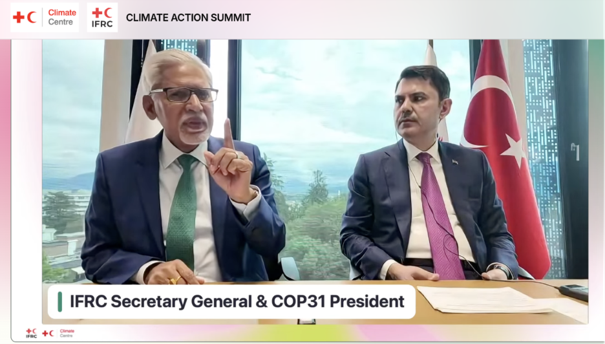
Today, I delivered opening remarks alongside the COP31 President @murat_kurum and joined the Hope, Humanity and Progress leadership dialogue at the Climate Action Summit hosted by the IFRC and the @RCClimate.
I shared how preparedness helped a headteacher in Nepal lead 900 children to safety before floods destroyed their school.
Warnings alone do not save lives. Communities must be prepared, empowered and resourced to act.
Climate action summit y'day hears how 900 Nepalese children were saved after quick thinking by a head & a @NepalRedCross evac. drill; pic from top L @YEMRedCrescent cholera; @PolskiCK beach patrol; @UgandaRedCross storm drainage; @cruzrojacol safe water - https://t.co/sCNxXGfm8Y
A school was destroyed. 900 children survived.
Today, @ifrc's SG @jagan_chapagain shared how Nepal headmaster Rajendra Dawadi evacuated all students before floodwaters struck, thanks to @NepalRedCross Cross school safety drill.
Preparedness saves lives. #EarlyWarningForAll
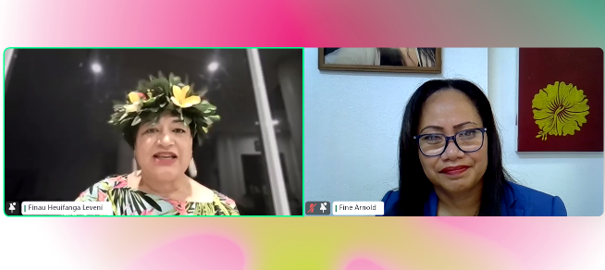
What a brilliant panel opening the Climate Action Summit today. Fine Tu'itupou-Arnold, SG of the Cook Islands Red Cross explains how communites are not asking us to redesign their systems, they want strengthened what they are already doing and we need humility to recognize that.
Powerful opening at the Climate Summit by Tine Stege, Climate Envoy of the Marshall Islands: "Let's be honest, the science has given us this wake-up call many times over. It is the same wake-up call that Pacific peoples, including Marshall Islanders, have been sounding 4 decades"
Join us today at the Climate Action Summit!
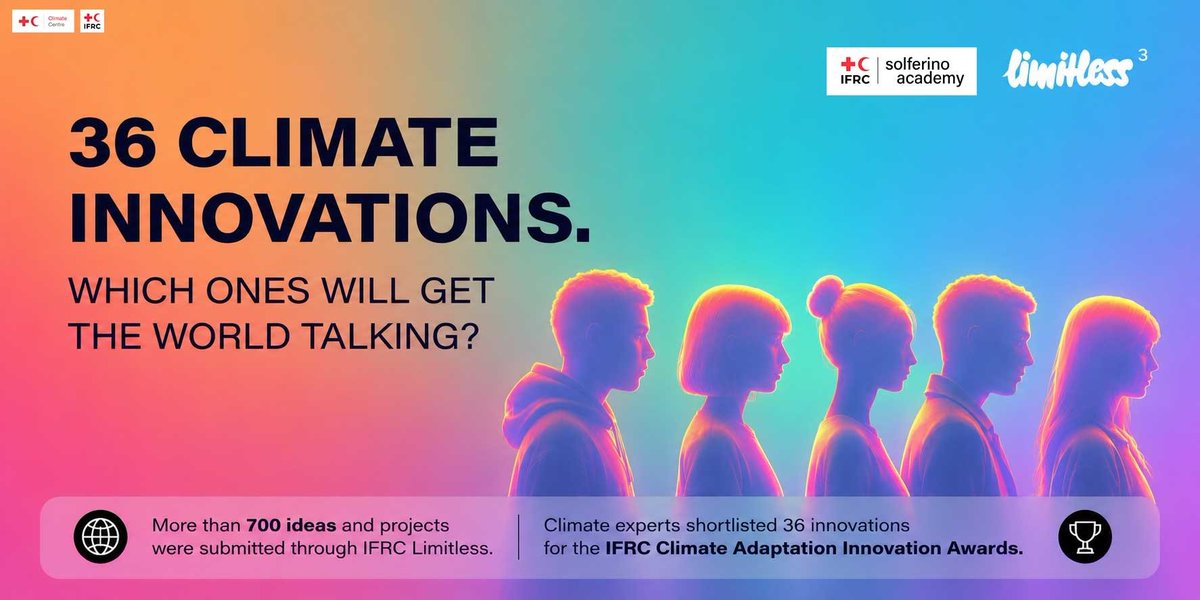
There will be a great award reveal at🗒️12:15. Young people from around the world will share innovations to improve the lives and livelihoods in their communities. You can vote too: https://t.co/aOfJXkBRee!
👉https://t.co/4WHdFGsDs6
Don't miss the leadership plenary of the Climate Action Summit 2026 - with wonderful speakers from start to finish! It starts online Wed, Sep 16, 2026 at 1:00 PM CEST and can be viewed here:
https://t.co/LkILHrea3a
@ifrc@theGCF@Google@GoogleAI
Join us tomorrow at the Climate Action Summit - local, everywhere
Locally led climate action works and scaling, funding and innovations are urgently needed. This summit will offer inspiring stories and new methods to advance collectively!
https://t.co/4WHdFGsDs6
@ifrc
Climate action in #Somalia: Community volunteers in Nugaal, Puntland built gabions to protect against erosion caused by heavy rain and floods (file photo); @liz_stephens on fears Somalia faces seasonal flood risk comparable to last El Niño floods in 2023 - https://t.co/C8jDuLBYUX
.@UNEP report out today, Limiting overshoot: Navigating exceedance of 1.5°C & pathways towards return, says cities esp. vulnerable to intense heat & floods; pic, man douses himself in Mexicali where temps can top 50°C (Francisco Javier Chavez/GHHIN-EJN - https://t.co/H7fy90TTaP