Biophysics-based health education.
Translating the science of circadian and quantum biology into actionable intelligence.
Consultations, Guides & Resources ⬇️
Circadian rhythms drive your sleep-wake cycle, hormone release, neurotransmitter production, cellular repair, and much more.
It’s important for your overall physical and mental health to get your light right.
My comprehensive Circadian Optimization Guide teaches you how.
Part I of the guide explains science of circadian biology, the biological effects of different wavelengths of light, why infrared light is essential for mitochondrial function, and the modern problems of static indoor lighting and artificial light at night.
Part II provides clear, actionable, and accessible steps for integrating the information and creating a healthy lifestyle and environment for you and your family. Including a daily checklist, blue light blocker glasses guide, indoor lighting recommendations, and more.
Available on my website. Link in the comments.
I’m excited to be heading to Seeds & Spores Family Farm in Marquette this Saturday for an evening centered around one of the core questions behind my work:
How does light organize life?
We’ll begin with a guided farm tour, followed by my presentation:
“How Light Organizes Life: An Introduction to Circadian & Quantum Biology.”
I’ll take us from the photon to the cell — exploring the physics beneath biology and how light influences circadian timing, mitochondrial energy production, biological water, metabolism, and the way our bodies interpret the environment around us.
We’ll also look at why natural sunlight differs so profoundly from modern artificial light, how food ultimately begins as captured light through photosynthesis, and why local and seasonal eating may matter from a biophysics perspective.
Most importantly, I’ll translate the science into practical ways to shape your light environment and daily habits to better support health and performance.
Then we’ll keep the conversation going around the bonfire.
I’m especially looking forward to this one because the setting brings everything together: sunlight, soil, food, seasonality, community, and human biology.
📍 Seeds & Spores Family Farm — Marquette, MI
📅 Saturday, August 22
🌱 Farm tour: 4 PM
☀️ Talk: 6 PM
🔥 Bonfire + conversation afterward
Bring your own picnic. Suggested donation: $10–20.
If you’re in the UP, come join us.
Today on The Science and Experience of Energy, we share clinical observations about how electrical currents from electrolysis may impact the color of surrounding hairs.
After treating clients with white facial hair, our TSEE guest writer Julia Wallis noticed something unexpected. She describes how nearby follicles (not the treated follicle) often began producing pigmented hair again. Greying reversal, like we previously observed in scalp and pubic hairs.
Pigment production in hair is energetically demanding. It is also influenced by aging, stress, circadian rhythms, nutrition, mitochondria, and the local tissue environment.
Julia's observations suggests that electrolysis could change the local tissue environment in ways that open a window of reversibility, tapping into the body's capacity to adapt, communicate, repair, and heal.
Exciting stuff! Thank you for sharing, Julia.
https://t.co/Cgx3D6Iljp
A resilient food system shouldn’t depend on a handful of centralized supply chains and single points of failure.
One of the lessons of the victory garden era was that food production can be decentralized — into backyards, farms, neighborhoods, and local communities.
That matters for more than food security.
Food is information. Food is medicine. And the quality of that food depends on the health of the soil and ecosystem that produced it.
Today, we are simultaneously overfed and undernourished — consuming plenty of calories while still lacking the nutrient density our biology requires.
Regenerative agriculture offers a different model: rebuild the soil, shorten the distance between producer and consumer, increase local resilience, and reconnect communities with the source of their food.
To me, decentralizing the food system isn’t just an agricultural issue. It’s a health, resilience, and national security issue.
I’m excited to be heading to Seeds & Spores Family Farm in Marquette this Saturday for an evening centered around one of the core questions behind my work:
How does light organize life?
We’ll begin with a guided farm tour, followed by my presentation:
“How Light Organizes Life: An Introduction to Circadian & Quantum Biology.”
I’ll take us from the photon to the cell — exploring the physics beneath biology and how light influences circadian timing, mitochondrial energy production, biological water, metabolism, and the way our bodies interpret the environment around us.
We’ll also look at why natural sunlight differs so profoundly from modern artificial light, how food ultimately begins as captured light through photosynthesis, and why local and seasonal eating may matter from a biophysics perspective.
Most importantly, I’ll translate the science into practical ways to shape your light environment and daily habits to better support health and performance.
Then we’ll keep the conversation going around the bonfire.
I’m especially looking forward to this one because the setting brings everything together: sunlight, soil, food, seasonality, community, and human biology.
📍 Seeds & Spores Family Farm — Marquette, MI
📅 Saturday, August 22
🌱 Farm tour: 4 PM
☀️ Talk: 6 PM
🔥 Bonfire + conversation afterward
Bring your own picnic. Suggested donation: $10–20.
If you’re in the UP, come join us.
🚨🚨🚨It’s out!
Preprint on photometabolism paper by Glen Jeffery, Bob Fosbury, and Scott Zimmerman and myself.
This is a completely non exclusive new theory on how infrared light affects life on earth.
https://t.co/3KSFI0tC4n
We evolved to run on sunlight. We now spend 93% of our lives under artificial light that our biology can't read, and that mismatch quietly drives the fatigue and fog we've come to call normal. My Circadian Optimization Guide shows you how to correct it. Link in bio.
Red LEDs may not contain the melatonin-suppressing blue light, but they also don’t contain the full spectrum of infrared that’s supportive for your biology.
Opt for incandescent lights where it makes sense. Strainless lighting is a great source for them.
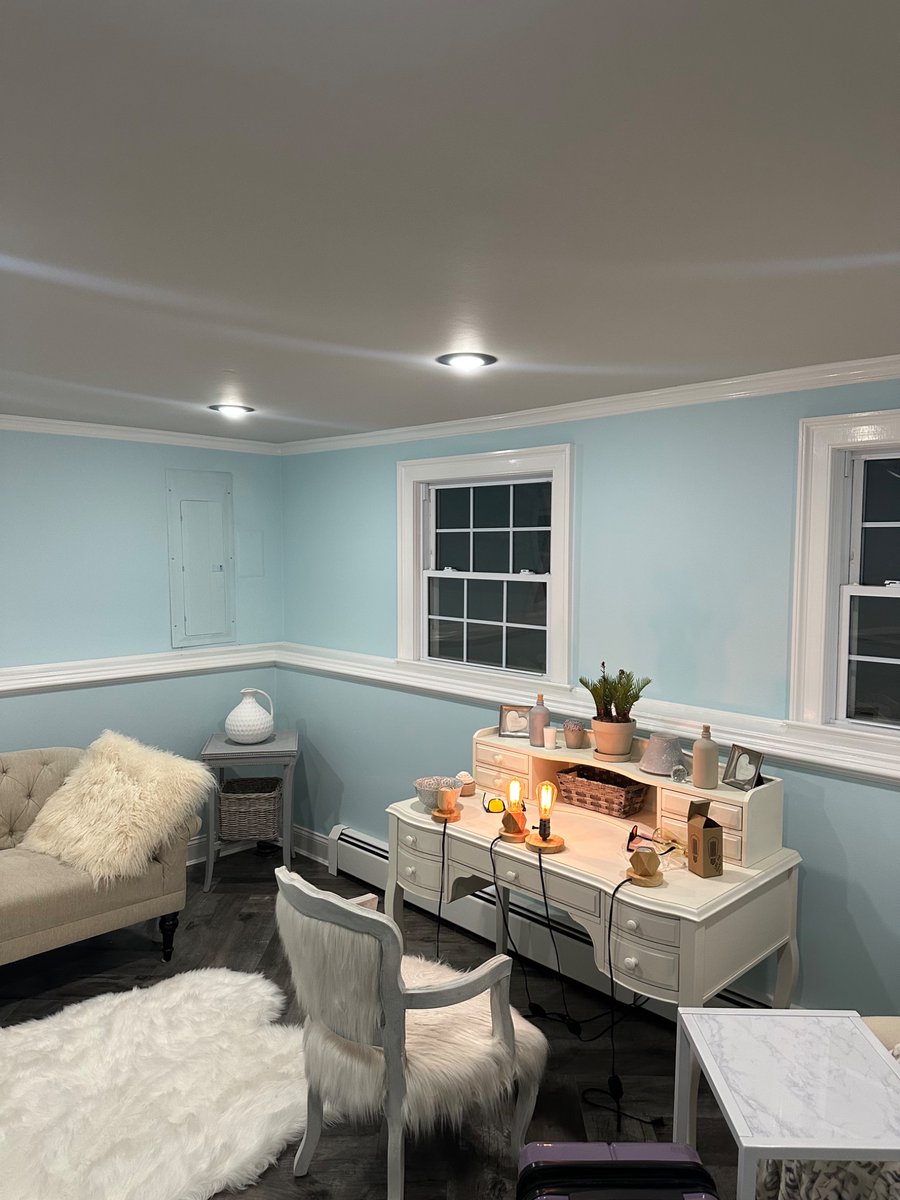
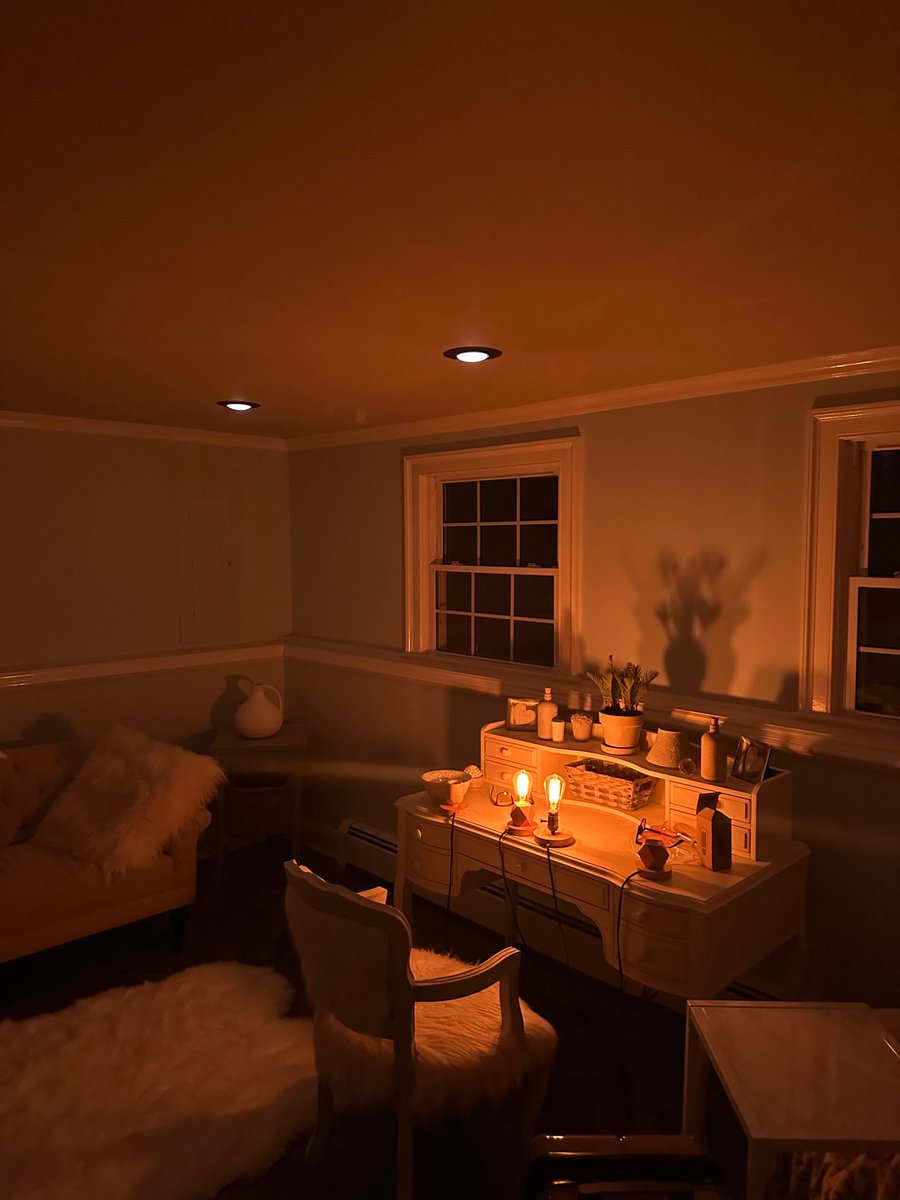
The same room. The only difference?
The lighting.
Stop stressing out your body with LEDs. Give it the relaxation it wants, and needs, with the Strainless Incandescent Lamp & Bulb.
We optimized modern lighting for electrical efficiency but failed to consider biological efficiency.
Incandescent light produces a broad spectrum rich in red and infrared. Modern LEDs remove that infrared energy while concentrating their output in the visible spectrum, with a sharp spike in blue light.
In this clip from my conversation with Les Raymond on The Mindful Movement Podcast, I explain how infrared interacts with mitochondria - including the water surrounding ATP synthase, the molecular nanomotor responsible for producing cellular energy.
If mitochondria are the engine, infrared may help create the environment that allows that engine to run efficiently.
This is one reason our light environment deserves far more attention when we think about mitochondrial health, metabolic health, and chronic illness.
🎙️ Link to the full conversation in the comments below.
Approximately 340,000 U.S. deaths per year are attributable to insufficient sun exposure (Alfredsson et al., 2020). Mortality-scale effects from a signal we systematically avoid.
What if the water inside our bodies is not simply an inert substance, but an active participant in the processes that sustain life?
Biological water, often called exclusion zone (EZ) water by Dr. Gerald Pollack, has properties very different from the bulk liquid water we drink. At hydrophilic surfaces such as cell membranes, water can organize into a more ordered, gel-like, liquid-crystalline structure.
And importantly, infrared light provides energy that expands this structured layer of water.
Because EZ water separates electrical charge, leaving the structured zone negatively charged while protons accumulate outside it, it can behave like a biological battery.
This emerging understanding challenges the conventional view of water as merely the passive solvent in which biochemical reactions occur. Instead, water may be intimately involved in the energetics, charge separation, organization, and flow that make biology possible.
Exploring the physics of light and water is changing how we think about biology itself.
🎙️ Link to the full conversation on The Mindful Movement Podcast in comments.
The natural RF background on this planet: ~10⁻⁷ microwatts per cm². Typical urban environment today: 0.1–1.0 microwatts per cm². A million-fold increase. Arguably the single greatest alteration to the natural environment our species has created.
We usually think of mitochondria as the organelles that make ATP.
But they also make deuterium-depleted metabolic water, which, upon interacting with biological surfaces develops into an ordered, charge-separated gel often described as exclusion zone (EZ) water.
That separation of negative and positive charge creates electrical potential that appears to support biological processes such as flow.
This is why the emerging physics of biological water is so fascinating.
Water is not simply a passive medium in which biochemistry happens. It is an active part of how energy, charge and organization move through living systems.
The more we understand the physics of water, the more we may have to rethink biology itself.
🎙️ Link to the full conversation with Les Raymond on The Mindful Movement Podcast in the comments.
Transcranial near-infrared light at 1064nm significantly improves cognitive and emotional function in healthy adults (Barrett & Gonzalez-Lima, 2013). Over 4,000 lab studies and 400+ RCTs now support photobiomodulation.
Infrared photons are absorbed by the water matrix surrounding mitochondrial components, generating phonons — coordinated vibrations that enhance electron transfer rates across the chain. The sun literally tunes your cellular engines.
I recently joined Les Raymond on The Mindful Movement Podcast for a wide-ranging conversation about my journey with Lyme disease and some of the science that has shaped my thinking.
We discussed:
• Circadian entrainment and the SCN - how light signals through the eyes help synchronize biological timing, and the effects this has on cortisol and melatonin rhythms.
• Natural versus artificial light spectra - particularly how static, isolated LEDs differ from dynamically-shifting sunlight and infrared-rich incandescents.
• Infrared light and mitochondrial bioenergetics - including the electron transport chain, ATP synthase, and the interaction between infrared energy and the water surrounding mitochondrial machinery.
• Biological or “exclusion-zone” water - its charge-separated properties and proposed role in cellular energetics and fluid dynamics.
• Seasonality and metabolic signaling — including mTOR, AMPK, dietary deuterium, and the idea that light, food, geography, and season provide interacting environmental signals.
• Why I view light as a foundational biological input, and why circadian timing and the indoor light environment deserve more attention.
Episode available at https://t.co/ZRl2ePr09F
Blue light destroys dopamine.
Sunlight creates it.
Under artificial light, you have low energy, motivation, and focus.
Step outside and you feel like a million bucks.