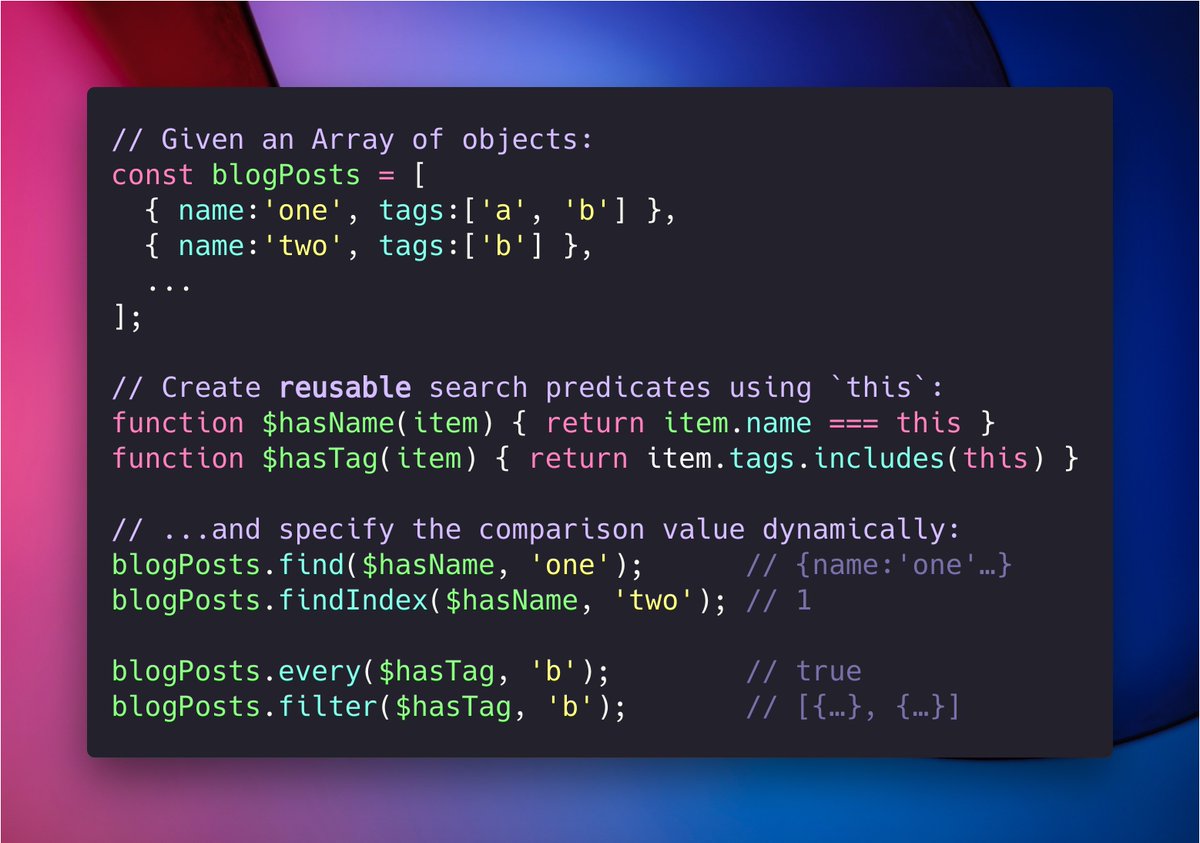
got tired of every project reinventing touch, mouse, wheel, pointer, keyboard modifiers, and gesture handling.
so built a small dependency-free lib that unifies them into one event model: tap, swipe, pinch, rotate, paths, gesture sequences, rolling taps,..
https://t.co/dHX36bIW50
Sharing an interesting recent conversation on AI's impact on the economy.
AI has been compared to various historical precedents: electricity, industrial revolution, etc., I think the strongest analogy is that of AI as a new computing paradigm (Software 2.0) because both are fundamentally about the automation of digital information processing.
If you were to forecast the impact of computing on the job market in ~1980s, the most predictive feature of a task/job you'd look at is to what extent the algorithm of it is fixed, i.e. are you just mechanically transforming information according to rote, easy to specify rules (e.g. typing, bookkeeping, human calculators, etc.)? Back then, this was the class of programs that the computing capability of that era allowed us to write (by hand, manually).
With AI now, we are able to write new programs that we could never hope to write by hand before. We do it by specifying objectives (e.g. classification accuracy, reward functions), and we search the program space via gradient descent to find neural networks that work well against that objective. This is my Software 2.0 blog post from a while ago. In this new programming paradigm then, the new most predictive feature to look at is verifiability. If a task/job is verifiable, then it is optimizable directly or via reinforcement learning, and a neural net can be trained to work extremely well. It's about to what extent an AI can "practice" something. The environment has to be resettable (you can start a new attempt), efficient (a lot attempts can be made), and rewardable (there is some automated process to reward any specific attempt that was made).
The more a task/job is verifiable, the more amenable it is to automation in the new programming paradigm. If it is not verifiable, it has to fall out from neural net magic of generalization fingers crossed, or via weaker means like imitation. This is what's driving the "jagged" frontier of progress in LLMs. Tasks that are verifiable progress rapidly, including possibly beyond the ability of top experts (e.g. math, code, amount of time spent watching videos, anything that looks like puzzles with correct answers), while many others lag by comparison (creative, strategic, tasks that combine real-world knowledge, state, context and common sense).
Software 1.0 easily automates what you can specify.
Software 2.0 easily automates what you can verify.
The Popover API puts your UI on a separate top layer so you can stop fighting with focus management. Plus backdrop styling so short it fits here:
[popover]::backdrop {
background: rgb(52, 168, 83);
backdrop-filter: blur(3px);
}
Build more with less code→ https://t.co/mtx4sC9qLm
🆕 The URL Pattern API is Newly Available!
Use it to match and extract parts of URLs, no need to reinvent routing logic. Supports literals, wildcards, named groups, and even regex constraints.
Learn how it works 👇
https://t.co/XazJrs6AOs
Wow, diffusion models (used in AI image generation) are also game engines - a type of world simulation.
By predicting the next frame of the classic shooter DOOM, you get a playable game at 20 fps without any underlying real game engine.
This video is from the diffusion model.
We're still accepting proposals for our LLM Evaluations Grant until this Friday, September 6th — recipients will get $200K in funding to support this work. More details ➡️ https://t.co/liQKqnHPcm
Between the 3 Sept and 10 Sept, secure env vars of *all* public @travisci repositories were injected into PR builds. Signing keys, access creds, API tokens.
Anyone could exfiltrate these and gain lateral movement into 1000s of orgs. #security 1/4
https://t.co/i23jFzAjjH
Miss Google Reader? Chrome is experimenting with a native "Follow" feature for sites with an RSS feed.
Surfacing them in the New Tab Page could help discover new posts (and encourage more sites to invest in a good RSS experience for all RSS readers).
https://t.co/zVp5nImeeY
Ever tried debugging an element that keeps disappearing when it loses focus once you start using devtools?
Well dang me to heck there is an "Emulate a focused page" option in @ChromeDevTools just for that 🤯
(you can get it from the [⌘]+[P] Command Menu, or Global Preferences)
WebBundles (a new standard proposed by Google) could allow sites to evade privacy and security tools. Brave believes Web standards should stay focused on privacy, transparency, and user control. Read our blog for details and how to get involved: https://t.co/voVXvrL3bw
Tried the GDPR data export from Spotify. By default, you get like 6 JSON files with almost nothing. After many emails and complaining and a month of waiting, I got a 250MB archive with basically EVERY INTERACTION I ever did with any Spotify client, all my searches. Everything.