Such an honour to be included in this incredible special issue!
We discuss how to support global team science and catalyse transformative discovery, drawing on our experience from @CancerGrand
"Just imagine what could be achieved in a system designed for true collaboration."
New issue alert👉https://t.co/uP2kI6DjtL
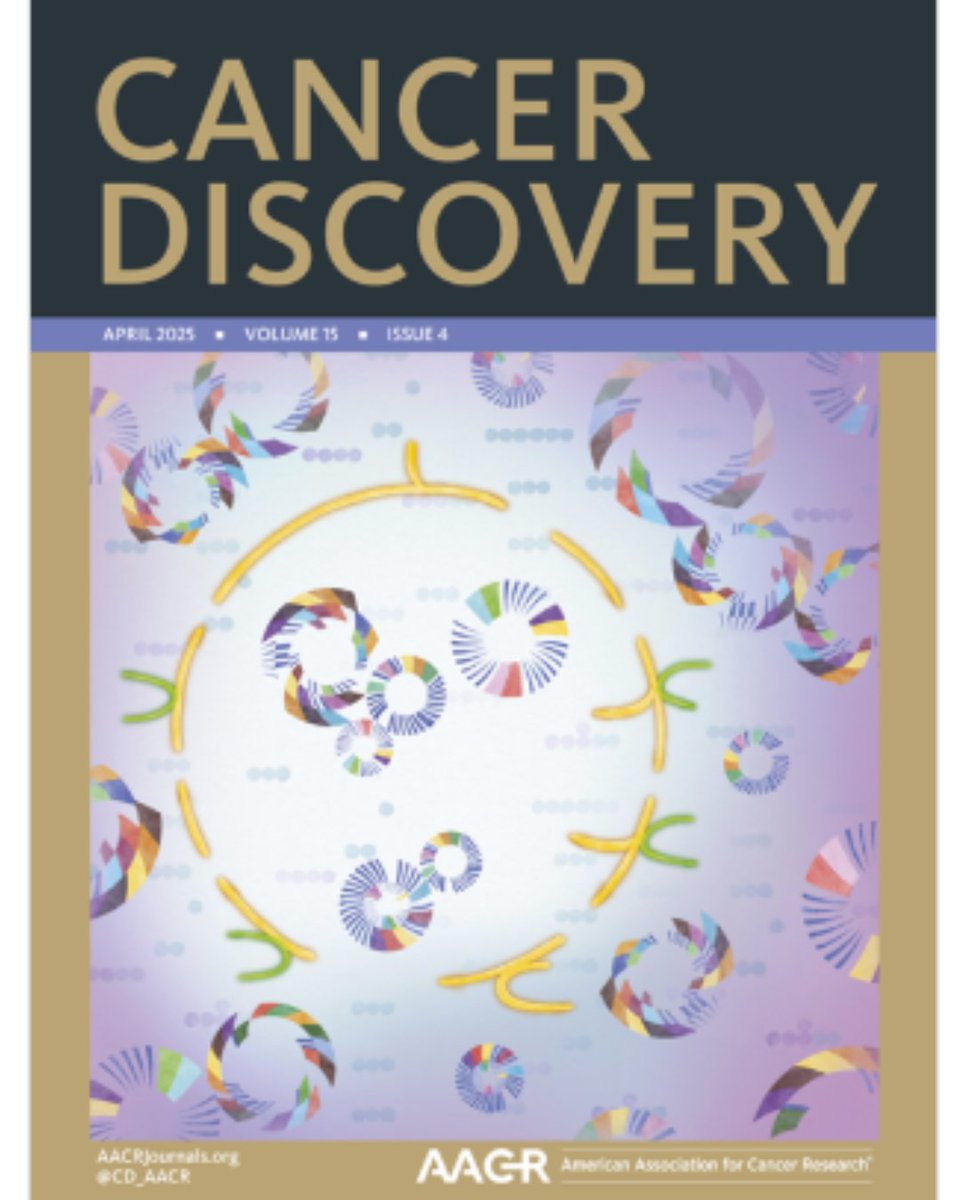
On the cover: For the Hallmarks of Cancer's 25th anniversary, the cover illustrates its enduring impact across the cancer research community, uniting scientists, clinicians, patients, and educators to drive progress.
Final call for abstracts! 🔬
Spatial biology is transforming how we understand cancer, from tumour evolution and the microenvironment to treatment responses.
This September, the Cancer Grand Challenges Conference: Spatial Biology will bring together global leaders in cancer research, tech development and clinical practice for three days of breakthrough science, bold ideas and new collaborations.
There will also be editors from leading scientific journals attending, making this a fantastic opportunity to share your work with a broad and influential community across cancer research and publishing.
Submit your abstract by Sunday 31 May for the opportunity to present your research and be part of the conversation shaping the future of spatial biology in cancer.
📍 The Royal Society, London
📅 1–3 September 2026
⏰ Abstract deadline: Sunday 31 May
Submit your abstract and secure your place ➡️ https://t.co/ZWKcw2idWV
#SpatialBiology #CancerResearch
#ShaharAlon, #BerndBodenmiller, #DarioBressan, #RongFan, #JosephineBunch, #FeiChen, #ElizabethHillman, #JoakimLundeberg, #DanaPe'er, #SinemSaka, #PeterSorger, #OliverStegle, #JasonSwedlow, #AdamTaylor, #SarahTeichmann, #NicholasWalton
Such an honour to be included in this incredible special issue!
We discuss how to support global team science and catalyse transformative discovery, drawing on our experience from @CancerGrand
"Just imagine what could be achieved in a system designed for true collaboration."
New issue alert👉https://t.co/uP2kI6DjtL
On the cover: For the Hallmarks of Cancer's 25th anniversary, the cover illustrates its enduring impact across the cancer research community, uniting scientists, clinicians, patients, and educators to drive progress.
Massive thanks to everyone who let us pick their brain over the years!
Especially the amazing @CancerGrand team, Scientific Committee members past and present, all Cancer Grand Challenges team leads, funded scientists and programme managers.
Let us know what you think!
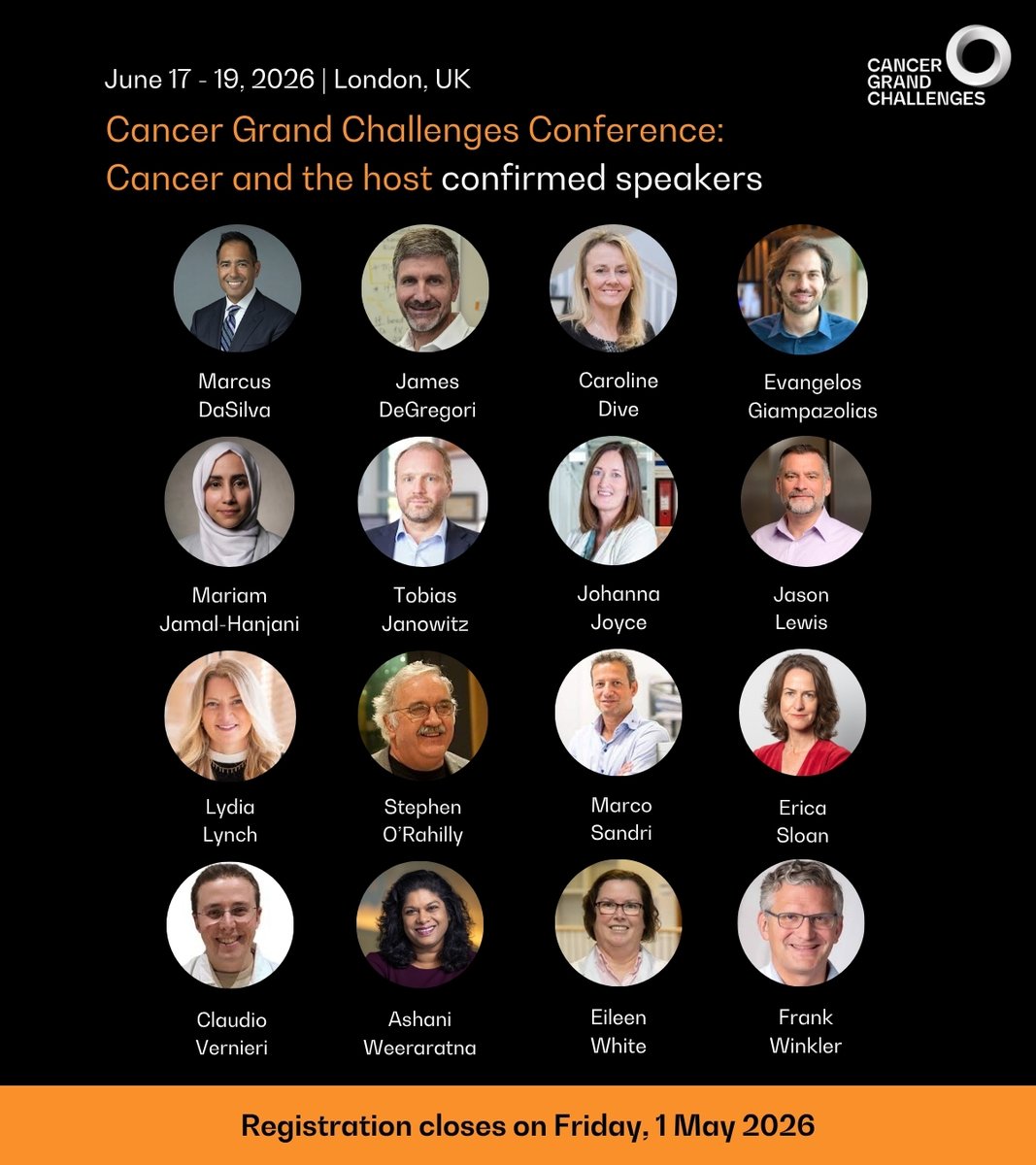
Final places are still available to attend the Cancer Grand Challenges Conference: Cancer and the host
If you’re interested in exploring cancer as a systemic disease and joining thought leaders from across the cancer research spectrum to discuss and debate how the unique biology of each individual shapes cancer development and treatment response, this is a meeting you won’t want to miss.
Register now to secure your place: https://t.co/zhkf9Xkme7
🗓️ Wednesday 17 – Friday 19 June 2026
🚨 Registration closes Friday 1 May 2026
📍 The Royal Society, London
@MarcusDGon, Professor Caroline Dive. CBE, @diggy5353 , @giampazolias, Mariam Jamal-Hanjani, @Joycelab, @LewisLabMSKCC, @lynchielydia , Stephen o'rahilly, Marco Sandri, Erica Sloan, Claudio Vernieri, Ashani Weeraratna, @EileenWhitePhD and Frank Winkler @CR_UK@NCICancerTrials
Drawing on a decade of experience from Cancer Grand Challenges, we set out a practical framework for designing, supporting, and evaluating large‑scale collaborative research.
Published in @CellCellPress, we examine what it truly takes to enable global team science - and how rethinking structures, incentives, and culture can catalyse transformative discovery. These include:
🔬 Challenge‑led science can galvanise the community around the toughest questions
🌍 Global funding partnerships are essential to resilient, future‑proof research
🤝 Team design, leadership, culture, and data sharing have to go alongside scientific excellence
⭐ Evaluation and credit systems must evolve to truly reward collaboration in the team science era
Read the full commentary and join the conversation on the future of global team science: https://t.co/kYGJCXHzuF
New issue alert👉https://t.co/uP2kI6DjtL
On the cover: For the Hallmarks of Cancer's 25th anniversary, the cover illustrates its enduring impact across the cancer research community, uniting scientists, clinicians, patients, and educators to drive progress.
Don’t forget - next week is the final week to submit abstracts for the #CancerGrandChallenges event: Cancer and the Host
https://t.co/EA9zrF5fcV
📥 Abstract deadline: 20 March
🗓️ 17–19 June 2026
📍The Royal Society, London
This conference brings together leading researchers to explore cancer as a systemic disease. Whether you study immune regulation, organ crosstalk, microbiome influence, systemic metabolism, or novel modelling approaches - We want to hear from you!
Cancer doesn’t develop in isolation—and neither should our science. This London conference invites us to rethink cancer through the lens of host–tumour interactions, unlocking new therapeutic possibilities by considering the whole individual. https://t.co/vej7tYuJaM
📢 Recruitment for the EMBL International PhD Programme is officially open!
At EMBL, we train young scientists to become skilled and creative future leaders in academia and other sectors. Join us and get a head start on your career in life sciences!
https://t.co/wlj1i614ey
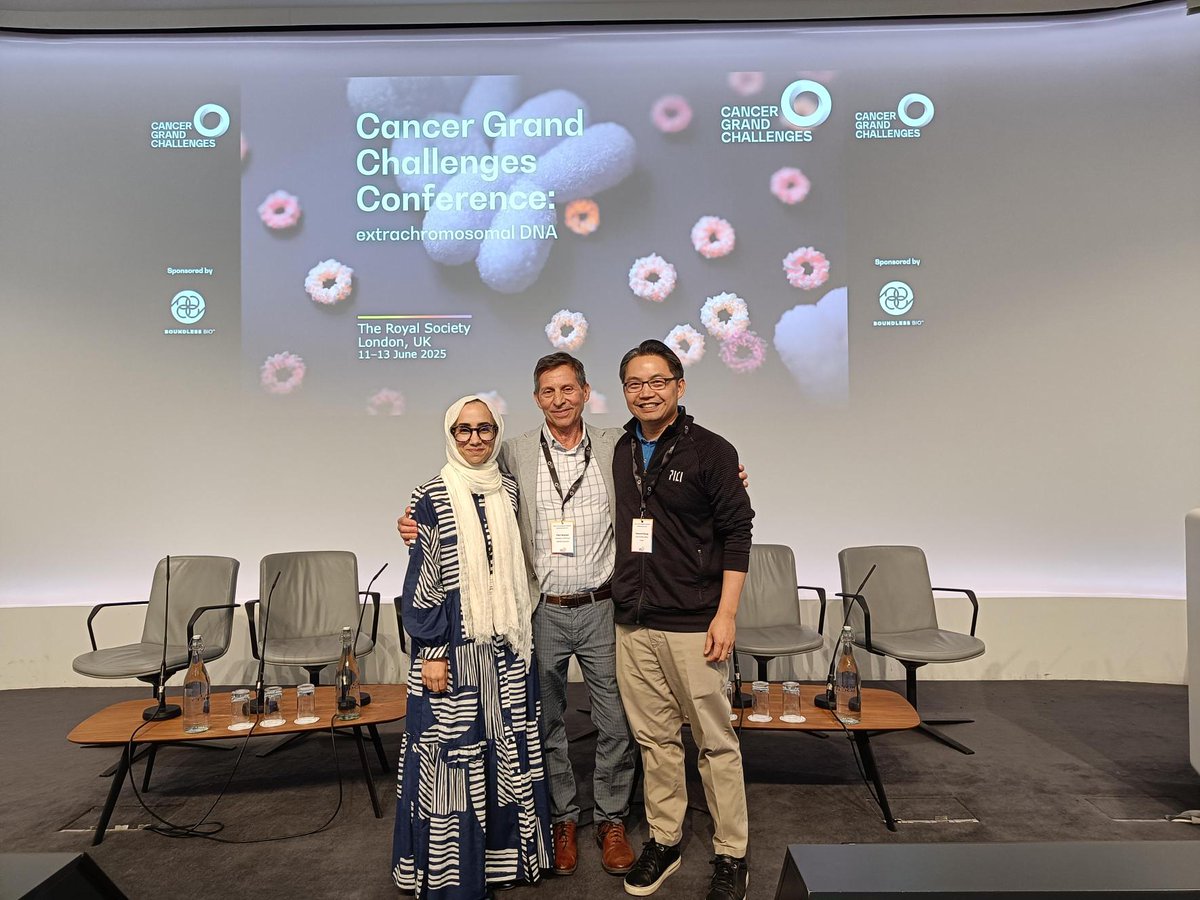
A massive thank you to everyone at #CGCecDNA, especially our co-organisers @mischellab, Mariam Jamal-Hanjani and @HowardYChang, and all of our fantastic speakers!
Together we’ll tackle the challenge of extrachromosomal DNA.
Excited to unveil Boltz-2, our new model capable not only of predicting structures but also binding affinities! Boltz-2 is the first AI model to approach the performance of FEP simulations while being more than 1000x faster! All open-sourced under MIT license! A thread… 🤗🚀
Move over AlphaFold3. Boltz-2 has arrived, bringing affinity prediction for protein-small molecule interactions!
Can’t wait to see what this group does next. It was a pleasure writing this piece. Thanks to @BarzilayRegina & @jeremyWohlwend, and congratulations to all involved!
Today, @BarzilayRegina’s group @MIT released Boltz-2.
With accuracy rivalling AlphaFold3, the updated model can now predict small molecule-protein binding affinity.
Crucially, Boltz-2 is open source.
Read more: https://t.co/7GWzOs4U1N
Exceptional work from @rushika_perera identifies differential utilization of PCSK9 / cholesterol synthesis pathways and regulation of #ferroptosis as key determinants of pancreatic cancer metastasis. 🔥🤩
https://t.co/8MgWGQhD46
🧠 How do tumours and the nervous system talk—and to what end?
This question drives one of 7 open #CancerGrandChallenges.
Our team explores it in a new @NeuroCellPress perspective.
📖 Read the full article:https://t.co/4ekKzY0Uzh
📅 EOIs open until 18 June
Thank you to all of our funded scientists and committee members for letting me pick your brains, here's the result!
A showcase of what global team science can do🌍
Plus take a deepdive into our 7 new challenges with
@CharlesSwanton
The latest edition of our annual progress magazine Discover is now live! ⤵️
Read about:
➡️ key advances from our funded teams
➡️ the biggest themes in cancer research from early-onset cancers to AI and cancer as a systemic disease
➡️ our 7 new challenges
https://t.co/XipbECL7zn
🚨New in @Nature
Mutographs identified mutational signatures caused by the bacterial genotoxin colibactin are enriched in early onset colorectal cancer cases
Read more about the findings, the open questions and the curiosities of colibactin 👇
https://t.co/FfElyKim68
We are finalizing the programme of our @CancerGrand Challenges Conference on #ecDNAs (June, London🇬🇧), and I couldn't be more proud and excited! Watch this space for updates! Also, register soon as we're nearly sold out! 👇
https://t.co/J815aChFQP