Application deadline coming up soon for the below machine learning course, with applications to wearables.
Very relevant to early career scientists across @HDR_UK ... and also people wishing to conduct analysis of @uk_biobank accelerometer resource
Looking for an open-source, camera-annotated, free-living dataset for wrist-based accelerometry? Check out the @OxWearables Capture-24: Activity tracker dataset for human activity recognition https://t.co/OuDBb92clu via @oxforduni_repo #icampam2022@ismpb_org
Thank you @GeorgiaTomova, @PWGTennant + @statsmethods for the best week at #LeedsCausalSchool 👩💻👩🔬🔥
These ideas will be hurting my head for a long time yet 🤯 (but I think today's lesson was that's how it should be? ☑️)
There is rightly much talk about using consumer wearable devices for physical activity measurement using various research study designs. We've written a commentary picking up on four key issues we think are relevant for population surveillance https://t.co/1oZOzKAKFf
@profHoltermann@DrMelodyDing@CharlotteLundR@nidhigupta2911 2) Focus on specific groups seems like could increase danger of looking at small samples + overinterpreting differences. Is that a concern? How can we avoid falling into that trap?
https://t.co/8c1nydjBW6
2/2
here is the secret about precision medicine. it's still about averages, but just a bunch more averages and calculated from smaller groups, so estimated with -- you guessed it -- less precision
@profHoltermann@DrMelodyDing@CharlotteLundR@nidhigupta2911 V interesting hypothesis + paper! Thanks!
Had 2 qns:
1) Why did you choose to focus on groups rather than particular activities i.e. occupational gps not occ/non-occ activities? Esp as underpinnings seem about different qualities of occ PA (eg low control)/leisure PA?
1/2
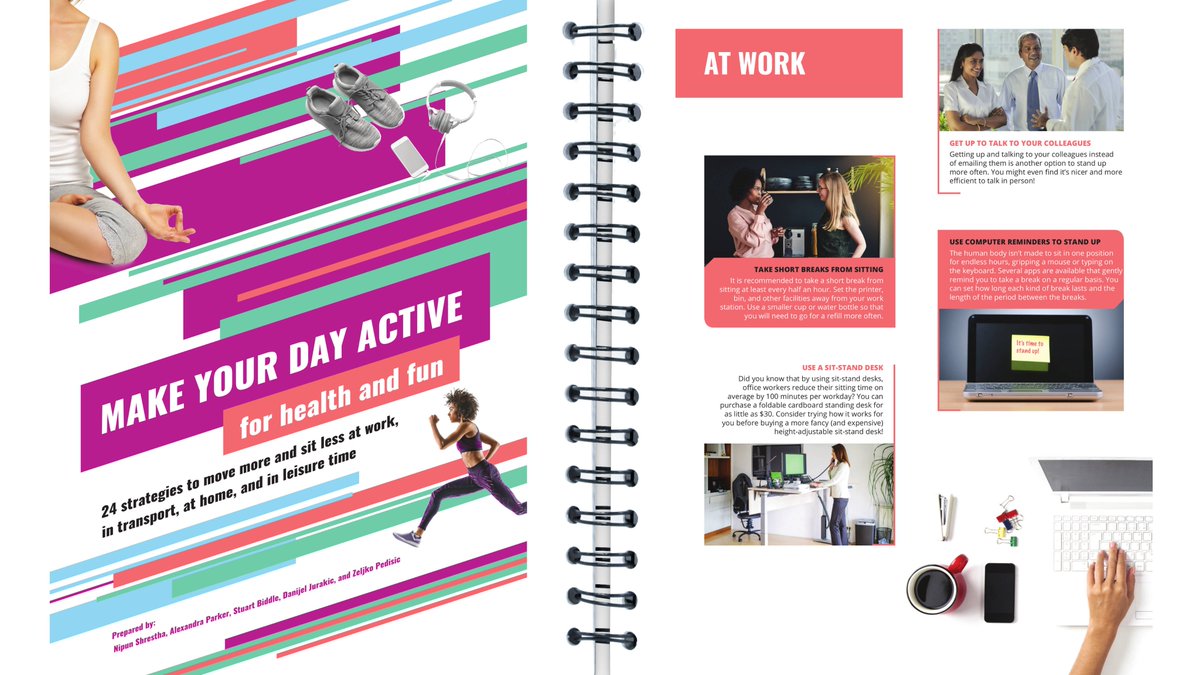
Make your day active for health and fun!
2⃣4⃣ strategies to move more and sit less at work, in transport, at home, and in leisure time
Free pdf brochure:
https://t.co/xJopRHHWl7