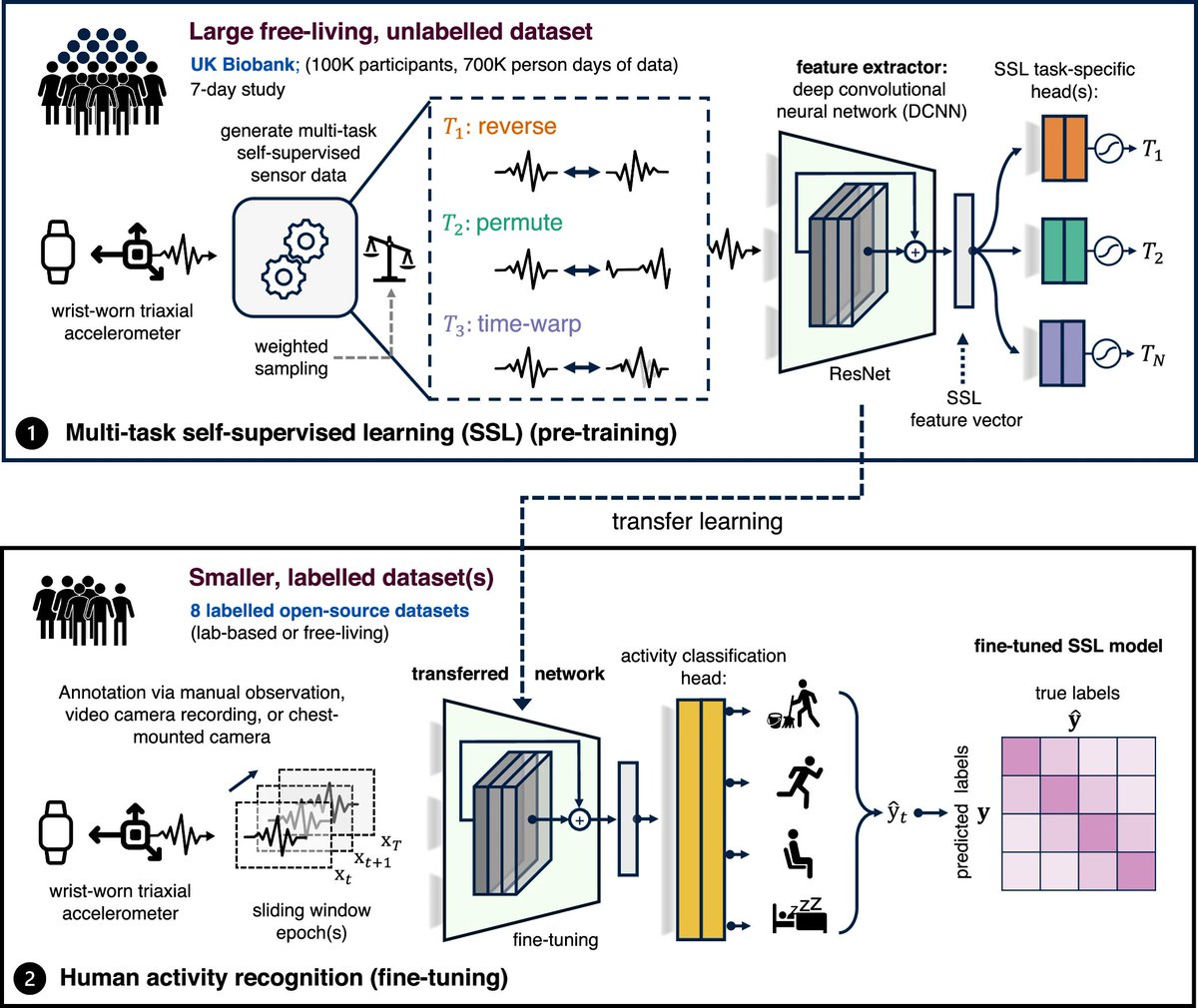
Happy to announce our foundation model for wearables published at npj Digital Medicine today. This model sets a new standard in #Wearables, significantly outperforming human activity recognition benchmarks in diverse conditions. 🚀
https://t.co/RfIRY5UMTz
I don’t think gpt can easily understand decades long of Apple Watch data as no human truly understands. That’s what we are actively researching on. But giving false information on easy to detect pattern is another story.
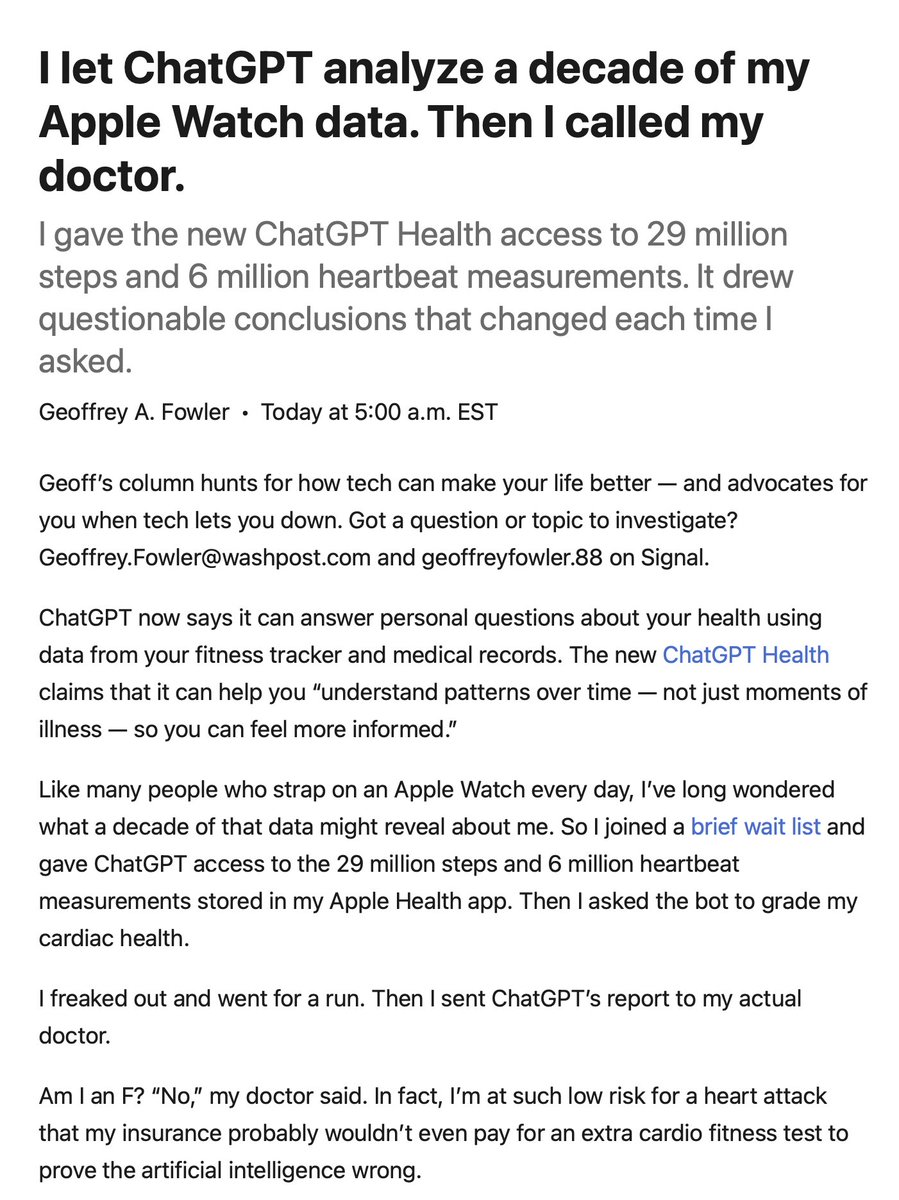
The performance of the newly released ChatGPT Health, via a thorough assessment by @geoffreyfowler with his health data, is very disappointing
gift link https://t.co/OXjlxrGnA3
@chalmermagne A couple of issues, once the funding is allocated, there are no incentives to reform. Second, in my experience with ATI, it seems to be very decentralized that AI researchers don’t know what to do with it. Finally for young researchers who do AI, the support is rather limited.
If you are working on AI for health×timeseries please consider submitting to our NeurIPS 2025 workshop below. The team has prepared a great lineup of speakers and topics — stay tuned for updates!
@JasonSynaptic These are two separate issues. Given any year when the total budget is already allocated, good to limit the application numbers to focus on quality over quantity. Budget cut we are seeing is terrible but we shouldn’t be doing rat race hoping grant submissions become a gamble.
Increasingly, text from everyone looks posh and GPT-like. Am I the only one who starts to miss the messy and imperfect text that we used to receive as that's how we are as humans?
@paulg@Noahpinion Academic tweets are moving to LinkedIn at least. People with more followers get more exposure here while everything else being pushed down.
We pay too much attention to growth hacking but overlook the value of organic growth both in life and at work.
Check out my latest essay on this topic: https://t.co/RF1sLVSczt
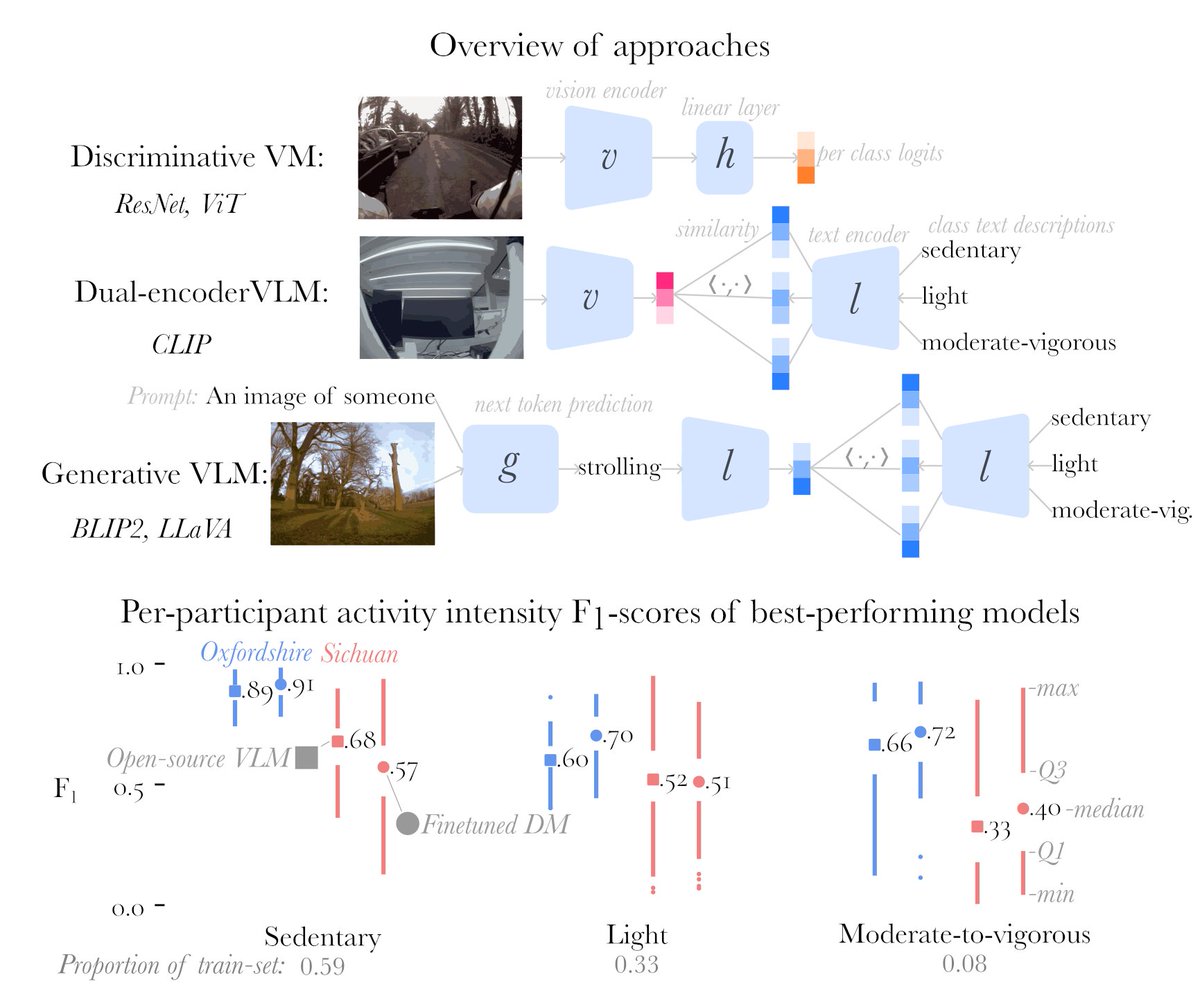
🚨 New preprint on arXiv from @OxWearables@pixl_oxford !
Can vision-language models (VLMs) help automatically annotate physical activity in large real-world wearable datasets (⌚️+📷, 🇬🇧 + 🇨🇳).
📄 https://t.co/08Klw511JV
🧵1/7
The tide has turned indeed. A few years back, most of my brightest friends are staying in the US or wanting to move over. The new generation of fresh Europe-educated PhDs are choosing to stay. That's great news for Europe.
A smart foreign-born undergrad at a US university asked me if he should go to the UK to start his startup because of the random deportations here. I said that while the median startup wasn't taking things to this extreme yet, it would be an advantage in recruiting.
Excited to be attending #ICLR2025 next week in Singapore!
Keen to connect if you are working:
* Machine learning for wearables
* Generalist medical AI
* Multi-modal learning with large-scale datasets (e.g., biobanks)
Feel free to reach out 😉
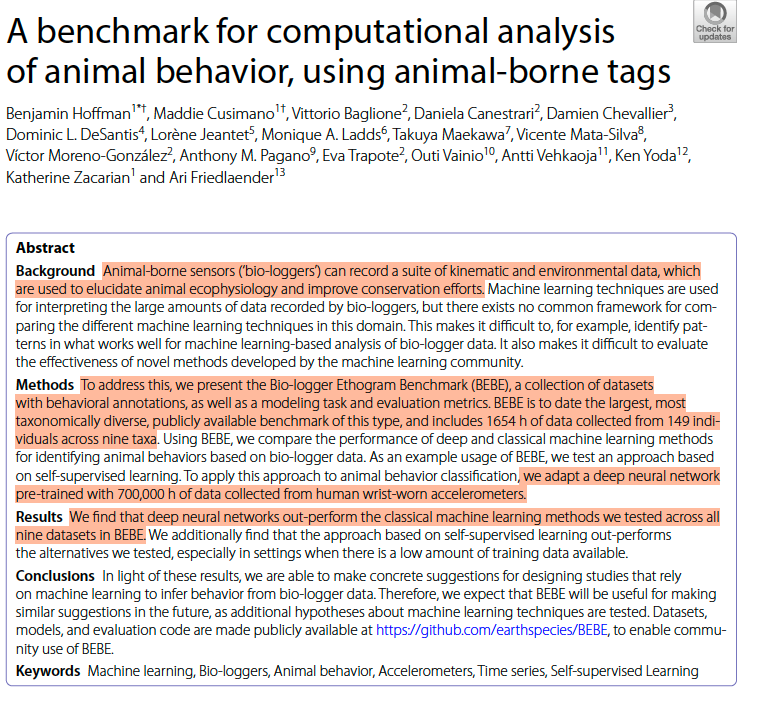
Joyful moments in research often stem from unplanted seeds. The team from @earthspecies showed that our foundation model for humans also worked for behaviour tracking in animals like birds and whale. So fun to learn about the similarities between human and animal behaviours
🌍 The top 10 most cited @npjDigitalMed papers of 2024 hail from across the globe! Check out our map to see where these groundbreaking studies originated. Ready to find out more? 👇😉
Happy to announce our foundation model for wearables published at npj Digital Medicine today. This model sets a new standard in #Wearables, significantly outperforming human activity recognition benchmarks in diverse conditions. 🚀
https://t.co/RfIRY5UMTz
🚩Come join our group working on new @wellcometrust funded project @Oxford_NDPH@bdi_oxford on clinically important but neglected condition: alcohol-related dementia
https://t.co/7Hk2ac91Bu
Informal chats welcome - get in touch!
Software engineers aren't lazy.
They just have no incentive to be productive at bigCos.
Here's why:
— No reward for simplicity / deleting things
— No prizes for doing it quickly (everyone assumes it was easy)
— Little interesting work. Business needs are often boring.
1/5
Thought experiment on a commercial biobank: 10% of Chinese population, omics, self-report, imaging and physical measurements. Selected populations will be followed up longitudinally. Participants get paid in cash and shares. Open for all use but insurance and the military.
ML is a fast moving field. A consequence of this is that many junior ML researchers don’t receive good feedback from senior researchers who never played with the ML methods themselves to develop good intuition.
Does this only happen in Oxford or across the board?
@DJHunter_EPI@EricTopol@uk_biobank Thanks for pointing out the difference David. Think this approach will likely make the study more inviting for the participants. But as researchers, we need to be ready to to disentangle the effect of feedback in our analysis.