Spotted @IAF_MCC 's Chinook CH 47F from my backyard. The newly inducted Chinook is a twin-engined, tandem rotor, heavy lift helicopter. Seems like air force has started operating Chinook from Assam.
@VinodDX9
@KSingh84856557 @writetake@I30mki
👉Arguments ensconced in a warm, fuzzy feeling of desh-bhakti will not win us air battles in the mid 2030s when the Tejas Mk 2 may enter squadron service in significant numbers.
👉 Cherry-picking parts of podcasts while ignoring the context of arguments & suggesting that anyone who doesn't back Tejas is a paid foreign lobbyist is part of what makes so much of our online defence commentary a joke - hide under anonymous veils and fire away. An easy `solution' to not liking an argument is imputing motives.
👉Lets consider the facts - The heart of the mismatch between a new-build Tejas variant in the 2030s and what China is flying presently can be defined in one word - GENERATION.
👉Tejas Mk2 is explicitly a 4th generation, single-engine, non-stealth design.
👉The J-20 is a genuine 5th-generation platform with a stealth planform, internal weapons bays, and DSI intakes.
👉By the time Tejas Mk2 reaches squadrons in meaningful numbers, China's 6th-gen prototypes (the tailless J-36/J-XDS-type designs seen flying since late 2024) will have matured to a point of early-stage induction.
👉Mk2 would be entering service roughly two full generations behind China's frontline development curve.
👉Mk2's first flight has already slid from originally-envisioned 2023 to now early 2027. Every year of delay is a year in which China's 5th- and 6th-generation jet programs mature and scale-up. This gap is widening in real time.
👉Superficial vs. true low-observability: Tejas Mk2's reduced radar cross-section (a significant improvement over Mk1) is a shape optimisation on an aircraft that still carries weapons externally on most stations.
👉While this is a meaningful improvement over Mk1, it is CATEGORICALLY different from the J-20's ground-up stealth design with internal carriage. RCS reduction without internal weapons bays and edge alignment doesn't confer genuine low-observability against modern radars.
👉Engine constraints - Single vs twins: One F414 gives Mk2 solid thrust for its class, but the J-20 (now moving to the WS-15) has far more power margin for payload, supercruise, range, and future growth.
👉This capability gives China an edge in controlling contested airspace over Tibet/the northern border while flying at altitude and at distance from Indian bases.
👉Software/sensor-fusion: There is a potential "system of systems" gap between the Tejas Mk 2 with some reports suggesting that Beijing's newer J-20s (particularly the J-20 twin-seater) is already built around manned-unmanned teaming and distributed sensor networks.
👉Add to that AI-assisted battle management as a likely design premise from day one in the in-service Chinese fighters.
👉At the moment, there is a race against time to induct Tejas Mk2 - the philosophy appears to be induct first, upgrade later. This means that the first in service fighters may not host a spate of new technologies still under development in India. A key question - will avionics and weapons integration on the Tejas Mk-2 be playing catch-up for years after induction?
👉Production and supply-chains: China has ALREADY inducted 300 odd J-20s per some reports and is well on the way in trials of 6th-gen types. Mk2's approved order is around 120 aircraft and the program will remain dependent on U.S-sourced GE F414 engines — unless there is a genuine transfer of technology in engine hot section tech that results in a critical mass in engine manufacturing capabilities in-house. China doesn't have to deal with this. They have achieved engine maturity.
👉In simple terms, Tejas Mk1A and Mk2 cannot be considered a J-20 counter and yet that is PRECISELY the nature of the threat that we face. Pakistan is moving to Chinese stealth platforms as well. In the mid-2030s, we will still have a more than 250 Su-30 MKIs in service - massively upgradeable with significant airframe life remaining in addition to Rafale jets which are being procured and represent the best of what you have.
👉As mentioned - repeatedly - in several of our podcasts - India needs to move to AMCA quickly - and consider the argument that AMCA too may be dated by the time it enters squadron service since China will already have inducted its 6th generation platforms.
👉Does that mean India WILL give up on Tejas and AMCA - No - both projects are too far down the road contractually and otherwise to be scrapped in my opinion. The purpose of this thread is to ask a basic question - does this acquisition make sense given the nature of the threats that we see.
👉Ending this here - will address the `why do we need Rafale if we have Tejas Mk 2' thread when I get around to it.
Two Tejas Mk1 (not Mk1A) were offered with certain deficiencies. It was assured that it would take a few months to fix the issues.
IAF offered to take these after 'a few months' - once those issues were resolved.
Those issues remain unresolved till date and the IAF is still waiting for the delivery.
These ac are two FOC trainers, which were to be delivered by Dec 2016 as per the contract.
There is some merit in the suggestion that some ac (Mk 1A) can be taken on strength to initiate crew trg and to set up Sqn infrastructure- rest can follow. I tend to agree.
Three factors militate against this idea:
1. Credibility gap. In the minds of IAF leadership, ac accepted with deficiencies would take forever to be fixed, and Sqns would have to continue to operate with degraded performance.
2. It is also felt that taking a few jets would ease the pressure on HAL and the complete delivery would get pushed back even further. This was the experience during acceptance of Mk 1 .
Example- FOC variants : All were contracted to be delivered by 2016. The first single seater ac was delivered in May 2020. First trainer in Oct 2023.
3. There are some safety-critical issues in the Mk1A, yet to be resolved. Hopefully once they are resolved, and the ac is offered for acceptance, the IAF would consider taking a small batch.
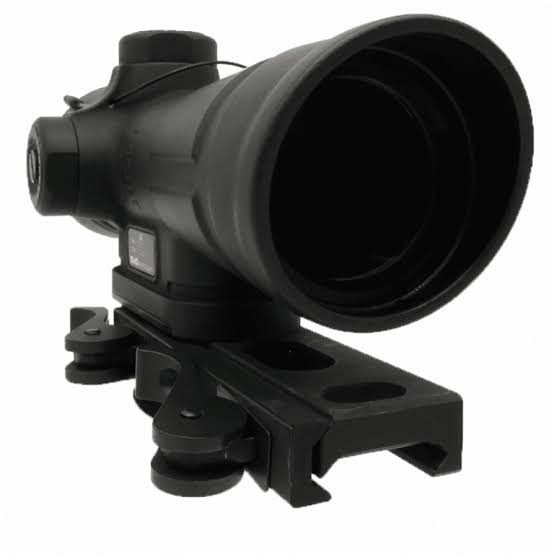
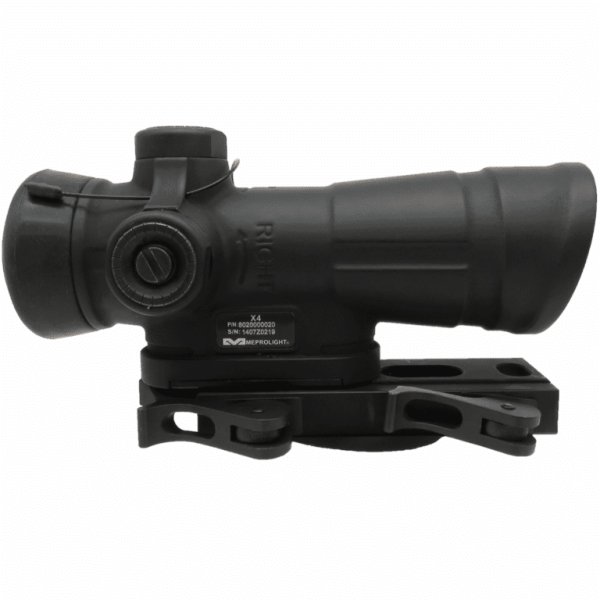
The Indian Army has selected Israeli company Meprolight’s Mepro X6 Day Scope as the dedicated daytime optic for its NEGEV light machine guns.
https://t.co/O46DUqhvI6
This girl is apparently a doctor, yet she is publicly mocking a cadaver.
A cadaver is not a prop, or an object for cheap humour. It is a human being who chose to donate their body for medical education and scientific advancement after death.
When students enter medical college and step into the dissection hall, they take a cadaveric oath, a solemn pledge that serves as a tribute to body donors. The cadaver is regarded as the student's "first teacher" to foster empathy, ethics, gratitude, and respect for human dignity.
During my first year of MBBS, our cadaver was a retired Brigadier. We treated him with dignity because we understood that we were learning from a person who had made a conscious, and rare in Indian society, decision for the benefit of future patients and future doctors.
Mocking a cadaver and making lewd remarks about the body's private parts is not edgy, funny, or bold. It reflects a complete failure to understand one of the most basic ethical principles taught in medicine: respect for human dignity, even after death.
It may or may not attract liability under the BNS, but it is unquestionably conduct that falls far below the ethical standards expected of a medical professional.
The @NMC_IND should take cognizance of this matter and ensure that such behaviour has consequences.
There was also a boy on the same show who made derogatory remarks about a girl who was apparently his date, and he is rightly facing the consequences of his actions. This girl should be held to the same standard.
#Breaking ⚡⚡⚡⚡
The first 'Made in India' Airbus C295 military transport aircraft has conducted its first test flight from the Final Assembly Line in Vadodara 🇮🇳, marking a milestone for Indian aviation and defence.
#Airbus#TataAdvancedSystems
Rajnath Singh’s stern message to HAL—stick to your commitment, don’t overpromise
If all goes well, Tejas Mk1A induction by October this year
Of course with compromises by the IAF
https://t.co/jZa3nNj6CL
Exercise Josh 2-26 was conducted on the Western front with Western Air Command of the IAF and Northern Command, Western Command, South Western Command of Indian Army participating in honing their combat skills in a joint ops environment.
Integrated Air Command & Control System (IACCS) of Indian Air Force was instrumental in reducing sensor to shooter time while showcasing its data linking capacity, redundancy & robustness. Akashteer seamlessly plugged in to the IACCS to complement sustained high tempo joint ops in inhospitable terrain.
Operations were conducted to fine tune air space coordination procedures to enable seamless parallel civil and military aviation operations. Joint User Airfields, assets and resources as a Whole Of Nation Approach were optimally exercised to solidify concepts and practice in a training environment.
The major thrust of the joint exercise was to simulate a near realistic combat environment in an integrated framework, focussing on technology integration and civil military fusion while operating in a challenging scenario.
@adgpi@IAF_MCC@indiannavy@SpokespersonMoD #IndianAirForce #ShaheedSmarak #ArmedForces #NationFirst
@DefencePROPalam@westerncomd_IA@SWComd_IA@NorthernComd_IA@AAI_Official@MoCA_GoI