"History shows us where such rhetoric can lead. The Nazis exploited myths of national humiliation and betrayal after the First World War, scapegoating Jews to legitimize exclusion, persecution, and ultimately genocide. The historical circumstances are different, but the broader👇
Mr. @SecRubio, I write this as an educator at one of your Ivy League schools, the University of Pennsylvania, and as someone who has spent years teaching Persian history and culture and their intersections with Greek and Western history and culture.
Your dangerously Eurocentric account of Perso-Greek history is not only distorted and misleading; it also ignores the most basic facts about centuries of cultural exchange between civilizations you frame as fundamentally opposed.
Greek civilization did not develop in isolation from its eastern neighbors, nor did what we now call Western civilization emerge independently of the intellectual and cultural worlds to its east. The Persians and Greeks were not simply enemies locked in an eternal civilizational struggle. They were also neighbors whose worlds intersected through diplomacy, trade, art, religion, literature, philosophy, science, and political thought. The Achaemenid Empire itself was a vast, multicultural world connecting the Mediterranean to Central Asia. Greek thinkers lived and traveled in the wider Persian world, while Greek knowledge, art, and political ideas circulated across the eastern Mediterranean and beyond. These encounters were complex, reciprocal, and often shaped by both conflict and cooperation.
Yes, there were imperial wars between Persians and Greeks, just as there were wars between other ancient empires. But reducing their history to military invasions while erasing centuries of cultural contact and exchange is not historical analysis. It is ideological mythmaking.
Had you engaged seriously with the histories of Persian and Greek philosophy, mathematics, astronomy, mythology, art, and literature, you might have recognized how inadequate and dangerous it is to reproduce the crude civilizational binaries popularized by the notoriously racist movie 300. Invoking this caricature of ancient history to mobilize support for contemporary military aggression is not an innocent historical error. It is a way of manufacturing an enemy by presenting an entire civilization as an existential threat.
History shows us where such rhetoric can lead. The Nazis exploited myths of national humiliation and betrayal after the First World War, scapegoating Jews to legitimize exclusion, persecution, and ultimately genocide. The historical circumstances are different, but the broader warning remains: the deliberate construction of civilizational enemies can help normalize dehumanization and mass violence.
When a senior US official selectively weaponizes a complex history he demonstrably misrepresents, he does more than spread misinformation. He helps advance a worldview in which war between civilizations appears inevitable and aggression becomes defensible. That is how dangerous political narratives are built, and how human catastrophes are made easier to justify.
Your speech is historically uninformed, aggressively Eurocentric, and deeply troubling. At a moment when the consequences of military escalation are measured in human lives, we need historical literacy and intellectual responsibility, not racist caricatures dressed up as civilizational history.
@NobelPrize It is gratifying that you have finally awakened, looked at the world around you, and realized that the time has come to make the right choice. Criminals have tainted the human world.
Juden in Deutschland werden für Netanyahus Politik verantwortlich gemacht, sagt die deutsch-israelische Journalistin @antonia_yamin in der #phoenixrunde.
Drei Jahre 7. Oktober - Was hat sich verändert?
📱https://t.co/eUPDAtFG5b 📺 21 Uhr
کمیته نوبل پس از چند سال از خواب بیدار شد و جای درست ایستاد. اگر جایزه را از سمبل شرم ، شیرین عبادی، و اوباما که خون انسانهای بی گناه زیادی در غرب آسيا را برزمین ریخت، پس بگیرد دیگر میشود بهش اعتماد کرد
ناوی پیلای، برندهٔ جایزهٔ صلح نوبل:
اگه یه ذره بیشتر تشویقم کنین، ممکنه این جایزه رو با… ترامپ قسمت کنم!.. ولی امیدوارم ��وخی نباشه!
خبرنگار: نه نه ناوی! شوخی نیست! خبرش همه جا هست! بیبیسی هم گفته!
Iran’s Southeast Is Becoming an Increasingly Active Security Front
🔹Armed clashes in #Iran’s southeastern Sistan-Baluchestan province have intensified significantly in recent weeks, with attacks on security forces becoming almost a daily occurrence.
🔹On October 8, gunmen attacked a minibus carrying personnel of the Iranian Army’s 88th Armored Division near Nikshahr, killing one and wounding three. In a separate incident near Zahedan, another police officer was killed. Three days earlier, two police officers were killed in an attack near Bampur. These incidents follow weeks of armed confrontations and counterinsurgency operations across the province.
➡️Two developments are particularly important:
🔸First, the nature of the insurgency appears to be changing. Armed Baluchi groups, including Jaish al-Adl, have increasingly sought to coordinate their activities under the umbrella of the Mobarizoun Popular Front, established in late 2025. Although armed insurgency is hardly new to the region, the recent pattern suggests greater operational coordination and an effort to turn local insecurity into a broader challenge to state authority.
🔸Second, the escalation comes at a particularly sensitive moment for Tehran. As Iranian officials increasingly anticipate another military confrontation with the United States and Israel, there is growing concern within Iran’s strategic community that armed groups in border provinces could be used to destabilize the country from within, stretch its security forces, and create conditions for another external military campaign.
🔹Some Iranian analysts point to possible Israeli intelligence involvement and financial or logistical support from certain GCC states. These allegations remain unverified. But they are increasingly shaping how developments in Baluchestan are interpreted within the Iranian security establishment.
🔹This is also important in the context of Iran’s changing military doctrine. Iranian officials have repeatedly emphasized “preemption” as an element of their postwar security strategy. That logic appears to be extending to the domestic sphere, with security forces increasingly conducting operations aimed at neutralizing armed cells before they launch attacks.
🔹The geographical dimension is also important. The latest attack against Army personnel stationed along the Makran coast is particularly sensitive given the strategic importance of Chabahar, Iran’s only oceanic port, and the wider region’s role in the country’s military and economic planning.
🔹Yet the focus on external involvement risks obscuring an important domestic factor. The Islamic Republic’s longstanding treatment of the Baluchi population, particularly the deadly crackdown in Zahedan during the 2022 Woman, Life, Freedom movement, has deepened local grievances and created conditions that armed groups can exploit.
🔹The danger for Tehran is therefore twofold. Renewed war could provide further opportunities for armed groups to expand their operations, while an increasingly militarized response to local insecurity could deepen the very grievances that sustain the insurgency.
🔹As Iran prepares for the possibility of another external confrontation, the security situation in Baluchestan is becoming an increasingly important part of its wider strategic calculations. The Islamic Republic is now confronting the possibility that military pressure from outside and instability along its borders could reinforce one another.
So the same playbook but more. Let’s also all assume that civilian infrastructure will also be targeted everywhere. What about tactical nukes? Will those come into this round?
Naftali Bennett has branded one of the most influential Haredi rabbis in Israel, Dov Lando, as “antisemitic”
What did Rabbi Lando say to earn this label?
Lando proclaimed: “It’s possible, without a state [of Israel], to live well with the Arabs… to live, to respect the Arabs. It was pretty good when the Arabs were in charge. It was the best situation.”
He added that the Zionists “made Arabs hate us.“
Lando went on to call for a peace deal with the Palestinians, and slammed Zionism for having “brought the physical disasters, not just the spiritual ones, to the Jewish people.”
For these clear-eyed statements, Lando has become a public enemy denounced by politicians across the Zionist spectrum. The lesson is clear: even a senior rabbi is one of The Antisemites if he refuses to bow before the state of Israel and its genocidal army.
Für mich einer der stärksten Anrufe, die es je im ARD-#Presseclub gab. Rainer, 73 Jahre alt. Seine Großmutter war Jüdin, sein Großvater preußischer Kommunist. Die Gestapo zertrümmerte seinem Großvater im Gefängnis die Knochen, weil er Mitglied der Roten Hilfe war. Rainer erinnert daran, dass jeder Mensch das Recht auf einen Anwalt hat. Auch politisch Unbequeme. Und dass genau das kein Skandal, sondern ein Grundprinzip des Rechtsstaats ist. Dann spricht er über den wachsenden Antisemitismus und sagt: „Es ist nicht die Berliner Linke, die den Antisemitismus beflügelt. Sondern die verbrecherische Regierung des israelischen Staates.“ Und fordert, endlich auch über Netanyahu und dessen rechtsextreme Regierungsmitglieder zu sprechen. 73 Jahre Lebenserfahrung. Eine Familiengeschichte, die unter die Haut geht. Und eine Klarheit, die ich in dieser ganzen aufgeheizten Debatte viel zu oft vermisse.
Important point that the admin continues to ignore: you can never substitute tactical success for strategic victory when a conflict remains stuck in a structural impasse. At best, such tactical wins help you kick the can down the road resulting in yet another stupid forever war.
و این هیولاها ادعا میکنند که میخواهند برای ایرانیها آزادی!دموکراسی! بیاورند. به همین رویا فروشیها برای اینکه این هیولا یه لقمه نان جلوتون بندازند ادامه دهید
خوب این همان کارشناسی است که رسانههای فارسی زبان به عنوان کارشناس،که طبعا باید در تحليل براساس فکت و بیطرفی نظر دهد، دعوت میشود و برای بسیاری از مخاطبان فارسی زبان معلوم بود که این کارشناس! از چه جناحی میآید اما آقای @BBCArdalan تازه از زبان دیگری متوجه شد. بیچاره مردم ایران
Der Westfälische Friedenspreis geht an ein Militärbündnis, und das ist kein Scherz. Willkommen in der kriegstüchtigen Aufrüstungsgesellschaft, in der Krieg Frieden ist. https://t.co/AQbqTYAVq6
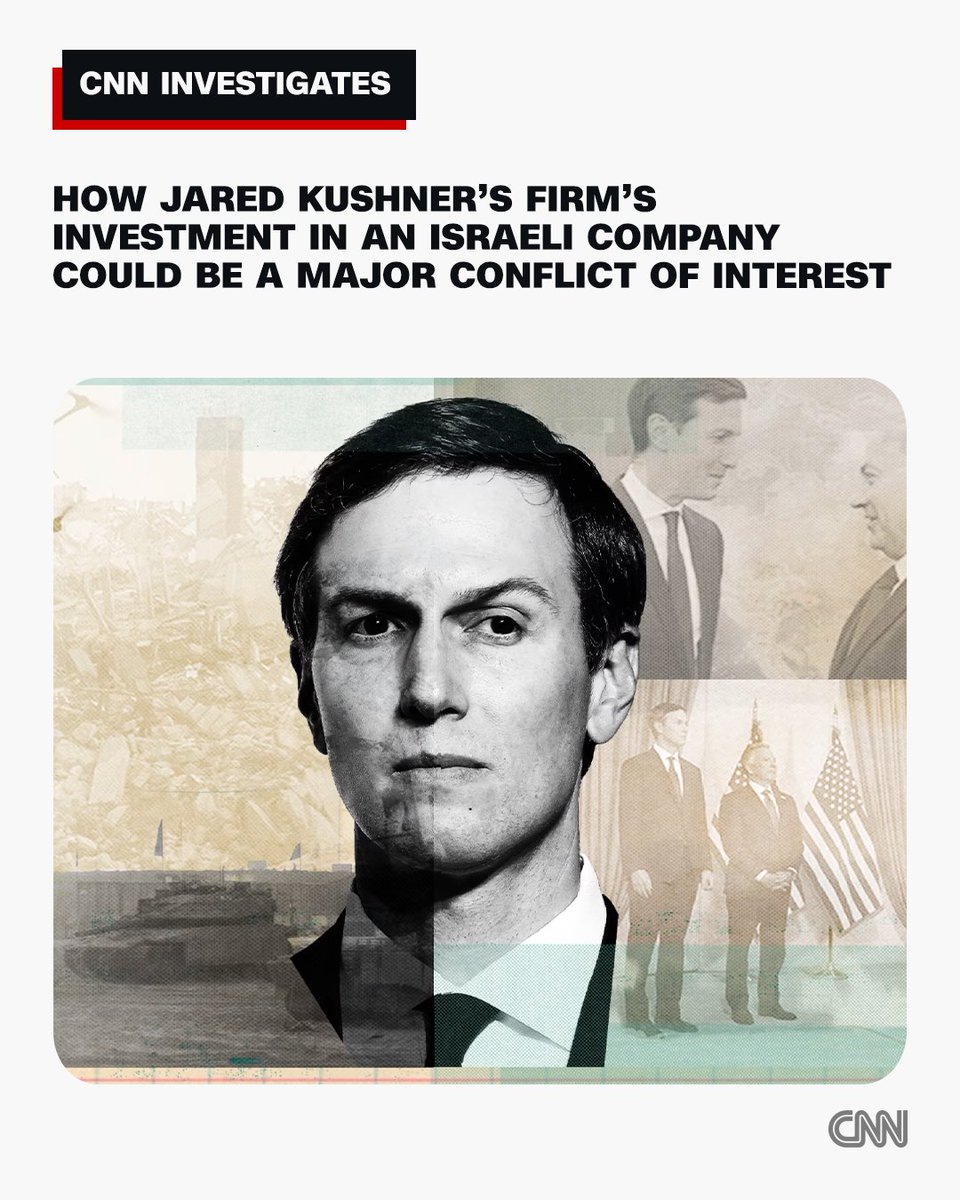
A CNN investigation has found that while Jared Kushner acted as a key Middle East peace negotiator, his private equity firm held the largest stake in an Israeli company backing businesses tied to Israel's military campaign in Gaza, including its largest arms manufacturer. https://t.co/zPxwBqGzs0
Danger Ahead: The U.S. and Iran Are Heading Toward Escalation
After everything Iran’s leadership has been through, Washington should not assume that Tehran is prepared to offer additional concessions simply because the pressure continues.
That leaves a much more dangerous question: not whether Iran will seek to increase the cost of the current standoff, but how far it is prepared to go.
Will Tehran limit itself to intensifying attacks and disruptions around the Strait of Hormuz, potentially including actions against U.S. military or commercial assets? Or will it decide that the only way to change Washington’s calculus is to expand the geographic and operational scope of the confrontation?
President Trump has taken a significant gamble. By rejecting Iran’s latest proposal, he risks reinforcing Tehran’s conclusion that Washington has no intention of returning to the framework of the June Memorandum of Understanding on terms Iran considers acceptable. That agreement envisioned an end to military operations, arrangements for reopening the Strait of Hormuz, sanctions relief, and renewed negotiations.
From Tehran’s perspective, therefore, maintaining the status quo makes little strategic sense. If diplomacy cannot restore what Iran believes it was promised, Iranian leaders have an incentive to create additional pressure until Washington faces a more difficult choice.
And this is where Trump’s dilemma becomes increasingly acute. The administration can continue applying pressure and risk provoking broader Iranian escalation, or it can look for a diplomatic formula that Tehran can portray as materially changing the status quo. What appears increasingly difficult is maintaining the current level of pressure indefinitely while expecting Iran simply to absorb the costs.
Iran is also unlikely to make it easy for Trump to claim a unilateral victory. Tehran’s objective will be to demonstrate that additional American pressure produces additional American costs rather than Iranian capitulation.
That creates the conditions for an increasingly dangerous escalation cycle: Washington believes more pressure will improve its bargaining position, while Tehran believes more escalation is necessary to force Washington back toward an acceptable agreement.
Under those conditions, avoiding another round of escalation will become increasingly difficult.
#IranWar
#iran