We're excited to share our new climate change indicators tool, with interactive real-time visualizations and data. We hope to expand it, so please let us know what you'd like to see!
➡️ Global Indicators: https://t.co/SYUX7Fjubg
▶️ Local climate: https://t.co/ZHNjVkl50U
BREAKING NEWS: Nearly all assessed shallow-water coral reef ecosystems face a high risk of collapse within 50 years, with 96% Critically Endangered.
First global coral reefs assessment under the IUCN Red List of Ecosystems, launched at #COP17Armenia. @redlisteco
Farm Action President Angela Huffman just exposed how corporate lobbyists captured the MAHA process and co-opted farmers’ voices.
Bookmark this.
“The MAHA assessment… called out corporate capture of our government agencies.”
“Pesticides.”
“Farm consolidation.”
“The way that subsidies drive the production of unhealthy foods.”
“But what happened after that?”
“Secretary Kennedy reported meeting with 140 agribusiness lobbyists over the next three months.”
“Bayer’s Modern Ag Alliance was a huge lobbying force during that time.”
“They represent pesticide companies.”
“By September, the MAHA strategy was released.”
“It completely backed away from the issues that the government had said needed to be addressed.”
“And after that came even more protections for Bayer.”
“We saw President Trump invoke the Defense Production Act in an executive order to ramp up glyphosate production.”
“The Trump administration went to the Supreme Court and advocated on behalf of Bayer for a pesticide liability shield.”
And it’s not just MAHA that has been captured by industry.
Farmers’ voices have been “co-opted” by corporate lobbyists.
“Washington, D.C. too often accepts the voice of these corporate lobbyists as farmers’ voices.”
“One example… every farmer has to pay into the checkoff when they sell their commodities or cattle.”
“It’s a major USDA fund.”
“It’s meant for marketing and research.”
“But the USDA contracts the bulk of that money to lobbying organizations.”
“Bayer’s Modern Ag Alliance that upended the MAHA movement, a third of their money comes from USDA checkoffs.”
“The National Cattlemen’s Beef Association, that’s the multinational meatpacker lobby, 70% of their budget is made up of USDA checkoff dollars.”
“They’re taking the money from farmers to the government [and] giving it back to these lobby groups to lobby for policies against the farmers.”
“The root issue is who speaks for farmers, who’s really benefiting from this.”
“A seed company or meatpacker or chemical company, their interests are inherently not the same as farmers’ interests.”
This panel was moderated by former Vice President Al Gore at the 2026 Climate Underground conference.
@AngelaSHuffman@algore
Chiricahua is now America's newest national park.
It's Chiricahua National Park in southeast AZ, the state's 4th national park after the Grand Canyon, Petrified Forest and Saguaro. 12,025 acres of volcanic rock spires that Native Americans knew as the Land of Standing-Up Rocks. The Chiricahua Apache lived there for centuries, until they surrendered to U.S. troops in 1886 and were forced onto the San Carlos reservation.
The Chiricahua National Park Act passed the Senate unanimously. Rep. Ciscomani (R-Ariz.) sponsored it, with Rep. Stanton (D-Ariz.) as co-sponsor. It protects Apache access to the land for ceremonies. The San Carlos, Mescalero and Fort Sill Apache tribes had not backed park status in the past. Rep. Ciscomani says those protections eased most of their concerns, and San Carlos Apache leaders took no formal position, per the AP.
But the National Park Service (NPS) is stretched thin. The National Parks Conservation Association says nearly 1 in 4 full-time NPS employees are gone, more than 4,000 permanent staff, through layoffs, buyouts and firings, first under DOGE and then at Interior. The Congressional Budget Office estimated that creating this park would cost under $500,000.
The Interior Department says about 70,000 people visited Chiricahua last year, and officials expect more now. The AP asked whether more staff will be hired. Officials wouldn't say.
A national park needs rangers, and rangers need a budget.
For the extended version, with more on the park, click into my Substack story. It's in the first reply.
#DemsUnited
The Trump administration wants to auction nearly 100 million acres of Pacific Ocean seafloor near American Samoa and the Northern Marianas Islands for deep-sea mining—damaging vital marine ecosystems and threatening the Pacific Islander way of life. https://t.co/FNHXJed6Yd
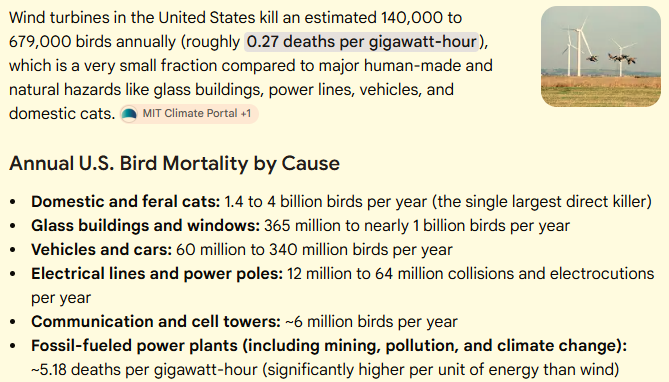
@alex_fasulo Dumb take. These instances are rare.
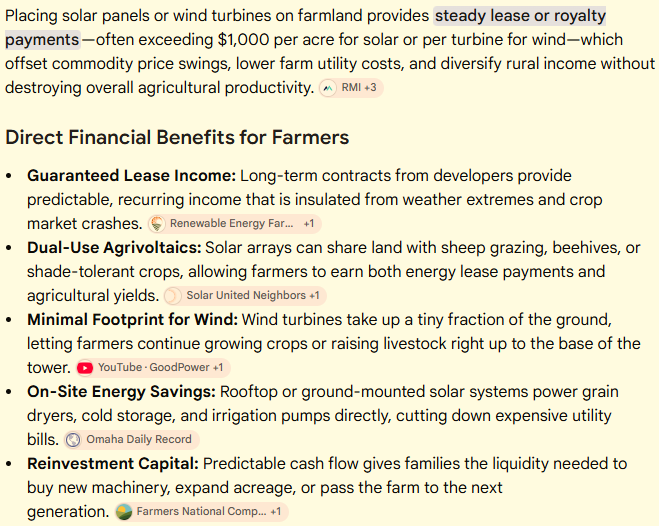
Meanwhile, did you know how profitable wind and solar are to farmers? Not to mention combining farming and renewables (agrivoltaics)?
Chiricahua National Monument has officially been redesignated as a national park, becoming America’s 64th national park.
Known as the “Wonderland of Rocks,” this spectacular Arizona landscape was shaped by massive volcanic eruptions and years of erosion, creating the towering rock pinnacles that define Chiricahua today.
Data center companies want more than 24,000 acres of your public land.
That's the count from the Center for Western Priorities, which just mapped every data center application sitting on BLM land.
35 applications, spread across AZ, ID, NV, OR, UT and WY.
At least seventeen are data center campuses, and one of them, in UT, would be powered by 456 small nuclear reactors. Thirteen are the roads, water pipelines and power lines to feed them. Many list zero acres, so the real footprint is bigger.
BLM already approved one data center near Boulder City, NV, in June. This month it was thrown out after an appeals board found BLM likely broke federal environmental law. If that data center sat on city land, Boulder City would have collected roughly $2.3 million a year. On BLM land, it won't generate any revenue for the city. Now picture 35 applications on 24,000 acres.
Then there's what these places eat. Power first. In a Sept. 24 letter to Interior Secretary Doug Burgum, 16 House Democrats warned that data centers could use up to 12% of all electricity in the U.S. by 2028, straining the grid and driving up energy prices.
Then water. U.S. data centers drank 17 billion gallons in 2023 just to stay cool, and Lawrence Berkeley National Laboratory says that could double or even quadruple by 2028. Not to mention the wildlife and the land itself. Public lands are often tied to tribal lands and waters, so tribal communities are on the line too.
And the public? The Center for Western Priorities says there is no framework for environmental review, public input, or sending revenue back to taxpayers. Lauren Bogard, of the Center for Western Priorities, put it plainly: "Data centers are not like oil, gas, or minerals, which are extracted from public lands because that's where they exist."
Not that extracting oil, gas or minerals is good for public lands in any shape or form.
If you feel as strongly as I do about keeping data centers off our public lands, please fill out the easy form below. Tell Burgum to stop this dangerous precedent and protect our shared public lands. Then share it with your friends. It's in the first reply. Thank you.
#HumanityUnited #DemsUnited 🧵
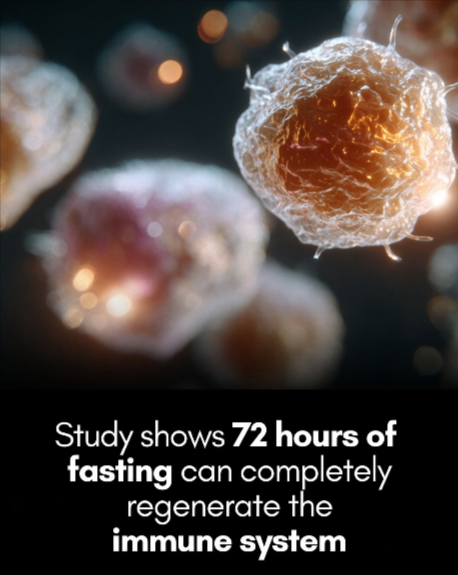
Research shows a 72-hour fast can completely rebuild your immune system.
A study from the University of Southern California has revealed that fasting for 72 hours can trigger a complete regeneration of the immune system.
Researchers found that prolonged fasting causes the body to deplete its glucose and fat reserves, forcing it into a detoxifying state that eliminates damaged cells and toxins.
When normal eating resumes, stem cells are activated, leading to the production of fresh, healthy white blood cells. This immune reboot effect was observed in both mice and humans, particularly in chemotherapy patients who showed improved immune health after fasting cycles.
Lead researcher Dr. Valter Longo explains that during fasting, a gene called PKA is suppressed—this gene must be turned off for stem cells to enter regenerative mode.
As a result, the immune system essentially clears out older, weaker components and rebuilds itself anew. While more research is needed to explore the full range of benefits across organs, the study suggests that fasting could be a powerful, drug-free strategy for enhancing immunity, especially for those with weakened systems due to aging or cancer treatment.
[Valter Longo. USC Leonard Davis School]
When the Muslim population in a country is less than 2%, they are a peace-loving minority that poses no threat to other ethnic groups. United States 1.1%, China 1.8% for example.
When the Muslim population is 2-5%, they begin to push for government authorization to enforce Islamic law in Muslim enclaves, recruiting new members from prisons and the streets, with disturbances occurring in Muslim enclaves. Such countries include: Australia 3.2%, Canada 4.9%, Italy 4.8%.
Denmark 5.4%, Germany 6.7%, United Kingdom 6%, Spain 5.3%, Thailand 5.4%
When the Muslim population reaches 5-10%, major disturbances erupt in Muslim enclaves; they advocate for the introduction of halal foods, ensuring that halal food practitioners are Muslims; they pressure chain supermarkets to label shelves with halal certifications, threatening those who refuse to comply. Such countries include: Denmark 5.4%, Germany 6.7%, United Kingdom 6%, Spain 5.3%, Thailand 5.4%, Philippines 5%, Sweden 7.1%, Switzerland 5.9%, Netherlands 5.5%.
When the Muslim population approaches 10-20%, nationwide riots occur; Muslims issue a series of demands, such as building large mosques in enclaves, granting super-national and super-legal privileges, forcing non-Muslims to follow Muslim customs, and criminalizing "expressions of dissatisfaction with Islam." Such countries include: France 10.8%, India 14.6%, Israel 18.4%, Russia 13%.
When the Muslim population is 20-60%, jihadist militants sporadically massacre non-believers, burning down Christian and Jewish places of worship; other ethnic groups either convert to Islam out of fear of being killed or are killed by Muslims; the country experiences massacres and ongoing terrorist attacks. Such countries include: Ethiopia 33%, Bosnia 50.7%, Chad 55%.
When the Muslim population reaches 60-80%, Islamic law replaces secular law, establishing a theocratic regime that persecutes all other non-believers in the name of the state, massacres Christians, and imposes taxes on non-believers using Islamic law as a weapon. Such countries include: Lebanon 67.8, Albania 60%, Malaysia 63%, Qatar 77.5% (Qatari citizen 100%).
When the Muslim population is 80%-98%, the country lives in daily intimidation, violence, and jihad, carrying out ethnic cleansing and massacres, with the state expelling non-believers. Such countries include: Sudan 96.6%, Bangladesh 90%, Egypt 93%, Indonesia 87%, Iraq 99.6%, Pakistan 97%, Palestine 98%, Syria 90%, Turkey 94%.
When the Muslim population is 98 to 100%, the Islamic people welcome the "House of Islamic Peace." In theory, this should be a time of peace, as everyone is Muslim, living in harmony without internal strife—but in reality, it is nothing like that; peace is not achieved, because in 100% purely Islamic countries, Muslim groups of different sects attack each other, vie to become the leaders of domestic Islamic law, and seek to eliminate other Muslim factions for all sorts of reasons. Such countries include: When the Muslim population is 80%-99%, the country lives in daily intimidation, violence, and jihad, carrying out ethnic cleansing and massacres, with the state expelling non-believers. Such countries include: , Afghanistan 100%, Somalia 99.6%, Yemen 100%. Maldives 99%, Mauritania 99.6%, Morocco 99%, Niger 98.2%, Iran 99.5%
Myriam was a 7-year-old French Jewish girl. She witnessed a terrorist break into her school and kill two of her classmates.
She tried to run but tripped while grabbing her schoolbag, causing her ballet slippers to fall out. She stopped to pick them up. He chased her and grabbed her by the hair, shooting her in the head at point-blank range.
The man was Mohamed Merah, and a rap song honoring him and other Muslim terrorists has become the unofficial anthem of the ‘student protests’ in France.