I don't like that this is live-streamed, and I actually don't mind it being public. Executing someone in some back room is not any more civilized or dignified, that is actually what totalitarian states do.
But the ability to click onto this in between a million other things vying for our attention, or for children to see it without parents being aware, I think that is bad and undignified. It must not be flippant or made into entertainment. It is objectifying of the condemned.
If you want to see a man be executed, you owe it to him and to society to get your ass out of bed and walk down there and stand there and watch it happen. You need to schedule it on your calendar, tell people you can't meet for coffee because you're going to see the execution. You need to stand there with everyone else and feel the weight of it. You need to walk back to your car after and drive home not wanting to listen to music or anything because you just saw a man die. It should affect you.
The death penalty is not fun, it is not entertainment. It is just, and it is ultimately good. But it is sobering and should be treated with the weight it demands.
“On Wednesday, September 23rd, I was arrested on USF public property in Tampa Bay while preaching the gospel of Jesus Christ and speaking against abortion” - Tyler Newton https://t.co/bNzfLcv4Qz
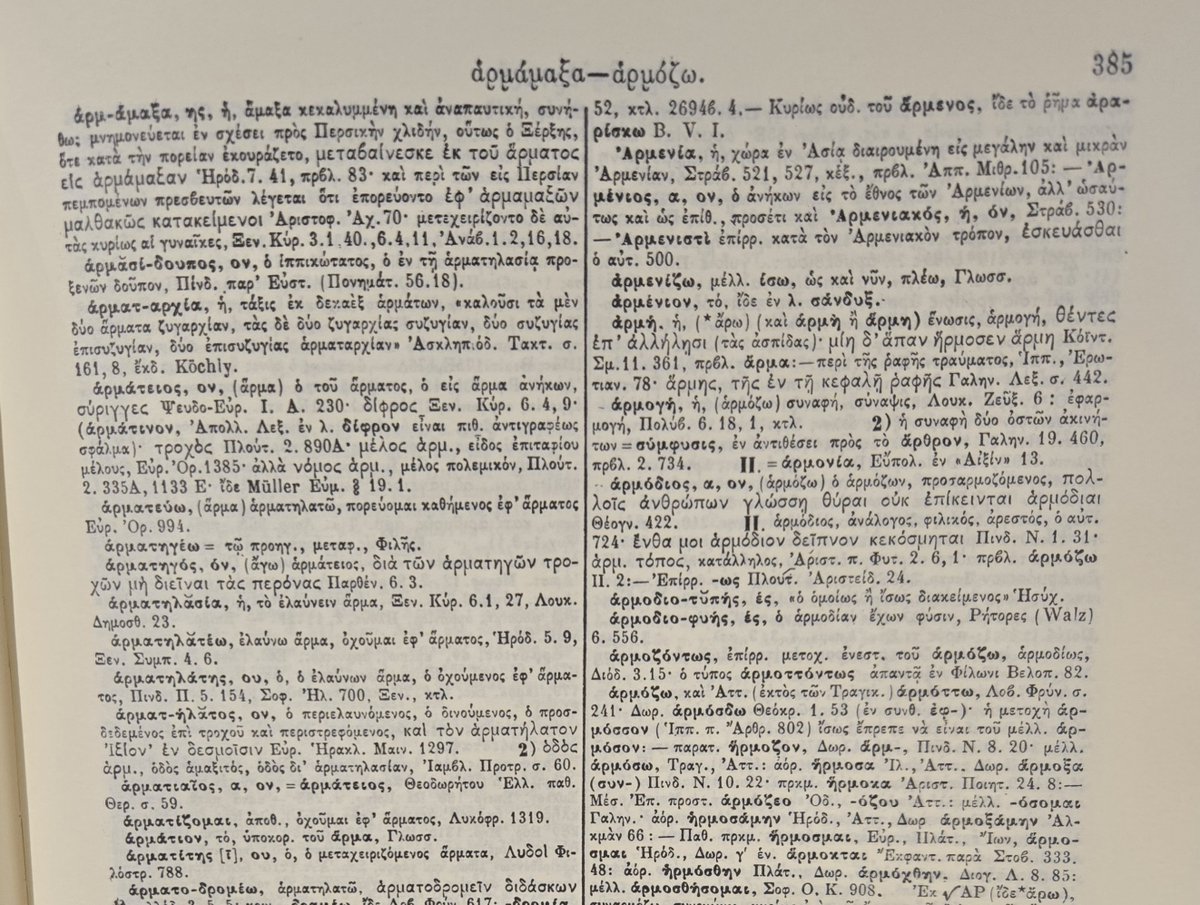
How to immerse yourself in Ancient Greek without getting lost? Pro tip: read the four-volume Liddell and Scott - you know, the one that gives its definitions in Ancient Greek, rather than English, and adds citations? I speak of the Mega Lexikon.
One concern I have with some modern biblical and theological scholarship is that many squeak by in the languages.
This, surely, will not produce the highest-quality scholarship.
Some students who pursue PhDs in historical, biblical, and theological studies are content with getting just enough theological German, French, Latin, Syriac, etc., to avoid feeling totally lost.
Or they reach only far enough in the biblical languages—Aramaic, Hebrew, and Greek—that they can reference lexicons and grammars but cannot easily maneuver through ancient sources or intuitively understand the ideas that these ancient authors present in their various languages.
This seems to me to be a big problem. The goal of a PhD is not to rush through the program, get a degree, and then find a professorship.
The goal of a PhD is to go deep into a world, exploring its ideas and grappling with fascinating issues and concepts, often in another language.
To be content with only dipping one’s toes into the waters of a research language, while spending the majority of one’s time reading secondary sources, does not seem to be the most profitable practice.
A preferable route is to go deep into a few languages and a few years later, after you feel that those research languages are in your heart and soul, begin a PhD.
Then, you will be able to feel the joy and depth of your subject.
This has been such an inspiring example of what Jesus meant when he gave us the great commission! Thank you @crossway and @9Marks for leading the way and setting the bar high!
🚨Giveaway🚨
I’m giving away a 𝒑𝒓𝒆-𝒓𝒆𝒍𝒆𝒂𝒔𝒆 copy of our newest CSC volume on Hebrews!
To enter:
🔁 RT this post
👤 Follow this account
👇 Tag a friend for an extra entry!
Winner announced 8/21