The continued electrification of Europe's rail network is a major step toward cleaner, more efficient transportation. With around 60% of railway lines now electrified, the region is making meaningful progress in reducing emissions and strengthening sustainable mobility infrastructure.
Thank you @xruiztru for highlighting this.
#RailTransport #SustainableMobility #GreenTransition #Infrastructure
I've long said that commercial vehicles would flip to electric far faster than personally owned vehicles, for two reasons:
1. Vehicles that drive more miles in a year save more by going to cheaper electric fuel.
2. Fleet operators understand and are motivated by total cost.
It's going to happen first and fast in China, then ripple out to the rest of the world.
Instant payments can substitute for cash when adoption moves quickly beyond high-income early users. Evidence from Brazil, Costa Rica, and Mexico finds that the key is a rapid low-income gradient.
Ethiopia continues to be ahead of the curve on adopting climate-friendly policies. Its new transport roadmap could make it one of Africa's biggest EV hubs.
https://t.co/5p8JdKVkU2
Join us at @LSEnews to discuss the economic ideas shaping climate action ahead of #COP31.
Featuring André Corrêa do Lago, Robin Burgess, José Scheinkman, Rohini Pande, Catherine Wolfram & Juliano Assunção.
📍LSE & online
🗓️ 24 June
Register: https://t.co/p7hZZSL33V
#LCAW2026
How accessible are Jordan’s cities?
IGC research finds that while congestion is a challenge - especially in Amman - the distance people travel to reach key services and amenities may be an even greater barrier to mobility.
Read more in our latest blog ⬇️ https://t.co/zxx38Lxfir
🚨 Diff-in-diff imputation in Python 🚨
Excited to report that a package for estimation and and event study plots is now available. Similar syntax to the did_imputation and event_plot Stata commands
Available here: https://t.co/EtE0WGzM4e
Huge thanks to the author @gmarinichev
Scaling evidence-based education programmes requires identifying the non-negotiable components that drive impact and adapting everything else to fit within government systems.
Read last month's article to learn more: https://t.co/EN5ZDDJF9p
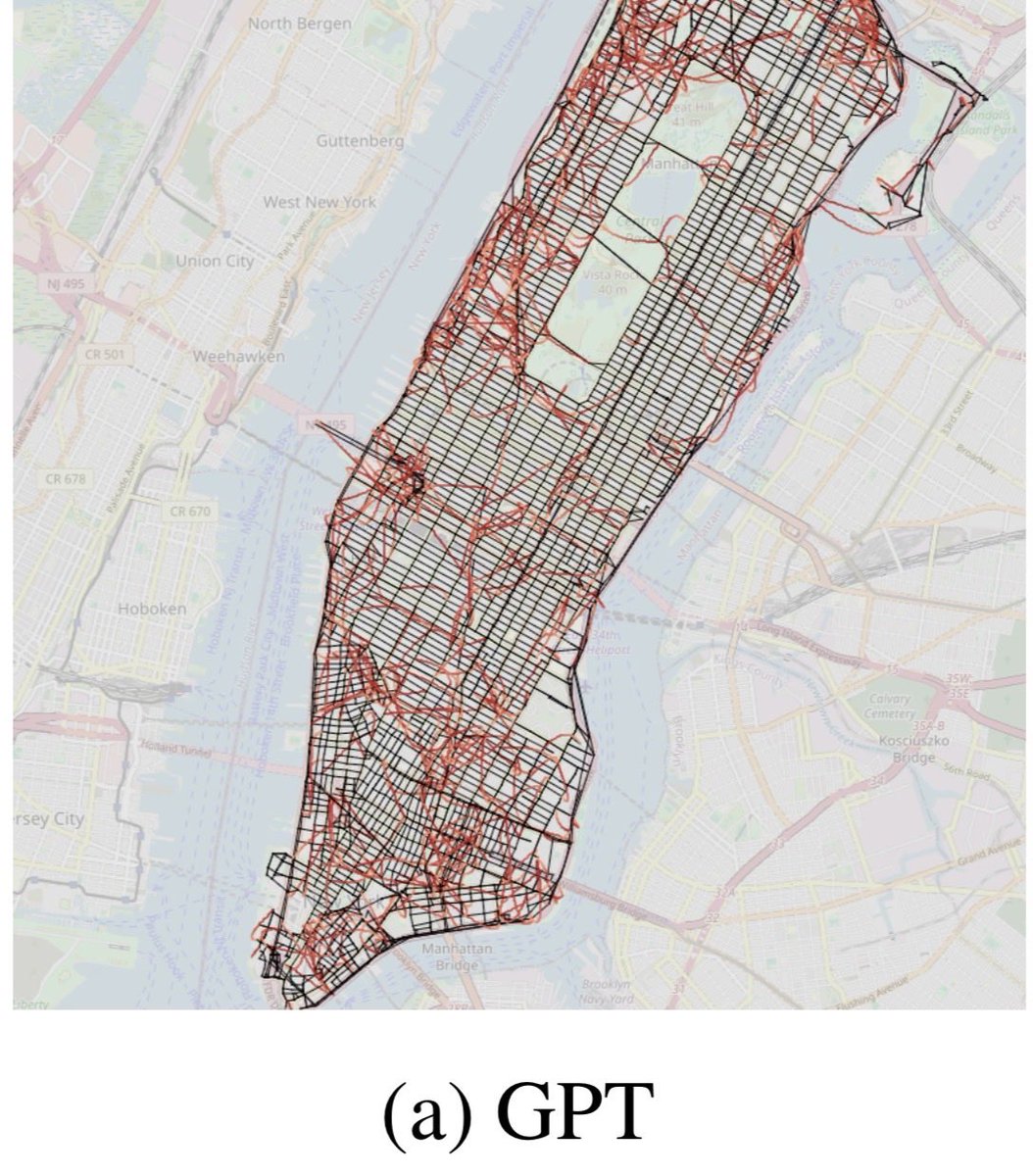
Cool stuff, building on ideas around “world models” by Econs and CS people @keyonV, @asheshrambachan and @m_sendhil.
Question: If you train on next turns for Manhattan taxi drivers, will the model learn a map of Manhattan?
They showed GPTs can be almost perfect at next-token (next turn) prediction… but paradoxically stupid regarding what the right map is.
New paper (NextLat) shows that predicting “next latent state” (jointly with next token) appears to much better at world modeling
It’d be great to see economists get into this game… help build architectures for world models of the global economy
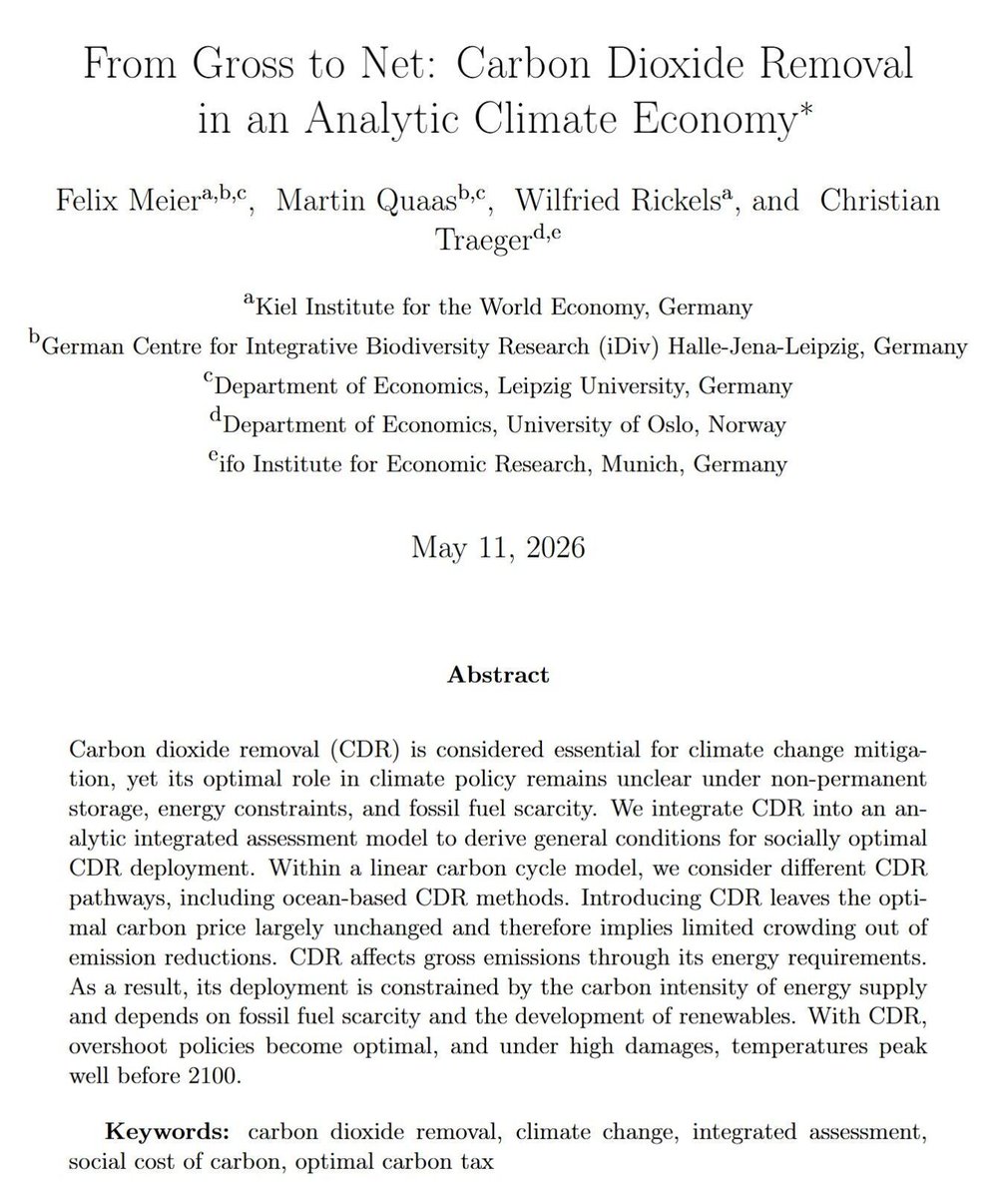
📢 Just accepted in #JAERE! 📢
"From Gross to Net: Carbon Dioxide Removal in an Analytic Climate Economy" by Felix Meier, Martin Quaas, Wilfried Rickels (@wilmwilmsen) and Christian Traeger.
📎 Read it here: https://t.co/y0ILLVEIXB
In the May issue, "Consumption Response to Minimum Wages: Evidence from Chinese Households," by Ernest Dautović, Harald Hau, and Yi Huang. https://t.co/EWTekKQOTa
Today @Nature published 2 new AI medical agentic models that take capabilities to a new level, from end-to-end care after presentation to the emergency department and longitudinally through 3 out-patient visits. There's a lot to unpack.
Summarized in a new Ground Truths post.
https://t.co/NRzuMe23DC
Why do arguments often change people’s beliefs without changing their attitudes? In a new APSR with @PatrickPLiu and Scott Clifford, we point to belief relevance: arguments are more persuasive when they grapple with the idiosyncratic reasons people hold their political views.