We have rediscovered Saurocytozoon in Tupinambis; despite being phenotypically identical to Leucocytotozoon, it is genetically related to Plasmodium. We thank all the researchers, field helpers, and landowners who supported our work. | Cambridge Core - https://t.co/aOTt2o0PtE
𝗡𝗲𝘄 𝗽𝗮𝗽𝗲𝗿 𝗶𝗻 𝗽𝗿𝗲𝘀𝘀 𝗶𝗻 𝗣𝗔𝗥𝗔𝗦𝗜𝗧𝗘:
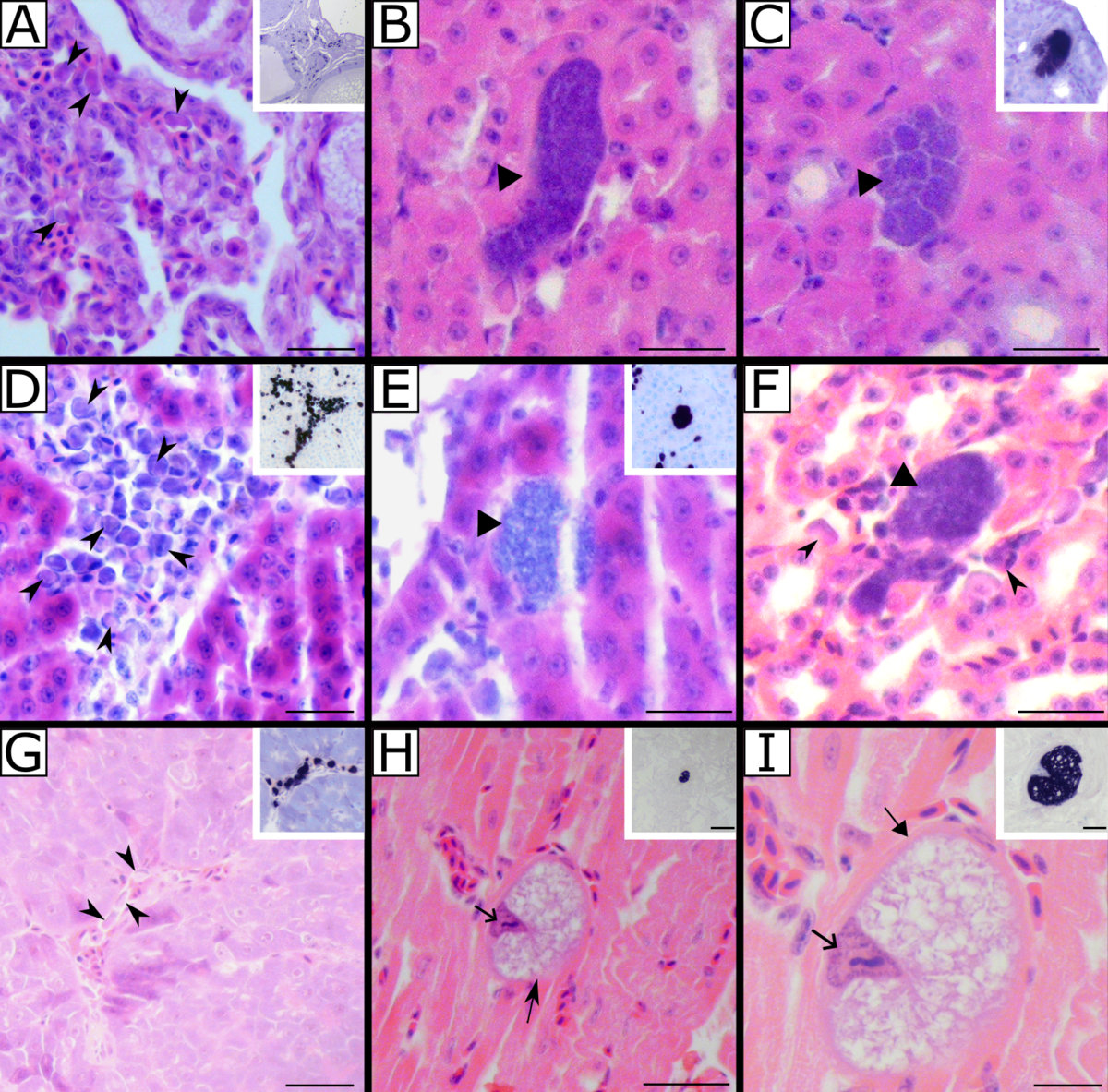
Leucocytozoon infections in tits (Aves, Paridae): blood and tissue stages investigated using an integrative approach
🔜 https://t.co/yMsdEkYflU
Abstract: Leucocytozoon species are cosmopolitan and prevalent avian parasites, with some infections being lethal, mainly due to the exo-erythrocytic development of the parasite in bird tissues. The patterns of exo-erythrocytic development in Leucocytozoon spp. infections in wild birds remain poorly studied. This study investigated the development ofLeucocytozoon spp. tissue stages in tits (Paridae). Great tits (Parus major), Blue tits (Cyanistes caeruleus), and Coal tits (Periparus ater) were screened for infections using an integrative approach that consisted of microscopic analysis of thin blood smears, histological techniques, chromogenic in situ hybridization (CISH), PCR-based methods, and phylogenetic analysis. In total, 41 individuals were analyzed (eight naturally infected that were selected and euthanized, and 33 found dead in the wild and opportunistically sampled). Among the naturally infected birds, all individuals that were microscopically positive for Leucocytozoon species were also PCR-positive for these parasites. Co-infections with Plasmodium spp. and Haemoproteus spp. were commonly found, mainly among the opportunistically sampled birds. Two morphotypes were identified, Leucocytozoon majoris (Laveran, 1902) and Leucocytozoon fringillinarumWoodcock, 1910. Tissue stages were present in three birds sampled exclusively during the non-breeding season, two of them with meronts developing in the kidneys and liver, and one individual with a megalomeront in the heart. All the exo-erythrocytic stages were confirmed to be Leucocytozoon spp. by CISH using a Leucocytozoon genus-specific probe. Phylogenetic analysis placed parasite lineages with different morphotypes in separate clades. The developmental patterns of exo-erythrocytic stages of Leucocytozoon spp. in naturally infected passerines are poorly understood, requiring further research.
Résumé
Infections à Leucocytozoon chez les mésanges (Aves, Paridae) : stades sanguins et tissulaires étudiés à l'aide d'une approche intégrative
Les espèces de Leucocytozoon sont des parasites aviaires cosmopolites et répandus. Certaines infections sont mortelles, principalement en raison du développement exo-érythrocytaire du parasite dans les tissus des oiseaux. Les schémas de développement exo-érythrocytaire dans les infections à Leucocytozoon spp. chez les oiseaux sauvages restent peu étudiés. Cette étude a examiné le développement des stades tissulaires de Leucocytozoon spp. chez les mésanges (Paridae). Des mésanges charbonnières (Parus major), mésanges bleues (Cyanistes caeruleus) et mésanges noires (Periparus ater) ont été examinées pour détecter les infections à l'aide d'une approche intégrative consistant en une analyse microscopique de frottis sanguins minces, des techniques histologiques, une hybridation chromogène in situ (CISH), des méthodes basées sur la PCR et une analyse phylogénétique. Au total, 41 individus ont été analysés (huit naturellement infectés qui ont été sélectionnés et euthanasiés et 33 trouvés morts dans la nature et échantillonnés de manière opportuniste). Parmi les oiseaux naturellement infectés, tous les individus qui étaient microscopiquement positifs pour les espèces de Leucocytozoon étaient également positifs pour ces parasites par PCR. Des co-infections avec Plasmodium spp. et Haemoproteus spp. ont été couramment trouvées, principalement parmi les oiseaux échantillonnés de manière opportuniste. Deux morphotypes ont été identifiés, Leucocytozoon majoris(Laveran, 1902) et Leucocytozoon fringillinarum Woodcock, 1910. Des stades tissulaires étaient présents chez trois oiseaux échantillonnés exclusivement en dehors de la saison de reproduction, deux d'entre eux avec des mérontes se développant dans les reins et le foie, et un individu avec un mégaloméronte dans le cœur. Tous les stades exo-érythrocytaires ont été confirmés comme étant des Leucocytozoon spp. par CISH en utilisant une sonde spécifique au genre Leucocytozoon. L'analyse phylogénétique a placé les lignées de parasites avec différents morphotypes dans des clades distincts. Les modèles de développement des stades exo-érythrocytaires de Leucocytozoonspp. chez les passereaux naturellement infectés sont mal compris et nécessitent des recherches supplémentaires.
The deadline to apply for conference scholarships is approaching, It is May 31. Guidelines for the application procedures are available on our website. Don't forget that the requirements to apply are: Be student from low or middle income countries, and submit research results.
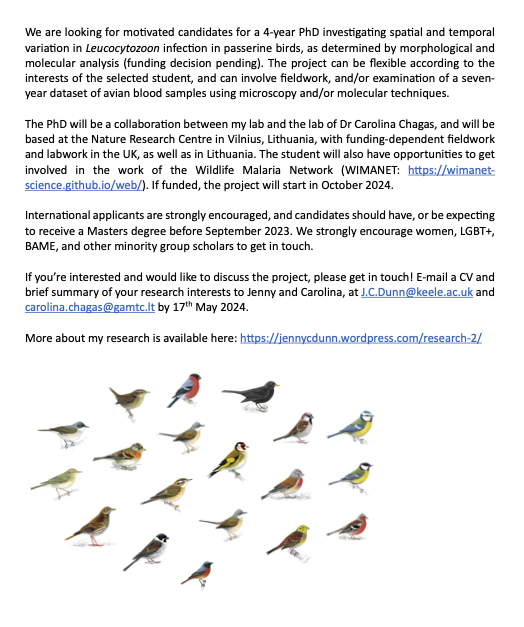
PhD studentship working with me and @crfchagas based in Nature Research Centre, Lithuania! Working on #Leucocytozoon infection in #birds with opportunities to get involved in @WIMANETscience. E-mail us any questions, application deadline 15th May #malaria#ornithology Please RT
🗣️Publication alert!!🚨
Trypanosomatids in Bloodsucking Diptera Insects (Ceratopogonidae and Simuliidae) Wild-Caught at Raptor Bird Nests in Temperate Forests https://t.co/l2s885tUQ3 #mdpidiversity via @DiversityMdpi
I'm looking for students interested in developing a PhD project on #avian#malaria#haemoparasites, based at the Nature Research Centre in Lithunia. More information below.
#International applicants strongly encouraged - please get in touch!
Please RT! #ornithology#PhD
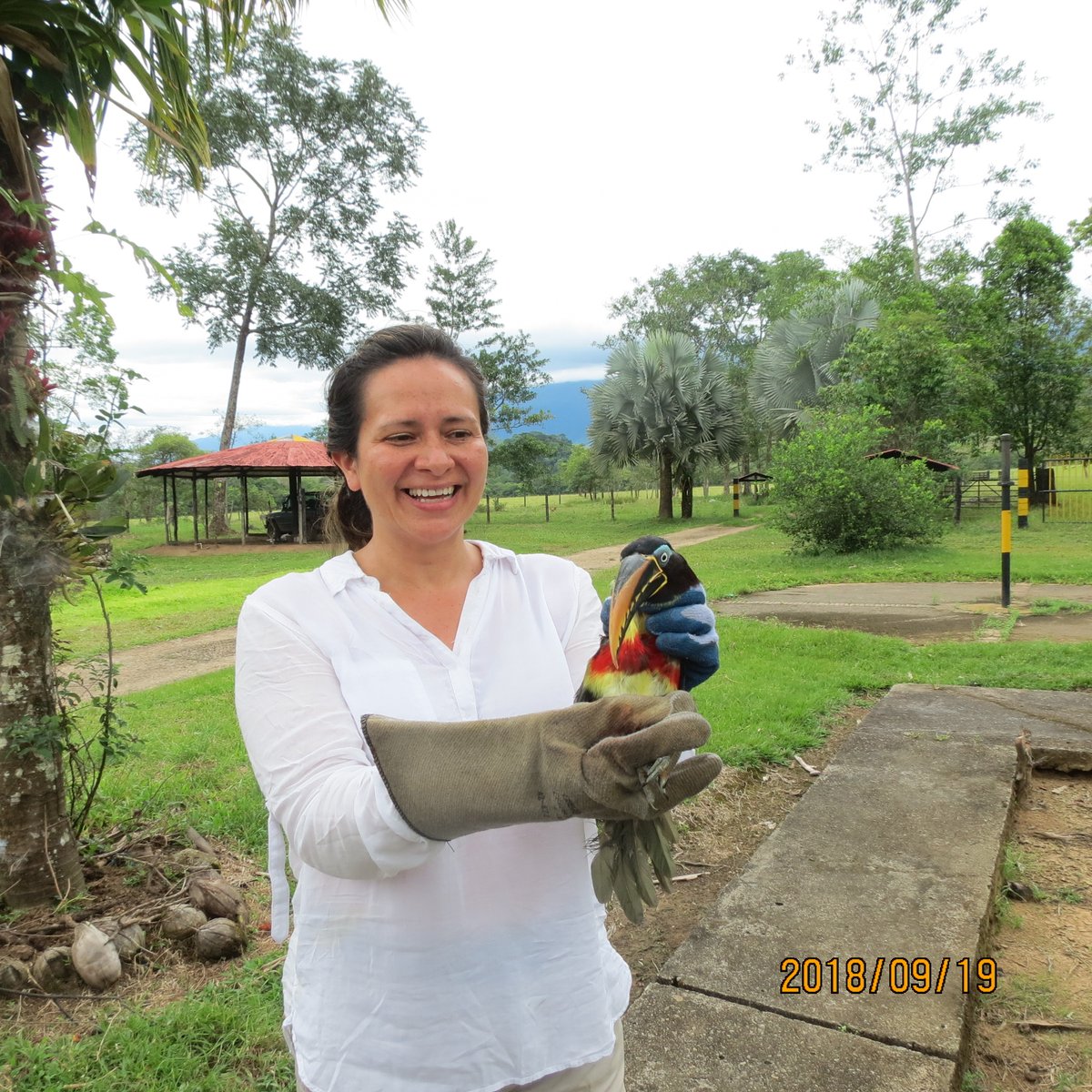
La profesora @NubiaMatta empezó a estudiar parásitos de fauna silvestre en 1997. Estas investigaciones permitieron consolidar luego el Grupo de Estudio Relación Parásito Hospedero, GERPH, del Departamento de Biología de la Universidad Nacional de Colombia.
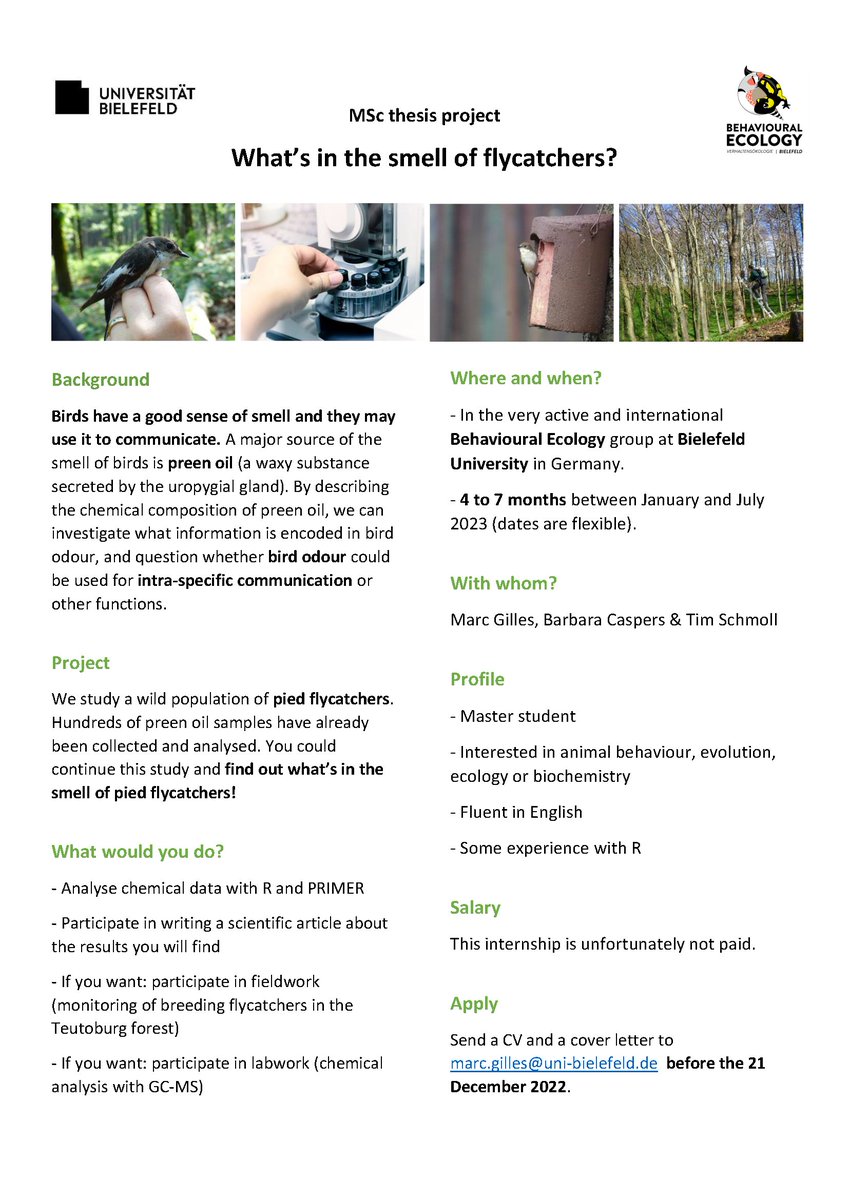
We are looking for a Master student to work on the preen oil of pied #flycatchers at @BehavEcoBIE at Bielefeld University (Germany)! Deadline to apply 21 December 2022. Please RT!