The brief Trump-Modi meeting may not have reset strained U.S.-India ties, although both countries have a mutual interest in recalibrating relations given their shared strategic interests. The meeting came barely a week after U.S. attacks on commercial tankers killed three Indian merchant mariners, inflaming public sentiment in India.
Modi, however, did not directly raise the killings. Instead, he noted the large number of Indians serving as crews on foreign-flagged commercial vessels and stressed the importance of their safety and security. Trump responded by describing seafaring as “a rough profession.” He offered neither condolences nor expressions of regret, in part because the Indian side did not seek a U.S. apology or compensation for the victims’ families.
The irony is striking. The U.S. Navy enjoys peacetime logistical support at Indian ports, yet it launched munitions against a vessel after establishing contact with the crew and identifying them as Indian nationals.
Francis Fukuyama recently shared a compelling piece titled “The Myth of Authoritarian Efficiency” by political scientists Jørgen Møller and Svend-Erik Skaaning (Aarhus University / V-Dem project).
The article dismantles the popular notion that authoritarian regimes—particularly China—are simply better at “getting things done.” Drawing on historical data and comparative evidence, the authors argue that democracies consistently outperform autocracies over the long term across critical domains:
• Military effectiveness: Democracies have won more than 80% of wars since 1815. Greater legitimacy enables citizens to make greater sacrifices, and democratic alliances prove more durable.
• Economic performance: While autocracies can drive catch-up growth to middle-income levels, they struggle to transition to innovation-driven, knowledge economies that require rule of law, intellectual property protection, and open debate. High-quality democracies show a modest but robust long-run growth advantage.
• Avoiding catastrophe: Autocracies periodically produce large-scale man-made disasters (Mao’s Great Leap Forward, Soviet collectivization). Institutional checks and public scrutiny in democracies make comparable failures rare.
• Crisis management & environment: Transparency, independent science, and accountability lead to better outcomes on pandemics, climate policy, and environmental indicators. China’s zero-COVID flip-flop and overstated economic statistics illustrate the risks of centralized, unaccountable decision-making.
The authors acknowledge democracies can be slow and messy, but emphasize that self-correction mechanisms ultimately make them more resilient and effective than systems that concentrate power without feedback loops.
Francis Fukuyama, author of the landmark book The End of History and the Last Man, continues to spark important conversations about the enduring strengths of liberal democracy in an era of renewed authoritarian confidence.
Full article (highly recommended):
https://t.co/rdLYptPLnY
What’s your take—do you see evidence of this “myth” playing out in emerging markets or great-power competition today?
#Democracy #Geopolitics #China #EmergingMarkets #InternationalRelations #PoliticalEconomy
The dropping of “Indo” from PACOM signals the decreasing significance of India in Washington’s strategic thinking.
There were already hints of this in Hegseth’s Shangri-La speech. “India was mentioned last,” an Asian diplomat said.
Hegseth praised the efforts of South Korea, the Philippines, Japan, Australia, Singapore, Indonesia, Malaysia, Thailand and Vietnam before finally turning to India.
https://t.co/R81CvlVJzg
The more that India is seen as Israel's friend, the more problems it will create. (And what is this: "Hindu scholars from Modi’s power base are due to visit Israel this month to meet officials and academics to learn about Zionism.")
Super profile of India-Israel relationship in recent times @FT “In a world that was going towards universalism and post-national institutions,” says Reuven Azar, Israel’s ambassador to India, Modi and Netanyahu “were different . . . not just embracing nationalism but embracing identity”.
https://t.co/5NSbCce3y2
Now reading this new suggestive book by @TK_Sakurai on Erich Fromm's theory of fascism. As Sakurai explains, for Fromm, individuals with evident sadistic and masochistic inclinations tend to show a "propensity toward authoritarianism."
Democratic Drain by Justin Gest - @_JustinGest
Explores a new phenomenon in which migration depletes origin countries of people with democratic political values, enabling authoritarianism.
📚 https://t.co/jBK5P1O5sg
Neither side is willing to trust or accommodate the other, & the trust deficit remains deep. nuclear issue, Hormuz, Lebanon crisis, & competing geopolitical interests have made the conflict increasingly complex, leaving the prospects for a lasting peace uncertain.
#MiddleEast
I understood one thing that Iran–Israel–US conflict is unlikely to end unless Israel wants it to. Trump has lost both war and credibility, now acting like a puppet and in search of a face saving exit. While Iran's morale has risen considerably since the beginning of d conflict.
🇮🇳 Countries with the Largest Indian Diaspora Population
1. 🇺🇸 United States — 5.4M
2. 🇦🇪 UAE — 3.6M
3. 🇲🇾 Malaysia — 2.9M
4. 🇨🇦 Canada — 2.9M
5. 🇸🇦 Saudi Arabia — 2.5M
6. 🇲🇲 Myanmar — 2.0M
7. 🇬🇧 United Kingdom — 1.9M
8. 🇿🇦 South Africa — 1.7M
9. 🇱🇰 Sri Lanka — 1.6M
10. 🇰🇼 Kuwait — 996K
11. 🇦🇺 Australia — 976K
12. 🇲🇺 Mauritius — 895K
Source: Ministry of External Affairs, Government of India (May 2024)
Trump’s unpredictable policies have pushed Japan to rethink its security strategy. China’s growing assertiveness in the Indo-Pacific, South China Sea, & around Taiwan has accelerated Tokyo’s defence transformation. Japan is gradually moving beyond its post-WWII pacifism.
C Raja Mohan writes | Japan’s new military doctrine is about boosting national defence and seeking a more active regional security role. There are lessons for India https://t.co/NnojmZ8mwr via @IndianExpress
According to a draft MoU, Iran would allow maritime traffic through Hormuz and demine the Strait over 30 days while the U.S. would lift its blockade gradually. The ceasefire would be extended by 60 days, on all fronts. Iran would also get access, in one way or another, to its frozen funds (some $24 billion in total-- for context, what Obama released in 2015 was less than $2 bn). The U.S. is also considering a $300 bn redevelopment fund that could be invested in infrastructure projects in #Iran. And the most important issue -- Iran's nuclear programme-- is not even being discussed in the prelim agreement. Once the MoU is agreed, both sides would start negotiations on the nuclear file.
To understand how the U.S. was humbled in this war, just look at how the U.S. position has changed -- from trump's March 6 demand for "unconditional surrender" to this deal, which doesn't even address the core issue. Remember how Vance left Islamabad on April 12? He said the U.S. offer is on the table and it's up to the Iranians to either take it or face the consequences. Iran didn't take it. Then trump imposed his blockade based on two illusions -- one, he thought economic pressure would force Iran to kneel and offer him major concessions. Two, he thought China, under economic pressure, would pressure Iran to yield. trump went to Beijing and got nothing from Xi with regard to Iran. He came back and walked back from another threat of relaunching the war.
trump claimed that Iran lost all its military capabilities and that the country is leaderless. But Iran's response was much more cohesive than trump's mix of diplomacy, economic pressure and military threat. When trump imposed the blockade, Iran cancelled direct negotiations and kicked the nuclear file down its priority list. Iran said it would talk about the nuclear programme only if and once the blockade is lifted. And they stuck to their position, despite trump's repeated threats of resuming attacks--and every time he walked back. And whenever the U.S. carried out a strike, Iran responded in kind. Where does it leave the US? trump is today negotiating an agreement to begin negotiations on Iran's nuclear programme, which he "obliterated" in June 2025. He doesn't even talk about Iran's missile programme any more.
"The post–World War II order has come to an end—and the new global architecture taking shape will reflect the outcomes of conflicts, diplomatic initiatives, and economic policies still in progress," writes expert @stevenacook.
"In the Middle East, the pronounced shift in the distribution of power will certainly contribute to a new global order." Read more: https://t.co/Z99Pi1KZJq
Wrote this piece to understand India’s Pakistan policy and what went wrong
“Certainly, India’s strategy of undercutting and indeed isolating Pakistan, regionally and globally, has backfired in a big way,” @MichaelKugelman told @AJEnglish
https://t.co/Gmw2CNITud
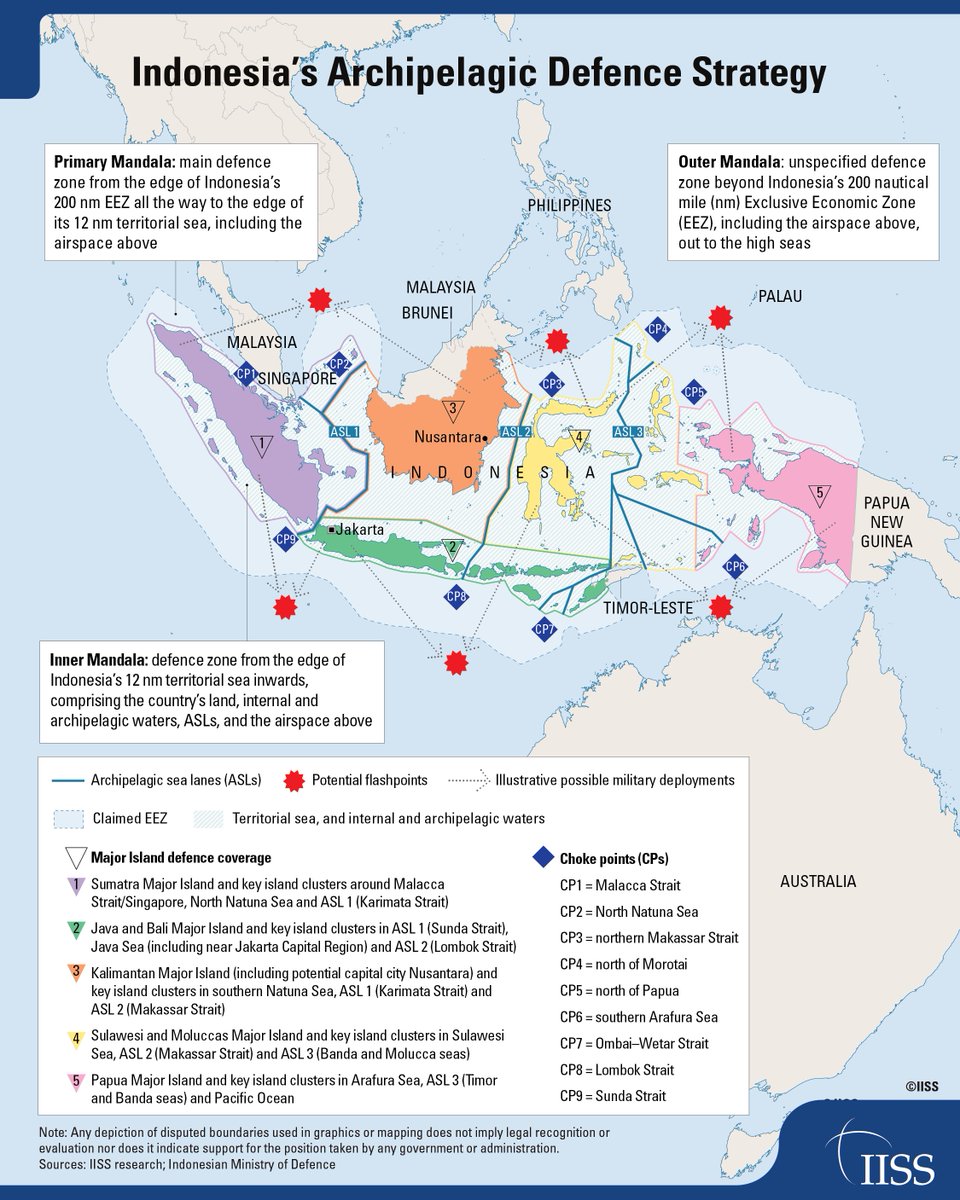
Research paper: how Southeast Asian states are pursuing limited but strategic military modernization to preserve autonomy amid intensifying US–China rivalry, the growing importance of maritime deterrence and asymmetric warfare in contemporary Indo-Pacific geopolitics.
Control and security of chokepoint and sea-lanes of communication has become increasingly debated in light of the war in the Gulf.
This research paper analyses why and how maritime Southeast Asian states are seeking to develop and implement anti-access/area-denial strategies and capabilities to respond to major conflicts.
Find out more I Dr @EvanLaksmana I https://t.co/0A9nBxd8AY
IISS Shangri-La Dialogue
29–31 May 2026
#IISS_SLD26
https://t.co/aj642880tE
What's 'constructive strategic stability'?
According to Xi, it has four pillars: 1. 'Cooperation' as the main driver of the US-China ties; 2. 'Competition within proper limits'; 3. 'Manageable differences'; and 4. “Expectable peace.”
Xi is actually telling Trump to treat China as an equal partner with redlines that need to be respected for long term stability in superpower relations.
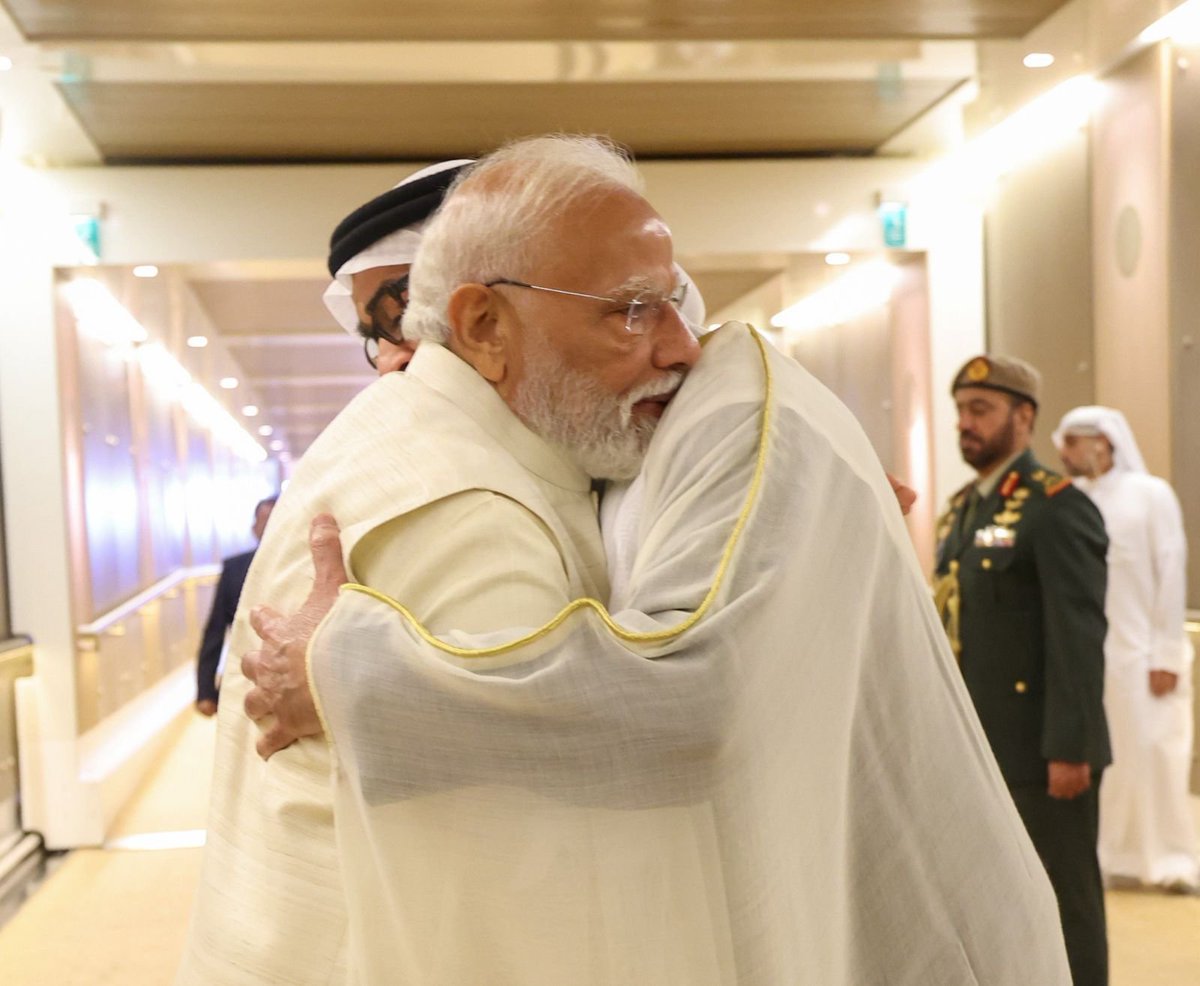
Concluding a short but highly productive visit to the UAE. Held extensive discussions with my brother, His Highness Sheikh Mohamed bin Zayed Al Nahyan, on ways to further deepen the India-UAE Comprehensive Strategic Partnership. I am confident that the outcomes of this visit will further strengthen our friendship and contribute to growth and prosperity.
@MohamedBinZayed