Satya Nadella's idea of "human capital + token capital" clicked for me when I thought about a hospital.
A senior doctor may have 25 years of diagnostic experience. Traditionally, that knowledge stays in the doctor's head.
Now imagine every diagnosis, treatment decision, and outcome helps train an internal AI system. New doctors can access that expertise instantly, and the hospital keeps learning even as people join or leave.
The doctor isn't replaced.
The doctor's expertise becomes scalable.
That's what I think Satya means by token capital: turning organizational knowledge into AI systems that improve with every interaction.
The companies that win in the AI era may not be the ones with the best model. They may be the ones that build the strongest learning loops between people and AI.
AI isn't just automation.
It's organizational memory that compounds.
I reread the prompts we wrote last year… and it felt like we were confidently giving instructions to AI without fully understanding them ourselves
Now I can’t help but think - a year from now, today’s “best prompts” might look exactly the same
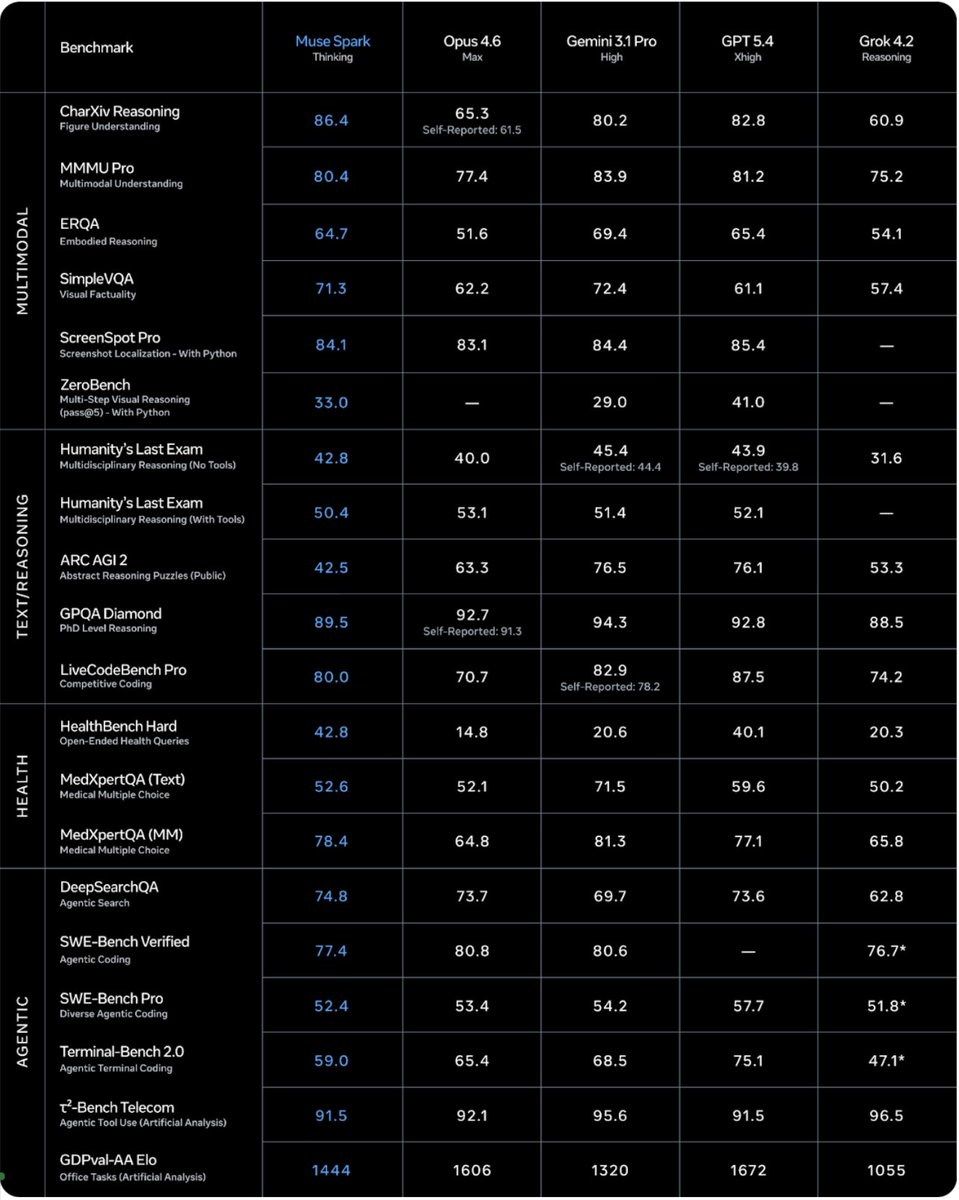
Meta is back in the AI race.
They just released Muse Spark - and it scores 52 on the Artificial Analysis Intelligence Index, placing it just behind
Gemini 3.1 Pro,
GPT-5.4,
and Claude Opus 4.6.
To put that in perspective:
Their previous models like Llama 4 Maverick were around 18.
This is not incremental progress.
This is a jump straight back into the frontier.
But the bigger story isn’t just performance.
This is Meta’s first frontier model that is not open weights.
That’s a major strategic shift.
For years, Meta leaned into open-source to drive adoption.
Now, they’re moving closer to the closed-model approach of OpenAI, Google, and Anthropic.
A few things that stand out:
• Top 5 model globally on benchmarks
• Second-best vision performance (80.5%)
• Strong reasoning and instruction-following
• Much more token-efficient than comparable models
But also:
• Still behind on real-world agentic workflows
• No public API yet
Here’s what actually matters:
Meta doesn’t need to win every benchmark.
Because they already own distribution.
Muse Spark is being integrated across Facebook, Instagram, Threads, and Meta AI.
That’s billions of users - without needing behavior change.
The real shift is this:
Most companies are building the smartest AI.
Meta is positioning to build the most used AI.
And historically — distribution wins.
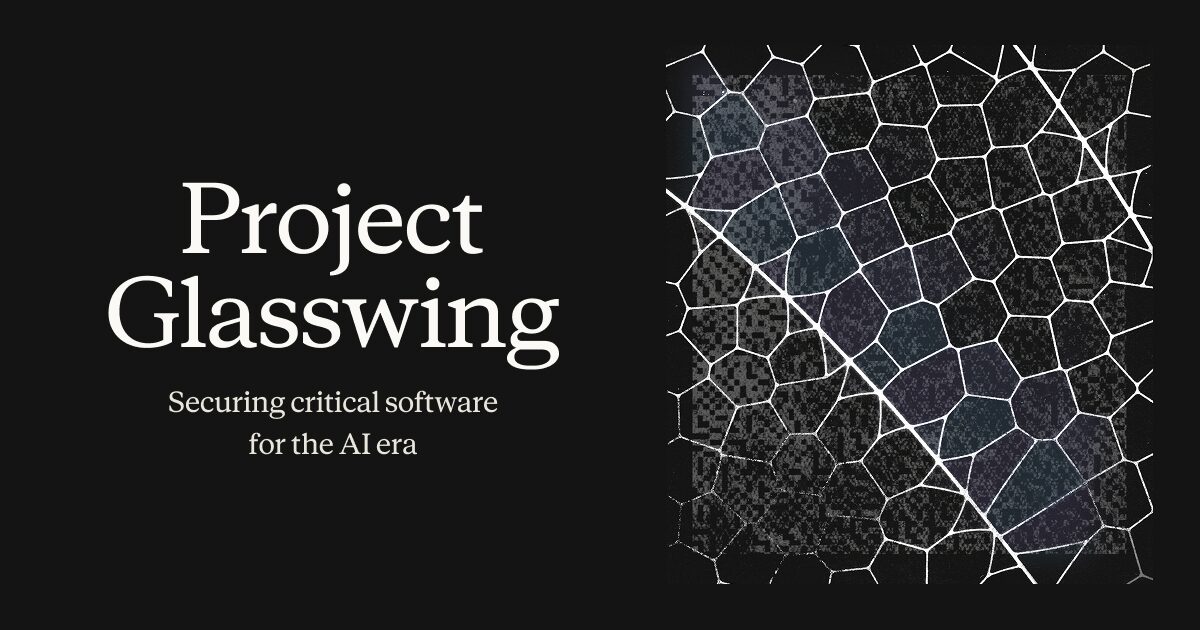
Anthropic just announced Project Glasswing.
An AI model (Claude Mythos Preview) that can find software vulnerabilities better than most humans.
It has already discovered thousands of high-severity flaws - across operating systems, browsers, and critical infrastructure.
Some of these bugs went undetected for years.
Instead of releasing it publicly, Anthropic is working with Amazon Web Services, Google, Microsoft, NVIDIA and others to fix systems first.
They’re also committing $100M in usage credits to support this effort.
Focus: use AI to find and fix vulnerabilities in critical software.
@OpenAIDevs@kwindla@mark_backman Sir, are there plans for Pipecat to support OpenAI’s new Responses API (WebSocket mode)?
Since it offers 40% faster tool-heavy turns and in-memory context continuation via previous_response_id
@pipecat_ai
ONDCs open commerce revolution (2022) scaled India's e-com via Beckn—discovery networks, interoperable flows, Google Cloud at its core.
Now UCP (2026) brings agentic checkouts with strikingly similar DNA: profiles, negotiation, modularity. 🇮🇳→🌍
Curious @GoogleIndia@Shopify ONDC's playbook inspire UCP's agent evolution?
When most cars become self-driving, two very different realities emerge
For the office commuter like me, autonomy means freedom — time to think, read, work, or simply breath
For the professional driver, autonomy means disruption — a skill they’ve built their life on suddenly becomes obsolete, forcing reinvention
AI will unlock opportunities for some and unsettle others
Progress isn’t just about technology advancing… it’s about people adapting
Talking to ChatGPT is basically a human emotional roller coaster:
- When it agrees with us: This AI is brilliant
- When it disagrees: Ugh… it doesn’t understand anything. Let me rewrite this like a prompt engineer. AI only works when I do the hard work.
- When it gives a great answer: I am asking all great questions
- When it misunderstands: Ai is still learning
Truth is: AI feels smart when we are clear
Clarity in → Clarity out
And that’s the real skill in the AI era
When a client vibe-codes half your solution and then asks for a discount… you learn a few things
Last week, one of our long-time, high-paying clients asked for new APIs
Turns out—they had vibe-coded a platform that does half of what we deliver in https://t.co/lOMqnkFvWk
And for the other half (the hard, non-vibe-code part), they wanted our solution… at a discount
Honestly?
My first reaction was: Wait… after all the customisation we did?
It felt bad
But after sleeping on it, I realised something important:
This is the new reality
When tools let anyone “vibe-code” a decent prototype, clients start re-evaluating what they’re paying for
- Cost structures are shifting
- AI is eating AI startups
- And the value line is moving
So instead of resisting it, I leaned into it
I offered the discount
Then used the same conversation to understand their new challenges
By the end, we figured out a way to deliver more value and maintain the same billing — because retaining customer matter more than short term profits
Lesson:
We’re in an era where clients can build 40–60% of a SaaS product on their own
What they will still pay for is the hard stuff
- reliability
- integrations
- scale
- support
the last 20% that actually makes the system production-ready
And that’s our moat
The landscape is shifting fast
But adaptability > ego
And long-term value > one-time billing discomfort
The real difference between ChatGPT and AGI is that ChatGPT predicts love, while AGI might feel it.
Both can say “I love you,” but only one would mean it
We’re clearly entering the “post-phone” chapter
Snap’s new Specs and Meta’s Ray-Ban collab are early signs.
They’re not trying to build another gadget — they’re trying to blend digital life right into what you already wear.
Navigation, live video, messaging, AI assistant — all without pulling your phone out
Old game is slowing down
Smartphones, ads, and app stores have hit maturity
Everyone’s fighting for the same attention slice
Make it adapt to human behavior instead of forcing humans to adapt to it
Still, two big gates before mass adoption
- Design & comfort — if it looks bulky or weird, forget it
- Social acceptance — once your friends, creators, or celebrities wear it casually, that’s when it breaks out (just like earbuds)
We saw a glimpse of this with the “AI companion pendant” phase — always-on, chatty, fidget-friendly devices
But that didn’t click. Maybe too early
As for the OpenAI + Jony Ive project — early leaks said it’s not a hearable "pod"-like device
The first device is expected to be a compact, screenless, AI-driven assistant that sits on your desk or pocket.
Minimalist. Ambient. Designed for interaction, not attention. God Knows What
And beyond glasses, companies like Meta are going deeper — muscle-signal wristbands, neural bands, EEG headsets
Controlling devices with just subtle gestures. No screens, no clicks (I like this)
We’re clearly entering the “post-phone” chapter
Nobody knows what form it’ll take yet — eyewear, band, pod, or something else
What I hope is that India doesn’t just watch from the sidelines this time
We have the engineering depth, hardware ecosystem forming, and global design taste now
Would love to see an Indian startup lead the charge here — building devices for the world, not just for the market
So maybe it’s not a question of if smart glasses take off, but who makes the one that finally feels right
Why People Want Sam Altman to Fail
It’s not entirely about Sam Altman
It’s about what his success represents — and what it threatens
When OpenAI and ChatGPT reshaped how the world thinks about intelligence, work, and creativity, it didn’t just spark curiosity.
It triggered something deeper — a validation crisis across industries, governments, and even individuals
For decades, technological revolutions came with long adoption curves
There was time to adjust
But AI moved differently — too fast, too visible, too concentrated around a few names
And Sam became the face of that acceleration.
So when people say, “AI is a bubble,” or “Altman is overhyping it,” it often masks a quieter sentiment:
"If this is truly the future, then everything I’ve known or built may lose value — and I might have to start again."
That’s not resentment; that’s psychological self-preservation
It’s easier to wish for a correction — for Altman to stumble, for the hype to fade — than to confront the fear that this shift might be permanent
The wish for his failure isn’t rooted in malice
It’s a collective desire for the world to slow down, to give everyone a chance to catch up, to prove that intuition and experience still matter in a machine-driven age
Sam Altman’s confidence, his billion-dollar bets, and his unapologetic speed embody a future that refuses to wait — and that’s unsettling
If he fails, people get to say, “See, I was right”
Not because they wanted him to lose — but because it restores a sense of control in a world that suddenly feels unpredictable
That’s the psychology behind the sentiment — not hate,
but the human need for reassurance that the old rules still apply.
Every few years, we hit a point where tech quietly rewrites how we live
Smartphones did that. AirPods did that
And now, it feels like smart glasses might be next — the moment where computing finally steps off the screen and sits right on your face
Snap’s new Specs and Meta’s Ray-Ban collab are early signs. They’re not trying to build another gadget — they’re trying to blend digital life right into what you already wear. Navigation, live video, messaging, AI assistant — all without pulling your phone out
Why now? Because the old game is slowing down. Smartphones, ads, and app stores have hit maturity. Everyone’s fighting for the same attention slice. So the new frontier isn’t another app — it’s how you see and interact with the world itself
The goal: make tech invisible. Make it adapt to human behavior instead of forcing humans to adapt to it.
That’s what design is quietly chasing — glasses that look and feel normal. When that happens, we’ll stop calling them “smart glasses” at all. They’ll just be glasses
Still, two big gates before mass adoption:
1️⃣ Design & comfort — if it looks bulky or weird, forget it.
2️⃣ Social acceptance — once your friends, creators, or celebrities wear it casually, that’s when it breaks out (just like earbuds)
We saw a glimpse of this with the “AI companion pendant” phase — always-on, chatty, fidget-friendly devices. But that didn’t click. Maybe too early
As for the OpenAI + Jony Ive project — early leaks said it’s not a hearable "pod"-like device
The first device is expected to be a compact, screenless, AI-driven assistant that sits on your desk or pocket. Minimalist. Ambient. Designed for interaction, not attention. Classic Ive thinking
And beyond glasses, companies like Meta are going deeper — muscle-signal wristbands, neural bands, EEG headsets
Controlling devices with just subtle gestures. No screens, no clicks
We’re clearly entering the “post-phone” chapter
Nobody knows what form it’ll take yet — eyewear, band, pod, or something else
What I hope is that India doesn’t just watch from the sidelines this time
We have the engineering depth, hardware ecosystem forming, and global design taste now
Would love to see an Indian startup lead the charge here — building devices for the world, not just for the market
So maybe it’s not a question of if smart glasses take off, but who makes the one that finally feels right
Most org charts, processes, and “roles” exist only because humans used to be slow, expensive, or scarce
Once intelligence becomes abundant, you don’t just automate tasks —
you redesign the company itself
You won’t open apps anymore — they’ll appear and vanish as needed
Right now, a lot of people — from Elon Musk to Sam Altman to other top names in AI — are talking about apps that build themselves on the fly
Today, every AI product is still a tool — a chat, a workspace, a builder
Its crazy to think like this
This kills the concept of “App Store” and even “installation.”
The real “operating system” becomes your context, not your device
What must change for this to happen
- We need a context layer — a unified, privacy-safe “API for your life” that apps can read (with consent)
- We need AI-native operating systems that respond to intents, not clicks
- We need new economic models — micro-value or usage-based, not subscriptions
- And we need trust frameworks that show what data shaped which behavior
The trade-offs
- We’ll gain personalisation, but risk losing exploration
- We’ll gain context, but lose memory
- Software may feel more intimate — but also more impermanent.
The future of software isn’t apps you open — it’s moments that open software for you
PS - If software constantly adapts to you, you might stop exploring new behaviors
You’ll get the path of least friction, not the path of growth
🎵 AI just dropped a hit.
Xania Monet — an AI-powered R&B singer — just charted on Billboard with 17 million streams, a $3 million record deal, and zero human vocals.
Created by poet Talisha Jones using Suno (an AI “ChatGPT for music”), Xania is proof that the line between artist and algorithm is officially gone.
The question now isn’t “Will AI make music?” — it’s “Will we care if it’s not human?”
🔥 The future of creativity just got real.