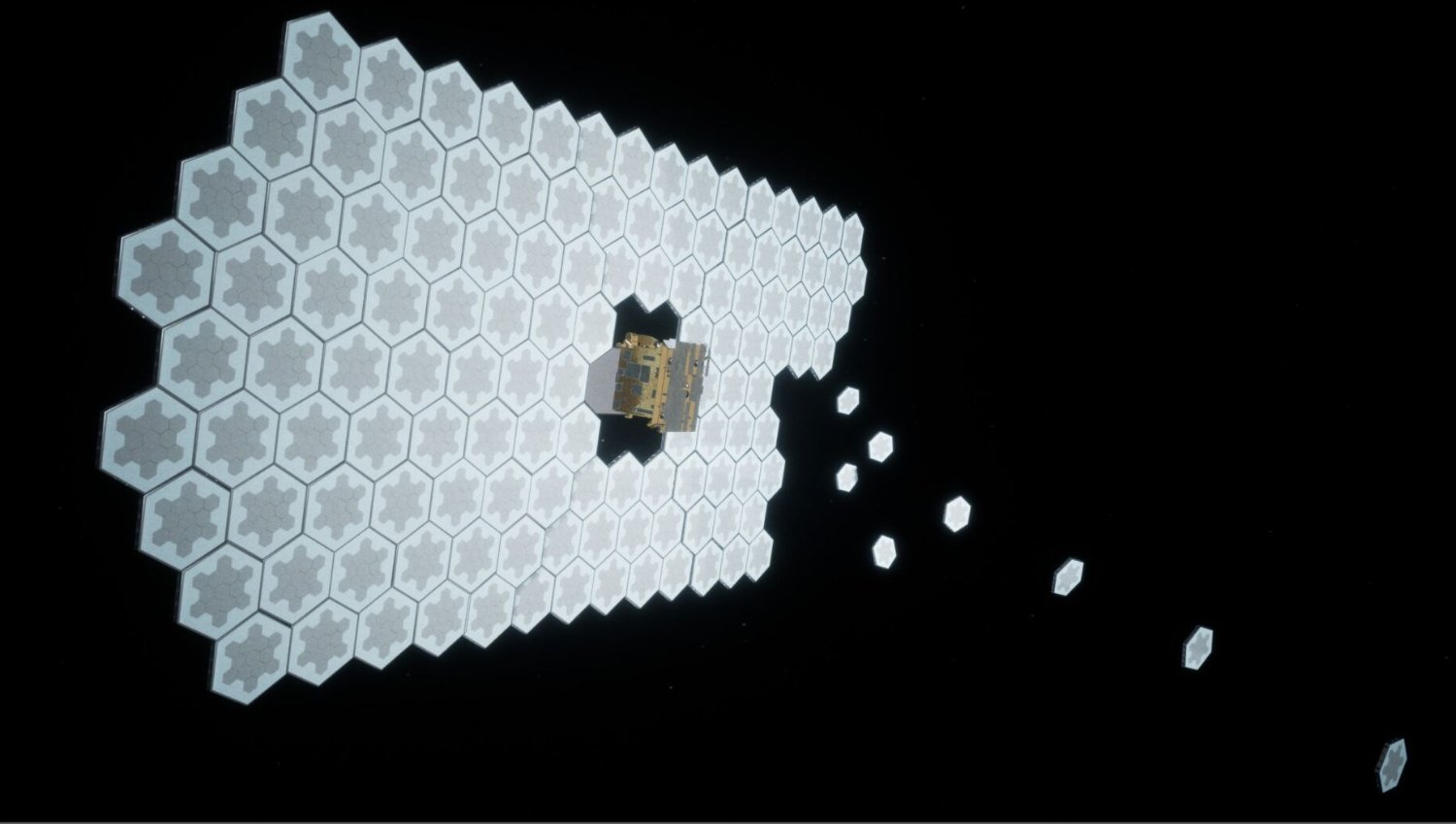
The Black Flag 100 from @BlackFlagVC named @rdvrobotics one of the most exciting deep tech companies to watch. We're building modular spacecraft that autonmously assemble in orbit into more capable systems than can be origami folded to fit into a rocket.
Got to sit down with Harsha Ravindran from @WQHS and the NGEN Entreprenuership Network at @AIAA ASCEND. We talked about the @RdvRobotics founding story and how in-space assembly will unlock more spacecraft performance for the space economy. Follow @WQHS so you don't miss the interview it when it drops.
We had a great session on Powering the Frontier at @AIAA ASCEND last week in DC. Exploring and developing the Moon and beyond will take an all-of-the-above approach to energy with nuclear playing an important role. Thanks @Zeno_Power@NASAJPL@JHUAPL@DraperLab and @Rdvrobotics
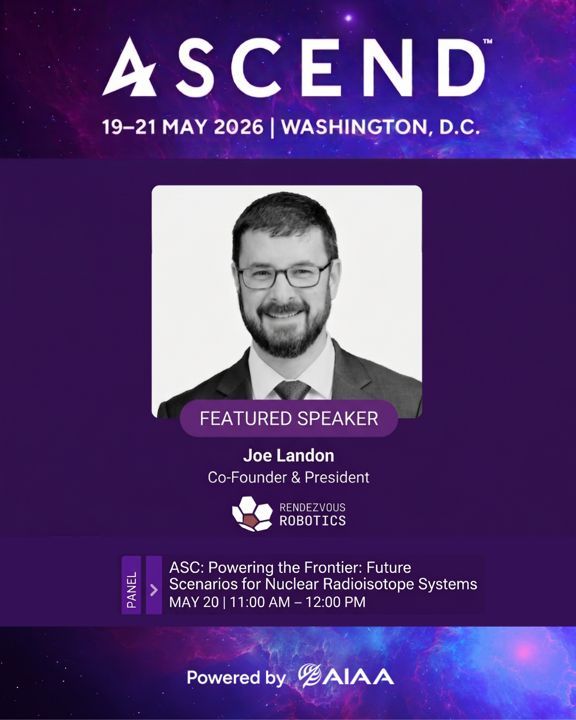
Get ready for @AIAA's ASCEND 2026 in DC. I'm speaking on Wednesday morning about "Powering the Frontier" with @ac_charania
from @zeno_power, Jericho Locke from @DraperLab and Charles Norton from @NASAJPL. Join us to discuss nuclear energy and powerful in-space assembled solar arrays that can extend human exploration further and longer.
Orbital data centers are moving fast. As this scales to the power levels that make it genuinely competitive, in-space assembly is how we get there. We will need more capable systems beyond what can be folded up to fit in a single rocket.
Air Force contracted @OverviewEnergy to study space-based solar power for military bases. As this scales up, in-space assembly becomes a key part of the solution. Building larger arrays in orbit unlocks capability that a single launch can't deliver.
Heading west next week for the SpaceTech Economic Forum. @joe_landon will join “To the Moon and Beyond” for a conversation on frontier space markets. The panel will focus on what’s becoming real, what’s hype, and what still needs to be built.
Our answer? Modular autonomous spacecraft that self-assemble in orbit. Building in space will enable a scalable space economy by moving beyond the limits of what can be folded to fit inside a rocket.
See you at THE BR-DGE.
#ModularSpacecraft #AutonomousAssembly #RendezvousRobotics
#BuildInSpace
Totally mutual @nxthompson! Loved this conversation and the opportunity to dig into how AI + space will change profound aspects of life on and around Earth, from wrangling energy, to human spaceflight, to massive scale space infrastructure.
Learning a ton from this series. Thanks @atlanticrethink for the depth of research and perspective going into The Most Interesting Thing in AI.
NASA Force is accepting applications for early- to mid-career technical talent to take on mission-critical roles across areas like lunar rover operations, airspace operations automation, next-generation propulsion, and spaceport development, helping advance exploration higher, farther, and faster than ever before! Apply through April 21: https://t.co/8GKCWTlq3S
Last stop: @semafor World Economy.
This Friday, our CEO and Co-founder, Phil Frank, will be a featured speaker, joining global leaders for a conversation about the next era of innovation in space and the economic, industrial, and geopolitical forces shaping what comes next.
https://t.co/KGwhnatOnb
Three conferences, three cities, 10 days.
Rendezvous Co-founder and CEO Phil Frank is on the move.
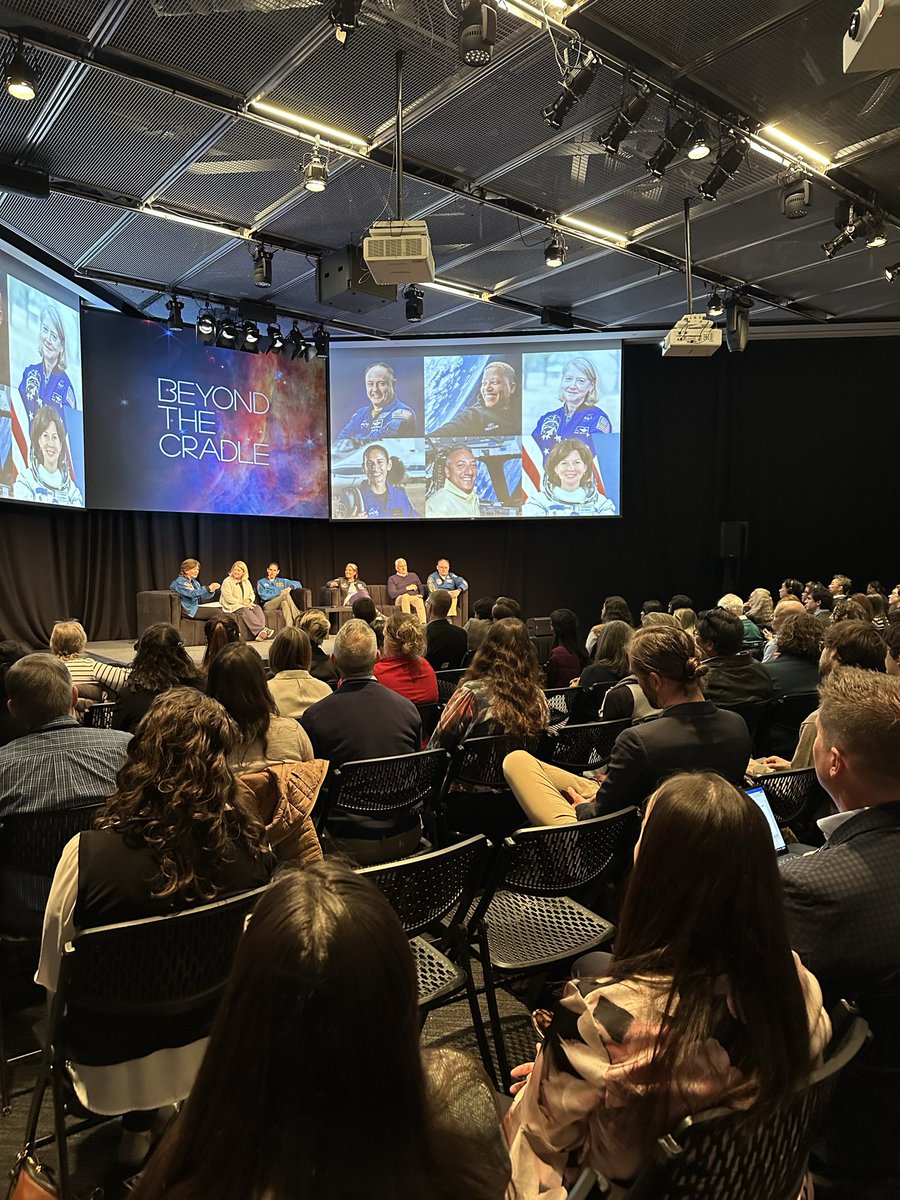
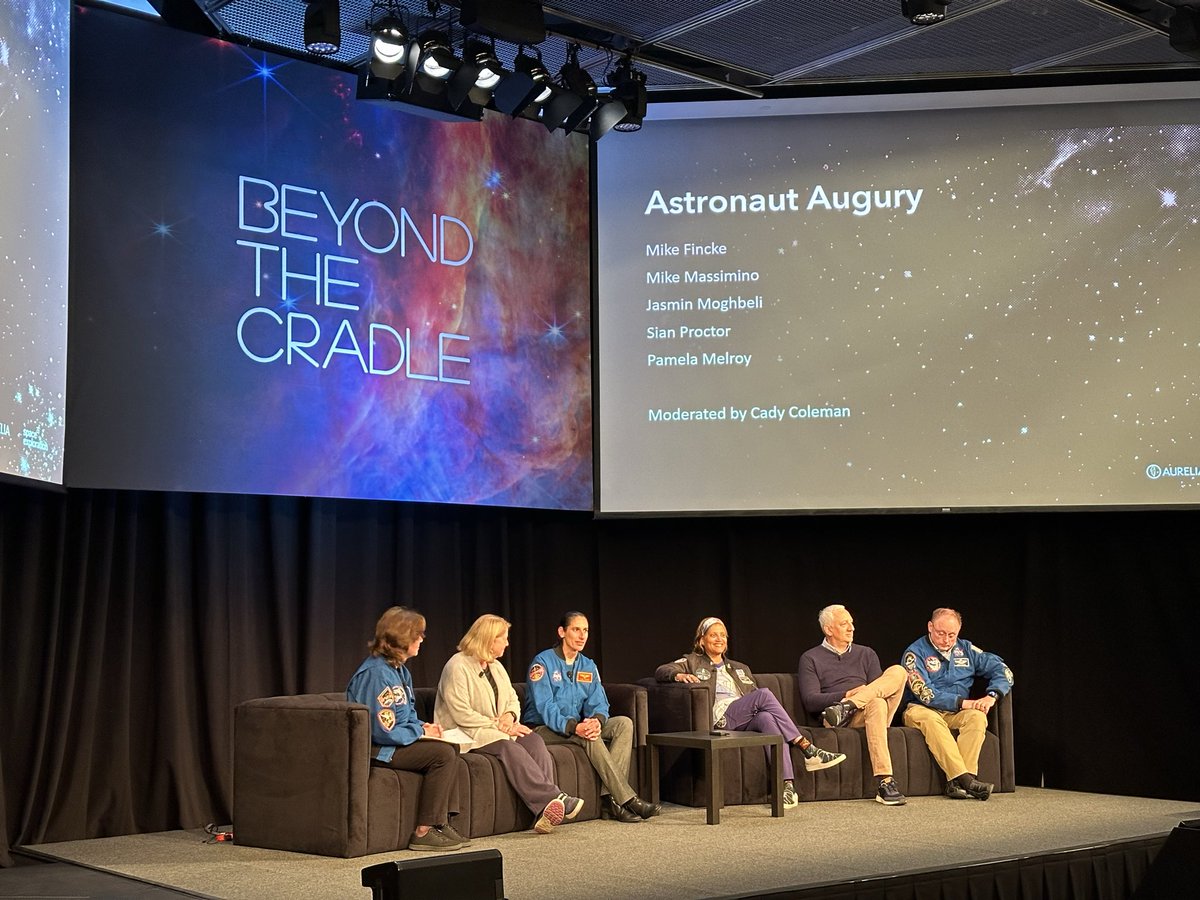
✅ First stop: Cambridge — Beyond the Cradle during MIT Space Week, joining Cody Paige, Raphael Roettgen, CFA “Democratizing Access to Space,” moderated by Mehak Sarang.
📍 Next: Colorado Springs — Space Symposium, for “Edge Computing for Resilient Space Architectures,” alongside Daniel Gizinski, Dr. -Ing Onur Deniz, Karan Kunjur, Avi Shabtai, and Michał Zachara, moderated by Dara Panahy.
📍 Final: Washington, D.C. — SEMAFOR World Economy, sharing the stage with Dylan Taylor, CEO, Voyager Technologies.
🌶️ Hot take from @joe_landon yesterday during @Via_Satellite#SatShow Week.
“Why are we still designing spacecraft to be folded to fit to the size of a rocket fairing?” 👇
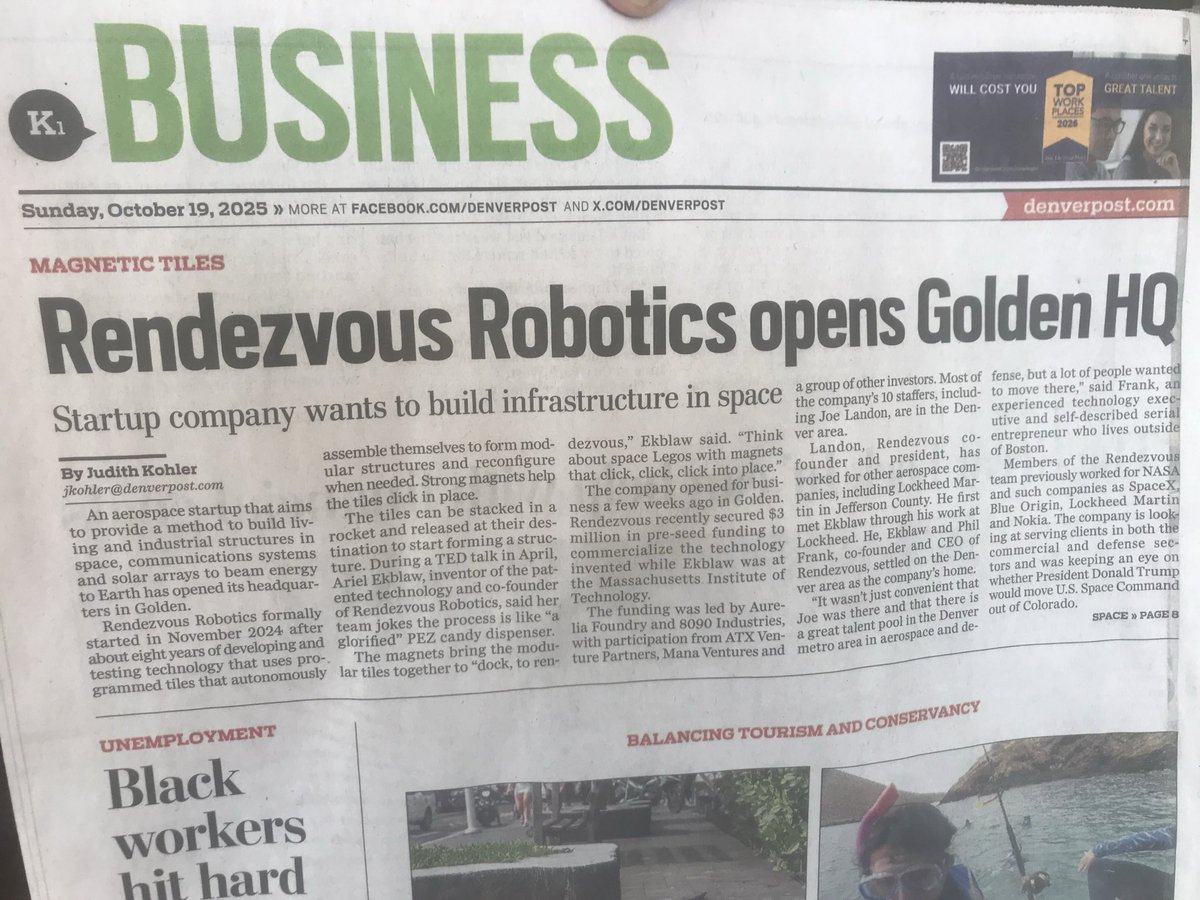
Just a little bit of life lately at Rendezvous Robotics.
The sign’s up, the team’s making fast progress on our next mission, and we’re excited to welcome our first group of interns this summer.
There’s still time to join us: https://t.co/2UYTF3HwsM
#spacetalent#hiring #rendezvousrobotics
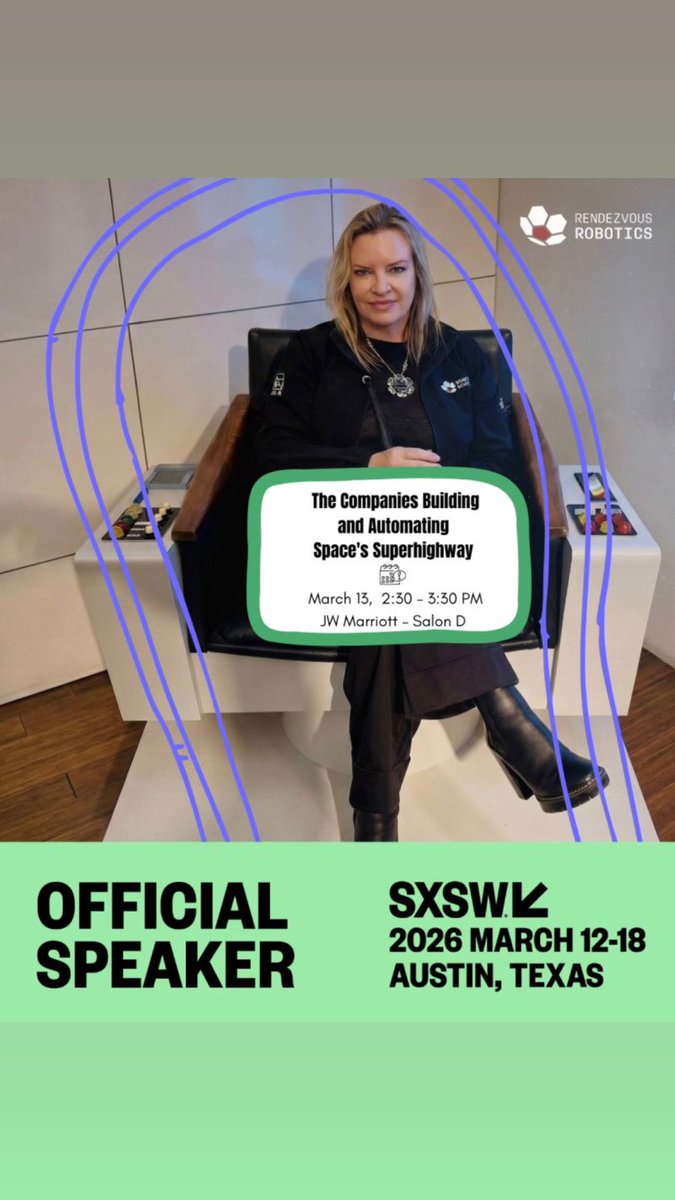
If someone gives me a mic 🎙️ I will definitely talk about space. Humbled for this opportunity to represent @Rdvrobotics at @sxsw. If you’re going, don’t miss this session: https://t.co/C8BMJEdYxK
#spacemarketing#spaceinfrastructure#ISAM
When you're building hardware for space, how fast you can test and iterate is critical. Nominal is what the best teams use.
Congrats to the @Nominal_io team on well-deserved unicorn status.
Launch is no longer the biggest challenge. The real question is what happens once systems reach orbit.
When satellites remain static, innovation slows and flexibility disappears. Companies like @rdvrobotics are focused on enabling systems that can be assembled, upgraded, and adapted over time, helping space evolve from missions to true infrastructure.
https://t.co/0UWl3e66jB
Launch is scaling. The bottleneck is shifting to what you can actually do once you're in orbit.
Maj. Gen. Stephen Purdy (@stephenater) said it directly: “Two to three years is too slow.” He also pointed to the need for payloads with “mass-produced affordability, at scale.”
We agree. But beyond production speed, there’s another constraint that hits after launch: once a system is in orbit, it’s locked into the architecture you launched. You can’t upgrade, expand, or adapt to a new mission without starting over and launching a whole new satellite.
That’s what we’re solving at Rendezvous Robotics: autonomous assembly in orbit so your architecture isn’t frozen at launch. You build the foundation, then scale and adapt along with the mission.
Great read from @StephenClark1 of @arstechnica
https://t.co/HefFLRlmp4