This note from Bao Chau Ngo (Fields Medal 2010, Clay Research Award) on Alpoge's work for Riemann is incredible. It's rare to see a mathematician of his caliber with such an open mind about AI.
@DrewFudenberg@IvanWerning@ben_golub You could feed the entire history into the AI and ask it to generate a narrative summary, say in 5-10 pages. Trace out the human chain of thinking, notable turning points and dead ends, etc.
Finally! Been waiting for work like this since grad school.
For those who don’t know, nightlights measures have been severely limited up to this point by unobservable changes in sensors over time, together with other issues. This has made the time series dimension in the data basically unusable. Fixing this is a major advance towards analyzing economic outcomes in the most hard-to-measure places.
Looking forward to digging into this one.
Harmonized luminosity series (1992-today), adjusted OLS-DMSP fused into VIIRS, @EJ_RES (@GChiovelli , @tannerwdregan, & Stelios, wisely not in X). Use it (or criticize it!!
"All else equal, building more housing lowers costs" is perhaps one of the best substantiated findings in urban economics, the basis for a trillion dollar industry, yet it is still treated like a speculative claim by many politicians.
This is exactly right, and it works at every level. I pivoted my undergrad RAs this semester from transcribing handwritten records to verifying AI transcriptions. Large productivity gains, with humans providing a critical input that itself requires training.
Everyone worries the demand and need for junior workers is falling, taking way a ladder for career advancement.
But there is a very natural task for them to do: deal with verification, which has blown up as a need
Can I say , again, that I am more than sick and tired of this baseless statements on the basis of 0 evidence by people who have no freaking idea about the labour market, or the organization of work? This is insanely stupid. And even more stupid that you can become famous by just doing this.
Basically every one of this guy’s posts is “Every popular free-to-play mobile game is made from demons from hell who lie to you because they want to eat your soul” and it’s hard to watch any of them and not conclude that these companies should be regulated into the ground
Very glad to see the NYT editorial board endorse BAAJA, the bipartisan permitting reform bill.
Key points from the article:
1. "Democrats who call climate change an emergency should not defend a permitting system too slow to build the clean energy that would address it."
2. "[BAAJA] would make it easier to build solar energy farms, battery storage, power lines and more. As a result, it would reduce energy prices. The status quo is expensive, dirty and unstable. The country needs to build a lot of big, new things to make its future cheaper and cleaner."
3. "The bill’s Democratic skeptics are making a mistake. President Trump would almost certainly veto a follow-up bill next year. And time matters, especially for the climate. Congress should pass this bill now. It can then return next year and pass other bills that would do even more good."
4. "Today, it typically takes between 5 and 13 years to build a long-distance power line, like the one that transports clean hydropower from Quebec to New England. That line took about a decade to finish, and opened in January. It has enough capacity to meet about one-fifth of Massachusetts’s electricity demand, and it’s projected to save consumers $50 million a year."
5. "A more robust, cleaner grid would make American energy more reliable and less dependent on hostile foreign nations. No country can embargo the wind."
6. "[BAAJA] would force data center operators to pay the full costs of the electricity they use, protecting the average electricity consumer."
7. "On net, the bill would cut greenhouse gas emissions from power plants by as much as 18 percent by 2040. It would do so in part by nearly tripling the construction of high-voltage transmission lines."
8. "Anyone who cares about climate change should cheer this bill. And a party that just won an election on affordability should not pass up a chance to start delivering immediately."
"Aquaterra may be mostly water today, but for the greater part of human history—indeed, for the greater part of the past million years—it was mostly land. And that land is where we came from."
https://t.co/mfc6rgnn08
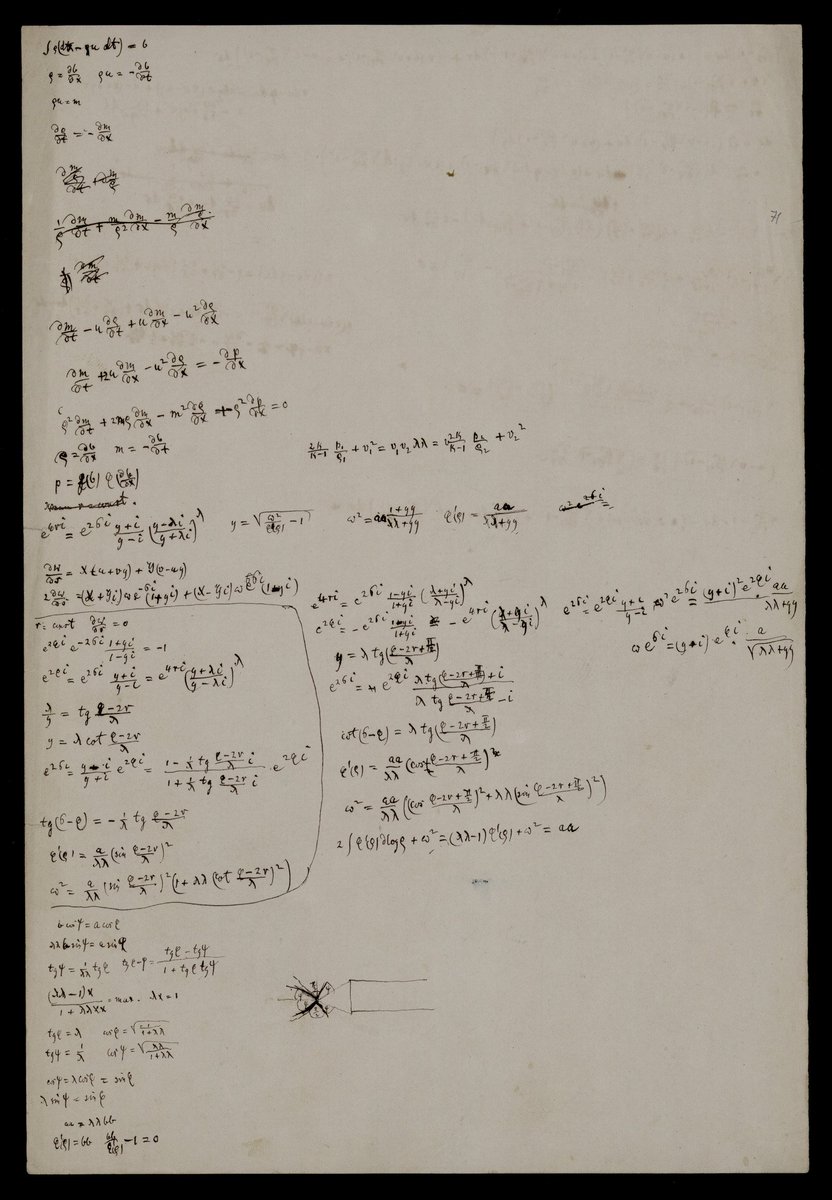
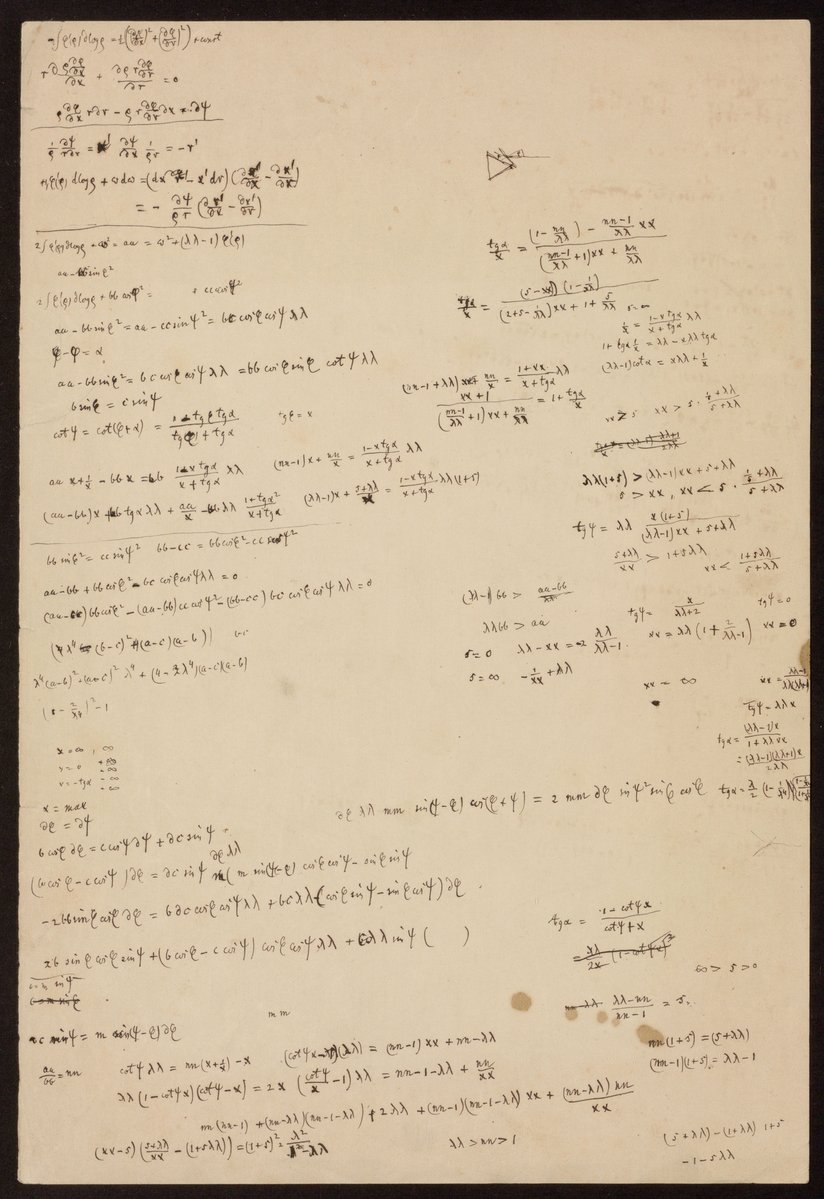
Been running Opus 5.5 agents over the notebooks of Gauss, Riemann, Hilbert and Grothendieck. around 12,000 pages so far. Heres the best finding so far:
Riemann's 1860 shock wave paper is famous for getting the energy part wrong however his unpublished sheets at Göttingen have it right the Rankine Hugoniot conditions a decade or two before Rankine and Hugoniot plus results usually dated 19061937, all in his own notation. A second sheet in another folder has the same physics.
There are probably thousands of potential undiscovered stuff in the research papers of the smartest ever to live imo all of them should be made public and reviewed by ai years of work can probably be transcribed by agents in days
One thing I’ve noticed from working on both theory & empirics with AI at the same time: (sophisticated) theory is very cheap usage-wise, empirics are very expensive.
Haven’t seen a much discussion about this, but it’s likely to affect AI’s expected impact in science quite a bit.
Takes on the election
1. To a first approximation, Republicans lost this hard because voters lost confidence in the Trump administration, not because of a positive agenda from the Democrats. Favorability of the Democratic Party was negative (-5). But Trump told voters to “vote like he was on the ballot”, and they did. The NBC exit poll found that 37% of voters approved of Trump, and 63% disapproved (-26). There’s just no winning the national environment with these margins.
2. There were essentially two major issues that voters cared about: 1) cost of living and 2) government corruption, both of which ~90% of voters said were “crucial or a major factor”. AI was not *that* big of a deal in this election - 56% said it was “crucial or a major factor”, but it’s really hard to disambiguate what voters feel about AGI and catastrophic risks (if anything) from ordinary median-voter NIMBYism around data centers. (It will, however, likely be a huge deal in the 2028 election when the impacts of AI become much more visible). Immigration was also not that big of a deal. Voters actually slightly favored Rs on immigration (+2), probably thanks to lasting backlash from the Biden administration’s laxity on border enforcement. It's unclear to what extent the war with Iran contributed aside from it raising the price of gas.
3. Data centers are probably not over. In fact data center ETF $DTCR was up nearly 2.5% today! It’s hard to understand why this is the case, but one hypothesis is that markets think ultimately, elites’ recognition of the immense economic and national security importance of data centers will override voters’ desire not to build them.
4. On cost of living in particular: one of the most important questions now is to what extent Dems will embrace economic slopulism (think rent control, broad asset taxes, and subsidizing demand) vs. “abundance liberal” policies like building more housing, cutting regulations, and embracing economic growth.
5. Thermostatic backlash is real. Voters hate incumbents. Political majorities shift constantly. The blue wave of 2008 was immediately followed by the red wave of 2010. Anyone predicting a durable multi-decade supermajority for Democrats will likely end up being wrong.
6. “Woke is back” is exactly the wrong lesson for Democrats to take from this, and Ro Khanna posting “DEI is back” doesn’t help. Using transgender issues as a proxy for “woke”, 52% of voters said trans rights have gone too far, compared to just 26% who said they haven’t gone far enough. Deep-blue Washington voted to ban trans athletes in girls’ sports, and Colorado voted to ban trans surgery for minors. Successful Democrats mostly avoided culture war issues.
7. Similarly, a lot of moderate or even right-leaning downballot measures passed, even in blue states. Eight states voted to require voter ID. North Carolina voted to cap state income taxes. California’s billionaire tax is on track to fail by nearly 11 points. Wisconsin voted to ban DEI in state government. Voters largely do not like left-wing ideas.
8. On the other side, “Demographics is destiny” (i.e. America needs to be a white nationalist/nativist country and heavily restrict immigration) is the wrong lesson for Republicans. White voters shifted 13 points to the left. Whites under 30 shifted 30 points to the left. Hispanics and other non-white groups shifted massively towards the right in 2024, and can be encouraged to do so again.
9. Moderates outperformed; radicals underperformed. Dems won by 13 points nationwide. Roy Cooper won by 19.6 in North Carolina (where Trump won by 3.2 in 2024). Jon Ossoff won by 18 in Georgia, where Trump won by 2.2. Abdul El-Sayed in Michigan and Troy Jackson in Maine, both Bernie-backed supporters of Medicare for All, abolishing ICE, and wealth taxes, both underperformed the national margin. In fact, Maine shifted slightly rightward. Dems were able to win deep red states like Iowa, Kansas, and Mississippi by running moderate, Republican-presenting, pro-border-security candidates. I suspect this is the main reason markets are up today. (For some intuition on how insane it is for a Dem candidate to win in Mississippi, Trump won Mississippi in 2024 by a larger margin than Harris won California!)
10. One of last night’s biggest winners was Florida’s Republican governor, Ron DeSantis. Under his tenure, Florida has gone from slightly red-leaning to reliably red. Republicans swept every statewide office, kept every House seat, and kept their majority in the State House and supermajority in the State Senate. In January, Florida will be the only one of America’s ten most populous states to have a Republican governor. DeSantis is genuinely smart and nuanced, lacks the baggage of figures like Vance and Rubio who are associated with the Trump administration, and did a great job as an administrator running Florida (see its high rate of domestic migration, zero state income tax, very low debt per capita, high education rankings, state budget surplus, etc). I would be unsurprised if he decided to run for President in 2028.
11. The other biggest winner was Jon Ossoff. Ossoff is a young, handsome, charismatic, moderate white male who won by 18 points in a state that went +2.2 for Trump in 2024. He achieved this in large part by focusing relentlessly on the two issues that mattered: the Trump admin’s corruption and the cost of living. He may very well be the Democratic frontrunner in 2028 (although, of course, it's far too early to make confident predictions about these things).
12. The biggest loser of all last night was Israel and the US-Israel relationship. Israel’s popularity in the United States has been in a steep, secular decline for years. Just 13% of Democrats and 54% of Republicans have positive views on Israel, and this is heavily skewed by age - younger voters are much more likely to oppose Israel. With Democrats taking both houses, it’s unlikely America’s level of political and military support for Israel will last for very long.
13. Gerrymandering doesn’t work under sufficiently strong margins for the opposing party. In political science, this is known as “dummymandering”. Dems are on track to flip 7 of North Carolina’s 14 House seats, shifting the balance of power from 10-4 Republican to 11-3 Democratic.
14. Trump quickly conceded that his party lost and he would be open to working with the Democrats. This was a positive update on Trump’s tendency toward authoritarianism. Many mainstream Republican figures, like JD Vance and Ted Cruz, quickly posted somewhat genuine mea culpas. There was a lot less coping than I expected. It’s possible that the loss had to be very painful for them to learn from it, and we wouldn’t have seen the same if Dems had won only 51 Senate seats.
15. Elections are truly a ton of fun to monitor live. There’s nothing like it. And prediction markets beat mainstream media in terms of timeliness and accuracy by FAR.
16. There’s a good chance none of this matters that much. Trump is still the president and still has veto power. Voters might turn on the incumbent Democrats in 2028. And historically, real GDP growth isn’t that different during eras where Ds controlled Congress vs Rs. Much of your probability mass should go towards “nothing ever happens”.