For those who are interested in returning to school in their 40s, scheduling does not have to be a barrier. Earning a bachelor’s degree through PLNU can be done even while still working full time.
https://t.co/K2CzUIrmRq
In many @dgsomucla neuroscience labs, trainees move between fundamental & clinically-oriented research, sometimes in the same project. This kind of cross-training is where new ideas emerge, especially in areas like #autism and neural computation (eg @FDavatolhagh in @anne_churchland's lab). What kind of training do you think best prepares scientists to tackle complex brain disorders?
Scientific publishing needs to change. In a new preprint, HHMI President Erin O'Shea and Bodo Stern argue that the incentives are misaligned. Researchers should be evaluated on what they choose to share, not what journals select. I’m proud that @hhmi_science is leading the way. Read the preprint here: https://t.co/CV1iiwgIvY
This list of accomplishments by Berkeley profs is impressive but I think the most impressive stat is 32% of students are Pell grant recipients and they get to take classes and do research with profs thanks to federal funding. BTW more Pell students than Ivy League combined.
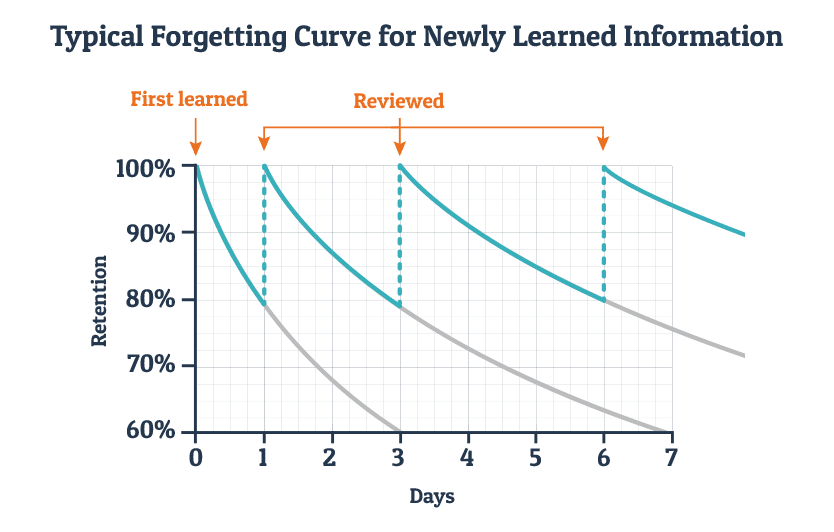
They should teach this in every school:
EVERYTHING you learn, even basic math, decays over time unless you use it regularly in daily life or make a deliberate effort to practice it.
This phenomenon is known as Ebbinghaus’s Forgetting Curve.
@SirMaucco sounds cheesy but my parents and ancestors. all the people before me that never had these opportunities. being at harvard was like i made it to the moon honestly.
Very excited to share this finding from my postdoctoral work that is now published in @ScienceAdvances. We show how the gut’s epithelium modifies enteric behaviors during nutritional adversity via distinct peptidergic signaling axes.
https://t.co/vRP9Wcn8bq
Thread ⬇️
(1/n)
Postdoctoral Research Fellow opportunity in Nematode Genomics at Tree of Life, Wellcome Sanger Institute: see https://t.co/ACUMXVaJGv to apply!
We are seeking a postdoctoral fellow (PDF) to work on the generation and analysis of nematode genome sequences, and to carry out a programme of research exploring the evolution and adaptation of nematodes.
Nematodes are ubiquitous, abundant and speciose. The phylum includes many parasites of human, veterinary and plant health importance. Free-living members often dominate sediments and soils, and play key roles in ecology. The model nematode, Caenorhabditis elegans, is a preeminent biological model organism. We are interested in describing and exploring the patterns and processes that shape nematode genomes, and in using genomic data to interrogate the evolution of parasitism and other traits.
Using advanced sequencing toolkits, including single-specimen protocols, we plan to generate many 100’s of nematode genomes–chromosomally complete wherever possible–from species in laboratory culture, from species isolated from wild or farmed hosts (animal and plant) and from single individuals identified from marine and terrestrial sediments.
The postdoctoral fellow will be part of a team focussed on nematodes, and will participate in specimen acquisition and preparation for sequencing, but will have a main focus on assembling raw data into chromosomally-complete genomes and on analysing the biology of those genomes. For example, many nematode species undergo programmed DNA elimination, meaning that the genomes of somatic cells differ from that of the germline. This process is biologically fascinating but has the side effect of making genome assembly entertainingly difficult.
Researchers in the Blaxter group, part of the Tree of Life programme, work on a range of taxa, from protists to metazoa, with overarching goals of linking genomic diversity to phylogenetic diversity, and understanding the drivers of and constraints on genomic change. The group is intensely collaborative, with shared questions that we explore in different groups of species. We develop toolkits for our work that we share openly with others, and provide data platforms to support dissemination of our work. The PDF will be embedded in this supportive and dynamic environment to produce significant work of wide impact.
see https://t.co/f50VYGX1Jd and https://t.co/IfYbmuLTJz
The Tree of Life programme as a whole is dedicated to biodiversity genomics, with faculty-driven research and several major core projects delivering and analysing reference genomes from protists, plants, fungi and animals, with skilled wet lab and informatics teams for extraction, sequencing, assembling, and curating genomes. The Institute too is intensely collaborative, and postdocs in particular benefit from an active postdoc community, with training, seminars and mutual aid over beers and pizza.
see https://t.co/234GpTWdvj
#########################
Join us for UNDERSTANDING LIFE: Using largescale biodiversity reference genomes
In person meeting 27-29 October 2025 at the Wellcome Genome Campus, Cambridge UK
REGISTRATION OPEN! https://t.co/KsWgvWooyl
#########################
Tree of Life: https://t.co/234GpTWdvj
Darwin project: https://t.co/qFHieASs6C
Psyche (European Lepidoptera genomics): https://t.co/wQufXR6Cjx and https://t.co/WGWc0SBrZN
AEGIS: https://t.co/m9d4NABnje
Genomics job opportunities in Sweden! Our infrastructure has an open position for a postdoc with a focus on long-read sequencing, and a permanent (!) bioinformatician position in ancient DNA. Cutting-edge tech, great environment, work-life balance, nice country. Please RT!
The goal of a PhD is not to learn some facts or read a few papers or learn a bunch of techniques. The goal of a PhD is to learn independence, problem solving, how to finish things you start, resilience, & gain the ability to adapt & think creatively. Learning these things is hard
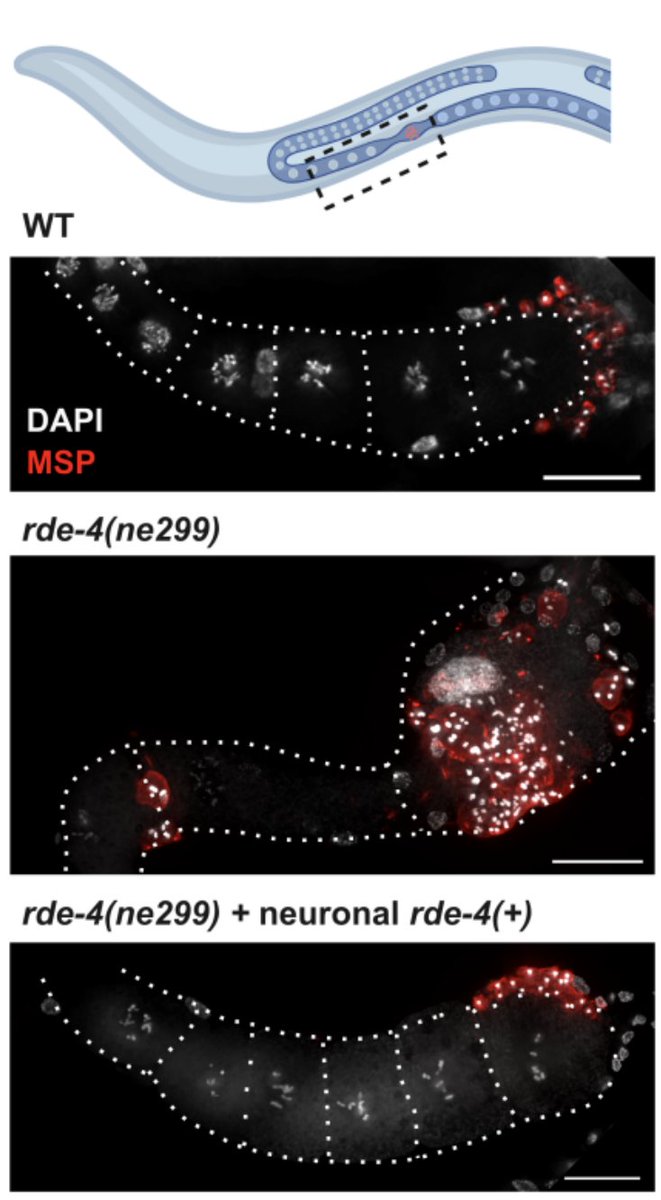
WOoo! Hot pre-print alert! 🔥 Our new story shows that neuronal oversight of germline small RNAs prevents sterility & allows lab-domesticated C. elegans to reproduce when temperatures rise. This picture shows how neuronal small RNAs rescue the germline from being messed up (1/2)
I think a good rule of thumb is to spend at least as much time thinking about your data as you did obtaining it. It's common for people to spend a lot less time thinking than doing which gives rise to all kinds of problems.
At #MBL Visual Neuroscience course w/ Anna Jansson @anna_m_neuro, Angel Robles-Gomez & Leonor Afrima. Using 2P microscopy to image transfer of visual signals into & out of bipolar cells in retina of larval zebrafish. Great fun! Thanks to Directors @RichKramerLab & @SchwartzLabNU
🌟Ending the day on a high note. My friend’s book has arrived, and it’s autographed! Thank you, @jenheemstra. Your journey is truly inspiring, and it’s empowering to see all you’ve accomplished. I can’t wait to read your book and take note of the lessons shared in its pages. 📖👏🏽