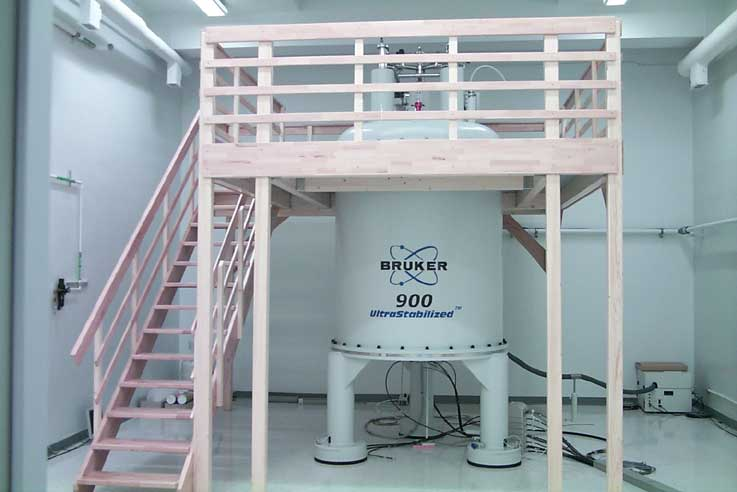
. @nmr900 is also celebrating 21 years of operation this August 2026, having first opened to users in August 2005! Here’s to another 21 years at 21 Tesla! 🧲🍾
The CSC and CSChE societies and communities express deep concern over proposed Tri-Council funding cuts. Canada must invest in science to ensure long-term health, innovation, and prosperity. Read the full statement here: https://t.co/ddKRDLnHwj
Please RT! We are delighted to announce the award winners for the 4th Global NMR Online Conference for their outstanding presentations. 🏆
Congratulations to all the winners!🎉
We want to thank all the participants, our sponsors and the judges.
#GlobalnmrOC2025#NMRchat
The field of magnetic resonance comes together- across borders and time zones!
The Global NMR Online Conference 2025 is officially LIVE!
Dive into 2-minute presentations from brilliant minds pushing the boundaries in MR techniques.
Join us:
https://t.co/bIk7Bn4IKL
Our novel readout scheme for solid-state spin systems has just been published! It enables efficient noise cancellation and few-pixel imaging without the need for a camera—relying solely on AOMs commonly found in most experimental setups.
https://t.co/Znt5dur2GQ
Join us on Tuesday, April 22, at 5 PM Paris / 11 AM Boston / 8:30 PM Delhi for a talk by Prof. Vladimir K. Michaelis: NMR Spectroscopy of Metal Halide Materials: Shining Opportunities & Challenging Nuclei #NMR#NMRchat
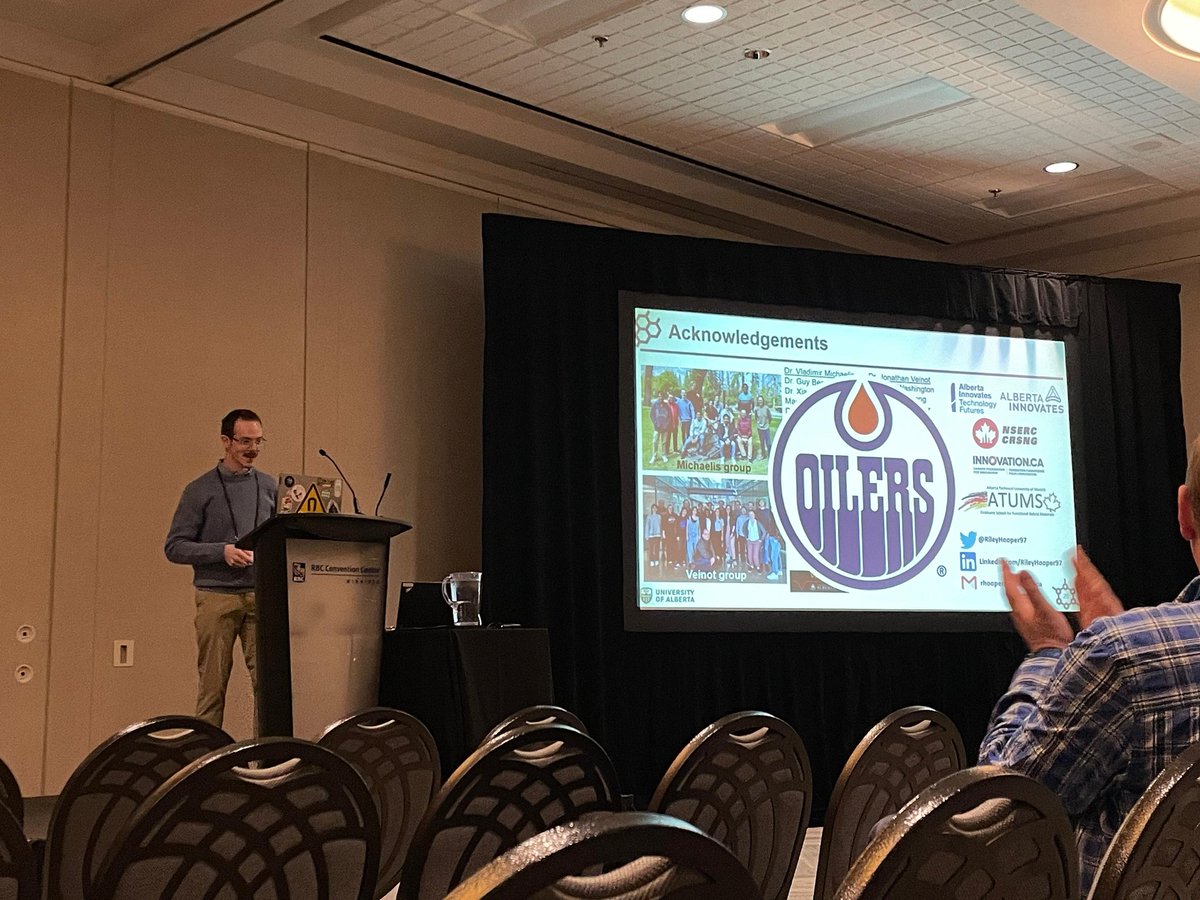
Dominik will give a talk on the ENC conference next week (Monday at 4 PM). He will be presenting our recent NMR work, along with some exciting unpublished results on novel optically addressable spin systems! Please feel free to reach out if you would like to discuss with him.
Pushing Limits of Ultra-wideline Solid-State NMR Spectroscopy: NMR Signatures of 209Bi and 127I in Metal–Organic Frameworks at Ultra-high Magnetic Fields | Journal of the American Chemical Society @nmr900 https://t.co/NjvgxliSlH
Verdazyl-Based Radicals for High-Field Dynamic Nuclear Polarization NMR | Journal of the American Chemical Society @ualbertaScience@UAlberta@ualbertachem @TykwinskiGroup @nmr900 https://t.co/cSwZde4Qhr
Lots of great talks so far at #S24MRS, catch me as part of the Lead-Free, Lead-Reduced, Perovskite-Like Materials session on Friday at 11:45 am in Room 334!
Congratulations to Michael Doyle (Chemistry), Anna Kalisvaart (Psych), James Cahill (BioSci), Russ Greiner (CompSci), Maya Evenden (BioSci) and Mauricio Sacchi (Physics) on receiving Killam Awards in recognition of their outstanding work. 🎉
https://t.co/7877i23G39 #UAlberta
In case you missed it at Euromar, here is some of our latest work investigating the X-site of cesium lead bromides using Bromine NMR, NQR, and DFT. Also out now in JMR! https://t.co/ucld1JGu87 #GlobalnmrTC2023
@Michael_A_Hope @MichaelisNMR @ABSi_nano Although I think it would be dependent on the specific system under investigation, for Cs-substituted FaPbI3 the NQR signals already become extremely broad at ~10% Cs loading (A-site mixing), and 4% Br loading for mixing at the X-site --> https://t.co/25MP69fyM0
@blkwiln @MichaelisNMR @ABSi_nano Generally no, you will not know the sign of Cq from experiment, only the magnitude. DFT can help resolve this, but it should not impact data fitting.