@mattwensing@bmoesta Bob is awesome, huge fan and he blurbed the book on PULL! In short - not all jobs get done, and not all jobs that get done, get done by you. PULL defines a “job” (or “project”) that is actually prioritized with existing methods/etc that are not good enough
Despite the proliferation of startup pundits over the last 25 years, no one knows how to make startups more successful.
The New Pundits have sold millions of books, and their entrepreneurship “science” is taught in universities and accelerators all over the world. But none of it has made a difference.
Startups are no more likely to survive today than they were in 1995. By some measures, they are even less likely to work.
In his latest essay, legendary venture investor @ganeumann presents the data, diagnoses the problem, and proposes something that might actually work.
It involves Robert Boyle, Peter Thiel, Paul Feyerabend, and Lewis Carroll’s Through the Looking-Glass.
https://t.co/CElsVCloYY
Lot of hate here, but I find it really inspiring to see startups grow that fast and a cool challenge to try to figure out how to grow that fast and build something that great.
"Triple, triple, double, double is dead.
Going from $1M to $3M to $9M is not interesting.
You have to go $1M to $15M to $100M."
@chetanp@honam@rabois@jasonlk@bdeeter@ttunguz is triple triple double double dead? Have our growth expectations changed forever?
@rjs@next_door_nate Favorite quote is in book 2: “it was an uncomplicated making process, sophisticated only in its simplicity.” (Or something close to that)
More and more, I have lost conviction that “minimum viable products” make sense for product development.
It makes no sense to release a product with the core flow and then dismiss its viability after the aggregate data says people aren’t using it.
Instead, founders should have a fundamental belief about what people want—and they should keep iterating until that value is correctly surfaced.
In practice, this means you should keep a steady flow of new users as you add components to the product, seeing if it solves a core part of the activation and signup loop.
The only part that could possibly be “half-baked” is those individual components. But even those need sufficient quality so there are no confounding factors that distort the signal.
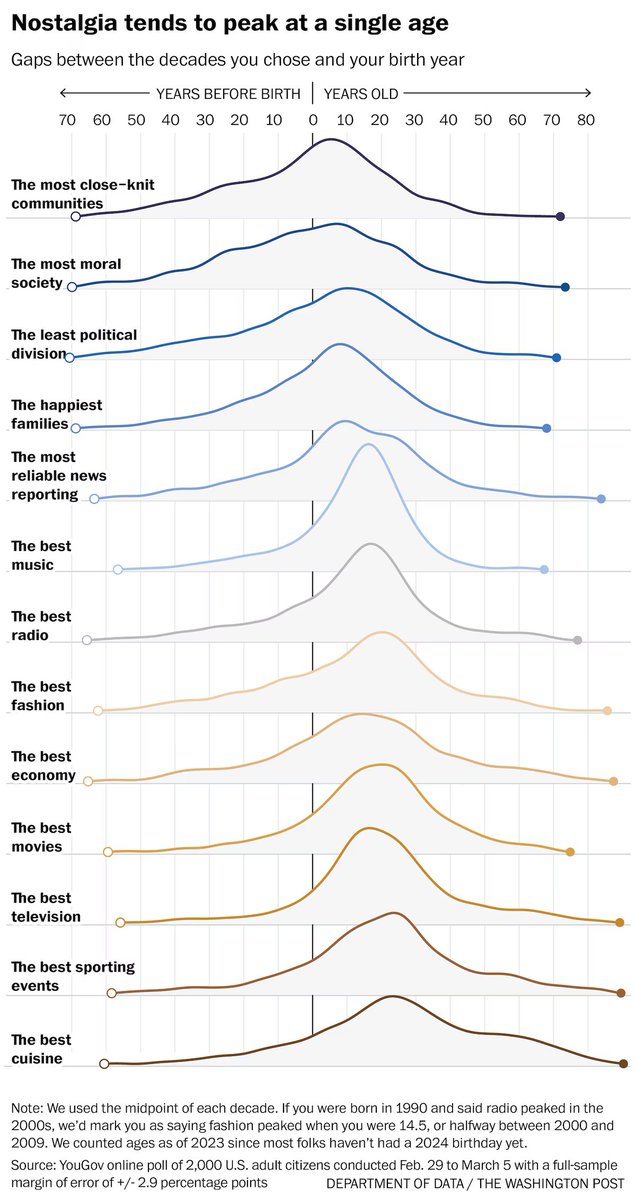
It turns out music, movies, entertainment, and society in general peaked during the exact time period when you, the person reading this, were a teenager.
My favorite part of early Hubspot lore:
Evolving from “stop f***ing the customer” to “solve for the customer”
Not sure if that part of the story is public anywhere, but it should be
tl;dr: Woo hoo! HubSpot has some MAJOR product updates we're spotlighting today. Trust me, THIS IS BIG.
HubSpot was built with the spirit of reinvention.
We started as a simple set of applications for marketing.
Over our ~18 years, we've evolved into a full CRM and customer platform with over 200,000 customers. (Not that I'm keeping score or anything, but that's more than the 900 pound gorilla in our industry.)
What I love about HubSpot is our focus on SMBs and our passion for Solving For The Customer.
It's not just that we champion the entrepreneur, it's that we champion those that are entrepreneurial, whatever the stage. That means a founder just getting started or an ambitious leader in a 2,000 person company that knows there is a way to grow better. (See how I snuck in the HubSpot mission? As a founder, I get to do that whenever I want. I don't make the rules).
I could not be more proud of the HubSpot team and what they have built. I also love the way the team is telling the story.
https://t.co/WSesGrEn4F
All feedback is appreciated.
What do you love the most?
What did you *want* to love, but we just missed the mark?
What do you hope to see in the next Spotlight?
Thanks for your support.
Cheers,
@dharmesh