Doing nothing is the hardest trade in finance, and your brain is the reason. The investor who bought the S&P at the March 2000 peak waited 13 years just to break even. This chart makes it look easy because it hides what "nothing" actually required.
It required sitting through a 49% crash from 2000 to 2002. Then a 57% crash from 2007 to 2009, when the index bottomed at 666 and every credible voice on TV said the financial system was ending. Then a 34% drop in 33 days during Covid. Then a 25% grind through 2022.
Here's why almost nobody can sit still. Kahneman measured that losses hurt roughly twice as much as equivalent gains feel good. Now add checking frequency. On any single day, stocks are up only about 53% of the time, so the daily checker experiences psychological pain almost every other open. Zoom to 10-year windows and the market has been positive about 94% of the time. Same investment, completely different emotional experience. Your holding period doesn't change your returns as much as it changes how often you get hurt.
Then there's action bias. A famous study of soccer penalty kicks found goalkeepers dive left or right on 94% of shots, even though the data says staying in the center stops more goals. Diving and missing feels like effort. Standing still and conceding feels like negligence. Investors are goalkeepers. Selling in March 2009 felt responsible. Holding felt reckless. From that 666 low, every dollar you refused to sell turned into $11.50.
The industry knows all this and built for it. Your brokerage app sends push notifications about red days because a scared user is an active user, and activity generates revenue. Barber and Odean found the most active traders underperform the market by about 6.5% a year. Dalbar has tracked real investors since 1985 and the average equity fund investor has now lost to the S&P for 15 straight years.
The market pays a premium for exactly one behavior, and everything from your amygdala to your phone is engineered to stop you from doing it. Congratulations to the investors who did nothing. They beat their own biology.
The world's richest companies told you that they were going to blow all their money - literally thousand yards+ a year - into buying literally every every computing hardware that's out there out on the market, and you had 6 months+ to adjust to this with all the evidence pointing towards it and you missed it entirely because you grew up in a world where computing hardware was a dirty word. You're literally no better than Hoult's character in this movie. You know how to sound like you know what you're talking about but when an opportunity comes knocking at your door you couldn't think from first principles out of a wet paper bag and missed out on a generational run that even a small % allocation would have changed your career entirely. Now you're just left holding your dick in your hand hoping desperately for this to be a bubble and everything to come crashing down so you look like a hero once again just like 25 years ago
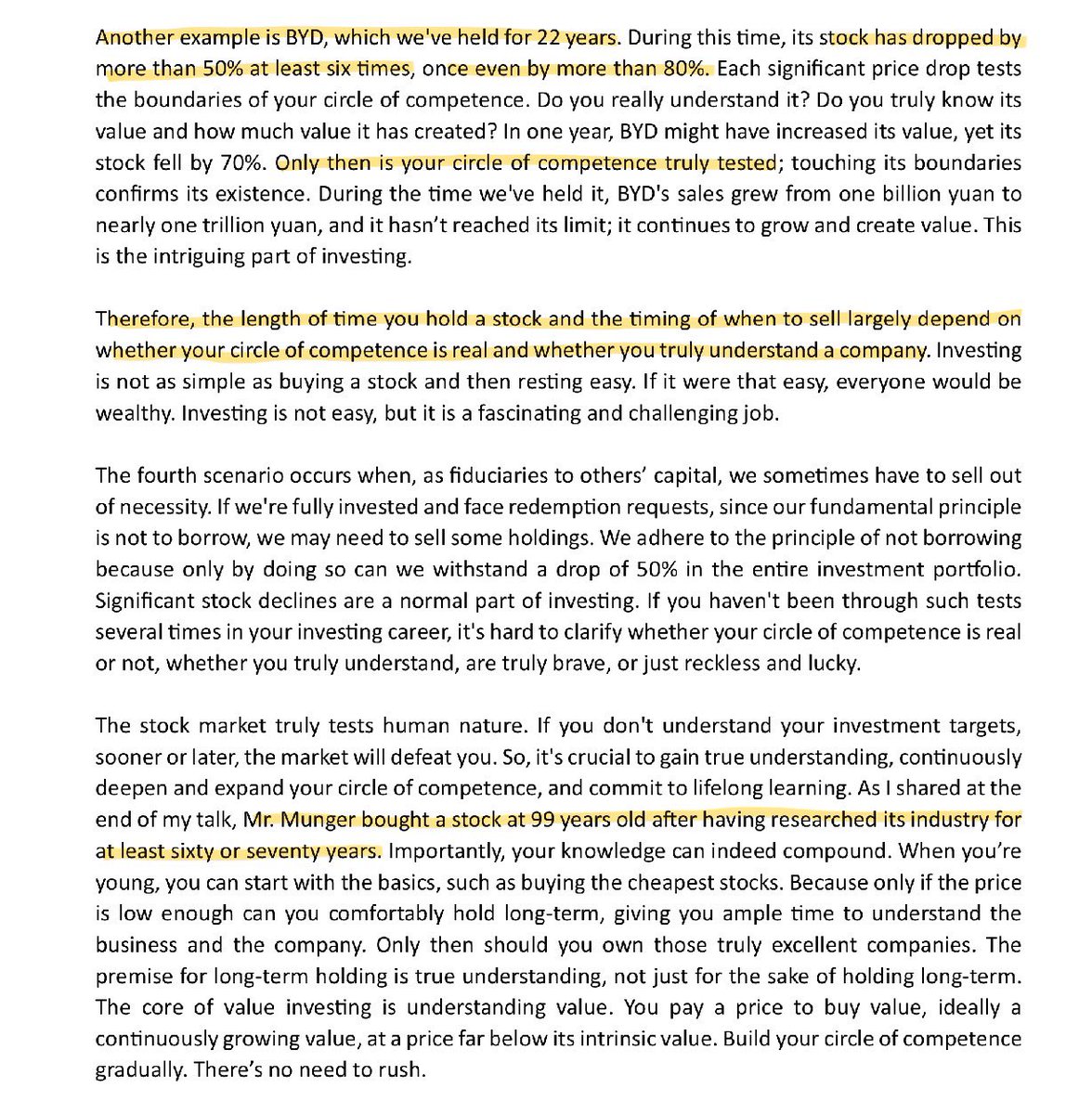
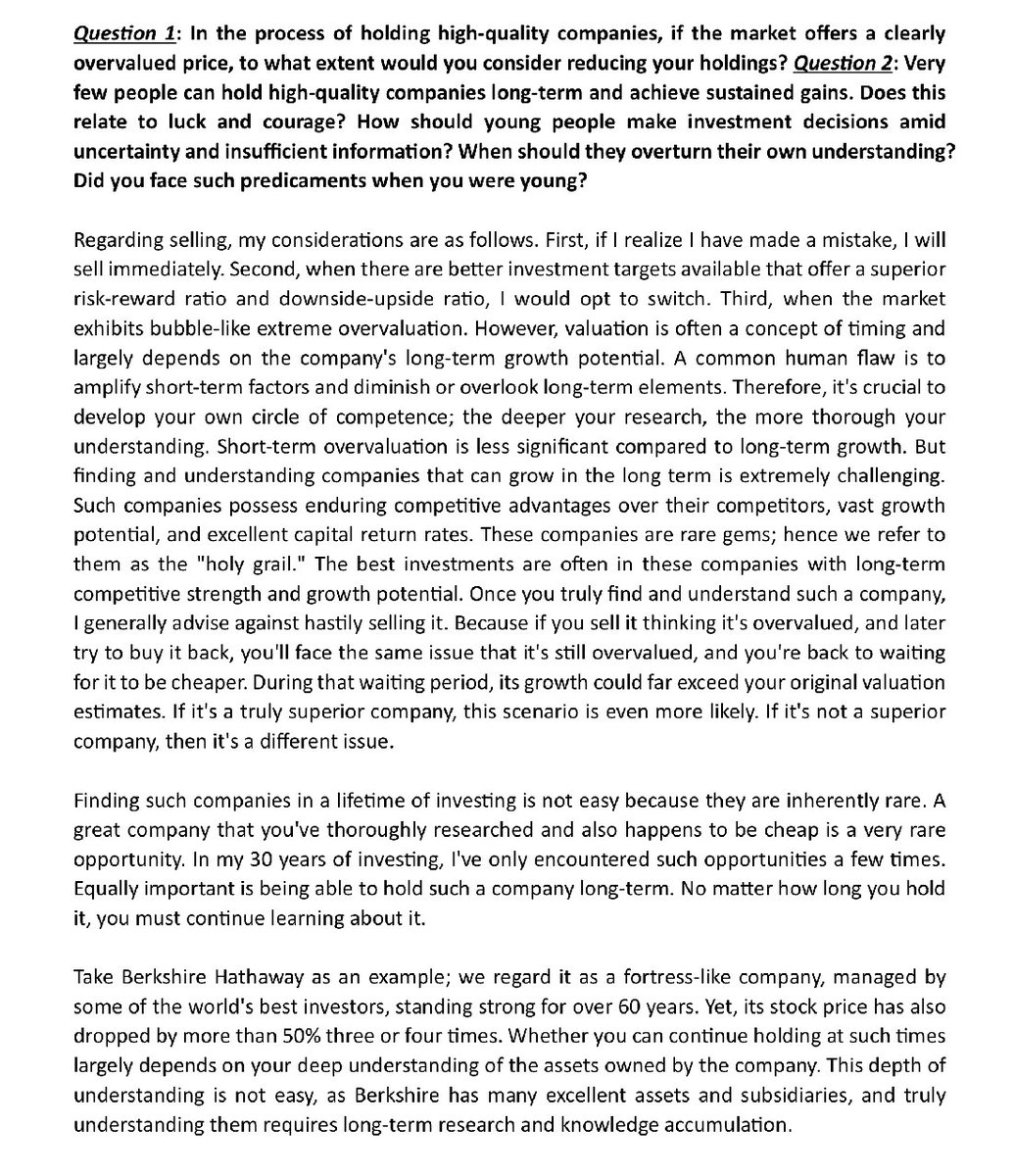
Li Lu has held a single company’s stock for over 22 years
During this period , the stock has dropped more than 50% up to 6 times !
“Only then is your circle of competence truly tested “
Fintwit Archetypes (non-exhaustive) :
1. "True" Value Investor
Manages personal portfolio, family money or small fund (quarterly letters always public). Concentrated, bottoms-up investor that applies Buffett. Not retarded. Huge drawdowns, but it's OK, he "thinks long term"
This speech from Federer is brilliant and so much of what he says is applicable to trading.
Even though he was one of the greatest men’s tennis players, he won “only” 54% of the points he played.
The whole speech is worth 2 mins of your time 🎾😎
China’s unfolding consumer deflationary boom in one chart. I guess it explains how Chinese equities could lose two thirds of their value, real estate lose between a quarter and a third of its value, and domestic auto sales still make new highs.
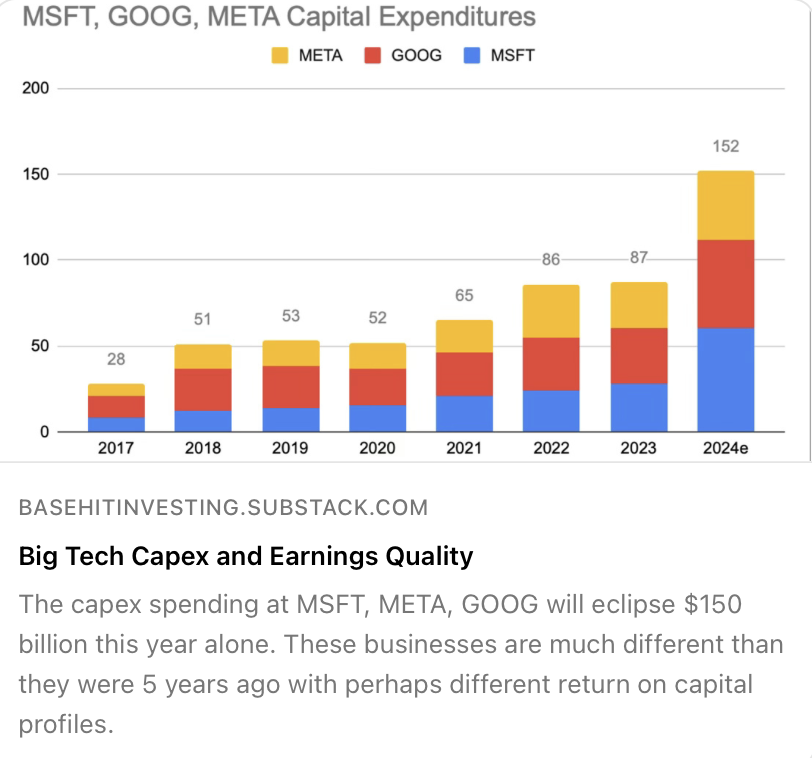
New post with some thoughts on the valuations, ROICs and the rising capital intensity of the formerly capital light tech companies (link in bio)
$GOOG $MSFT $META
“Hi, my name is Andrew and I’m wondering if you had more day with Charlie, what would you do with him?“
The most poignant question of the day came from a child.
Buffett’s answer eulogized Charlie and sprinkled fabulous life advice throughout.
“[Charlie and I] never had any doubts about the other. person.“
Listen all the way - Warren ends it epically. ❤️
Terry Fox was a cancer patient who ran 5,373 km across Canada in just 143 days before he died.
Terry thrilled the entire country. His goal was to receive one Canadian dollar for every Canadian in the population (then 24 million people), and he achieved his goal by raising 24.17 million Canadian dollars in February 1981.
A year after Terry Fox's death, the Terry Fox Foundation was created, which promotes amateur races across Canada and in several countries to support the fight against cancer.
According to the Terry Fox Foundation, more than C$715 million has already been raised for cancer research on Terry Fox's behalf.
America has Warren Buffett, but Japan's most famous investor is 71-year-old Kiritani, who has a portfolio of over 500 stocks totaling over 400 million yen. He does not own a car and rides around everywhere in his bicycle. He's also known for his love of shareholder perks. /1
A story in 3 parts:
(1) Schwarzman/Blackstone: A “golden moment” in private credit
(2) BofA: Defaults in private credit could rise
(3) UBS Chairman: Private credit may cause next financial crisis
Did you know the first mutual fund was launched in 1774?
It also required unlocking an iron chest with 3 keys to trade... And the first value fund was launched 5 years later!
A FINANCIAL CRISIS
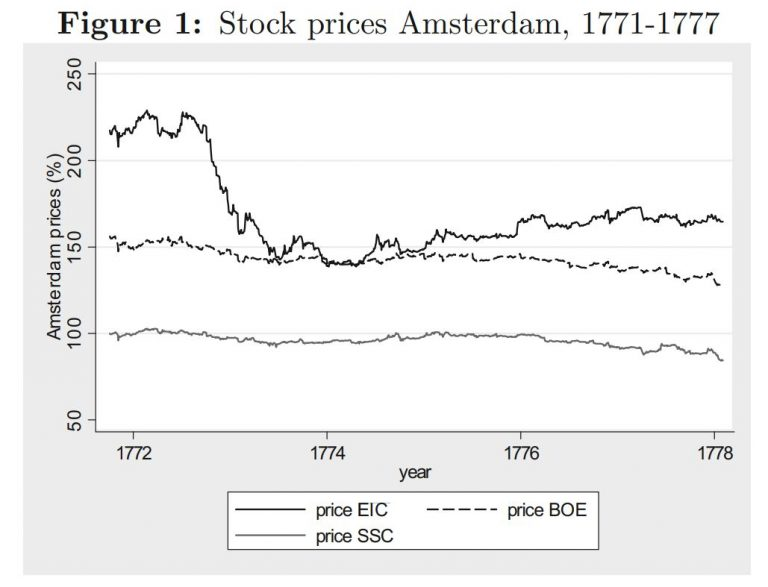
In 1772-73, a rapid collapse in East India Company share prices and ensuing crisis underscored the importance of diversification. However, purchasing enough securities to be diversified was expensive for average investors.
Dutch broker Abraham van Ketwich realized small investors needed a way to access diversified market exposure at a low cost. Sensing an opportunity, van Ketwich launched the world's first mutual fund in 1774.
"EENDRAGT MAAK MAGT" (1774)
As you'll discover, van Ketwich was a true financial innovator and pioneer. His fund, named "Eendragt Maakt Magt" in Dutch, translates to "Unity Creates Strength". Great marketing for a diversified strategy.
To offer this diversified portfolio at a low-cost, van Ketwich pooled assets into one vehicle and sold shares of the portfolio to investors. Just like modern mutual funds.
Historian Geert Rouwenhorst wrote:
“The bonds in its portfolio had a face value of 1,000 guilders, and replication of the portfolio by purchasing these securities in the open market was only feasible for investors of considerable wealth. Eendragt Maakt Magt created an opportunity to obtain portfolio diversification in portions of 500 guilders.”
THE PORTFOLIO
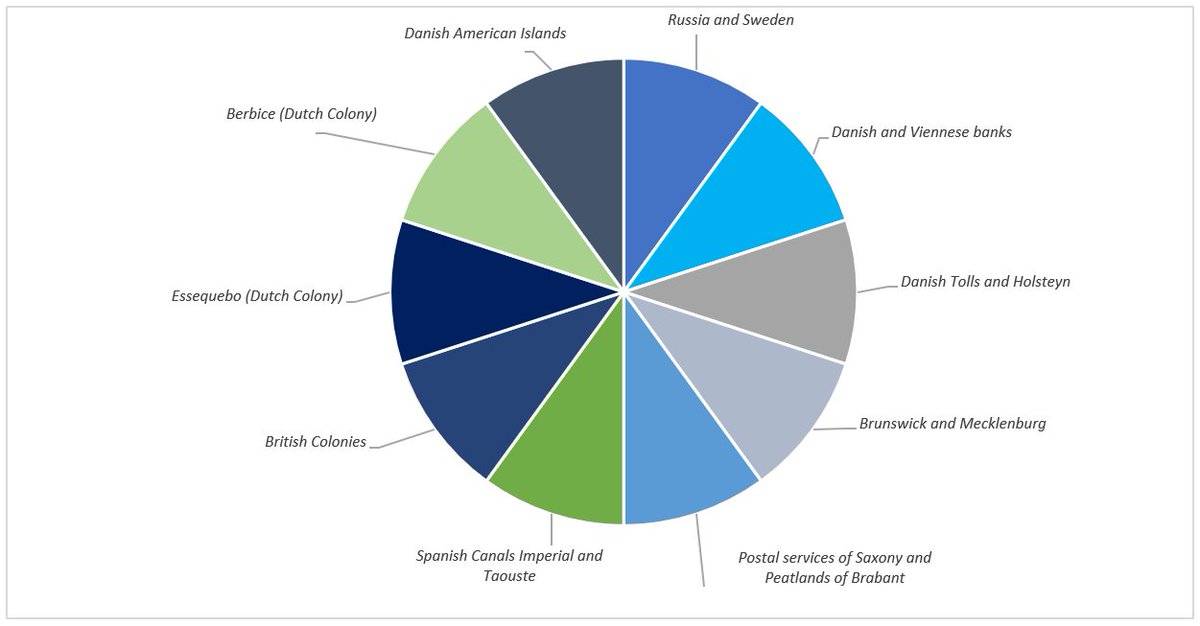
Since low-cost diversification was the primary objective, Eendragt Maakt Magt held 50 bonds spread across 10 categories.
To ensure investors were truly diversified, the prospectus explained positions would be weighted to “observe as much as possible an equal proportionality”. In other words, equally-weighted.
Even the management fee was incredibly low, at just 0.20%. Not bad for a passive, equally-weighted bond fund.
THE ULTIMATE "LOCKUP PERIOD"
The Ketwich fund had a unique system for maintaining good fund governance.
To prevent the fund’s managers from making "active" bets and overtrading, the prospectus stated securities were stored in an "iron chest with three differently working locks".
Therefore, every trade required all three managers to agree to unlock the iron chest with their respective keys. This policy acted as a safeguard against overtrading and rash decisions by one of the fund’s managers.
Despite founding the world’s first mutual fund, Abraham van Ketwich’s innovations did not stop there.
THE WORLD'S FIRST VALUE FUND (1779)
Just five years after debuting his first fund, van Ketwich launched his second “mutual fund” in 1779: Concordia Res Parvae Crescunt. Unlike his first fund, this strategy did take an active investment approach (gasp!).
The fund’s prospectus (shown above) stated that the portfolio would invest in:
“solid securities and those that based on decline in their price would merit speculation and could be purchased below their intrinsic values… of which one has every reason to expect an important benefit…”
Yes, you read that correctly. Instead of a “sophomore slump”, van Ketwich followed up his first invention with another innovation: the world’s first value fund.
The new fund's strategy was to purchase securities trading at prices "below their intrinsic values".
While the fund's returns were not stellar, Concordia Res Parvae Crescunt operated until 1894. After operating for 114 years, historian Geert Rouwenhorst argues van Ketwich’s value fund "is probably the longest mutual fund to have ever existed".
Sources in next tweet!