Professor of Aerothermal Technology & Director @whittlelab @AIAZero – net zero flight, UK Disruptive Innovation Labs, accelerated policy & tech development.
As @SKYNRG marks the beginning of construction at the DSL-01 SAF facility, we reflect on insights from @Rob__Miller, CEO of @whittlelab, who reasons that decarbonization demands CEO‑level nuance, insights and action. #TheSMI
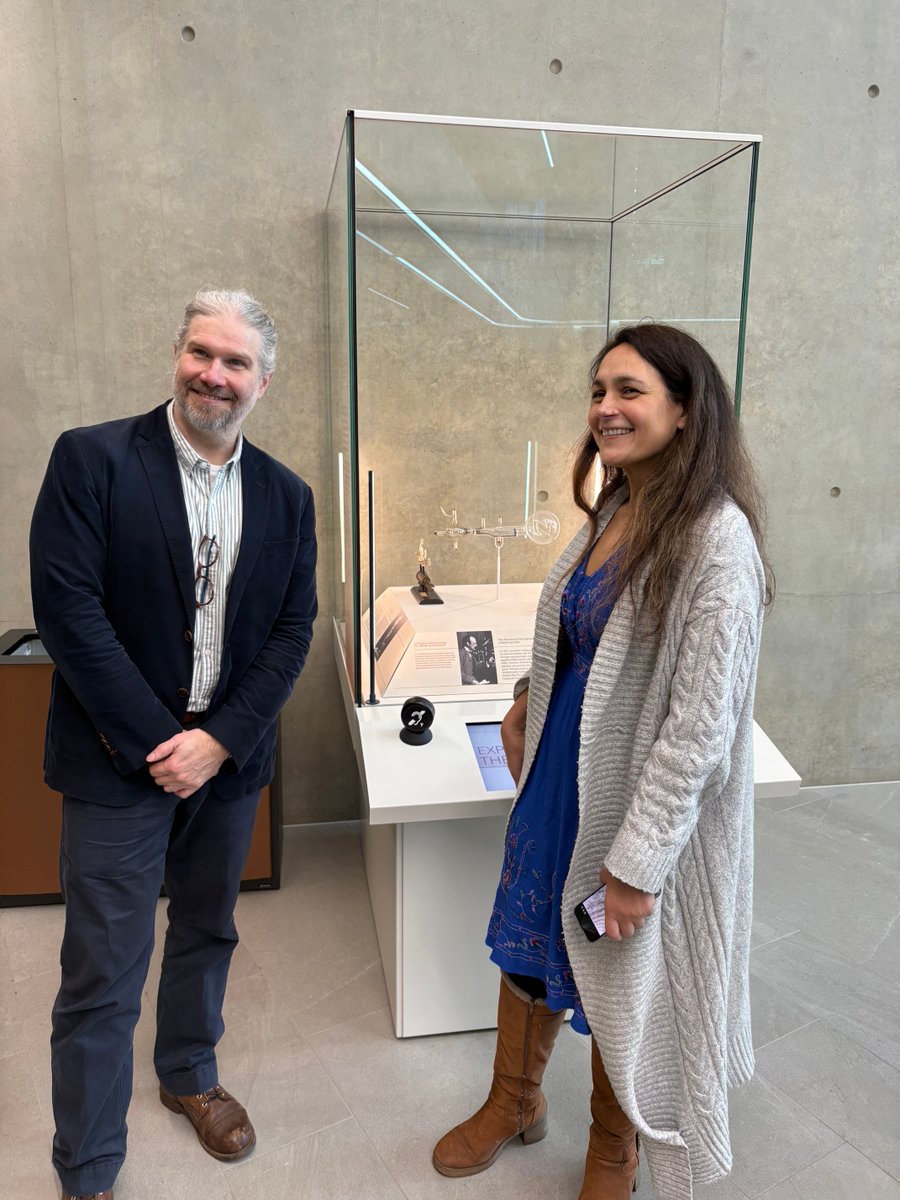
We were delighted to welcome DSIT Director Eleanor Taylor and colleagues to the Cambridge West Innovation District.
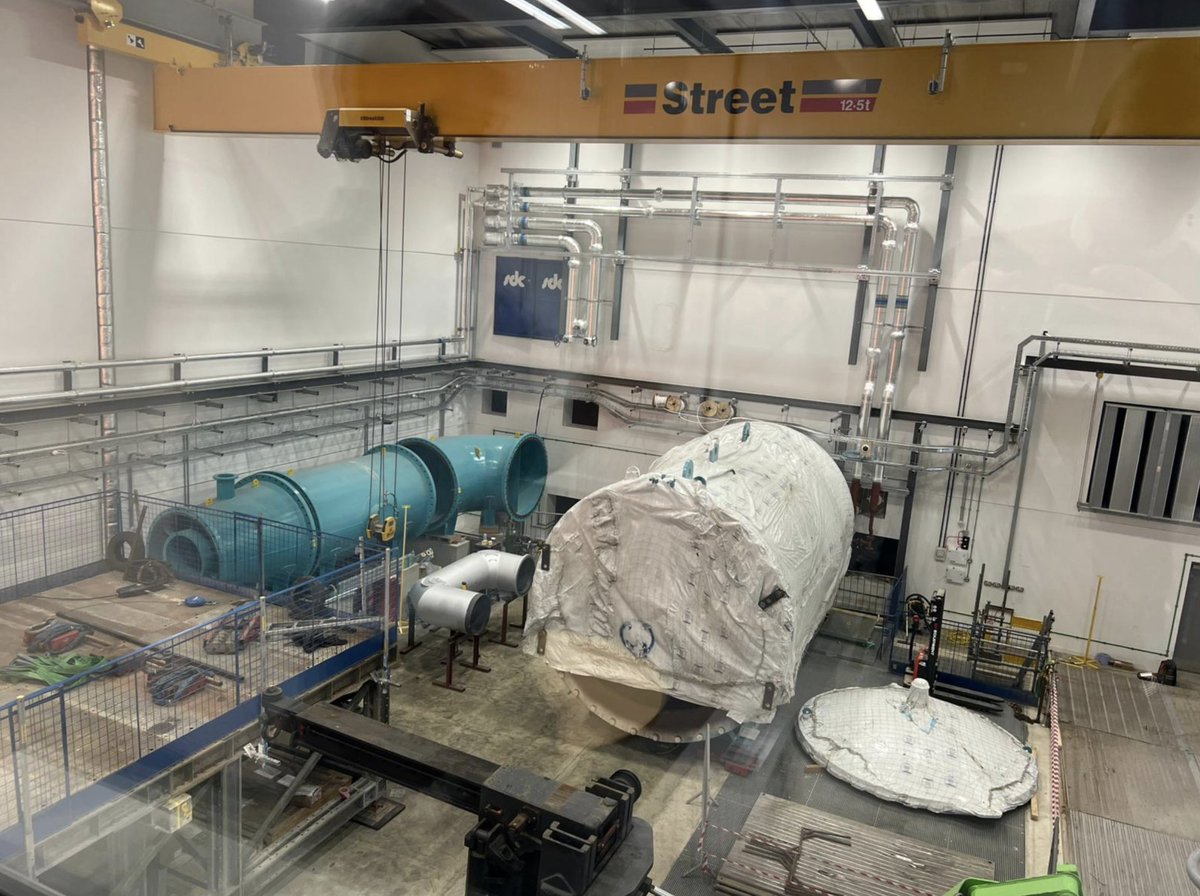
This included an excellent discussion following news that Cambridge's Cavendish Lab will be home to the UK's most powerful quantum computer, and the arrival of a 60-tonne pressure vessel at the @WhittleLab, part of a 4MW rapid test facility.
A new kind of engineering capability has arrived in the UK ⚙️
A 60-tonne pressure vessel delivered to @WhittleLab is part of a 4MW rapid test facility – bringing Formula-1-style iteration to aerospace, energy and defence.
We also took delivery of a @RollsRoyce Trent XWB.
Read the full story 👉 https://t.co/z5uEegIEAw
#ActionThisDay
Amazing to visit the new @whittlelab (Cambridge Aero department) - two of my favourite topics in one go: AI + aerospace ✈️🤖
Great to hear the progress on agentic design, and how it plugs into rapid prototyping (wind tunnel pictured). Watch this place!
Thanks to @Rob__Miller!
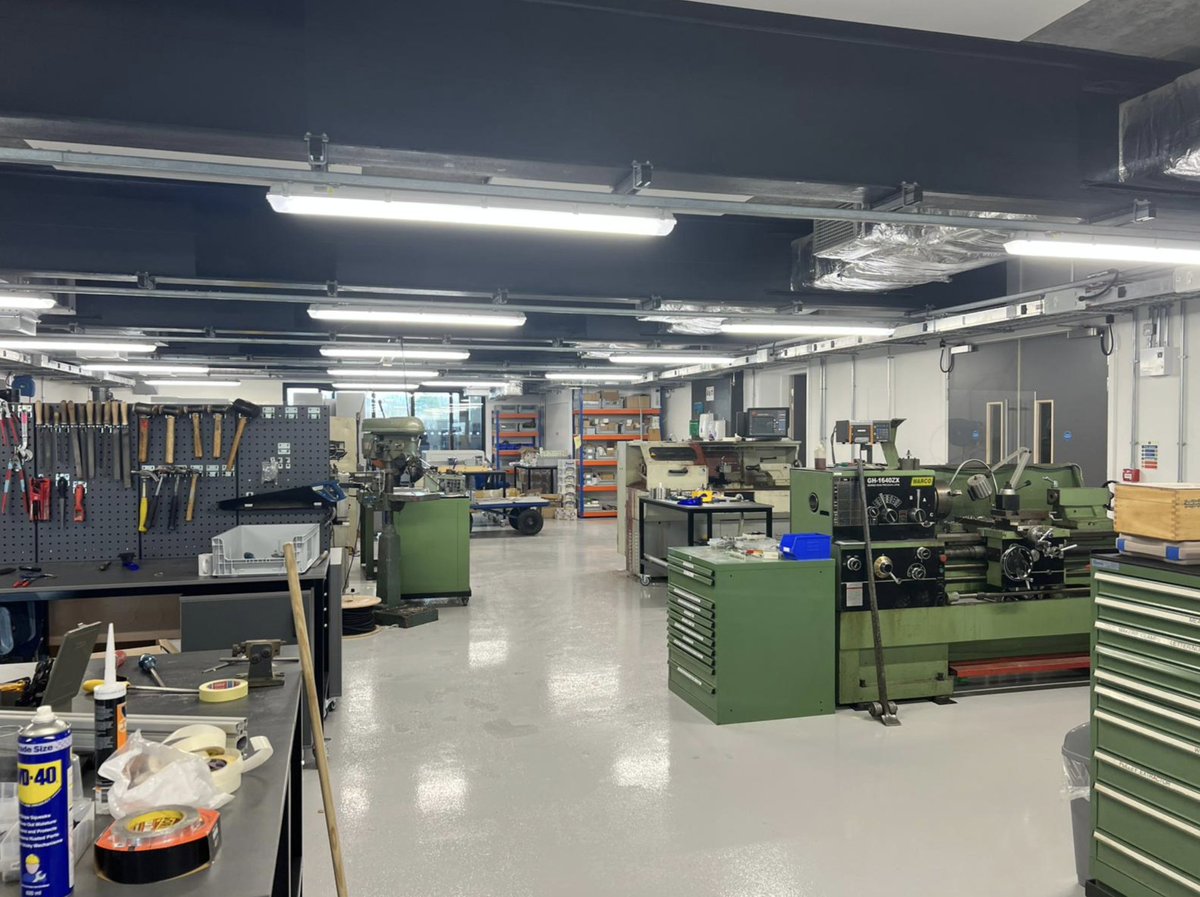
Action this day. The old @whittlelab is being dismantled — and a new era of UK technological ambition has risen beside it — the objective, to ensure the UK can once again builds the industries of the future in energy, defence and aerospace @BILCambridge@Cambridge_Uni
We were delighted to welcome Mayor @paulbristow79 and colleagues from @CambsPboroCA to the Cambridge West Innovation District and @Eddington_Camb, to showcase our world-leading research facilities and opportunities to boost growth in the region through innovation.
a16z: The Power Brokers
There is this story about Marc Andreessen that I think perfectly captures a16z.
in 2015, when New Yorker writer Tad Friend sat down to breakfast with Marc Andreessen while writing Tomorrow’s Advance Man.
Friend had just heard from a rival VC who wanted to get a word in: that a16z’s funds were so large, and ownership percentages so small1, that to get 5-10x aggregate returns across its first four funds, they’d need their aggregate portfolio to be worth $240-480 billion.
“When I started to check the math with Andreessen,” Friend writes, “He made a jerking-off motion and said ‘Blah-blah-blah. We have all the models—we’re elephant hunting, going after big game!’”
The aggregate portfolio did not end up being worth $240-480 billion. a16z Funds 1-4 had a total enterprise value of $853 billion at distribution or latest post-money valuation. Since distribution, Facebook alone has added $1.5 trillion in market cap.
Some form of this pattern keeps playing out: a16z makes a crazy bet on the future. Those in the know say it’s stupid. Wait some years. Turns out it’s not stupid!
Which is why, as a16z announces $15 billion in fresh funds, it is probably a mistake to dismiss them as greedy or stupid.
It's probably worth understanding just exactly what IT'S TRYING TO BUILD.
That's what I do in today's not boring deep dive:
a16z: The Power Brokers
🚨 FULL CONVERSATION
Fields medalist Terry Tao sits down with Math Inc's @jessemhan and @jdlichtman for a conversation on the future of mathematics.
"I got convinced that this was the future of mathematics [...]
It's a different style of writing proofs that actually is in some ways easier to read—harder to check by humans, but you see more clearly the inputs and outputs of a proof, which traditional writing often conceals [...]
I think the definition of a mathematician will broaden."
@AnEmergentI “We sought to energise high-quality development through innovation. We integrated science and technology deeply with industries and made a stream of new innovations.”
Xi Jinping's 10 minute New Year speech has their progress in science and technology right at the center of it.....
NB - Taiwan unification 'unstoppable'.
https://t.co/JKzpajqMl6
Laura Ryan on why academia's economic incentives are backwards—and why we need Lovelace Labs.
This and more in part two of our conversation with @AnEmergentI and @Lyan82, out now!
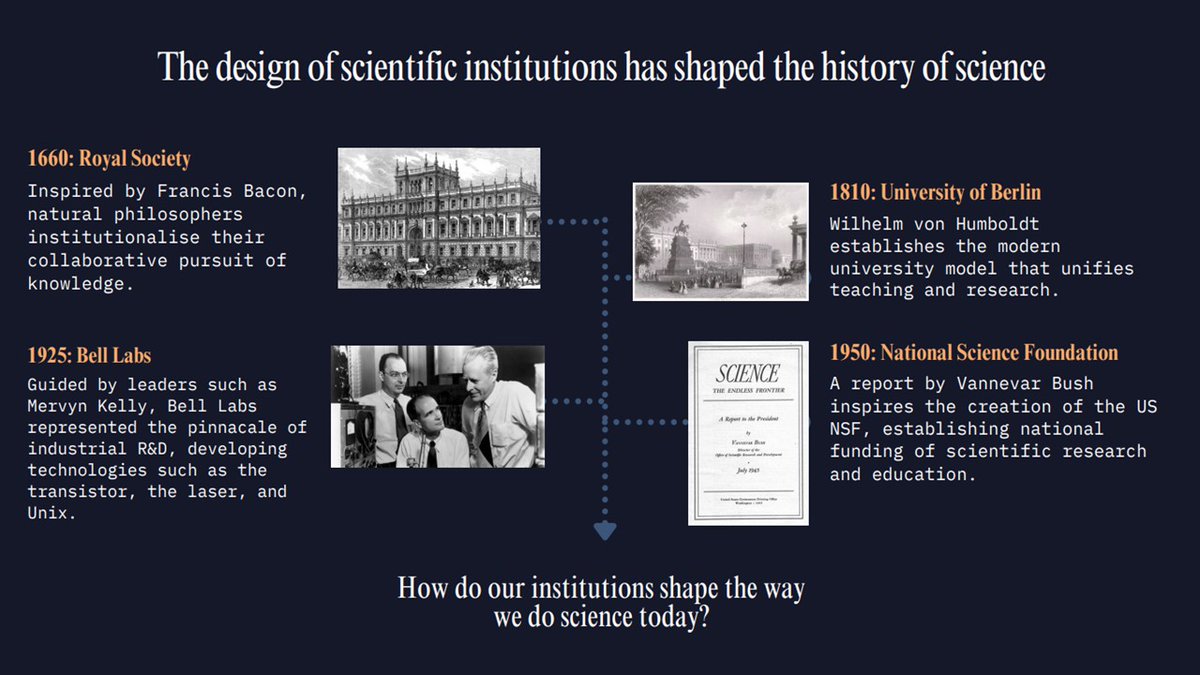
In 1948, the physicist Leo Szilard wrote a satire called The Mark Gable Foundation.
In it, he asked: If you wanted to slow down science without banning it, how would you do it?
You would create a competitive grant system. 🧵
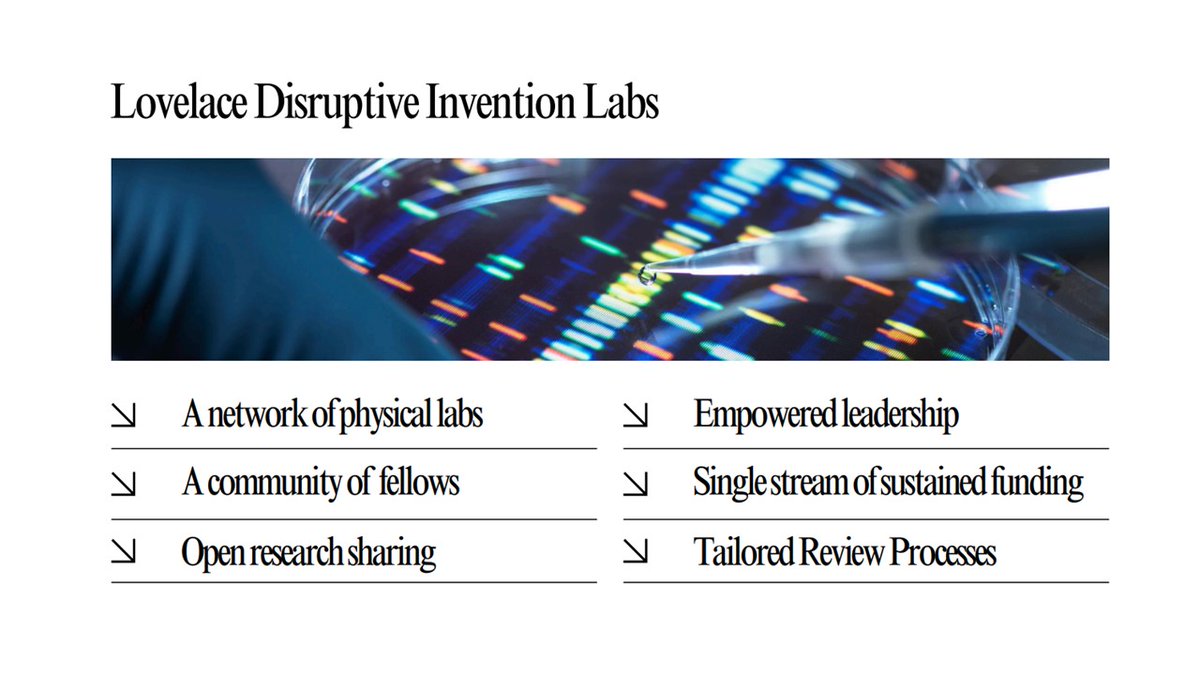
Can the success of Bell Labs or LMB be recreated? Yes, but institutional design matters. To lead in science, UK should build Lovelace Disruptive Invention Labs focused on long-term, high-risk research
Read full report 👉 https://t.co/sqEwFnCwtQ
The UK government will spend over £20bn on R&D in 2025/26. This is welcome – but we need to think harder about how that money is spent to drive genuine long-term progress
Across history, a small number of unconventional labs – like Bell Labs, the LMB, Xerox PARC and DeepMind – have created entirely new scientific fields and unlocked enormous economic value. What made them special wasn’t luck. They were designed differently
Yet the UK’s public-research landscape is unusually homogenous. 80% of non-business R&D is funnelled through universities, which excel at many things – but are not built for the high-risk, interdisciplinary technoscience that seeds tomorrow’s industries
At a time when AI and other platform technologies are opening vast new frontiers, this is a strategic vulnerability – but also a generational opportunity
Our proposal: The UK should build a national network of Lovelace Disruptive Invention Labs designed for...
🧬 Long-term, field-creating science and engineering
👫 Tightly coupled teams – theorists and engineers side-by-side
🎯 Bold research visions – not narrow projects
🚀 Freedom from publish-or-perish and short grant cycles
👩🔬 Empowered junior researchers
🏛️ Sustained institutional funding and autonomy
Four steps are needed to turn Lovelace Labs into reality:
1. Legislate a new public research entity – the Lovelace Society. A modern organisation with the freedom to design labs around mission, not bureaucracy
2. Create an initial founding unit to identify research visions, recruit world-class directors and shape the first labs
3. Secure long-term funding. ~£250m per year to establish 2–3 globally competitive labs, rising to 3–4% of public R&D by 2040
4. Enable high-potential programmes to scale into full labs, with legal pathways for outgrowing university or government projects
This is about rebuilding the UK’s position at the true frontier – where new scientific paradigms, new industries, and new national capabilities are born
To be clear: university-led research has many advantages. Lovelace Labs are intended to complement – not replace – existing research infrastructure. We need more diversity in the landscape of scientific institutions!
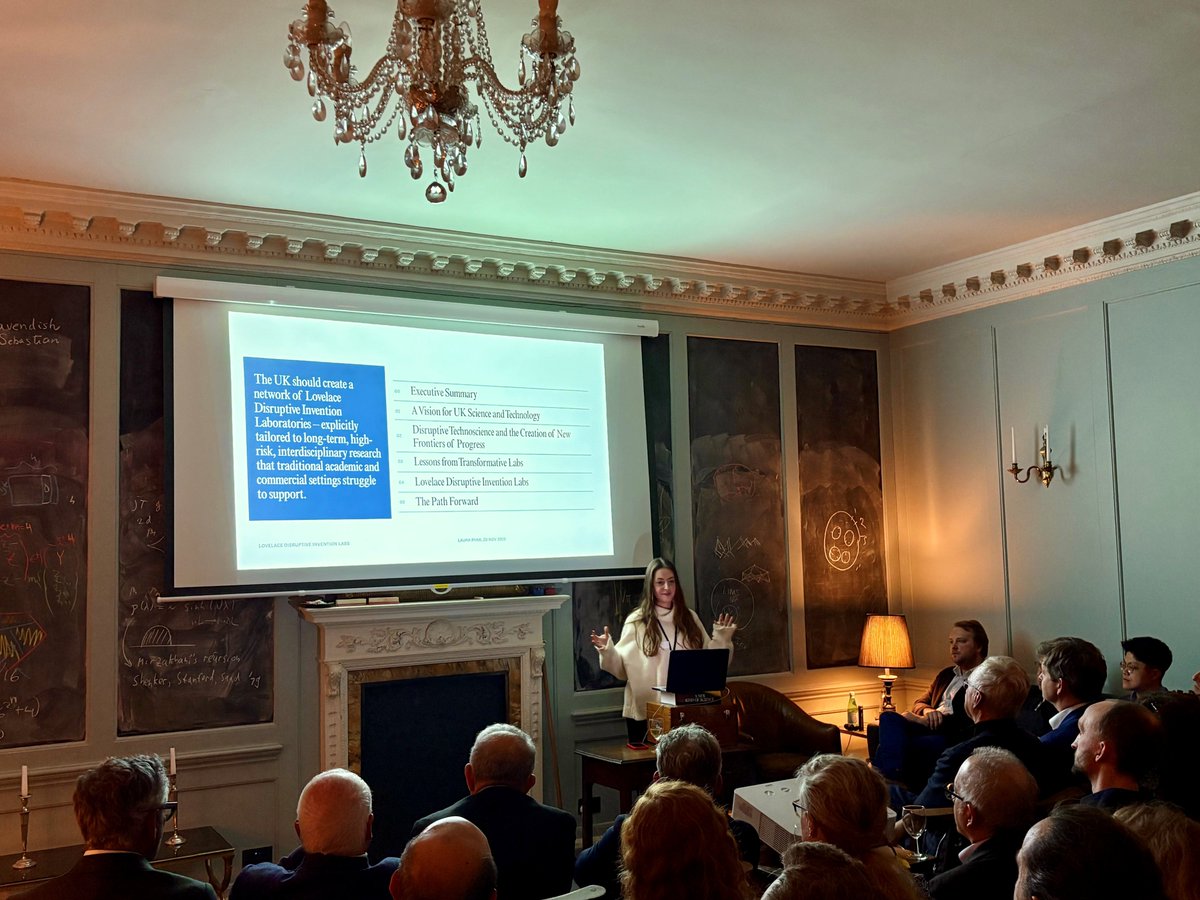
Huge thanks to @tkalil2050 for his brilliant foreword and to the @London_Inst for hosting our launch event last night in Michael Faraday’s historic rooms!
Thanks also to all participant who shared in our vision, incl. Sir Andy Hopper, @Rob__Miller , @ilangur, @j_foerst , @_rockt and many others
Finally, congratulations to the author-team at the @InstituteGC – @Lyan82 , @adjajadikerta, @AnEmergentI & @benedictcooney – on a truly outstanding piece of work!
@AnEmergentI Much appreciated, James. Was a pleasure to feed into the report – it’s an excellent piece of work, and of major importance for UK growth.”
@pravsels Praveen you are right this is powerful. If you want to learn more about Rapid Technology Development this is a film we made a few years ago. https://t.co/1Y7INlBGNz