Computer Scientist & Lecturer at Universitat Oberta de Catalunya.
Principal Investigator @ SOM Research Lab.
Coordinating the AI in Education task force @ UOC.
"Does code quality still matter?"
Code quality matters to human programmers because of cognitive constraints. LLMs have their own. Such constraints could give rise to technical debt that slow LLMs down when developing & improving software.
by Mark Seemann
https://t.co/LiVTDoOwad
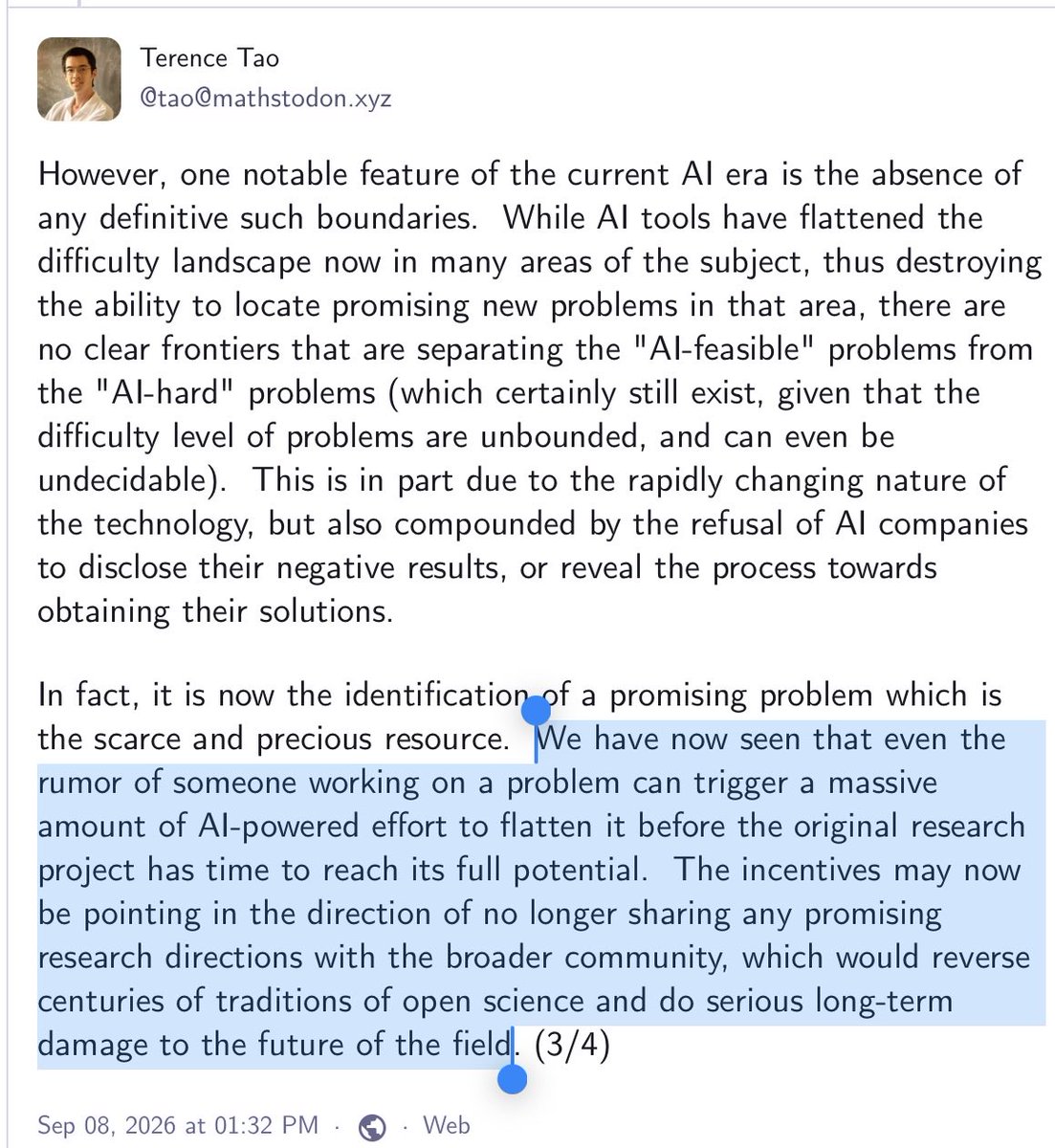
Still more absolute 🔥 from Terence Tao:
“We have now seen that even the rumor of someone working on a problem can trigger a massive amount of AI-powered effort to flatten it before the original research project has time to reach its full potential. The incentives may now be pointing in the direction of no longer sharing any promising research directions with the broader community, which would reverse centuries of traditions of open science and do serious long-term damage to the future of the field”
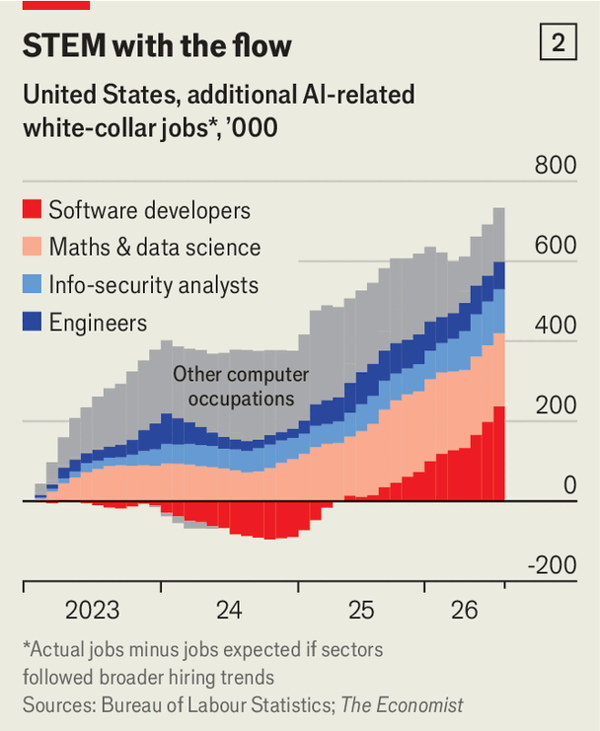
The jobs apocalypse is postponed. An AI jobs boom is here
According to @TheEconomist, AI is actually proving to be a net job creator in the US, easily generating over 1M new positions (from data center construction to AI engineering) to offset back-office layoffs.
While routine admin and customer service roles face real disruption, the overall labor market is proving resilient.
https://t.co/uVomCUvwSf
🦔AI can only fix security vulnerabilities 26% of the time. Researchers at 1Password ran over 6,000 AI-generated patches using Claude and ChatGPT against real vulnerabilities. Half the time the AI failed to fix the original bug. 4.5% of the time it created a brand new vulnerability that didn't exist before. And the researchers found that checking an AI-generated security patch takes more effort than just writing the fix yourself.
Their conclusion was blunt. "The expected value of a fully LLM-generated, non-human-reviewed patch is a net-negative by a considerable margin."
My Take
OpenAI launched a program this summer called "Patch the Planet" where AI finds bugs and generates the fixes. These researchers ran 270 patches against one of those same bugs. Zero clean fixes. Not one. Every patch that fixed the original problem created a new vulnerability in the process. The partner that submitted a fix through OpenAI's program produced what the researchers classified as the worst possible outcome, it didn't fully fix the bug and it introduced a new exploit on top of it.
Here's what this means if you don't write code for a living. Companies are using these AI tools to patch the software that runs your bank, your hospital, your phone. The pitch has been "AI finds and fixes security holes faster than humans." This study says the AI fix is four times more likely to be broken than working, and a third of the time it recreates the exact same mistakes human programmers already made. Reviewing the AI's work takes longer than doing it yourself. So the speed advantage disappears the moment you try to verify the output, which most companies won't do because the entire point was to move faster. I think we're going to see major breaches traced back to AI-generated patches that nobody checked, and the companies that shipped them are going to blame the tool instead of the decision to trust it.
Hedgie🤗
Study: https://t.co/5b9FQRBMSX
Dan's argument is sharper than "use AI carefully." His real claim: students should only use AI for things they already know how to do *well*. Not brainstorm-with-AI-but-draft-yourself, which is basically what every district policy says. He argues that's the wrong line entirely.
His point is that those policies borrow a workplace model — AI as associate, student as lead, product is the thing. But for students, the product isn't the point. The essay itself has no value; it exists so the student practices building an argument, integrating sources, thinking like a reader. Skip that mental work and the assignment is hollow, even if the output looks great.
So his real test isn't "how much AI is too much" — it's "would doing this yourself teach you something." If yes, no AI. If you've already mastered it and repeating it teaches nothing, AI's fine — like a calculator once you know arithmetic.
I like this argument a lot.
And I noticed he never once says "offloading." That word already carries a verdict — like something was shirked. Dan just asks whether a step was a *learning* step or a merely *supportive* one.
That's why it matters to me. Most discourse treats any AI use as offloading — a small moral failure — instead of asking Dan's actual question, which is whether that specific step is where the learning happens. His framing lets the answer be boring and mixed: fine here, real cost there. https://t.co/E1AZ00frip
First time I hear a legacy system be called "volcanic software":
- It is ancient.
- Most of the time nobody pays attention to it.
- It is often dangerous to touch it.
- Makes a real mess when it blows up.
"Les coses serioses demanen temps, i les coses que es poden assolir sense esmerçar-hi gaire temps són sospitoses d’una certa irrellevància." @genisroca#temps
Our team spent hundreds of hours reading documents so you don’t have to, all to answer: How good are AI companies’ safety practices?
I’m really proud of what we’ve built: It’s Guidelight’s first scorecard, on whether companies can control their AIs, and it's launching today.
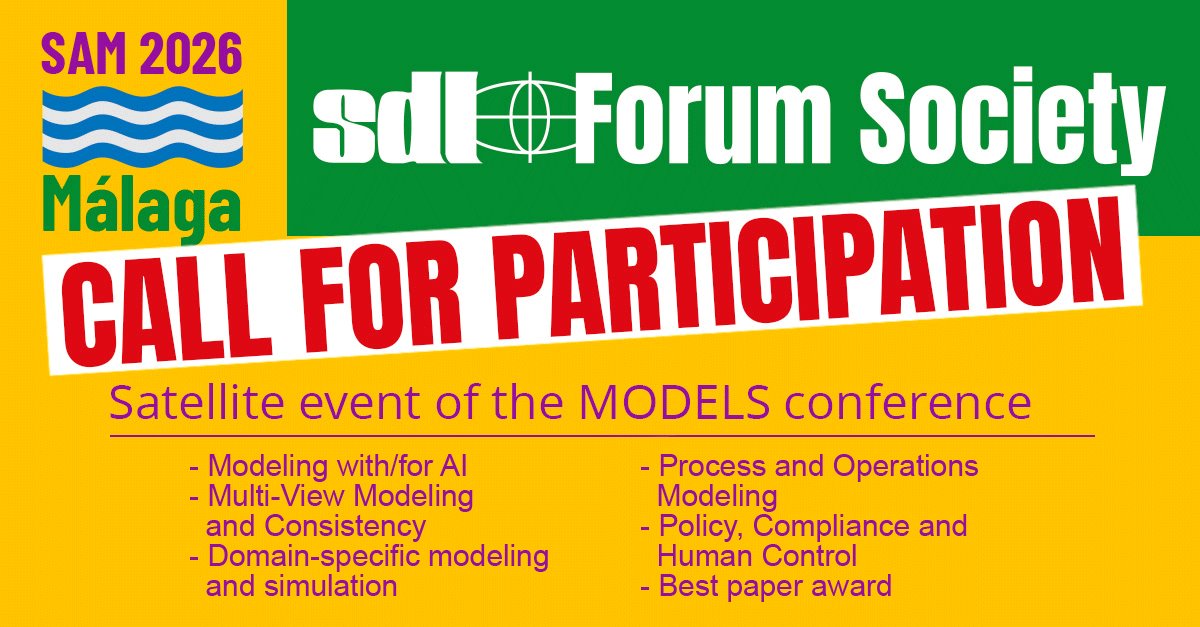
📢 Join us at SAM 2026 in Málaga!
The 18th International Conference on System Analysis and Modelling (SAM 2026) will take place 5–6 October 2026 in Málaga, Spain, co-located with MODELS 2026.
This year's theme, “The Symbiosis of AI and Systems Modeling,”
https://t.co/KmMaAAAZjj
📘 Introduction to Graph Theory — Free PDF
Learn the fundamentals of Graph Theory with this comprehensive 454-page PDF.
📚 What you'll learn
Graphs, vertices, and edges
Directed & undirected graphs
Degree of vertices
Paths, circuits, and cycles
Connected & disconnected graphs
Trees and spanning trees
Euler and Hamiltonian graphs
Graph coloring
Graph isomorphism
Adjacency and incidence matrices
Graph algorithms and applications
Problem sets and worked examples
📄 Pages: 454
💰 Cost: Free PDF
👉 Read the full post & access the PDF
https://t.co/LPCdWH1Zra
Here's the remarkable coincidence that allows us to see total solar eclipses: the diameter of the Moon is 400 times smaller than the diameter of the Sun, but it is also 400 times closer to us.