Data Gerd (Geek-Nerd), Cloud Architect, MS SQL DBA/Architect/BI juggler, Big Data (Streaming), Full-Stack Developer, Chesapeake Bay Retrievers, and electronics.
The "Small" AWS Update That Changes Everything for Data Teams
At first glance, Amazon S3 Annotations looks like just another incremental feature update. Attach some metadata to objects, right? Nothing revolutionary.
But here's what I'm seeing that's different — and it's significant.
Many of my clients have been asking for exactly this capability for years. They needed a way to attach rich, searchable context to their data — summaries, classifications, compliance information, AI-generated insights — and it simply wasn't available in any elegant way. They cobbled together workarounds using tags, prefixes, and external databases. It worked, but barely.
Now it's native. And that changes the game.
With up to 1,000 mutable annotations per object and a full gigabyte of capacity, this isn't a tweak — it's a fundamental shift in how we can organize and discover data within S3. When you layer in the ability to query those annotations through S3 Metadata → Iceberg tables → Athena/Redshift, you're looking at a foundation for intelligent data discovery that actually works.
Kudos to Wes and the AWS team for taking this step. It may seem like very little on the surface, but for data-intensive organizations — especially in media, financial services, and life sciences — this fills a gap that's been frustrating teams for too long.
Sometimes the biggest moves come wrapped in the quietest announcements.
What are you seeing in terms of data annotation needs? I'd love to hear how teams are thinking about this.
https://t.co/heFaXoqmqh
🚨Critical - containerd CRI Plugin Multiple Vulnerabilities (CVE-2026-50195, CVE-2026-53488, CVE-2026-53492, CVE-2026-53489, CVE-2026-47262)
AWS disclosed five flaws in the containerd CRI plugin (v1.7–2.3), the runtime behind EKS, ECS, Fargate, GKE and self-managed Kubernetes. Most are reachable by an attacker who only has permission to create pods on a shared node.
The headline bug lets a crafted checkpoint image poison the node's local image cache so other pods unknowingly run the attacker's image — cross-pod code execution. Even nastier: unsanitized image LABEL instructions reach the restart-monitor binary:// logger, giving host-root command execution straight from an image pull, with no checkpoint/restore required. The rest cover CDI annotation smuggling (device/host-mount injection), arbitrary host file read via symlinked log paths, and an image-triggered OOM DoS.
👉Upgrade to containerd 2.3.2 / 2.2.5 / 2.1.9.
We're launching code storage and git hosting.
Origin gives teams and agents a place to host, review, and collaborate on code.
Available this fall. Join the waitlist.
https://t.co/uamaIarJXY
Hey @amazon,
What gives? The profile for my delivery address has very specific times for delivery, yet they are ignored. A package I expected to receive yesterday hopefully will be successfully delivered tomorrow. The expected delivery failed two days in a row because the times in my profile were ignored.
How can we improve this experience?
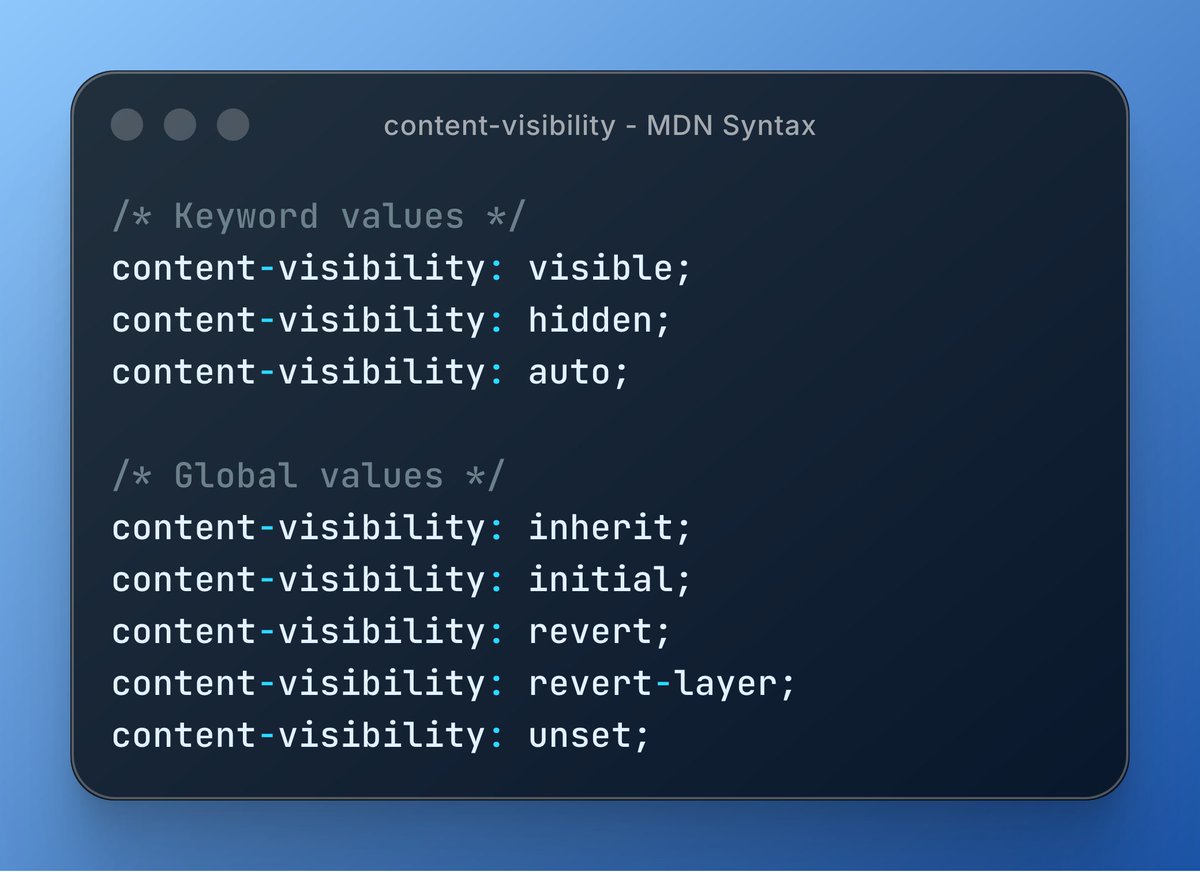
Speed up rendering with content-visibility: auto ⚡
This CSS property skips rendering off-screen content until needed, giving massive performance wins on long pages.
⋅ Pairs with contain-intrinsic-size
⋅ Zero-effort lazy rendering
Learn more 👇
https://t.co/aXEBbjqooA
🚨 BREAKING: A new role is quietly emerging and it’s about to dominate the next 5 years.
It’s not “AI engineer.”
It’s not “prompt engineer.”
It’s the Agent Operator.
And it will sit inside almost every organization.
Most people are still thinking about AI as a tool.
That framing is already outdated.
What’s actually happening is a shift from:
humans using software to humans managing autonomous agents that execute work
This is a fundamental redesign of how work gets done.
So what is an Agent Operator?
An Agent Operator is the person who:
• Designs how agents interact with real workflows
• Connects tools, data, and systems into agent pipelines
• Translates business problems into executable agent behavior
• Monitors, corrects, and improves agent performance over time
They don’t just “use AI.”
They orchestrate outcomes.
and this matter because
Every function marketing, legal, finance, biotech is becoming “agent-compatible.”
Not because companies want it.
Because they won’t have a choice.
Agents can:
• Run research loops
• Execute multi-step workflows
• Integrate across tools without APIs breaking the flow
• Operate 24/7 at near-zero marginal cost
The bottleneck is no longer capability.
It’s implementation inside real-world systems.
Required skills for AI Agent Operator role:
→ MCPs (Model Context Protocols)
Understanding how agents access tools, memory, and structured context.
→ CLIs (Command Line Interfaces)
Because serious agent workflows won’t live in GUIs—they’ll run in programmable environments.
→ Writing skills (the file kind)
Clear specs, instructions, and structured documents.
Agents run on precision, not vibes.
→ agents dot md fluency
The ability to define agent roles, constraints, memory, and tool usage in persistent formats.
→ Business acumen
Knowing what actually matters:
Where automation creates leverage, not noise.
What happens next
Enterprises will begin to redesign workflows:
Not around employees using dashboards…
But around agents executing tasks.
That means:
• SOPs → Agent playbooks
• Teams → Human + agent hybrids
• Tools → Composable agent systems
When that shift happens, companies won’t just need engineers.
They’ll need operators who understand both the system and the business.
The leverage is asymmetric
One strong Agent Operator can:
• Replace fragmented SaaS workflows
• Multiply team output without adding headcount
• Turn ideas into execution systems in days
This is not incremental productivity.
It’s operational transformation.
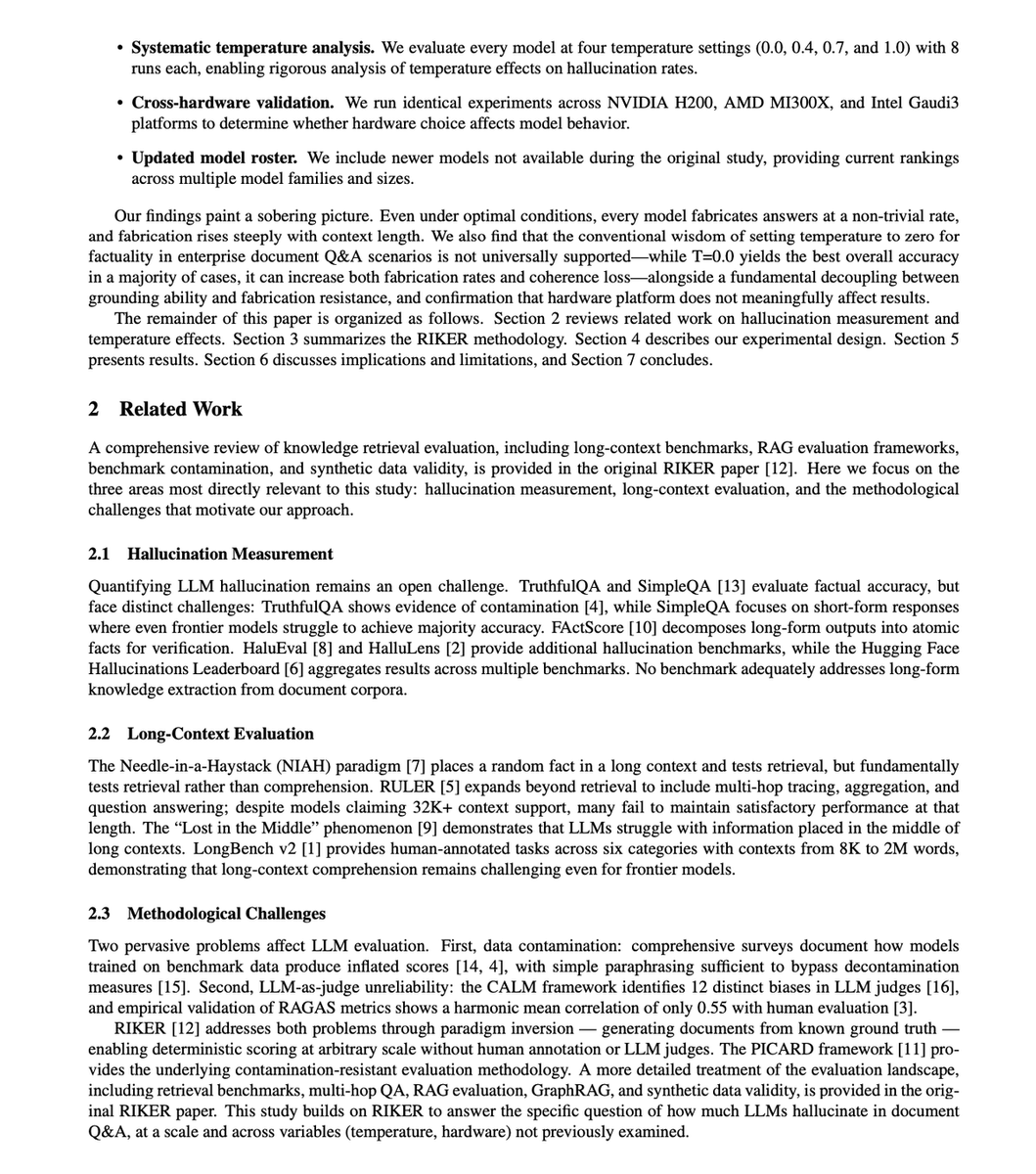
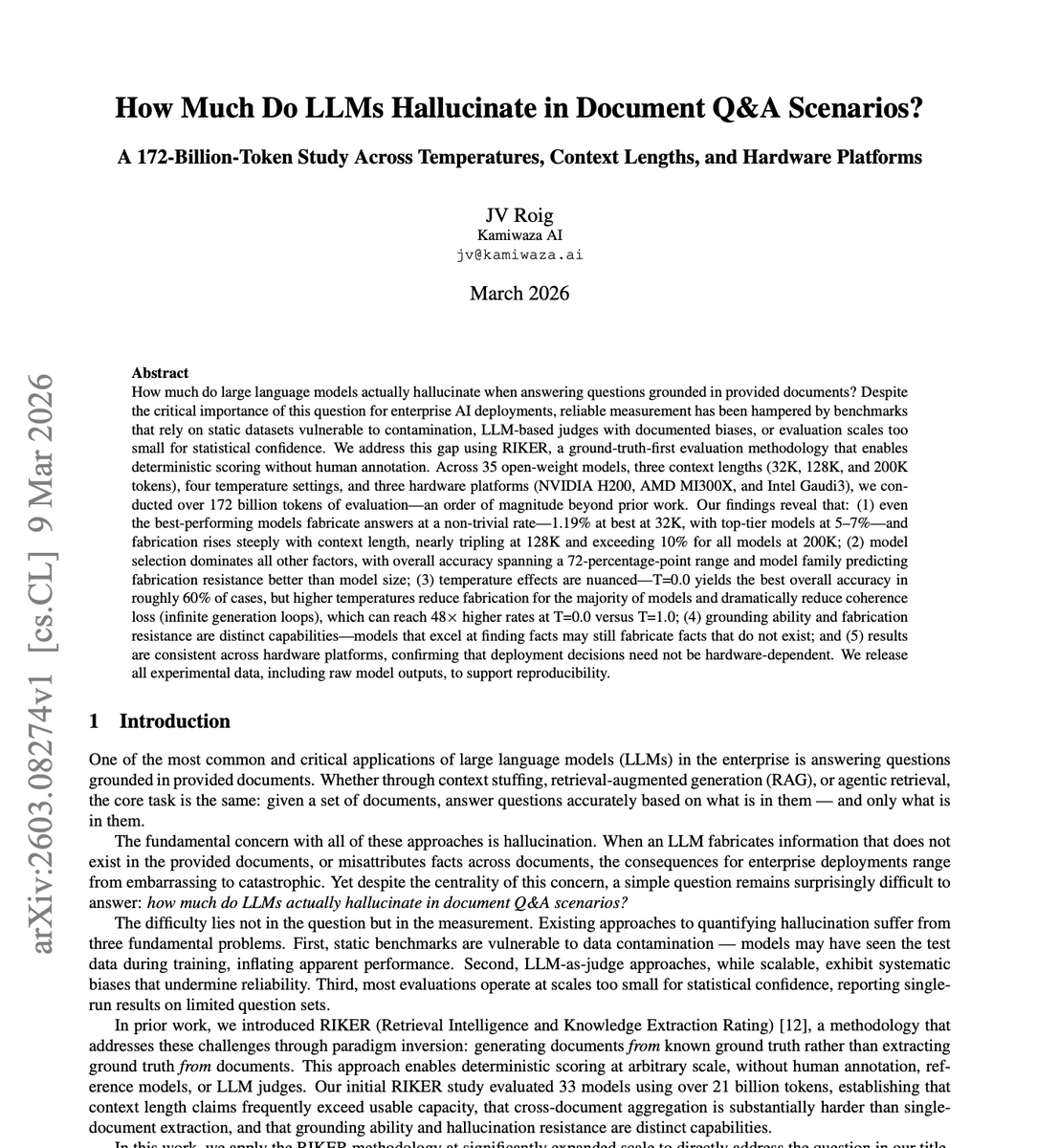
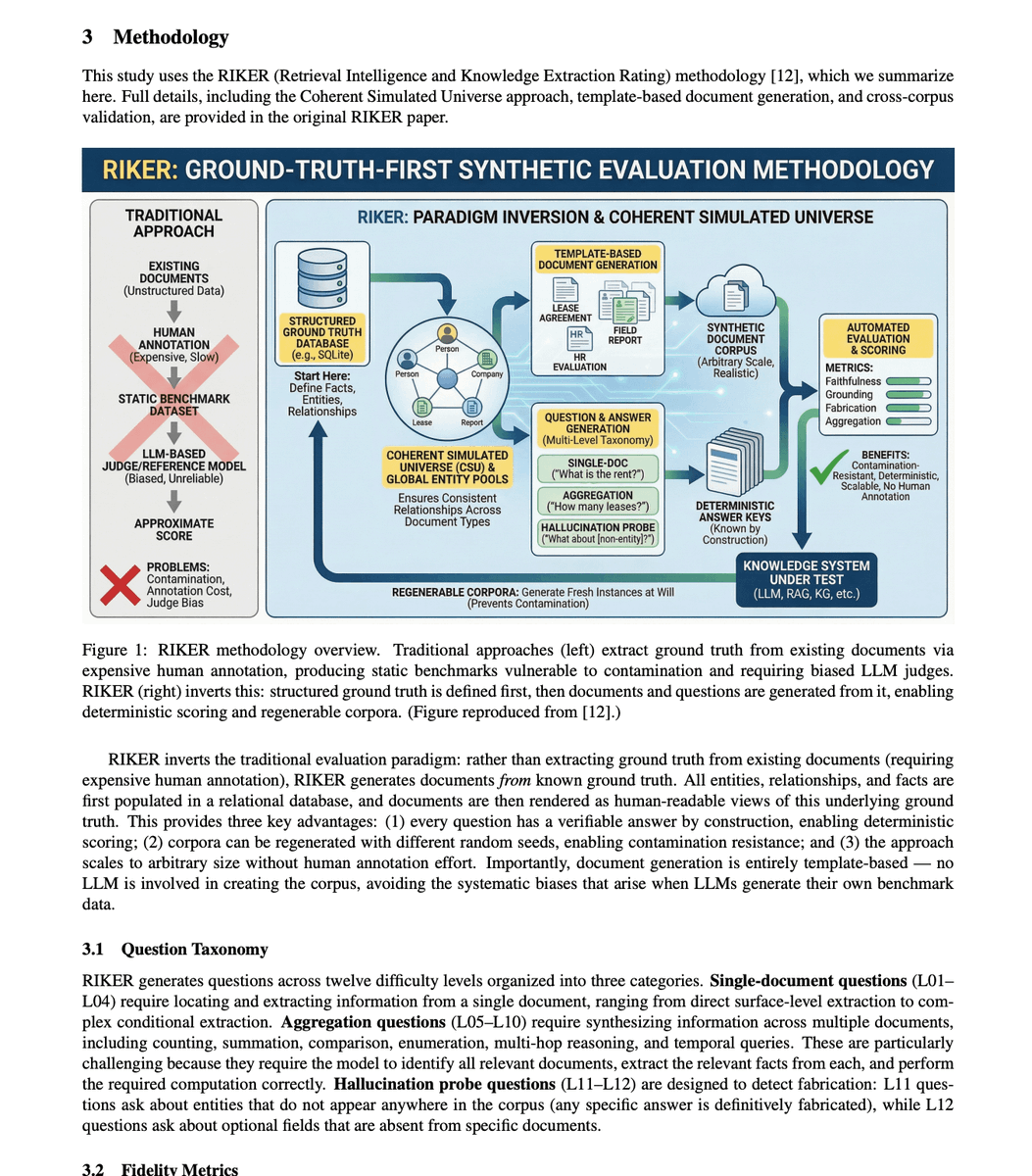
BREAKING: 🚨 Someone just tested 35 AI models across 172 billion tokens of real document questions.
The hallucination numbers should end the "just give it the documents" argument forever.
Here is what the data actually showed.
The best model in the entire study, under perfect conditions, fabricated answers 1.19% of the time. That sounds small until you realize that is the ceiling. The absolute best case. Under optimal settings that almost no real deployment uses.
Typical top models sit at 5 to 7% fabrication on document Q&A. Not on questions from memory. Not on abstract reasoning. On questions where the answer is sitting right there in the document in front of it.
The median across all 35 models tested was around 25%.
One in four answers fabricated, even with the source material provided.
Then they tested what happens when you extend the context window. Every company selling 128K and 200K context as the hallucination solution needs to read this part carefully.
At 200K context length, every single model in the study exceeded 10% hallucination. The rate nearly tripled compared to optimal shorter contexts.
The longer the window people want, the worse the fabrication gets. The exact feature being sold as the fix is making the problem significantly worse.
There is one more finding that does not get talked about enough.
Grounding skill and anti-fabrication skill are completely separate capabilities in these models.
A model that is excellent at finding relevant information in a document is not necessarily good at avoiding making things up. They are measuring two different things that do not reliably correlate. You cannot assume a model that retrieves well also fabricates less.
172 billion tokens. 35 models. The conclusion is the same across all of them.
Handing an LLM the actual document does not solve hallucination. It just changes the shape of it.