Visibilidad no es productividad. Las oficinas abiertas son un desastre ergonómico: provocan 62% más ausentismo y mayor rotación. Quienes trabajan en oficinas abiertas reportan mayores niveles de estrés y burnout. Evidencia de los últimos 15 años:
https://t.co/LpL5ywEKDS
The Thinker's [Short] Guide to Analytic Thinking — How to Take Thinking Apart and What to Look for When You Do (from the Thinker's Guide Library): https://t.co/78b5ZDV16M [2nd Edition]
Thomas S. Kuhn cumpliría hoy 104 años. Con su obra La estructura de las revoluciones científicas (1962) transformó la historia y la filosofía de la ciencia. Fue un autor fundamental en mi cátedra universitaria de epistemología médica. Universalizó conceptos como «paradigma».
En el interior de las fábricas de la India: Trabajadores entrenan a quienes los reemplazarán
En la India, miles de trabajadores de fábrica están contribuyendo a la construcción de la próxima generación de robots humanoides impulsados por inteligencia artificial, al llevar cámaras montadas en el cuerpo que capturan cada uno de sus movimientos
#dwAsia
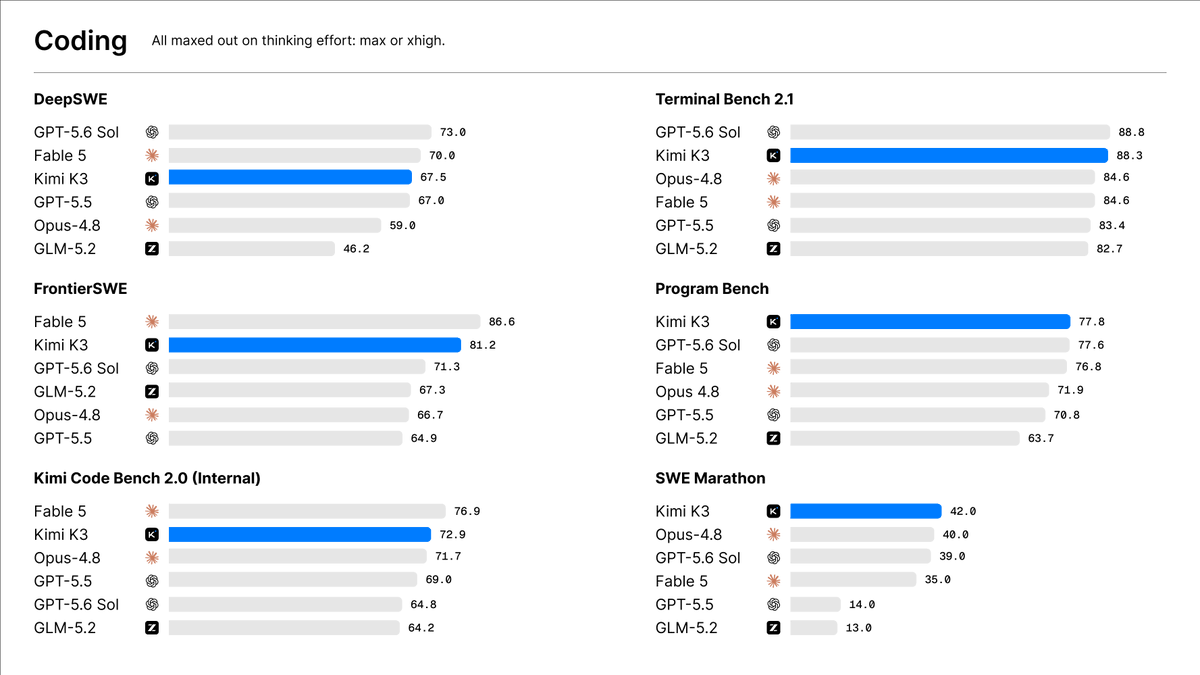
Introducing Kimi K3: Open Frontier Intelligence
🔹 2.8 Trillion Parameters, 1 Million Context, Native Multimodal
🔹 Kimi Delta Attention enables up to 6.3x faster decoding in million-token contexts
🔹 Attention Residuals deliver ~25% higher training efficiency at <2% additional cost
🔹 Built for long-horizon agentic coding and self-evolving workflows
Kimi K3 is now live on on https://t.co/zrk6zZxZUo, Kimi Work, Kimi Code, and the Kimi API.
Open Weights by July 27, 2026.
🔗 API: https://t.co/XCrgjXAqMw
🔗 Tech blog: https://t.co/YTfiMSNM1f
A new, reinforcement learning-based framework enables robots to select the appropriate motor skills and gait autonomously to navigate uneven terrain and clear obstacles at high speeds.
Learn more in Science #Robotics: https://t.co/k3TLwx3GRS
En 1981, una serie cogió la Odisea de Homero, la fusionó con la estética de "2001: Una odisea del espacio" y con las armas de Star Wars para llevarla al siglo XXXI. La animaron en Japón y marcó a toda una generación de niños españoles. Se llamó Ulises 31. Tira del hilo 🧵👇🏽👇🏽👇🏽
Fast Fourier Analysis in action.
Any complex waveform, sound, or shape can be perfectly reconstructed as the sum of simple rotating circles (epicycles).
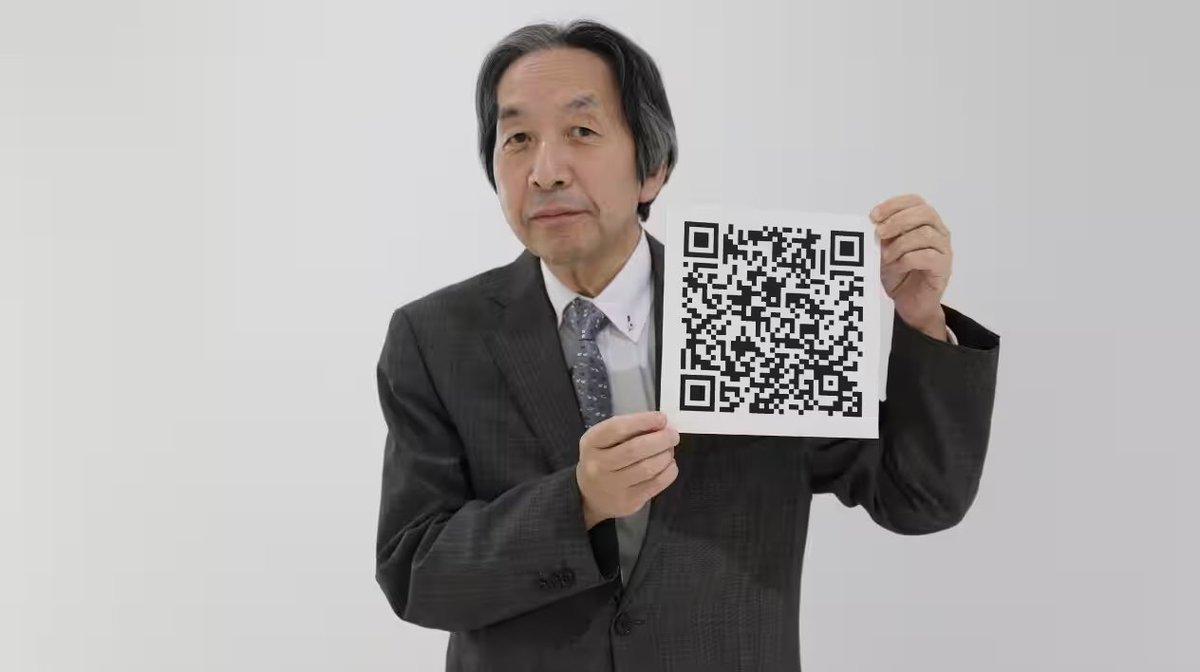
A Japanese engineer invented the QR code for one job, tracking car parts on a Toyota line, then his company chose to give the patent away for free, which is the only reason it ended up on every restaurant table on Earth.
His name is Masahiro Hara. The company was Denso Wave, a parts supplier owned by Toyota.
In 1992 the problem landed on his desk, and it was not glamorous. Workers on the factory floor were drowning.
Every car part had a barcode, but a barcode can only hold about twenty characters, so to track one component they had to stick five or ten barcodes on it.
A worker would stand there scanning a single part ten times in a row. Some of them were scanning close to a thousand barcodes a day. The job had stopped being about building cars and turned into pointing a scanner at stickers all day long.
And there was a second problem nobody upstairs cared about. This was a factory. Oil got on everything. A smudge of grease across a barcode and the whole thing became unreadable, and the line stopped.
Hara was asked to make the scanner faster. He looked at it for a while and realized the scanner was not the problem. The barcode itself was the ceiling. A line of black bars can only hold information going one direction, left to right.
He decided to build something that held information in two directions, up and down as well as across, so it could store hundreds of times more in the same little square.
Then came the part that sounds made up but is not.
Hara played Go on his lunch breaks, the old board game with black and white stones sitting on a grid. He was staring at the board one day and it clicked.
The grid of black and white stones was already a way to store information in two directions. That was the shape of his code.
But building the code was the easy half. The hard problem was speed, because the whole point was to be fast, and a scanner wastes most of its time just trying to figure out where the code is and which way it is turned.
The fix came to him on a train. He was looking out the window at buildings, and one building stood out from all the others because of its shape against the sky. That was the idea.
He put three little square targets in three corners of the code. The moment a scanner sees those three squares, it knows instantly where the code is and how it is rotated, even upside down, even at an angle.
Now here is the detail that shows how far he was willing to go. Those three corner squares only work if nothing else on the page looks like them.
If a magazine ad or a cardboard box happened to have the same black and white pattern nearby, the scanner would get confused and grab the wrong thing.
So Hara and his tiny two-person team went and surveyed printed material. Magazines. Flyers. Cardboard boxes. Piles of it, for days, reducing every picture down to its ratio of black to white area, hunting for the one ratio that almost never shows up in print anywhere. They found it. One to one to three to one to one.
That exact rhythm of black and white is baked into every corner square of every QR code on Earth, and it is there because it is the pattern the printed world almost never produces by accident.
Then he solved the oil.
He built the code so it carries a backup of its own information, spread mathematically across the whole square. You can tear off, smudge, or scratch out up to thirty percent of a QR code and it still scans perfectly, because the code rebuilds the missing piece from the copy it kept of itself.
A worker could get grease on a third of the label and the line would keep moving. This is the same math that lets a scratched CD still play and lets a spacecraft send data back across the solar system without asking to repeat itself.
He finished in 1994. He named it Quick Response, after what it does for the person using it, not after what it is.
And then Denso made the decision that actually mattered.
They held the patent. They could have charged a fee on every single scan, and given how many billions happen now, that would have made someone unimaginably rich.
Instead they announced they would not enforce their rights to collect royalties, and they published the specification openly so anyone could use it. Hara later said it was not even a big argument inside the company.
That one choice is the whole story. A code that costs nothing to use is a code everyone builds on. Airlines put it on tickets. Phone makers built readers into cameras.
Then a pandemic hit and the world needed a way to hand someone information without touching anything, and the free little square that a Toyota engineer built for greasy factory workers was suddenly on every menu, every payment, every door.
Hara still works there. He has said, more than once, that he never imagined it would spread this far, and that the part he is proudest of is that it got used to keep people safe.
The man built it to survive oil on a factory floor. It ended up surviving everything else too.
You have scanned his work a hundred times this year. Now you know whose it was.
Humans have been modifying crops for thousands of years. Wheat is no different.
Every loaf of bread you've ever eaten came from a plant that humans spent centuries selecting, crossing and improving.
The idea that there is a "natural" version of wheat untouched by human intervention is a nice story. It's just not history.
Now Bayer has signed an agreement to accelerate the development of hybrid wheat.
The goal is simple: Produce wheat varieties that are more productive, more resilient and better able to cope with the increasingly challenging conditions farmers face.
And that's where things get interesting.
Most people don't realize that wheat yields have largely plateaued in many regions while demand continues to rise and weather becomes more unpredictable.
Meanwhile, wheat remains one of humanity's most important food crops.
For thousands of years, crop improvement meant saving the best seeds.
Today it means combining elite genetics, advanced breeding and a deeper understanding of plant biology.
Same goal.
Better tools.
The irony is that many people celebrate the random achievements of ancient farmers while fearing the tried and tested achievements of modern ones.
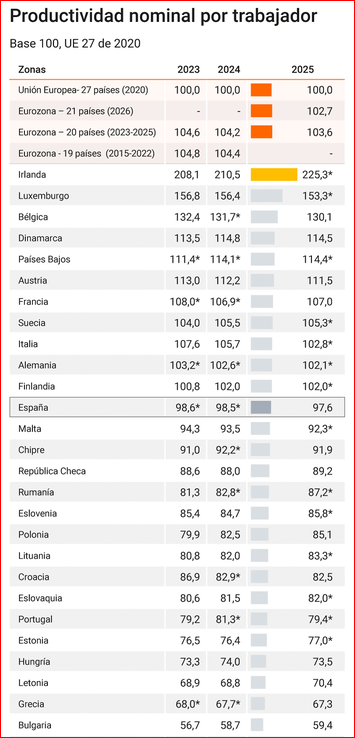
La productividad por trabajador cae en 2025 hasta su nivel más bajo en tres años.
España agranda su brecha con la media UE pese a la creación de empleo. La ampliación de permisos y las bajas médicas reducen las horas de trabajo.
https://t.co/EE9sGhuIaR
Breaking News: The FDA approved a daily pill that can lower cholesterol levels far below what statins can, clinical trials have shown. https://t.co/dTUtOXn4Wk
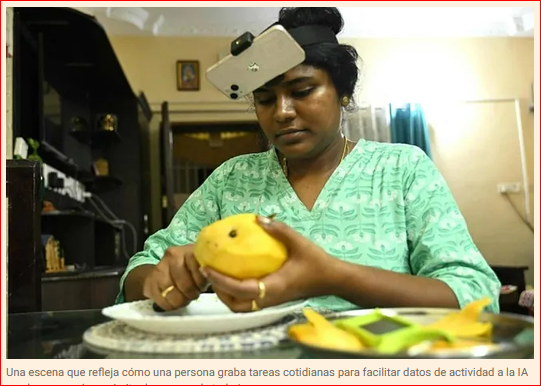
La paradoja de cobrar hoy por enseñar a la IA que nos sustituirá mañana.
La IA física avanza con trabajadores que graban sus tareas cotidianas.
https://t.co/QFaKscB3kw
El artículo sostiene que los hábitos se desarrollan, porque el cerebro agrupa acciones individuales en secuencias jerárquicas
Esta organización hace que el comportamiento sea más rápido, pero también menos flexible cuando cambia el valor de la recompensa
Los experimentos realizados con humanos y ratas mostraron que este modelo explica mejor cómo se forman y mantienen los hábitos que la teoría tradicional del aprendizaje por refuerzo model-free, ya que el estímulo discriminativo puede desencadenar la ejecución de una secuencia completa de acciones, en lugar de que cada acción sea seleccionada nuevamente según el valor actualizado de sus consecuencias
Fuente: https://t.co/RsC2eDZlUu
Dans son livre « La Médiocratie » (Système de la médiocrité), le philosophe canadien Alain Deneault écrit :
« Les médiocres ont remporté la bataille de notre époque. Le temps de la vérité et des valeurs a changé. Les médiocres se sont emparés de tout, avec leur médiocrité et leur corruption. Lorsque les valeurs et les principes élevés disparaissent, une corruption programmée des goûts, des mœurs et des valeurs remonte à la surface. C'est l'ère de la décadence. »
« Plus une personne s'enfonce dans la vulgarité, la superficialité et l'abaissement, plus elle gagne en popularité et en notoriété. »
Alain Deneault ajoute :
« Les réseaux sociaux ont largement contribué à promouvoir la médiocrité. Ils permettent à une belle personne dénuée de profondeur ou à un individu séduisant mais vide de contenu de s'imposer auprès du public, grâce à diverses plateformes médiatiques, dont beaucoup sont superficielles et peu productives, incapables d'offrir un contenu porteur de valeurs susceptibles de résister à l'épreuve du temps. »
Humanoid robotics is no longer a race between Tesla and Boston Dynamics.
At least 32 major humanoid platforms from 29 organizations across 11 countries are targeting factories, warehouses, labs, homes and service environments.
China accounts for 16 robots and the United States 7. Europe, Canada, Israel, Japan, Singapore and South Korea make up the rest.
Some target repetitive work. Others prioritize locomotion, dexterity, research, teleoperation or human interaction. A polished demo still does not prove an autonomous eight-hour shift.
INDUSTRIAL HUMANOIDS
‣ Boston Dynamics 🇺🇸 United States
➤ Atlas
• 1.90 m | 90 kg | 56 DoF
• 50 kg peak lifting capacity | up to 4 hours
‣ Agility Robotics 🇺🇸 United States
➤ Digit
• 15.9 kg carrying capacity
• Up to 4 hours of battery operation
‣ Figure AI 🇺🇸 United States
➤ Figure 03
• 1.73 m | 61 kg
• 20 kg payload | up to 8 hours
‣ Tesla 🇺🇸 United States
➤ Optimus
• General-purpose bipedal humanoid under development
• Built for repetitive, dangerous and demanding tasks
‣ Apptronik 🇺🇸 United States
➤ Apollo 2
• Bipedal legs or wheeled base
• Swappable battery architecture
‣ UBTECH 🇨🇳 China
➤ Walker S2
• 15 kg payload
• Autonomous battery swap in under 3 minutes
‣ Humanoid 🇬🇧 United Kingdom
➤ HMND 01 Alpha Bipedal
• 1.79 m | 90 kg | 29 body DoF
• 15 kg payload | up to 3 hours
‣ LimX Dynamics 🇨🇳 China
➤ Oli
• 1.65 m | 31 DoF
• Isaac Sim, MuJoCo and Gazebo support
GENERAL-PURPOSE HUMANOIDS
‣ Sanctuary AI 🇨🇦 Canada
➤ Phoenix Gen 8
• Hydraulic dexterous hands
• Tactile sensing for touch-based manipulation
‣ 1X Technologies 🇳🇴 Norway
➤ NEO
• $200 reservation deposit
• 1.68 m | 30 kg | up to 4 hours
‣ Unitree Robotics 🇨🇳 China
➤ G1
• From $13,500
• 1.32 m | about 35 kg | 23 body DoF
‣ Unitree Robotics 🇨🇳 China
➤ H2
• $29,900
• 1.82 m | about 70 kg | 31 DoF
‣ Fourier Intelligence 🇸🇬 Singapore
➤ GR-2
• 1.75 m | 63 kg | 53 joints
• 380 N·m peak torque
‣ AgiBot 🇨🇳 China
➤ A2 Ultra
• 1.69 m | about 69 kg | 40 DoF
• LiDAR, RGB-D cameras and hot-swappable batteries
‣ XPENG 🇨🇳 China
➤ IRON
• 82 total degrees of freedom
• Three Turing AI chips | 3,000 TOPS
‣ PUDU Robotics 🇨🇳 China
➤ D9
• 1.70 m | 65 kg | 42 DoF
• 20 kg total payload | 2 m/s
DYNAMIC AND RESEARCH HUMANOIDS
‣ NASA 🇺🇸 United States
➤ Valkyrie
• 1.88 m | about 136 kg
• 44 DoF | 1.8 kWh battery
‣ IHMC Robotics 🇺🇸 United States
➤ Nadia
• 29 actuated joints
• Electric and hydraulic actuation
‣ EngineAI 🇨🇳 China
➤ T800
• From ¥180,000
• 1.73 m | up to 450 N·m joint torque
‣ EngineAI 🇨🇳 China
➤ PM01
• ¥188,000
• 1.38 m | 24 DoF
‣ Kepler Robotics 🇨🇳 China
➤ Forerunner K2
• 1.78 m
• Rotary actuators up to 200 N·m
‣ Booster Robotics 🇨🇳 China
➤ T1
• About 1.20 m | 30 kg
• Up to 130 N·m joint torque
‣ PAL Robotics 🇪🇸 Spain
➤ TALOS
• 1.75 m | 95 kg
• 6 kg per arm at full extension
‣ ROBOTIS 🇰🇷 South Korea
➤ THORMANG3
• 1.375 m | 42 kg | 29 DoF
• ROS, open-source SDK and 3D CAD files
SERVICE AND EMBODIED AI
‣ AgiBot 🇨🇳 China
➤ X2
• 1.31 m | 35 kg | 25 DoF
• Up to 1.8 m/s movement speed
‣ Galbot 🇨🇳 China
➤ G1
• Up to 1.9 m horizontal reach
• Up to 10 kg payload | up to 8 hours of runtime
‣ RobotEra 🇨🇳 China
➤ STAR1
• 55 DoF
• 20 kg combined dual-arm payload
‣ MagicLab 🇨🇳 China
➤ MagicBot Gen1
• 1.74 m | about 70 kg | 42 DoF
• Up to 350 N·m joint torque
‣ Astribot 🇨🇳 China
➤ S1
• Two seven-degree-of-freedom arms
• Omnidirectional base and articulated torso
‣ NEURA Robotics 🇩🇪 Germany
➤ 4NE1 Gen 3.5
• Estimated €98,000 for 1–19 units
• ROS 2, Python and C++ interfaces
‣ Mentee Robotics 🇮🇱 Israel
➤ MenteeBot V3
• 1.75 m | 70 kg | 40 DoF
• Up to 25 kg carrying capacity
‣ Toyota 🇯🇵 Japan
➤ T-HR3
• 1.54 m | 75 kg
• 32 body axes and 10 articulated fingers
Which robot would you trust to complete an eight-hour shift with the fewest interventions?
El empleo público en Chile creció sin control: hoy el 68% de los funcionarios son a contrata y el 98% recibe el bono por desempeño completo.
Solo en sueldos, el Estado gastó $4.078.295 millones más en 2024 que en 2014.
En Pivotes proponemos un nuevo estatuto de empleo público:






![KirkDBorne's tweet photo. The Thinker's [Short] Guide to Analytic Thinking — How to Take Thinking Apart and What to Look for When You Do (from the Thinker's Guide Library): https://t.co/78b5ZDV16M [2nd Edition] https://t.co/5X0z7YvRSe](https://pbs.twimg.com/media/HNismKwWMAA76C_.jpg)