@j2k3k It is a double edge sword. My rule of thumb is only ingest based on a detection usecase. However, there’s the bit of forensic probability and compliance requirements.
@chrissanders88 Check repo commit history, identify possible compromised accs,
Analyse historical A record associated with the DNS using any dnsdb tools , identify possible adversary infra,
Using internet wayback machine check archived suspicious js script, Mal analysis: pivot intent
@chrissanders88 Two approaches:
i. From memory dump using volatility pivot identifying any other parent child relationships. Carve out the suspicious rundll32.exe process for further analysis
ii. Procmon logs,
Identify all the process, file and network relationships from rundll PID
@chrissanders88 Interesting fact, proxy servers tend to have caches which are a goldmine. You can easily carve interesting artefacts from the cache. Carve out webpages associated with the requests and or any objects/files of interest for further analysis.
I’ve trained many analysts over the years - inside my own teams, in SOCs, CERTs, and various internal security teams. And lately, I’ve been noticing a trend that deeply saddens me.
There’s an increasing number of young professionals who struggle with the grind of our work. They get simple but necessary tasks - tasks that transform indicators, rework detections, or retrieve and process data - but they return flawed results, late and incomplete. Some even let AI do the work without checking if it's correct. And when I ask why, the answer, directly or indirectly, is often the same: "I want to do the exciting stuff."
But the truth is, 97% of what we do in cybersecurity is not exciting. It's slow, repetitive, and requires patience. We grind through logs, extract data from reports, and refine rules. Most of the time, we don’t see the direct impact of our work. A signature written today might detect something crucial in a customer’s system six months from now, and we’ll never even know. But every small piece matters.
What saddens me is not just the impatience, but the lack of care. The unwillingness to put thought and effort into something seemingly simple. The failure to reflect on how to make a task better. This goes against something deeply ingrained in my upbringing - a principle that I believe is also deeply rooted in both German and Japanese culture.
In German, my grandmother would always say: "Mach es gescheit." It’s hard to translate precisely, but it means: Do it properly. Not just complete a task, but do it in a way that is solid, thoughtful, and more than just "good enough." It doesn’t mean perfection - it means putting care into what you do, even if no one else will notice.
The Japanese have a similar philosophy, one that I greatly admire. There is a word, "shokunin" (職人精神), which means more than just "craftsman." It describes someone who dedicates themselves fully to their craft, always refining, always improving. Even in the smallest tasks, a shokunin finds a way to do things better, not because someone told them to, but because they take pride in their work.
I was reminded of this when I thought about my uncle, who was a carpenter. When I was a child, I watched him finish his masterpiece for his final exam - an intricately crafted dresser. After days of sanding, polishing, and checking every tiny detail, he wasn’t done. He took out a small, hand-carved wooden rose, which he had made separately, and carefully placed it on the dresser’s ledge.
It wasn’t required. No one had told him to add that ornament. But he did it because he cared. Because he wanted his work to be more than just acceptable.
And this is what I want to see in young professionals today. It’s not about making flashy things, or chasing after excitement - it’s about taking pride in your craft, even in the smallest details. Because in the end, that’s what makes a difference.
So my advice is this: Whatever you do, do it gescheit. Do it like a shokunin. Put care into your work, even if no one else will see it. That’s how you grow. That’s how you build trust. And in the long run, that’s what will set you apart.
Dear friends,
You do not need someone like me to do an Entra ID/M365/Azure assessment if you have not gone through CIS M365 and Azure foundational benchmarks and applied as many benchmarks as your business needs allow, as well as cnofigured Conditional Access Policies that Microsoft has templated for you.
CIS Benchmarks largely overlap with SCuBA Guidelines and M365/Azure Security recommendations from Microsoft. They are created from a consortium of industry experts in all verticals from around the world. They do not tell you how to exploit configurations, but know that most of the recommendations are based on the ability to exploit lack of certain settings in different ways.
Please do this before you hire a consultant for a penetration test or a security assessment. Help us help you more. We will still find things to help improve the security of the tenant, even with these applied. The benchmarks are free and can be downloaded from here: https://t.co/fNzXbEd1O1
If you have an M365 Business Premium license, this comes with a P1 license for Conditional Access and most E3 Level 1 and E3 Level 2 benchmarks can still be applied. Most orgs cannot use Security Defaults because it does not meet their business needs. Once you disable them, you have to add the security yourself. CIS Benchmarks will help you get most of the way there.
Nessus scans check for these but most need a manual review based on individual configurations and business needs, and most results come back informational due to the "Manual" check requirement in the benchmarks. Nessus scans are still great though because they map the benchmarks to compliance frameworks as well.
Once this is done, THEN hire someone like me to help you test, further harden your tenant, and reveal your blind spots.
I want to make sure you get the best value for your money spent. People like me can do much more than just review configurations for hardening purposes. These are the basics. MS Cloud is hard.
You can also use https://t.co/V85n8redYx and https://t.co/iRUzS2nuxh to learn all the internet facing endpoints. Many organizations don't realize just how many access points from the internet exist.
These are the best things you can do in lieu of SC-300 (Identity and Access Management), AZ-500 (Azure Security Engineer), SC-200 (Security Operations Analyst), and SC-100 (Cybersecurity Architect) certification learning material from Microsoft which takes a really long time if you don't know cloud already:
How can we waste attackers’ time, attention, and money? Can we inflict psychological damage on them?
Our new paper (@JosiahDykstra + other fine folks) answers these questions, introducing the concept of “sludge” against attackers for systems resilience: https://t.co/GU8kIW4KUv
1/ @ZephrFish presented "Paving The Way To DA" at this year's @Steel_Con with @myexploit2600 [1]. In a tweet about this presentation, Andy also mentioned, among other things, his three-part blog with the same title [2],[3]. Thank you both! 👏 🧵
#CyberSecurity
Do you ever get text messages meant for someone else? Maybe sth like "Are you Linda from the pet store?" And because you're nice, you reply and say they got the wrong number.
Cindy Tsai, a lawyer, did just that. By the end of it all, she would lose about $2.5 million.
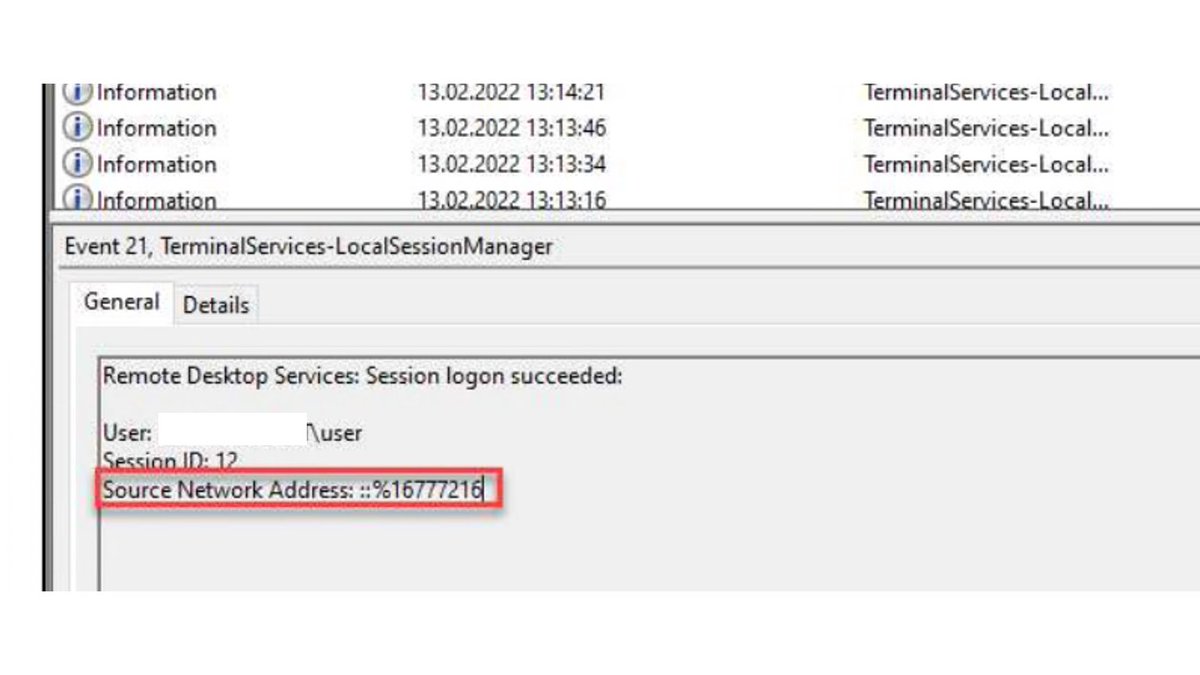
1/ #ThreatHunting: "16777216" as Source Network Address could indicate an RDP tunnel via ngrok.
@SecurityAura and I have seen the value ":%16777216" as Source Network Address within the MS-Windows-TerminalServices-LocalSessionManager/Operational Log in different investigations.
A ranking officer in an elite #DPRK military cyberwarfare units is being held at an undisclosed location in far eastern #Russia after Moscow’s agents thwarted his attempt to defect. https://t.co/FKqduIVCEh