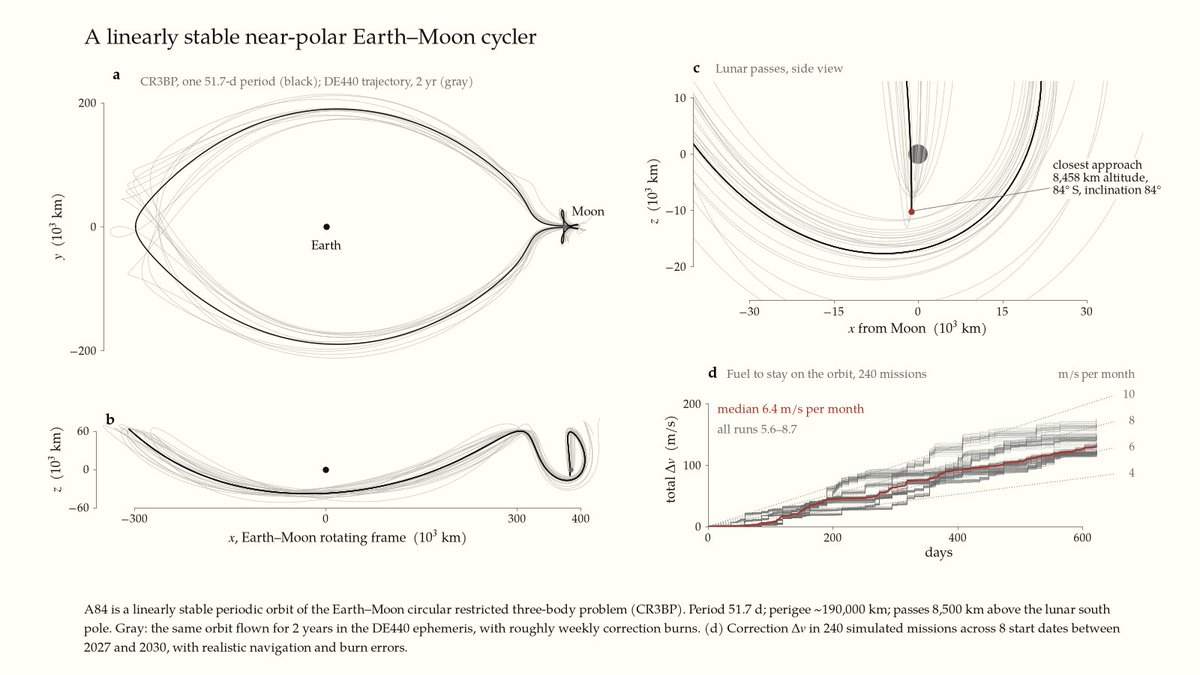
What if a spacecraft could cycle between Earth and Moon orbits, performing multiple circuits of each, naturally and indefinitely, with zero propulsion?
We’ve discovered a new class of stable, prograde, low-energy cycler orbits that do just that.
Why these orbits matter:
Ballistic → fuel-free
Stable → long-term ready
Near-chaotic → agile with low ΔV
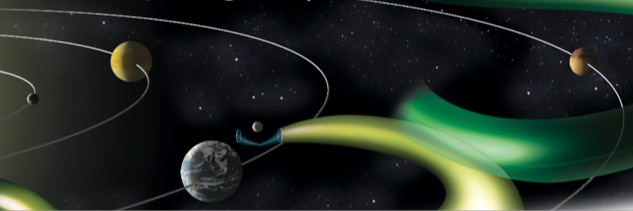
Low-energy → access to Earth/Moon, Lagrange points, Sun–Earth L1/L2, even heliocentric space
At the AAS/AIAA Astrodynamics Specialist Conference in Boston next week, I’ll present on a new family of ballistic Earth-Moon cycler orbits that are stable, prograde, and mission agile—unlike any cyclers in the current literature.
The example below is shown in both the Earth-Moon rotating frame and inertial frame.
Conference Paper: https://t.co/v3VDPIT0X4
Plans released for a $16 billion mile-long ship capable of carrying 80,000 people.
The 'Freedom Ship' would be home to about 50,000 people, with space for 10,000 tourists and 20,000 crew members.
"The Freedom Ship is envisioned as a permanently mobile city at sea designed for long-term residence rather than short-term travel," the company says.
The ship would be about 8 times the size of the current largest ship in the world, the Royal Caribbean’s Icon of the Seas.
The plans include a 15,000-seat stadium, schools, colleges, shops, clubs, a water park, a music hall, museums, parks, and more.
The ship, which would run on nuclear, would be too large to dock and would remain in international waters.
Freedom Cruise International says it would go around the world every two to three years.
Insane.
252 years ago today, the British Empire closed the busiest port in North America to teach one colony a lesson, and accidentally turned thirteen colonies into one country.
On December 16, 1773, a few dozen Bostonians had thrown 342 chests of East India Company tea into the harbor. The damages came to roughly £9,659. Lord North, the Prime Minister, decided to make an example. Parliament passed the Boston Port Act. King George III signed it on March 31, 1774. It took effect at dawn on June 1.
The Royal Navy moved warships into Boston Harbor and dropped anchor. Every dock was sealed. No ship could enter or leave. Not a barrel of flour, not a load of firewood, not a letter. The port would stay closed until Boston paid the East India Company in full and promised to behave.
The intent was to isolate Massachusetts and force her neighbors to watch her starve.
What happened instead is one of the strangest political miracles in modern history.
Down in Williamsburg, a 31 year old burgess named Thomas Jefferson and a few friends, including Patrick Henry and Richard Henry Lee, pulled a dusty old book off the shelf of the House of Burgesses library, a record of how the Long Parliament had once handled a tyrant, and proposed that the entire colony of Virginia observe June 1, 1774 as a day of "fasting, humiliation, and prayer" in solidarity with Boston.
The Royal Governor, Lord Dunmore, dissolved the House two days later for treason. The burgesses simply walked across the street to the Raleigh Tavern and kept meeting.
June 1 came. In Virginia, every Anglican church was draped in black. The bells tolled all day. Plantation owners shut their doors. Jefferson wrote later that "the effect of the day through the whole colony was like a shock of electricity."
The same shock ran through every colony south of New England. Wagon trains of food started rolling toward Boston from as far away as Charleston. The Marblehead fishermen offered to give the Boston merchants the use of their docks for free. A Quaker miller in Pennsylvania sent a hundred barrels of flour. Israel Putnam personally drove a herd of sheep from Connecticut to feed the city.
Three months later, 56 delegates from twelve colonies sat down together in Philadelphia. It was called the First Continental Congress. None of them had ever met under one roof before.
Parliament wanted to punish a city. It created a nation.
252 years ago today, in a harbor full of Royal Navy frigates, the American Revolution stopped being a Massachusetts problem.
I received a message in my direct messages asking how difficult it would be to use computer vision to track cell movement.
> SAM zero shot for the immune cell
> YOLO finetuned on a small dataset for bacteria
Realization time: ~2 hours
🚀 Space exploration timeline:
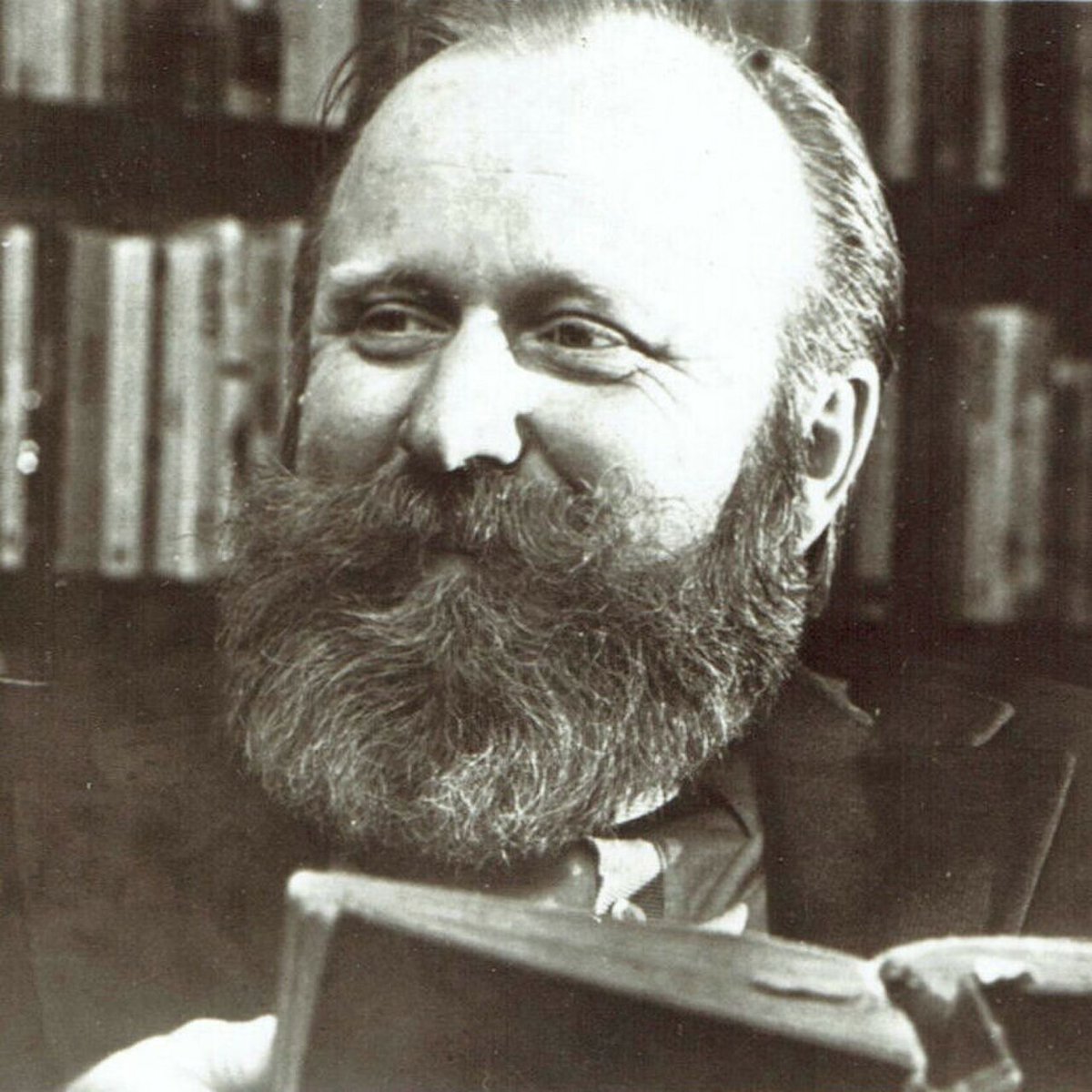
1903 — Tsiolkovsky publishes the rocket equation
1904
1905
1906
1907
1908
1909 — Goddard writes first paper on liquid propellants as fuel for rockets
1910
1911
1912
1913
1914 — Goddard patents designs for a liquid-fueled rocket and a multi-stage rocket
1915
1916
1917
1918
1919 — Goddard publishes "A Method of Reaching Extreme Altitudes"
1920
1921 — Goddard begins experiments with liquid oxygen and gasoline rocket engines
1922
1923 — Goddard successfully tests first liquid propellant engine
1924
1925
1926 — Goddard launches world's first liquid-fueled rocket
1927 — VfR (Society for Space Travel) founded in Germany; von Braun joins as a teenager
1928
1929 — Goddard launches rocket carrying first scientific payload (barometer & camera)
1930
1931 — Korolev co-founds GIRD (Group for Study of Reactive Motion) in Moscow
1932 — Von Braun becomes chief engineer of German Army rocket program
1933 — Korolev leads launch of USSR's first liquid-fueled rocket
1934 — Von Braun's A-2 rockets reach 2.4 km altitude
1935
1936 — Korolev designs RP-318, USSR's first rocket-powered aircraft
1937
1938
1939 — Von Braun's A-5 rocket reaches 8 km altitude
1940
1941
1942 — Von Braun's A-4 (V-2) rocket becomes first human-made object to reach space (100 km)
1943 — V-2 production begins; JPL formally established in USA
1944 — V-2 used as weapon against London and Antwerp; first ballistic missile attacks in history
1945 — USA recruits von Braun
1946 — USA and USSR independently begin reverse-engineering V-2
1947 — First animals (fruit flies) launched to space aboard a V-2
1948 — Korolev's R-1 rocket successfully launched
1949 — Albert II, a rhesus monkey, becomes first mammal in space aboard a US V-2 rocket
1950
1951
1952
1953 — Korolev begins design of R-7
1954 — Korolev writes letter to Moscow advocating for an orbital satellite program
1955 — USA announces Project Vanguard
1956 — Von Braun's Redstone rocket successfully tested; R-7 development nears completion
1957 — Korolev's R-7 becomes world's first ICBM; Sputnik 1 — first artificial satellite in orbit; Sputnik 2 carries Laika — first living creature in orbit
1958 — USA launches Explorer 1; NASA founded; first US attempt at Moon probe (Pioneer 0) fails
1959 — Luna 1 (USSR) — first spacecraft to escape Earth's gravity; Luna 2 — first human-made object to reach the Moon; Luna 3 — first photos of Moon's far side
1960 — First weather satellite (TIROS-1) launched by USA; first communications satellite (Echo 1); two Soviet dogs (Belka & Strelka) orbit Earth and return safely
1961 — Gagarin — first human in space, April 12; Alan Shepard — first American in space, May 5
1962 — Mariner 2 — first spacecraft to fly by another planet (Venus); Telstar 1 — first active communications satellite
1963 — Tereshkova — first woman in space
1964 — Ranger 7 — first close-up photographs of the Moon's surface
1965 — Leonov — first spacewalk; Mariner 4 — first close-up images of Mars
1966 — Luna 9 — first soft landing on the Moon; first orbital docking (Gemini 8); Surveyor 1 — first US soft Moon landing
1967 — Apollo 1 fire kills three astronauts; Venera 4 — first probe to enter another planet's atmosphere (Venus)
1968 — Apollo 8 — first crewed mission to orbit the Moon; famous Earthrise photograph
1969 — Apollo 11 — first humans on the Moon; Apollo 12 — second Moon landing
1970 — Apollo 13 — Moon mission aborted after explosion; Luna 16 — first robotic Moon sample return; Lunokhod 1 — first lunar rover
1971 — Salyut 1 (USSR) — first space station; Mariner 9 — first spacecraft to orbit another planet (Mars); Apollo 14 & 15 Moon landings
1972 — Apollo 16 & 17 — final Moon landings; Pioneer 10 launched toward Jupiter; last humans on the Moon
1973 — Pioneer 10 — first spacecraft to fly by Jupiter; Skylab — first US space station
1974 — Mariner 10 — first gravity assist maneuver; first flyby of Mercury
A Hamiltonian system is a way of describing motion where position and momentum evolve together as one coupled system.
The plot shows an energy landscape in phase space, with the motion of the system traced directly on top of it and projected onto the underlying phase portrait.
#HamiltonianSystems #PhaseSpace #PhysicsSimulation #DynamicalSystems #MathematicalPhysics
This visual shows nicely the uncertainty regarding when exactly global deaths will start to outnumber global births (and thereby kick off the shrinking of humanity). The UN data underlying this chart is much more bullish on human population than other institutes. I would be surprised if "peak-human" won't be reached before the 2080s. Source: https://t.co/n9krXd2eHO
This New Glenn rocket explosion released 20% of the energy of the Hiroshima atomic bomb and that wasn't even the bad part:
→ The pad: LC-36 is the only pad on Earth that launches New Glenn and now it's gone. Over $1B to build. SpaceX needed 7 months to rebuild after a similar hit.
→ The deadline: Amazon needs 1,618 satellites up by July 30 to keep its FCC license. It has ~300. The rocket that was supposed to help fix that just blew up twice in a row
SpaceX made us believe that landing rockets on barges was a normal expectation. Turns out rocket science is hard after all. Wishing the team a speedy recovery 🚀
Yes, it is inflation-adjusted. The chart uses "constant 2022 dollars". That means all the thresholds and household incomes have been adjusted for inflation to allow apples-to-apples comparison over 1967–2022. Growth in the high-income share isn't an artifact of inflation, it's real upward movement.
Four JPL-built propulsive drones – known as MoonFall – will survey the lunar surface at potential @NASAArtemis landing sites in unprecedented detail. The mission is part of the initial phase of the @NASAMoonBase initiative.
Learn more: https://t.co/2NJXRlgOoW
Chaos and randomness are not the same thing.
A chaotic system still has an underlying geometric structure. In fact, that structure is exactly what creates the chaos.
For systems like the double pendulum, the motion evolves in a 4-dimensional phase space: two position variables and two momentum variables. Conservation of energy constrains the motion to a 3-dimensional energy hypersurface inside that space. That turns out to be the minimum dimension needed for chaos.
Within that hypersurface, trajectories are repeatedly stretched, folded, and then re-injected by the dynamics, like a baker making a flaky pastry. Nearby initial conditions separate exponentially fast, producing the practical unpredictability associated with chaos.
But the motion is still governed by deterministic equations the entire time.
Randomness is different. Randomness has no underlying deterministic geometric evolution to follow.
Chaos has structure. It just has structure complicated enough that long-term prediction breaks down.
More about a working definition of chaos and chaotic, "strange" attractors here:
https://t.co/JIBwwd88Dm