Check out the Energy Empire podcast for the full story on this. Narayan makes the case that many our short term grid woes can be solved by making the grid smarter and unleashing capacity that is already there. A fascinating listen.
Grids are built for worst case scenarios, leaving massive unused capacity sitting there.
Amit Narayan found 450MW hiding in Portland General. 650MW in National Grid NY.
Result: 5% rate cuts, no new plants built.
100,000MW like this in plain sight nationwide.
After five years on the road, the average electric vehicle will still be able to drive up to 95% of its original range—better than many in the auto industry expected.
by Ellie Davis
https://t.co/Tivc9qJ0mI
Uranium is an important energy resource! It is also plentiful. We have enough uranium on earth to power our nuclear reactor fleets for hundreds of years, even as that fleet expands.
The current energy crisis is bullish for uranium.
Refineries need daily flows and only have weeks of crude storage, while yrs of uranium supplies can be easily stored.
This makes uranium the best energy source to weather geopolitical events.
The Arab oil embargo in the 70s led to a nuclear boom, and countries like Japan, heavily dependent on energy imports, built one of the biggest fleets.
Today, the political wind is changing once again: the EU, which shut down parts of its nuclear fleet, is now considering a restart.
Nuclear is basically the hedge against oil & gas volatility. You fuel a plant & it runs for yrs.
The heat dome that has settled over the eastern US is stressing the electric grid. PJM and utilities have been managing well so far. But as electricity demand surges and extreme weather events become more common, we need to invest *smartly* to avoid blackouts in the future.
@UtilityDive How does this compare to the sticker price for other sources of generation? Is this a unique issue for gas plants, or is sticker price underestimated across the board due to various add-on costs?
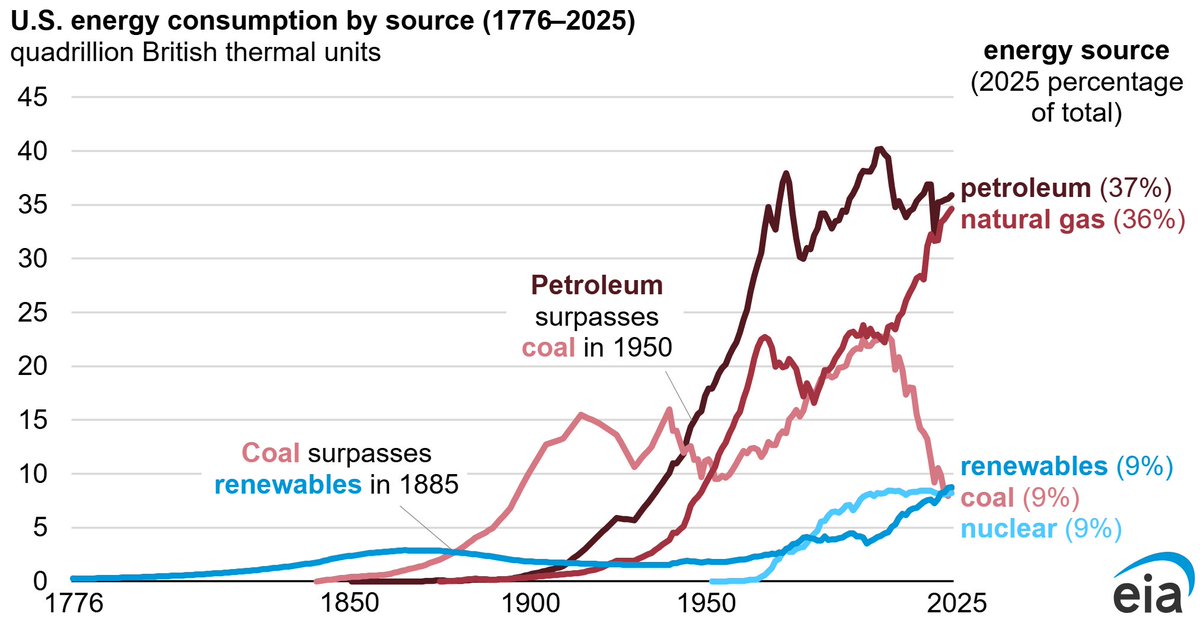
This is an excellent visual. Since the turn of the century, the rise in natural gas and renewables and the decline in coal are all significant. What stands out to you and how would you like to see trends develop over the next decades?
CHART OF THE DAY: The history of US energy consumption, from independence to present day. Historic milestone ahead: nat gas about to overtake oil.
(An annual treat from @EIAgov ahead of 4th of July festivities. Please, @EIA_One keep the tradition).
This is worth a listen! So much demand can be met by just modernizing the grid and getting electricity to where it needs to go more efficiently. We need more power generation, but that's far from the whole story.
🎧 On this week's episode of #ColumbiaEnergyExchange, host @bill_loveless speaks to Doug Arent and @RobinMillican about their recent reports for @ColumbiaUEnergy that examine the structural roots of rising electricity prices and look at approaches to improving grid investments and resilience. ⚡
Listen now: https://t.co/k5lShMmFzm
@peterli34923561 We need more nuclear power, but so-called waste recycling is not real. It doesn't work, is dangerous, and exorbitantly expensive. I'd run far away from any business model that hangs its hat on this technology.
@IYNC Great to see IYNC building the next generation of nuclear energy leaders! But important to note that while La Hague reprocesses a LOT, it recycles very little. 99% of what comes out is waste/stored indefinitely. We have many better fuel cycle options than so-called recycling!
@_ShahKruti This is the right way to tackle nuclear infrastructure and address waste! Now what we need is for Holtec and other like-minded companies to actively compete against so-called waste recycling models that are dangerous and drain money from nuclear power options that actually work.
What might the founding fathers say about nuclear energy - Ben Franklin edition:
"We have long tamed lightning; it would be a curious failure not to master this deeper, atomic power. Prudence advises we contrive it to supply affordable abundance while denying the seed of war."
@AmyAHarder@axios Lots of interesting data here. I'm keeping a close eye on where Google and others will look to get their dispatchable electricity - the kind that can ramp up and down with renewables - as more data centers come online. There is interest in nuclear, but it will take time.
@JoshJPhilipp There is a lot of legitimate pushback on data centers, but is water usage the big problem? I find this data from Axios compelling.
https://t.co/1Cgprx9K92 via @axios
@abundanceinst@BeaconTN Indeed, TN is an impressive leader on nuclear energy! But the main obstacles to expansion are more about mitigating cost overruns and staying focused on technologies that actually work. If we can nail those two things, we will have abundant, affordable nuclear energy.
As data centers are coming under increased scrutiny for their energy use and footprints, water usage is now a focus. It turns out they use much less water than other industries, but there is still a major trust gap with communities that needs to be addressed.
@Jennifer_Hiller Pouring money into so-called nuclear "recycling" technology is the fastest way to tank this industry. We need to invest smartly in the technologies that actually work, are safe, and can help lower costs.
@Jennifer_Hiller Loans can be helpful, but access to debt financing is not the main barrier to new reactor builds. It's the risk mitigation that you touch on in the article. Any real solution needs to tackle the cost and timeline overruns that have plagued the industry.
@HopfJames Yikes. Reprocessing is such an expensive and dangerous distraction to nuclear energy deployment. Our focus ought to be on deploying the technologies that actually work.