Voy a dejar mi trabajo para dedicarme al 100% a Claude.
Le pedí que hiciera esto:
Analizar mercados mal valorados en Polymarket para encontrar oportunidades de arbitraje y detectar las wallets que las están aprovechando para copiarlas.
Convertí $2K en $11K de la noche a la mañana.
Monitorizó +1.000 wallets.
Me di cuenta de algo muy rápido.
Hay bots de arbitraje contra los que no puedo competir sin saber programar.
Pero sí puedo encontrarlos. Y copiarlos.
Claude me construyó un terminal de monitorización conectado a un bot de copytrading en Telegram.
No es un script. Ni siquiera un bot.
Es un agente de IA que mejora cada vez que encuentra una nueva wallet.
Analiza el comportamiento de cada wallet. Cómo opera. Sus patrones de arbitraje. El tamaño de sus posiciones. El momento exacto en el que entra.
• 70% de tasa de acierto.
• 7 wallets copiándose ahora mismo de entre más de 500 monitorizadas.
El bot nunca se detiene. Nunca apuesta. Solo sigue las matemáticas y busca beneficio.
Solo necesitas:
• Claude
• Un dispositivo
• 1 hora al día
Lo voy a compartir gratis durante las próximas 24 horas.
Para conseguirlo:
1. Comenta “claude”
2. Dale like y haz RT
3. Sígueme en @igus_ai para que pueda enviártelo por DM
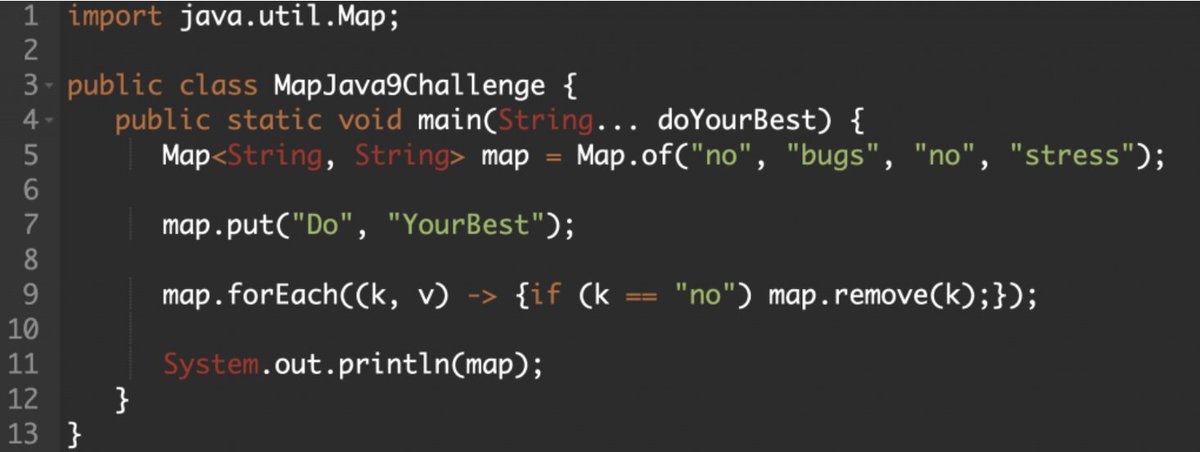
In Java 9 we can use Collection Factory with List, Set, or Map. Make code more concise and easier to read. With the Map Collection Factory Challenge! 💻
🔗 https://t.co/JjcBIaggq1
#javachallenger#software#java#code#map
If you are a Ul/UX designer and you are looking for a website where you can get free 3D illustrations. Here are 05 amazing website you should check out.
Credit: @JararMalik
Retweet for others ❤️
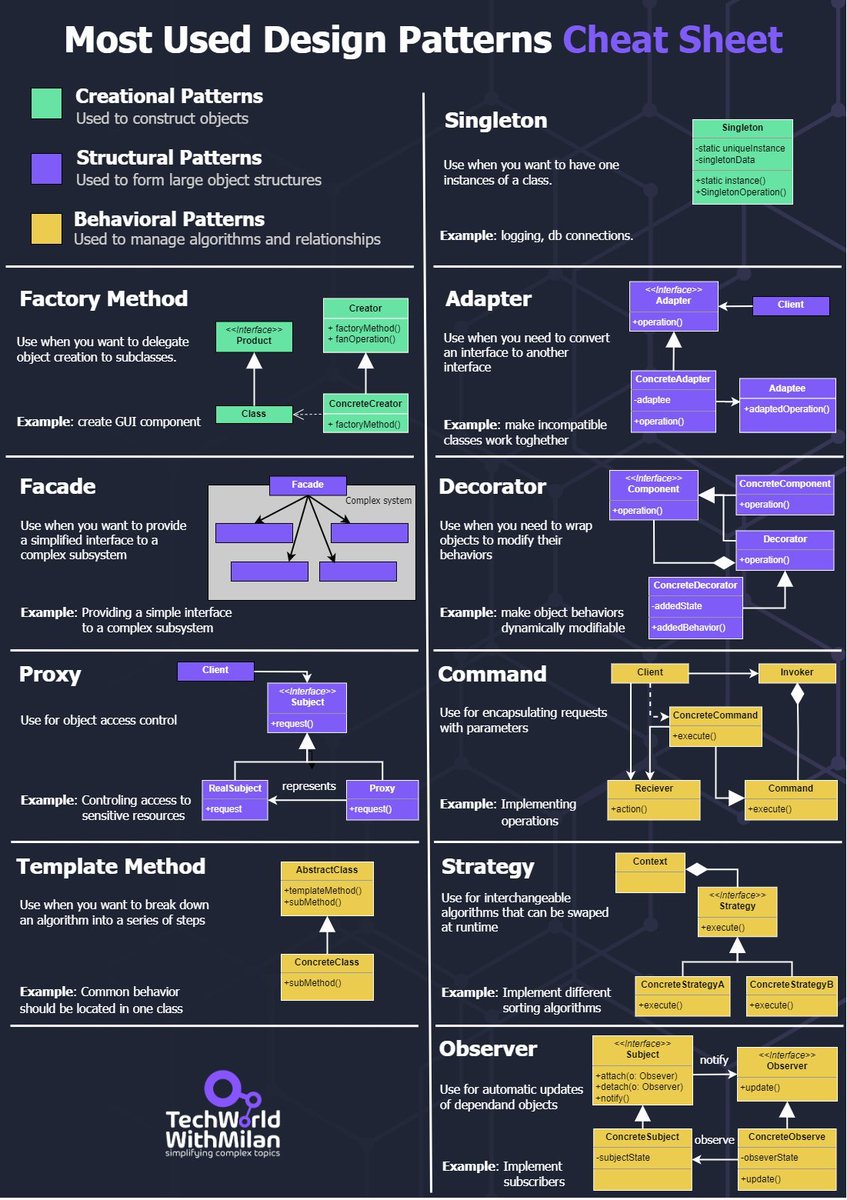
𝗗𝗲𝘀𝗶𝗴𝗻 𝗣𝗮𝘁𝘁𝗲𝗿𝗻𝘀 𝗖𝗵𝗲𝗮𝘁 𝗦𝗵𝗲𝗲𝘁
Design patterns can be divided into three main types:
𝟭. 𝗖𝗿𝗲𝗮𝘁𝗶𝗼𝗻𝗮𝗹 𝗣𝗮𝘁𝘁𝗲𝗿𝗻𝘀
These design patterns deal with object creation mechanisms, trying to create objects in a manner suitable to the situation.
Important patterns in this group are:
𝗙𝗮𝗰𝘁𝗼𝗿𝘆: This pattern allows delegating the instantiation logic to factory classes. The Factory Method creates objects without exposing the instantiation logic to the client.
𝗦𝗶𝗻𝗴𝗹𝗲𝘁𝗼𝗻 The Singleton pattern ensures that a class has only one instance and provides a global point of access to it. It's useful when exactly one object is needed to coordinate actions across the system.
𝟮. 𝗦𝘁𝗿𝘂𝗰𝘁𝘂𝗿𝗮𝗹 𝗣𝗮𝘁𝘁𝗲𝗿𝗻𝘀
These patterns deal with the composition of classes and objects that form larger structures.
Important patterns in this group are:
𝗔𝗱𝗮𝗽𝘁𝗲𝗿: This pattern works as a bridge between two incompatible interfaces. It wraps an existing class with a new interface to become compatible with the client's interface.
𝗙𝗮𝗰𝗮𝗱𝗲: The Façade pattern provides a unified interface to a set of interfaces in a subsystem. Façade defines a higher-level interface that makes the subsystem easier to use.
𝗗𝗲𝗰𝗼𝗿𝗮𝘁𝗼𝗿: This pattern dynamically adds/overrides behavior in an existing method of an object. This pattern provides a flexible alternative to subclassing for extending functionality.
𝗣𝗿𝗼𝘅𝘆: The Proxy pattern provides a surrogate or placeholder for another object to control access to it. In its most general form, a proxy is a class functioning as an interface to something else.
𝟯. 𝗕𝗲𝗵𝗮𝘃𝗶𝗼𝗿𝗮𝗹 𝗣𝗮𝘁𝘁𝗲𝗿𝗻𝘀
These patterns are specifically concerned with communication between objects and how they interact and distribute work.
Important patterns in this group are:
𝗖𝗼𝗺𝗺𝗮𝗻𝗱: The Command pattern encapsulates a request as an object, thus allowing users to parameterize clients with queues, requests, and operations.
𝗧𝗲𝗺𝗽𝗹𝗮𝘁𝗲 𝗠𝗲𝘁𝗵𝗼𝗱: This pattern defines the program skeleton of an algorithm in a method called template method, which defers some steps to subclasses.
𝗦𝘁𝗿𝗮𝘁𝗲𝗴𝘆: The Strategy pattern defines a family of algorithms, encapsulates each one, and makes them interchangeable. Strategy lets the algorithm vary independently from clients that use it.
𝗢𝗯𝘀𝗲𝗿𝘃𝗲𝗿: This pattern defines a one-to-many dependency between objects so that all its dependents are notified and updated automatically when one object changes state.
#technology #softwareengineering #programming #techworldwithmilan #developers
From creating tables to pagination, here are a few MySQL tricks web developers should have in their bags!
#DEVCommunity#Database
https://t.co/w3qRKrmEXP
12 Design Patterns You Must Know
1. Factory Pattern 🏭
Imagine a factory that produces different products. Similarly, this pattern creates objects without specifying their exact class, making code flexible and easy to extend. 🧩
2. Observer Pattern 🔍
Like subscribing to updates! Objects (observers) register to watch changes in a subject. When the subject changes, observers are notified automatically. 📡🔔
3. Singleton Pattern 🕊️
The one and only! Ensures a class has only one instance globally accessible. Useful for managing shared resources like databases. 🌐🔒
4. Builder Pattern 🛠️
Building complex objects step by step. Think of it as assembling Lego bricks to create something intricate without the mess! 🧱🏗️
5. Adapter Pattern 🌉
Bridging the gap! Converts the interface of one class into another interface clients expect. Makes incompatible components work together. 🔌🔌
6. Decorator Pattern 🎈
Like adding toppings to your pizza! Dynamically adds responsibilities to objects without changing their code. A flexible alternative to subclassing. 🍕✨
7. Proxy Pattern 🕶️
Virtual representative! Controls access to an object, acting as a stand-in with additional functionality, like lazy loading. 🔒🔍
8. Strategy Pattern 🎯
Switching strategies seamlessly! Allows selecting algorithms during runtime. Useful when you want to provide multiple ways to accomplish a task. 🎮🔄
9. Command Pattern ⌨️
Encapsulates requests as objects, allowing parameterization of clients with different requests and queuing of requests. Think of it as a to-do list for your program. 📋📌
10. Template Pattern 📄
Standardized process steps! Defines the structure of an algorithm, letting subclasses override specific steps. Ideal for reusable workflows. 📊📈
11. Iterator Pattern 🔄
Tour guide for collections! Provides a way to access elements of a collection without exposing its underlying representation. 🚶♂️🗺️
12. State Pattern 🚦
Like a traffic light! Allows an object to change its behavior when its internal state changes. Keeps your code organized as states pile up. 🚥🔄
🚨 Join Waiting List for New 10+ Hour Linux Course - https://t.co/EolNQecppN
#systemdesign #coding #interviewtips
By avoiding common memory-related exceptions such as OutOfMemoryError and optimizing your code, you can ensure your Java applications run smoothly.
Here's how!
{ author: @ducanhdev } #DEVCommunity#Java
https://t.co/jcdUFXNmMV
Follow along to build a global exception handling class for Spring Boot Rest APIs using @ControllerAdvice and @ExceptionHandler.
#DEVCommunity#Java
https://t.co/72I9sK2jdN