The Rwanda Journal of Medicine and Health Sciences publishes articles that have relevance in various health related fields including but not limited to medicine
Africa does not need another perfect plan. It needs the courage & institutional capacity, to act.
A day after the #AfricaMindsetReset Forum, this is the question I am still reflecting on:
If Africa already has talent, resources, policy frameworks and institutions, why does the distance between ambition and implementation remain so wide?
One intervention from H.E President Paul Kagame stayed with me. Speaking about decisions that disappear into committees, procedures, approvals and reports, he challenged something deeper than bureaucracy: our fear of acting before everything is perfect.
Because sometimes, inaction is itself the mistake.
But I also left the Forum convinced that a mindset reset cannot simply mean “thinking positively.”
Africa’s constraints are real: capital costs, fragmented markets, infrastructure gaps, institutional weaknesses & unequal global systems. The reset is about how we exercise agency within those realities.
That means moving:
from dependency to strategic partnership;
from fragmented national ambition to continental scale;
from exporting resources to retaining more value;
from announcing policies to measuring implementation;
from treating young Africans as beneficiaries to recognising them as producers, researchers, entrepreneurs and citizens; & from #Pan-African solidarity in principle to #Meta-African cooperation in practice.
For me, that is the significance of #MetaAfricanism .
Pan-Africanism helped secure liberation, dignity and solidarity. The challenge for our generation is to turn that inheritance into functioning systems: integrated markets, interoperable infrastructure, stronger institutions, African knowledge, productive investment and collective bargaining power.
And this requires something uncomfortable from young Africans too.
We cannot build our identity only around diagnosing what previous generations failed to do. We must also ask what we are prepared to build, reform, finance and sustain differently.
The Forum has ended.
The more important question begins now:
What changes in our behaviour, institutions & decisions because we were in the room?
#AfricaResets #MetaAfricanism
@ASG_Africa
Africa’s next chapter demands more than ambition—it requires a reset in how we think, govern, collaborate,& build.
The Africa Mindset Reset Forum 2026 is a timely space to move from ideas to African-led solutions, stronger institutions, and collective action.
#MindsetReset2026
Africa’s next chapter demands more than ambition—it requires a reset in how we think, govern, collaborate,& build.
The Africa Mindset Reset Forum 2026 is a timely space to move from ideas to African-led solutions, stronger institutions, and collective action.
#MindsetReset2026
Africa's development finance landscape is shifting - and 20 seats are open for those who want to shape it.
On 16 May, @ASG_Rwanda and the @OECDdev are hosting a workshop on domestic resource mobilisation, global finance architecture, and Africa's role in international cooperation frameworks.
Join us to interact with fellow leaders, practitioners, and African scholars.
Register: https://t.co/KjwZEv8kza
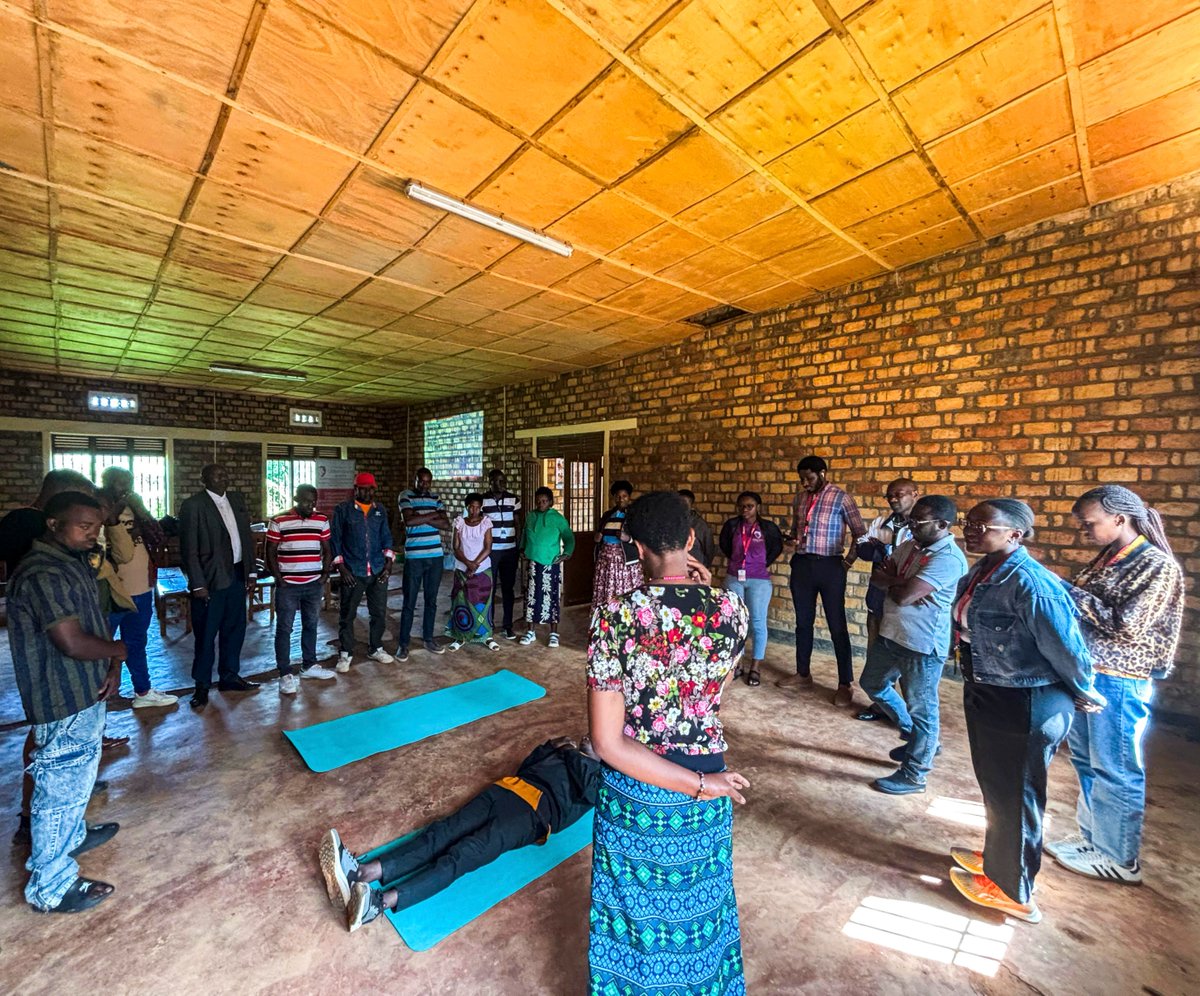
Not every emergency begins near a hospital.
In many communities, the first minutes after an injury, burn, road accident, or sudden health emergency can determine what happens next. Yet timely care is often delayed by limited first aid training, lack of basic supplies, and harmful practices that may put lives at further risk.
With the message “First Aid saves lives. Act fast and correctly,” our MGHD Global Surgery Class of 2026 students worked with communities in Butaro to strengthen one of the most important parts of emergency care: the first response.
Over four days, the students delivered locally adapted first aid training, based on the WHO Community First Aid Response Course, to more than 120 community stakeholders. The sessions focused on practical skills, using available everyday resources, addressing harmful practices through open dialogue, and increasing awareness of Rwanda’s national emergency number: 912.
Read more about UGHE’s role in Equi-Injury, a global effort working to improve access to quality injury care: https://t.co/gK9VCpbN8a
Today, @ASG_Africa and @AfroChampions signed an MoU to jointly develop and deliver the Sankore Institute of Global Negotiators (SIGN) programme, on the sidelines of the @africaceoforum.
Signed by @Francis_Gatare, ASG President, and Paulo Gomes, Co-Chair of AfroChampions.
SIGN will bring together curriculum development, technology platforms, credentialing systems, and a supranational network of partner institutions across Africa, building the next generation of African global negotiators.
This is a shared commitment to Africa-led institution building, leadership, and the belief that Africa has the capacity to shape its own future.