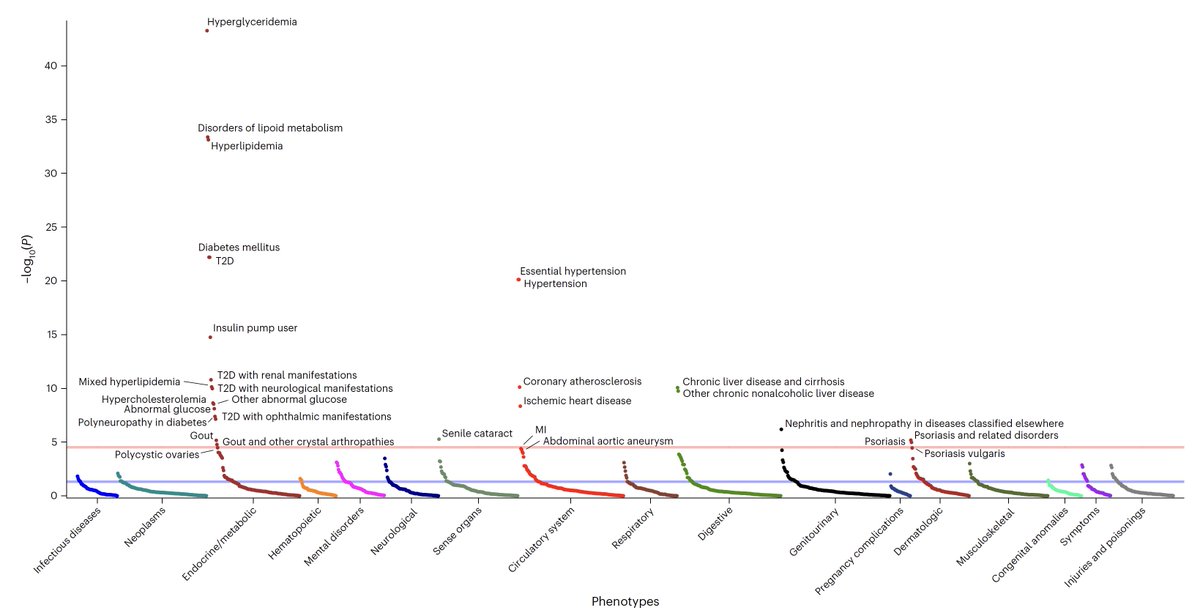
The genomics of insulin resistance with 77 new loci and a polygenic risk score connecting associations with hypertension, nonalcoholic fatty liver disease and coronary artery disease
https://t.co/m0xYD4ICJy @uk_biobank@NatureGenet@anto15392@RyanRebernick and @UMich colleagues
We are very excited to announce DFB's
✨Winter Research Symposium!✨
DFB Alumni will learn about research at UM, graduate programs and the opportunity to network with amazing scientists!
RSVP: https://t.co/zZgu76fagp
ALUMNI TALK:https://t.co/cKPiVn6SqQ
Today, we’re introducing a new model that eliminates accept/reject decisions.
By publishing every paper with eLife reviews as a Reviewed Preprint, we plan to restore autonomy to authors, ensuring that they will be judged by what, not where, they publish. https://t.co/OAsiOVFStI
I'm from a rural area and am a first gen college student. I wouldn't have even heard of #MDPhD programs let alone have enrolled in one if not for a childhood friend of a guidance counselor taking the time to talk to me on the phone. Cross-class connections matter!
An expansive new study based on 21 billion Facebook connections — about 84% of U.S. adults aged 25 to 44 — has uncovered a key to reducing poverty: more friendships between the rich and poor. https://t.co/tkPwztnObQ
Cool concept with lots of potential implications within obesity. But it makes me wonder - why would the body would want to suppress appetite after exercise? Doesn’t seem evolutionarily beneficial.
Exercise-induced lactoyl-phenylalanine signals to suppress appetite! Absolutely beautiful work from @longlabstanford https://t.co/oWGCv1cDza. Exciting to think about the ways that perturbations ripple through our metabolic networks. What else can lactate do? 🤩
@Matthew_N_B@TiroshLab Love this idea. I would guess that treatments also change these state transition probabilities. Basically mutations/treatments direct the collective tumor to have proportions of a variety of cell states
Massive congrats to @ATJCagan & team on a foundational study of somatic mutation rates across species!
In a little @NatureNV article 👇 we discuss their new findings, also with respect to another amazing paper on cancer mortality across zoo animals (1/2)
https://t.co/wSPF6DMea9