@eastdakota Settle, don't bankrupt guy, and keep financial terms confidential so you deter/discourage others while still letting the guy move on with his life.
The future of maritime autonomy is being built in America.
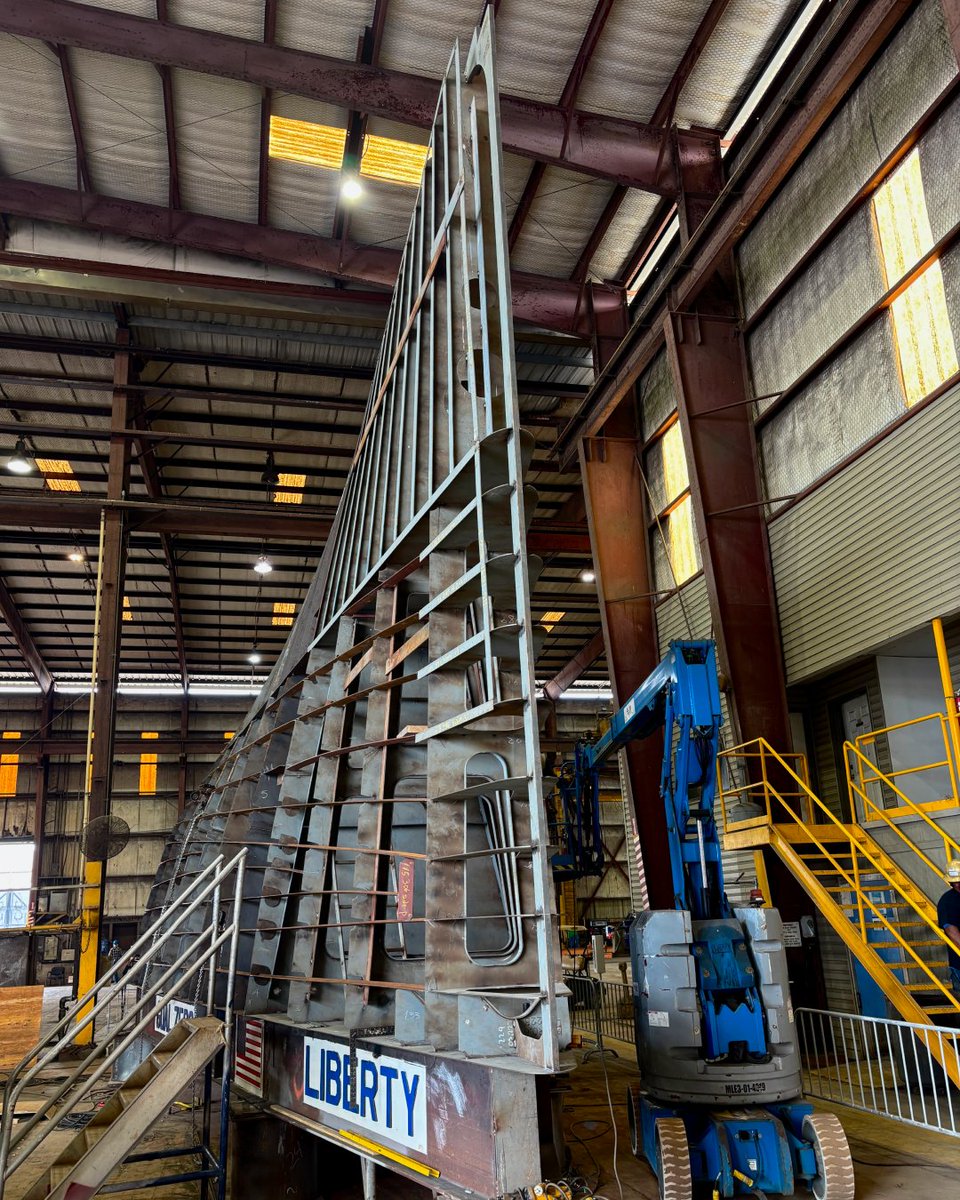
Ahead of next week's #Sail250 New Orleans events hosted by the New American Industrial Alliance, including a tour of Conrad Shipyard, we're excited to share a preview of Blue Water's Liberty Class MUSV (Medium Unmanned Surface Vessel). With a proven steel @damen Axe Bow, and strong shipyard momentum behind us, our hull is quickly taking shape at Conrad.
See you on the water.
“Build a little. Test a little. Learn a lot.”
One of the most effective approaches to building complex systems is shortening the loop between development and real-world learning, and it’s core to how we build at Blue Water Autonomy.
Traditional shipbuilding programs can take years before integrated systems are tested in realistic operating conditions. We did not want to wait until launch to validate core autonomy technologies.
Build fast. Test early. Adapt continuously.
👉 Read more about the mindset driving our approach to autonomy:
https://t.co/W4NXP9HOfC
This is an area where unmanned vessels can pick up quick wins/proof of concept if there is the political will to buy them
If a DDG can fire off weapons carried by a trailing USV instead of onboard, the depth of the magazine approaches bottomless, because USVs can shuttle back to port when empty as fresh weapons arrive
@johnkonrad Thanks John - design for the mission, and work your way backwards from what payload, endurance, and range you need. The USN gets this which is why there is so much focus on MUSVs and containerized payloads.
⚓ 🇺🇸 Amidst the chaos of SECNAV’s ouster and Sea Air Space - you missed the real news in Navy unmanned last week.
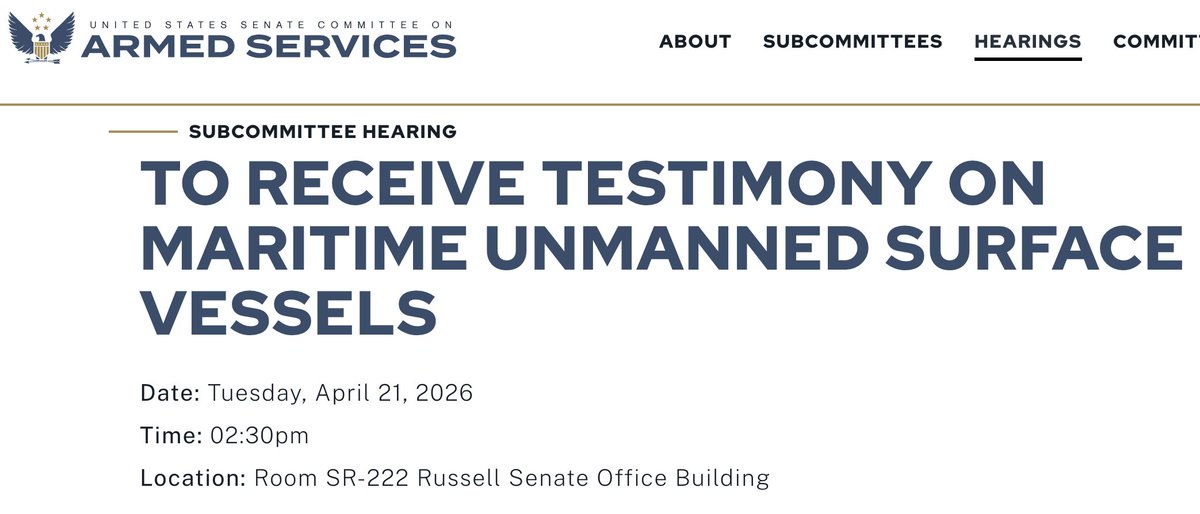
PAE RAS and N96 went up to the Hill to testify before Seapower - and faced off with some of the sharpest shipbuilding leaders in Congress.
On the same day - the Navy’s next 5 years of budget dropped.
Here’s what I learned about USV markets from Tuesday’s hearing and budget release. I’ve structured the below points to show the tension between Navy leaders, senior senators, and the cold hard reality of the budget’s numbers.
❌ Small USVs Getting Zero’d Out
- Senators Scott and Wicker both criticized Navy for killing the sUSV budget after a one-time buy "what happened there?"
- The budget agrees ⏩ this budget goes to $0 in 2027 and never comes back.
🚀 MUSV Budget is Hot
- Ms. Gassler (PAE RAS): We’re buying 30 MUSVs with $2B this year
- And we have $6B to spend over five years on 70 MUSVs
- Sen. Scott asked a few questions that seemed focused on long division techniques for $6B, but failed to ask the real question: $6B or $5B?
📊 The Budget’s reality:
- Top line Navy budget points to:
➡️ 36 MUSVs this year, 47 more over the next 5 years
➡️$4.4B over the next 5 years (+$2.1B this year)
- But the J-Books only show $3.1B over the next 5 years (+$2.1B)
➡️ 171+691+682+757+812 = 3,113 or $3.1B
On top of this, RADM Trinque pointed to $1.5B of spend on containerized payloads for MUSV and FF(X) over 5 years.
❤️🔥 Everyone Loves Continuous Leadership of Consolidated Portfolios
- Sen. Scott seemed skeptical that 2 years as N96 is long enough - could it be 3 years?
- Ms. Gassler comforted the Senator saying that her tenure of 4-6 years would provide a steady hand at the wheel. Navy is the ONLY service with a RAS-focused PAE
💸 🤖 What is a “Marketplace” for a MUSV and Why Did You Cancel MASC?
- Sen. Kaine asked about the program name and reset
- RADM Trinque: MASC requirements were more focused, MUSV opens it up (https://t.co/Zkmyl09d3w solicitations show MASC had 3 ship requirements while MUSV narrowed it to just 1)
- Ms. Gassler jumped in and focused the cancellation logic on urgency - MASC would have taken 18 months to prototype and the fleet wouldn’t get real capability fielded until 2029
- Sen. Kaine also asked what a “Marketplace” actually means
- Ms. Gassler explained that it’s not like Amazon. Right now we’re going after a specific mission —> “and as we add missions, we will add to that family of vessels as well.”
- This is the first public acknowledgement of more MUSVs and explains RADM Trinque's unfinished thought
➡️ The hearing had more hot takes - from whether MUSVs will count as ships to what will happen with the $55B DAWG budget - but overall it added to the market clarity for our industry.
🇺🇸 As Senator Wicker summarized to Ms. Gassler: “you’ve been presented with a unique opportunity to be a game changer”
There’s a lesson in shipbuilding history that feels especially relevant right now.
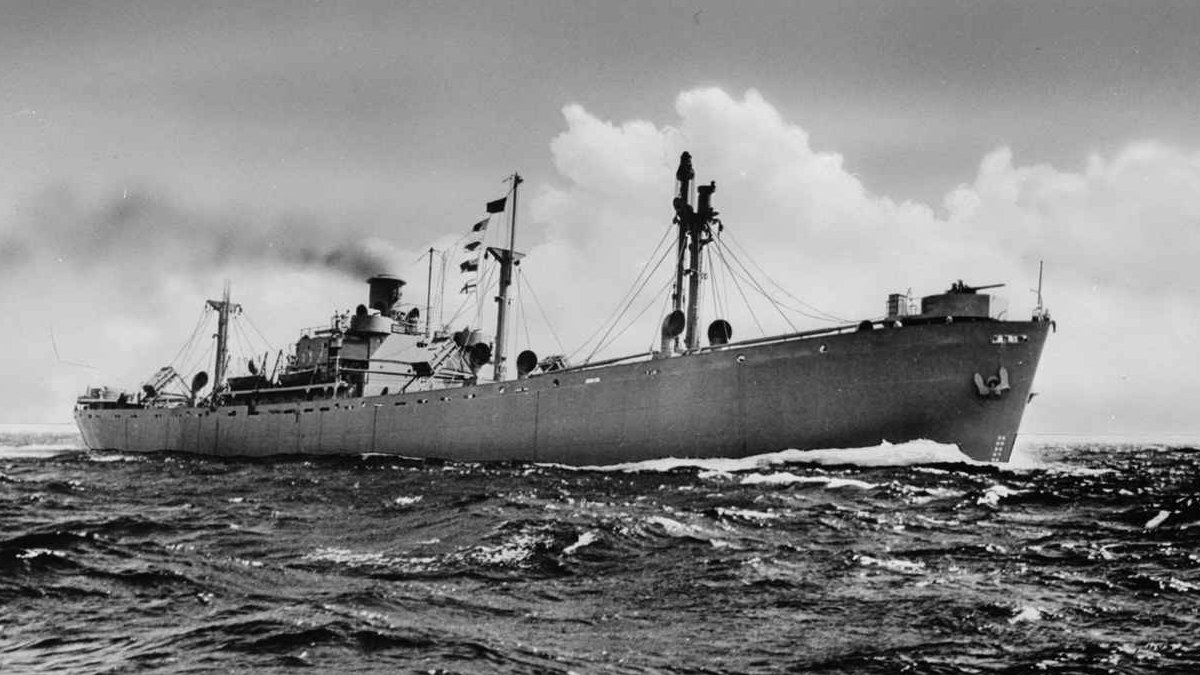
The Liberty Ships of World War II weren’t born from endless prototyping. They were built from a proven hull design—a British cargo vessel—adapted to meet urgent needs and taken straight into production. Speed and scale mattered more than starting from scratch or designing a perfect ship.
We’re seeing a similar shift emerge today with programs like MUSV. The need isn’t for more prototypes. It’s for mature, capable platforms that can be produced and deployed now.
In periods of urgency, proven designs outperform new ones because they can be built and scaled immediately.
Across the industry, more teams are moving in that direction—prioritizing what’s already working and building from there. That same line of thinking shaped how we approached our Liberty Class: start with a proven @damen hull (with 300+ Sea Axe hulls in service), partner with experienced builders such as Conrad Shipyard—who have delivered over 800 vessels in the last 20 years—and focus on delivering capability quickly.
What’s notable is how closely that approach now aligns with the Navy’s evolving procurement model, including efforts like the PAE RAS Marketplace.
Sometimes “leaning forward” isn’t about taking bigger risks. It’s about recognizing patterns early and acting on them with confidence.
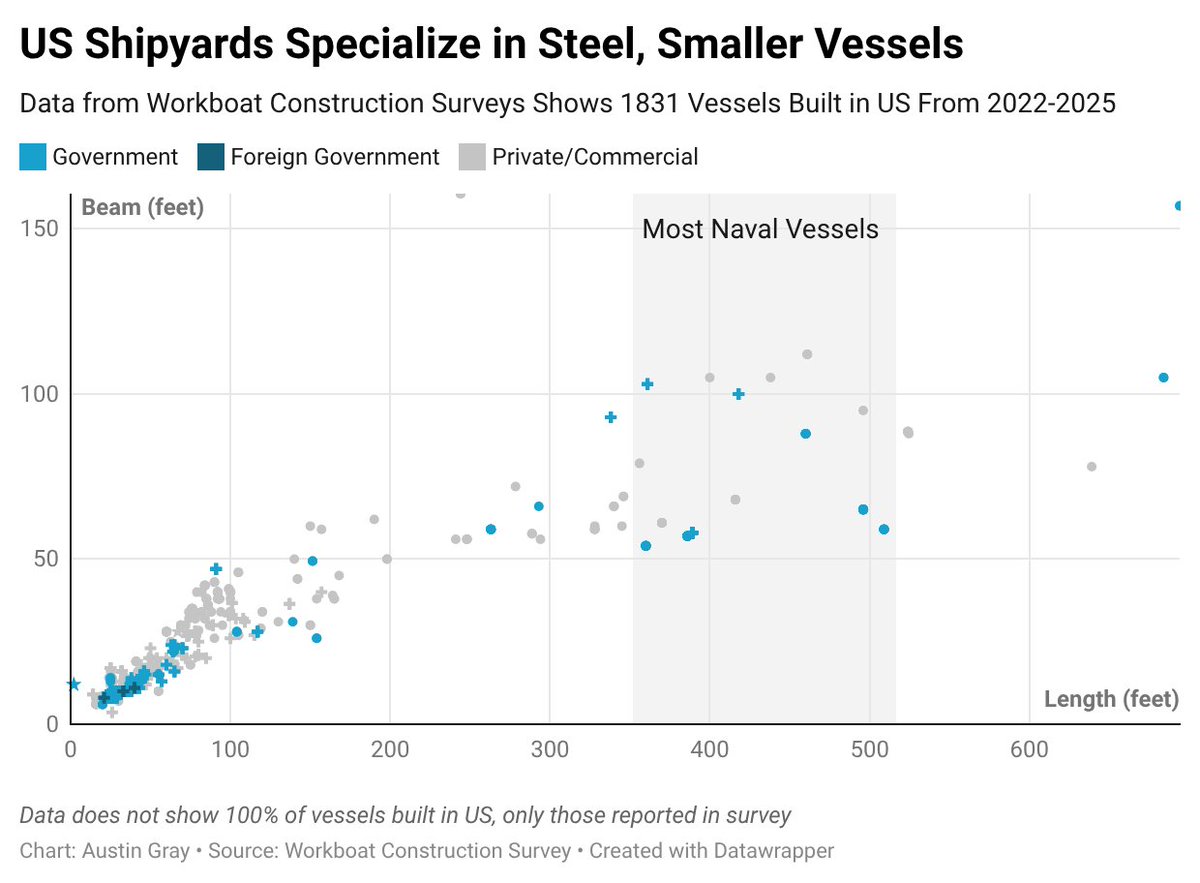
US shipbuilding actually builds A LOT!!
But - American yards focus on smaller vessels, not the types Navies want or the type to carry the bulk of international trade.
This is a simple condition of the Jones Act: US yards focus on building vessels that stay in US waters.
With our Navy now needing more ships, they have to ask for what our industrial base can build.
Simultaneously, with autonomous designs maturing rapidly, 100-200 foot ships make a ton of sense. This form factor is just big enough to be ocean-going, to sail alongside our blue water Navy, but just small enough to be produced en masse at many shipyards.
Shipyard capacity - and autonomous ship designs - in the 100-200' range offers the Navy the only fast way to get more tonnage out into PACOM and CENTCOM.
We were honored to be joined by @rylanhamilton, Founder and CEO of Blue Water Autonomy (@BlueWaterShips), on Ep18 of Forged in America (@ForgedUSAPod). The episode is especially topical given current events in Iran, as Blue Water designs and builds autonomous ships for the U.S. Navy.
Rylan began his career as a U.S. Navy officer before earning his MBA at @HarvardHBS. He co-founded 6 River Systems (@6riversystems), which pioneered the first collaborative autonomous mobile robots for logistics. Under his leadership, the company raised $45 million and was acquired by @Shopify for $450 million.
We discussed the future of warfare, AI, and a broad array of topics. He’s highly positive and a great role model. Check out the full episode on @Spotify, @Apple, @YouTube, etc.
https://t.co/68p4mrKaWD
🚨🚀 Shipbuilding Product Launch 🚨🚀
@BlueWaterShips is about to show the world the technology we’ve been building.
This will not be a normal product launch - because “shipbuilding + product launch” ≠ normal words.
🛑 Before we get into what the ship is, what it looks like, and what it does, there is something very unique I’d like to share about the how.
We developed it with private capital, as a tech product. This approach means:
⏩ Speed: Engineering feasibility drives schedule (not bureaucratic programmatic schedules)
💸 Cost Control: We aren’t building on a time and material contract where we’re paid more to work more, or order more expensive parts.
🤖 Product Velocity: This product will just keep updating and getting better, rather than trying to precisely answer a set of static requirements.
So what’s the big deal?
This product mindset is normal in consumer tech… but in shipbuilding —> unheard of.
🤔 The most important reaction when you see the cool product is not “oh that’s a cool ship” but rather “what process lets us achieve that?”
@USNavy's new open for business approach, explained at the Demand Signal road show, allows it to buy product developed privately, rather than churn for decades on T&M R&D.
The business, finance, and acquisition strategy for building technology matters. A lot.
🛡️ 🇺🇸 We must relentlessly continue our defense acquisition reform quest to get commercial product into warfighter hands.
Wishing you the happiest of holidays from everyone at Blue Water Autonomy.
Special thoughts for the warfighters and builders grinding over the holidays.
We’re thankful that you have the watch.
🧵Today's announcement that America is building #battleships has big implications.
Most analysis is focusing on the ship's size - and size matters.
But only software defines. POTUS reminded us that software will be a "big factor" too, at the very heart of a digital ship 1/
We're proud to be featured in today's @nytimes coverage of young Americans trying to fix a broken military - it starts with us.
"When veterans land in promising companies — or start their own — it’s not just good for them. It’s also good for America. @rylanhamilton and @AustinEGray, two Navy veterans, started Blue Water Autonomy last year with the goal of building long-range drone ships that could help the military expand its maritime presence without the costs, risks and labor demands of deploying American sailors.
Mr. Gray, a former naval intelligence officer who worked in a drone factory in Ukraine, said Blue Water’s vessels will one day do everything from ferrying cargo to carrying out intelligence, surveillance and reconnaissance missions. This summer, the company raised $50 million to construct a fully autonomous ship stretching 150 feet long."
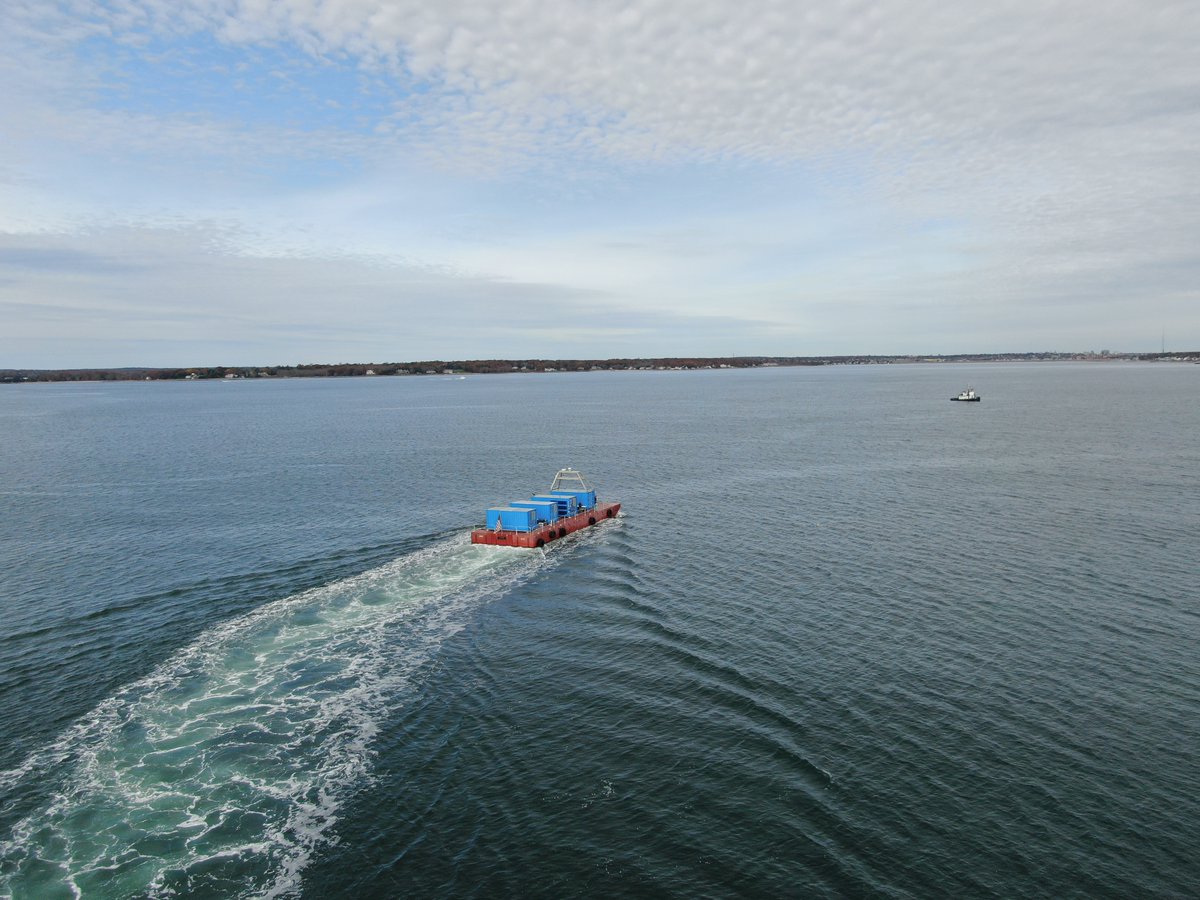
We have a 165 ton autonomous test vessel at sea.
When I said "big things are underway" I meant that we have a MASSIVE robot underway.
This is what it takes to test ship-scale hardware.
Today, a peak behind the curtain at what we’ve been building.
At Blue Water, our focus is the sharpest weapon. And our focus is autonomous ships. We can’t rely on simulation or speedboats to test ship-scale hardware - so we built a ship-scale autonomous test vessel.
Now, we unveil her. (Check the 🔥 exclusive coverage with @BusinessInsider@byjepstein)
“Ironsides,” has some fun attributes that give our tech realistic testing and our engineering team velocity. Here are 5️⃣ of our favorites:
1️⃣ End-to-end hardware in the loop testing from propeller spinning in the water to radar turning on the mast
2️⃣ Ship-scale machinery so heavy it would sink a speedboat
3️⃣ Platform-level autonomy running the whole vessel from engine room to navigation
4️⃣ Reconfigurable, easy-access design - we assembled Ironsides from 20,000 lb floating lego pieces - so we can swap hardware in and out. (Just like software!)
5️⃣ A realistic saltwater environment with sea-spray, seagulls, and savage weather.
Last week, we welcomed Congressman @WilliamKeating@JakeAuch to our New Bedford, MA test site to unveil Ironsides and share what we’ve been building. We’re especially grateful for the pro-business leadership of Mayor @JonMitchellNB & Sec. Economic Development @epaley. But we didn’t stop there.
Our badass team of operators and engineers is obsessed with tech, safety, and mission. They're at sea right now, testing (pic).
Our tech is forged by the sea, just like our Navy.
Let’s build.
🇺🇸 This morning, some great American experts sat down in the United States Senate to talk shipbuilding. @mercoglianos@ShipbuildersUSA
Here’s what they said - it’s not all obvious - it's a unique moment in American shipbuilding:
Reconciliation brought key investments, but now it’s time to execute them:
➡️ Navy destroyers and unmanned ships
➡️ Coast Guard icebreakers
➡️ Oilers to keep the fleet steaming
A mistake in the 80s came up again and again: shifting all our capacity to Naval shipbuilding gutted the commercial market, and pushed it overseas. This mistake became fatal when the Berlin Wall fell, taking defense budgets with it.
📈 Revitalizing our COMMERCIAL capability & capacity is now key.
Shipbuilding ≠ just the Navy.
For further decisive action, we need three ingredients:
1️⃣ White House leadership
2️⃣ Appropriated dollars
3️⃣ Legislative action
Matthew Paxton's testimony anchored on three points that explain the state of commercial US shipbuilding:
1️⃣ Emphasis on the Jones Act & domestic shipbuilding
2️⃣ The global playing field is NOT level
3️⃣ To strengthen, a national maritime strategy must be codified in law ➡️ the Ships Act must be passed.
And we’ll need more than just the Ships Act - it is a blueprint, but only a starting gun
Action Plan:
📈 Build and sustain demand signal for ships
💰 Get capital off the sidelines (nice call out for @BlueWaterShips & @Saronic)
🤖 Use technology - one of the advantages we have
✍ Enact and strengthen the OBVIOUS policy levers:
- small shipyard grants
- 25% tax credit
- workforce programs
➡️➡️➡️➡️➡️ level the playing field
Another great point was that specialization sells:
🇩🇪 German firms excel at producing propellers and engines
🇫🇮 Fins build great icebreakers
🇮🇹 Italians build cruise ships
🇬🇧 🇺🇸 🇦🇺 In AUKUS, highly specialized nuclear naval capability needs collaboration between allies to produce efficiently.
55 years ago - the last time we had real shipbuilding focused legislation - the Merchant Marine Act passed Congress.
Today, with or without federal leadership, Shipyards like @SnowAndCompany are showing what it means to rebuild the shipbuilding workforce.
Tuuli Snow told a touching story of a Ukrainian refugee reaching out to apply for a job - he could not speak English, but he could weld. Despite doubt, he crushed his welding test and today leads a team of Russian and Ukrainian refugee fabricators and welders.
“Shipbuilding is more than an industry. It’s a strategic capability”
Let's rebuild it ⚓🏗️ 🏛️ 🏭 ⚓
@johnkonrad@JerryHendrixII@michaelgwaltz@SeanPlankey@kristinawong@SusanSakmar@SamuelFByers@StrongerNavy@BDHerzinger@DustinWalper@mintzmyer@HunterStires@brentdsadler@ElbridgeColby
American Naval Autonomy, Scaling Globally . 🌊
@BlueWaterShips founder @RylanHamilton joined GV Managing Partner @DaveMuni to discuss his vision for autonomous maritime technology and how a new partnership with Conrad Shipyard is opening the door to global growth.