@ggwp2kmol @ggwp2kmol Sorry this happened. If you still have the transaction records from the drained account, it might be worth sending them over to @TTS_Firm so they can take a proper look and see if anything can be recovered.
We all know that a cup of coffee provides a morning jolt, but recent neuro-scientific research reveals it does much more than just wake us up. It actually fine-tunes the electrical circuitry of our central nervous system.
A fascinating 2026 study published in Clinical Neurophysiology discovered that consuming just 200 milligrams of caffeine—about the amount in two standard cups of coffee—enhances the brain's built-in braking system. When you touch something or experience a sudden physical sensation, your sensory nerves send lightning-fast signals to your brain. Your brain uses this incoming information to instantly pause or adjust your outgoing muscle commands, which is a process that keeps your movements highly precise and safe.
Caffeine acts as a microscopic mechanic for this sensory-motor loop. By blocking the neurochemicals that normally tell our brains to power down and relax, the stimulant changes the balance of vital neurotransmitters. This chemical shift sharpens your neural pathways, allowing your brain to process a sudden touch and hit its physiological brakes with remarkable efficiency.
The next time you enjoy your daily brew, remember that it is doing much more than just fighting fatigue. You are actively altering how your brain integrates feeling and movement, making your nervous system highly responsive to the world around you.
Paper Reference: Camilla Carrozzo et al, The effects of caffeine on short-latency afferent inhibition measured with paired-pulse conventional and threshold-tracking TMS, Clinical Neurophysiology (2026). DOI: 10.1016/j.clinph.2026.2111857
It’s the first time a frog—or any amphibian—has been observed pollinating a plant, researchers reported in 2023.
Learn more: https://t.co/UR3gYiXuiS #ScienceMagArchives
1 of 3
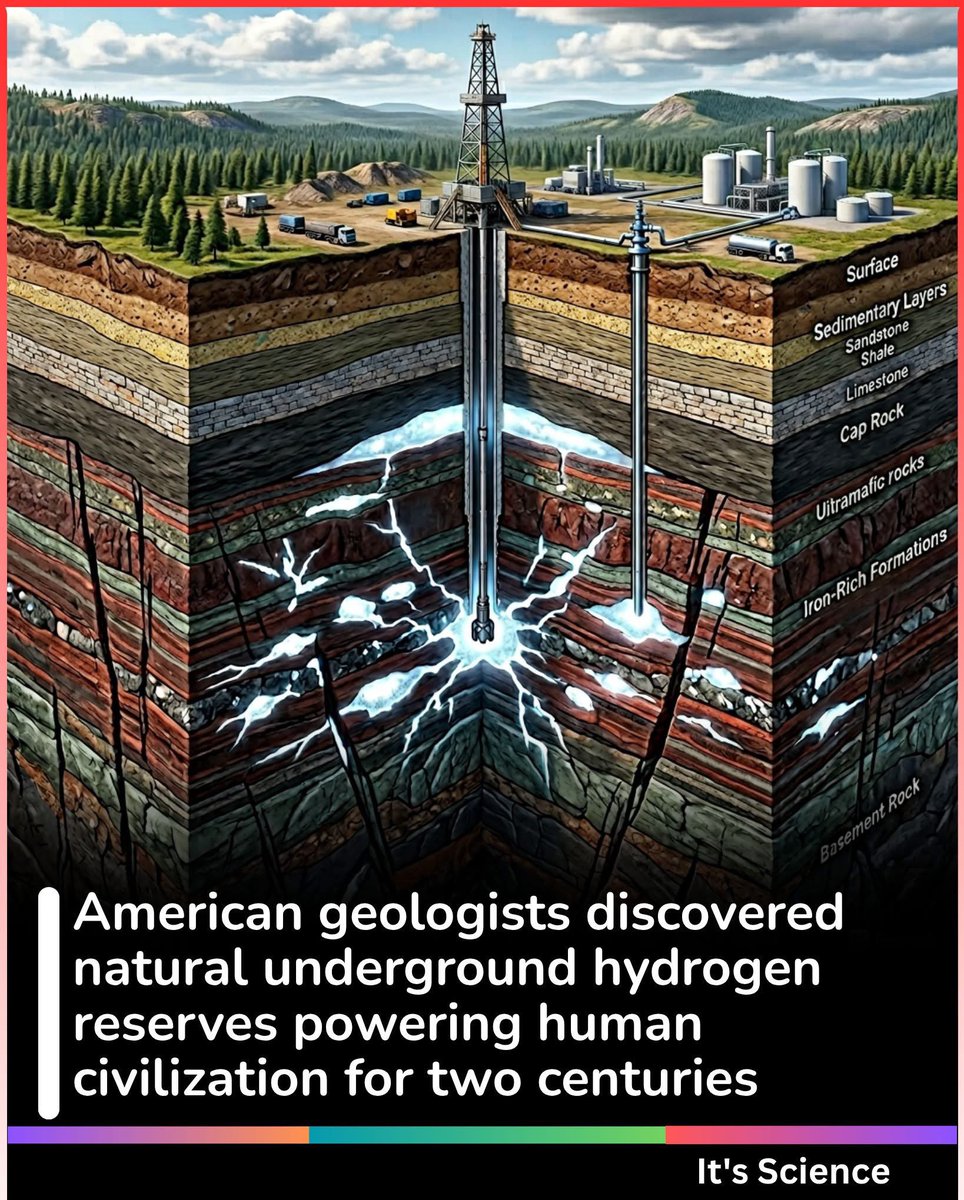
🚨 Earth’s Self-Recharging “White Hydrogen” Reserves: The Clean Energy Jackpot Hidden Beneath Our Feet 🚨
American geologists have mapped massive underground deposits of natural (white) hydrogen — a zero-carbon fuel that forms naturally deep in the Earth’s crust when water reacts with iron-rich rocks.
Unlike manufactured green hydrogen, this “white hydrogen” is continuously generated by geological processes and trapped in reservoirs — acting like a vast, self-recharging subterranean battery. We simply need to tap into it.
This could bypass much of the expensive, energy-intensive industrial production of hydrogen. If commercially scalable, it has the potential to lower global energy costs, boost energy security, and accelerate the shift away from fossil fuels.
The USGS estimates there could be trillions of tons of this resource worldwide. Even a small recoverable fraction could supply clean hydrogen for centuries — though much of it may be too deep or dispersed for economic extraction right now.
The Earth may have been hiding a limitless clean energy engine beneath us all along.
Are we ready for the hydrogen age? 👇
What’s your take?
Verified Sources (USGS & 2025–2026 Coverage)
• USGS Official Geologic Hydrogen Project & Prospectivity Map (2025, still current in 2026): https://t.co/BI3rZJ6aPN
• USGS First-Ever Prospectivity Map Release (Jan 2025): https://t.co/SbO0MzkSIm
• USGS Geologic Hydrogen FAQ: https://t.co/95EPx4HGXn
• BBC Future – “The precious ‘white gold’ fuel buried in the Earth” (strong overview): https://t.co/8HLO0Mzy86
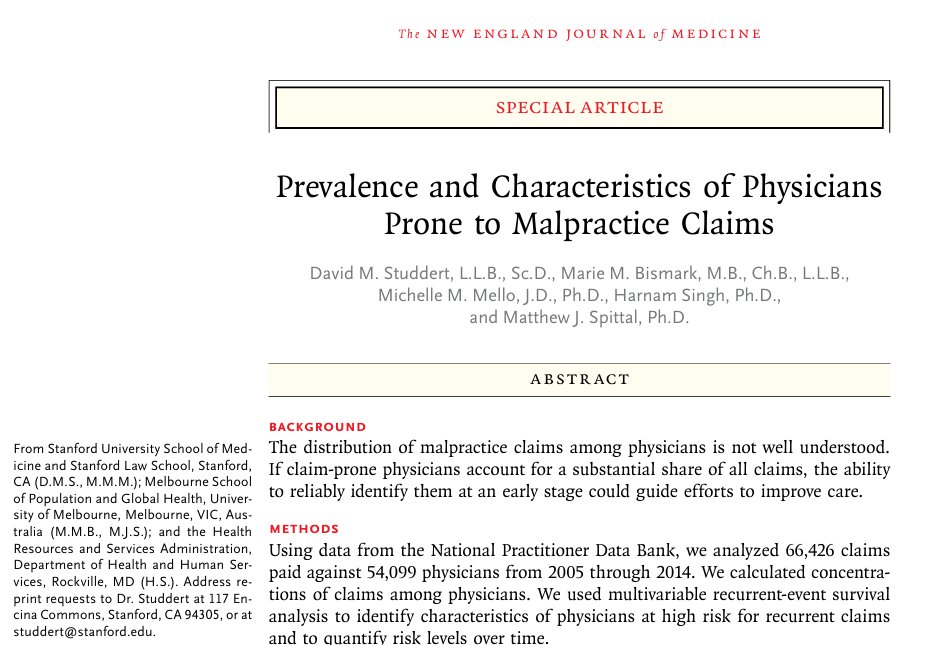
NEJM: New research reveals a massive concentration in medical malpractice: just 1% of all physicians account for 32% of all paid claims🩺⚖️
It seems risk isn't random—it's highly concentrated among a small group of practitioners.
Full study: https://t.co/4tcx4F5VWF @EricTopol
#Hantavirus biology is particularly interesting because severe disease emerges less from direct cytopathic destruction and more from dysregulated endothelial and immune responses.
This is one of the reasons hantavirus infection behaves so differently from many classical viral diseases.
The lungs fail, vascular leakage becomes profound, shock may develop rapidly — yet the infected tissues often show surprisingly limited structural destruction. The pathology is not primarily driven by massive cell death, but by a progressive loss of physiological regulation.
In many ways, hantavirus disease is a disorder of signalling before it is a disorder of anatomy. And interestingly, that logic is already visible at the very first step of infection: viral entry.
In the next two posts, I will explain how hantaviruses produce disease through:
— endothelial dysfunction
— immune dysregulation
Because the receptors the virus uses are not random. They are deeply connected to the systems that later fail.
Entry is mediated primarily through three receptor systems:
1⃣ β3 integrins (especially αvβ3) → predominantly linked to vascular biology and endothelial barrier regulation.
These integrins are not simple adhesion molecules. They participate in mechanotransduction, cytoskeletal organisation, vascular permeability, and endothelial quiescence. Pathogenic hantaviruses preferentially interact with inactive αvβ3 conformations, potentially perturbing signalling pathways that normally stabilise the endothelial barrier.
2⃣ Decay-accelerating factor (DAF/CD55) → fundamentally linked to immune regulation.
CD55 is a complement regulatory protein that protects host cells from excessive complement activation. Viral interaction with DAF immediately places hantavirus biology at the interface between infection and innate immune control — particularly relevant in a disease where inflammation itself contributes substantially to pathology.
3⃣ Protocadherin-1 (PCDH1) → associated with intercellular architecture.
Especially important for New World hantaviruses, PCDH1 is involved in cell-cell adhesion processes. This is mechanistically fascinating because hantavirus disease is ultimately characterised by loss of endothelial cohesion and barrier integrity.
In other words, the virus initially engages receptors involved in:
- vascular stability,
- immune modulation,
- and intercellular organisation.
The same systems that later become dysregulated during severe disease.
That mechanistic coherence is what makes hantavirus pathogenesis so biologically compelling.