As the world marks the World Day to Combat Desertification and Drought, it is important to recognize that #Somalia's recurring droughts are driven not only by low rainfall but also by environmental degradation. A SIDRA Institute study finds that the overuse of natural resources, including the loss of vegetation cover, deforestation, soil erosion, and poor land management, has made drought conditions worse. The study notes that population growth, urbanization, overgrazing, and weak natural resource management have all contributed to the problem. #SIDRAPublication #Somalia #WorldDesertificationDay
Read more👉https://t.co/kcYjs8IFev
Happy Hijri New Year 1448 AH
As we welcome the Islamic New Year, may this blessed occasion bring peace, prosperity, and renewed hope to our communities and nation.
May the year ahead inspire unity, resilience, and progress for all.
#HijriNewYear1448#HappyHijriNewYear#Somalia
#Israel’s recognition of #Somaliland also has implications for wider regional rivalries. #Iran has long viewed growing Israeli involvement around the Red Sea with suspicion and has criticized Israeli engagement with Somaliland, including the visit of Foreign Minister Gideon Sa’ar, arguing that it undermines Somalia’s sovereignty.
The issue is particularly sensitive given the ongoing tensions between Israel and Iran, which intensified in 2025 with direct military exchanges. In this context, any future Israeli security role near the Bab el-Mandeb Strait is likely to attract close scrutiny from Tehran and its allies. This could add a new geopolitical dimension to the Red Sea corridor, increasing the risk that regional competition extends into an already strategically important maritime zone. #RedSea #Geopolitics #HornOfAfrica
Read more👉https://t.co/amAk8UAuFc
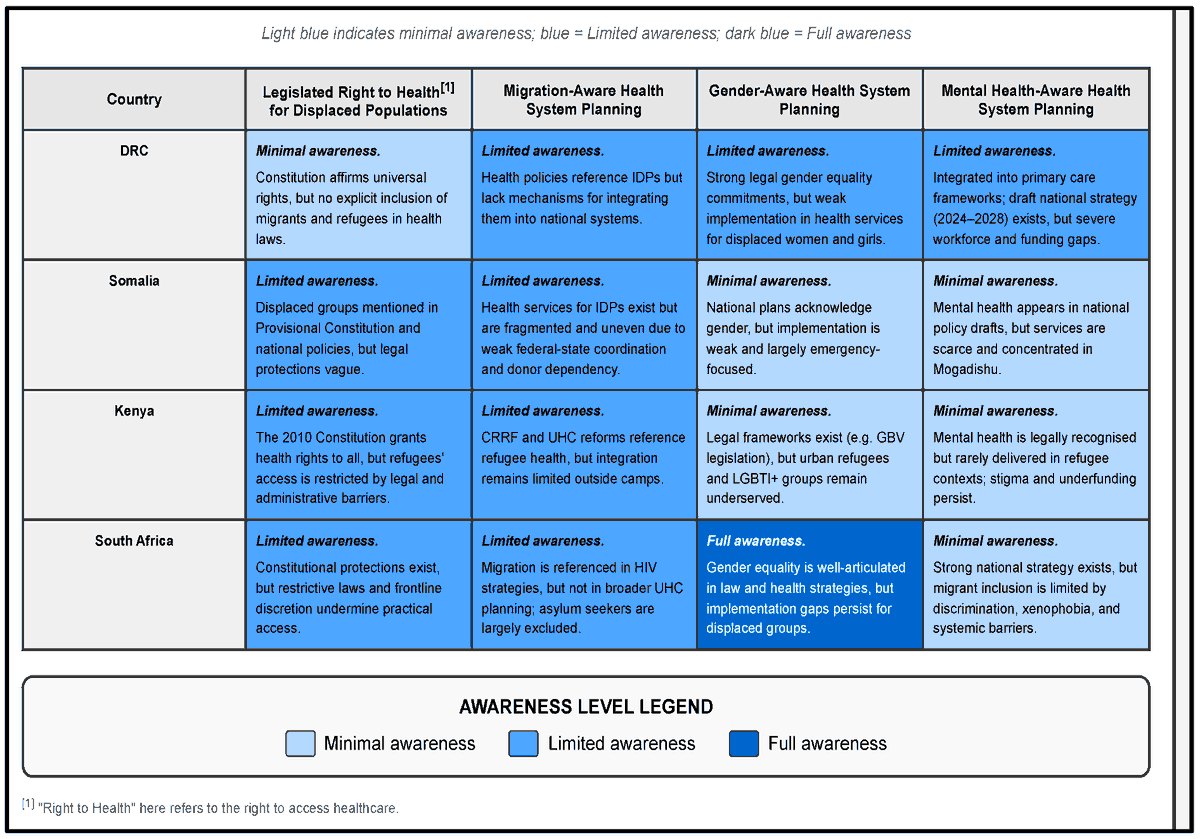
Despite national commitments to Universal Health Coverage (UHC), a new multi-country study covering Somalia, Kenya, South Africa, and the DRC finds that refugees, IDPs, asylum seekers, and undocumented migrants continue to face significant barriers to healthcare. The research highlights weak migration-aware health planning, limited mental health services, inadequate gender-responsive care, legal and administrative obstacles, and heavy dependence on donor-funded programs. In #Somalia, health services for displaced populations remain fragmented and uneven, underscoring the urgent need for inclusive, rights-based health systems that leave no one behind. #UHC #HealthForAll #MigrationHealth #Somalia #IDPs #Refugees #GlobalHealth
Read the full study👉https://t.co/Q2L7O4aVFm
SIDRA researcher @MohamedAlisalad is attending as a panelist at a DAKSHIN–RIS New Delhi session on India–Africa cooperation in digital and preventive healthcare, focusing on digital health, policy, and sustainable healthcare innovation.
The session aims to facilitate meaningful dialogue on strengthening India–Africa cooperation in digital health, policy partnerships, institutional capacity building, and sustainable healthcare innovation across the Global South.
🌍 Join us for ‘Session II: Exploring Areas of Cooperation in Digital and Preventive Healthcare’ at the International Seminar organized by DAKSHIN – Global South Centre of Excellence at @RIS_NewDelhi on “India-Africa Partnership for Sustainable Development: Advancing Cooperation in Trade, Investment, and Health”.
🗓️ Tuesday, 26 May 2026
🕑 2:00 PM – 5:00 PM (IST)
📍 Silver Oak Hall, India Habitat Centre, New Delhi
The second half of Session will focus on sharing of African experiences and exploring future areas of cooperation between India and Africa in building resilient, inclusive, and digitally enabled health systems.
The discussion will bring together distinguished experts and researchers from across Africa.
▪️ Featured Speakers
• Mr Andrew Thomas Lavali, Executive Director, Institute for Governance Reform (IGR), Sierra Leone
• Dr Franck Arnaud Ndorukwigira, Head of Digital Governance, Artificial Intelligence, and Technology, Centre For Development and Enterprises Great Lakes (CDE), Burundi
• Mr Robert Mwale, Lead Public Finance Management Researcher, Centre for Trade Policy and Development (CTPD), Zambia
• Mr Mahaman Mahaman Bachar, Executive Secretary, Association for the Promotion of Grassroots Development Initiatives, Niger
• Mr Mohamed Abdullahi Ali, Researcher, Somali Institute for Development Research & Analysis (SIDRA), Somalia @SIDRAInstitute
• Dr Christian Pout, Chairman, Centre for International, Diplomatic and Strategic Studies (CEIDES), Cameroon
• Prof John Huston Stanfield, Director, Advanced Study of African Renaissance Policies Ideas (ASARPI), Mauritius
• Ms Harshitha Nayar, Research Associate, Advanced Study of African Renaissance Policies Ideas (ASARPI), Mauritius
• Ms Zambwe Shingwele, Acting Research Fellow, Zambia Institute for Policy Analysis and Research (ZIPAR), Zambia @ZiparInfo
• Dr Nouzha Chekrouni, Senior Fellow, Policy Center For The New South (PCNS), Morocco
• Mr Michael Owuor, Research Fellow, The Global Centre for Policy and Strategy (GLOCEPS), Kenya @GLOCEPS1
The session aims to facilitate meaningful dialogue on strengthening India-Africa cooperation in digital health, policy partnerships, institutional capacity building, and sustainable healthcare innovation for the Global South.
#IndiaAfrica #SustainableDevelopment #GlobalSouth #Healthcare #DigitalHealth #Telemedicine #PreventiveHealthcare #IndiaAfricaPartnership #ABDM #eSanjeevani #RIS #DAKSHIN #HealthSystems #InternationalSeminar #SouthSouthCooperation #SSC #GlobalHealth #DevelopmentPartnership
@sisjnu_official@cmec_ris@AIC_aseanindia@fitm14@fisd19@Prabir_India@TheAtulKaushik@sujeetsamaddar@shishir_sh@sabya_saha@pdash76@PV_Chat@susheco@GaurPankhuri
#Somalia’s cybersecurity capacity remains at an early stage of development. Key supporting institutions, including the Data Protection Authority and the Somalia Computer Incident Response Team (SOMCIRT), are not yet fully operational, and a comprehensive law on cybersecurity and cybercrime is still pending. #SIDRAPublication #Cybersecurity #DataProtection #DigitalGovernance #CyberLaw #ICTPolicy
Find out more👉https://t.co/38SU2r7s14
Our policy brief, titled Cybersecurity in #Somalia: Current Landscape, Risks, and Opportunities, highlights significant progress driven by increased mobile connectivity and internet penetration, with approximately 11.3 million active mobile connections and 3.05 million social media users as of early 2025. The digital financial sector, particularly mobile money services, has become vital to the economy, supporting household resilience and remittances, which constitute a significant share of the country’s GDP. However, this progress is hindered by limited digital skills, underdeveloped infrastructure, connectivity challenges, a digital gender gap, and weak cybersecurity measures.
Risks: The vulnerabilities of Somalia’s digital ecosystem include susceptibility to cyberattacks due to weak cybersecurity capacity, limited legal enforcement, and inadequate technical infrastructure, making the country prone to cyber threats and fraud.
Opportunities: Somalia’s young and increasingly tech-savvy population offers a strategic advantage. The country can benefit from regional collaboration through its accession to the East African Community and partnerships with advanced nations to enhance cybersecurity, digital literacy, and institutional capacity. Investments in digital infrastructure and human capital present promising avenues for sustainable digital development and resilience.
Find out more➡️https://t.co/38SU2r7s14
As today is World #HypertensionDay, our survey conducted in Garowe city to study the range of medical conditions which Somali people in Puntland State travel abroad for treatment found that hypertension is one of the least common medical conditions for which they seek treatment abroad.
However, Puntland Health and Demographic Survey findings cited by our study showed that 5% of Puntland household members suffered from at least one chronic disease; this proportion rises with age. It also showed that 'the most common chronic diseases were blood pressure anomalies/hypertension (32 percent), diabetes (14 percent), kidney diseases (12 percent), chronic headaches (9 percent), liver disease (9 percent), asthma (8 percent) and gastritis/ulcers (7 percent).' 49 percent of these households paid their health expenses from their income.
Find out more➡️https://t.co/jcZEjfuXHY
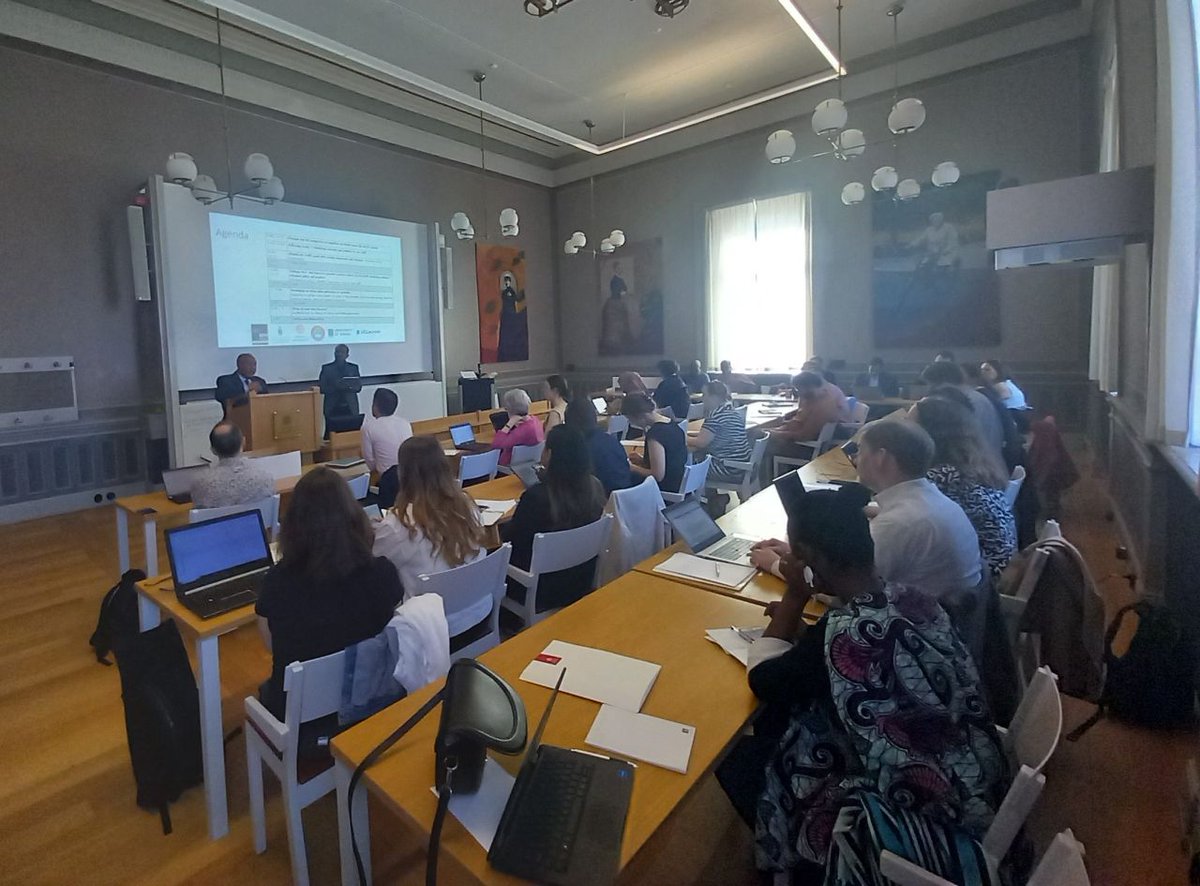
A SIDRA Senior Research Fellow attended the Cluster of Research Excellence (CoRE) in Migration & Health, where SIDRA is part of this important Africa-Europe research collaboration.
The CoRE, co-led by Uppsala University and the University of the Witwatersrand, advances collaborative research and policy approaches to support the health of migrants and migration-impacted communities across the AU-EU migration corridor. #InternationalCollaboration #MigrationAndHealth #CoRE #AUEU #ResearchExcellence
Opinion: Somali pirates hijacked vessels last week off the coast of #Somalia, raising fears of a resurgence of piracy in the Horn of Africa.
https://t.co/jf3AbGG2j7
The persistence of #Somali piracy networks means that even when attacks decline, the underlying infrastructure including established networks, financing systems, and operational skills remains intact, enabling piracy to quickly re-emerge whenever conditions become favorable again.
Read more👉https://t.co/EzzUOciudi
Illegal foreign fishing and overfishing play a major role in driving piracy, as foreign vessels engage in illegal, unregulated, and destructive fishing practices that deplete local fish stocks and severely undermine the livelihoods of Somali fishermen. As a result, many coastal communities lose their primary source of income, pushing some individuals toward piracy as an alternative means of survival. In this context, piracy is sometimes locally perceived not merely as a criminal act but as a form of retaliation or “self-defense” against the exploitation of marine resources by foreign actors. #SIDRAPublication #IllegalFishing #Overfishing #Somalia #Piracy #Livelihoods #MarineResources #EconomicDrivers
Read more👉https://t.co/EzzUOciudi
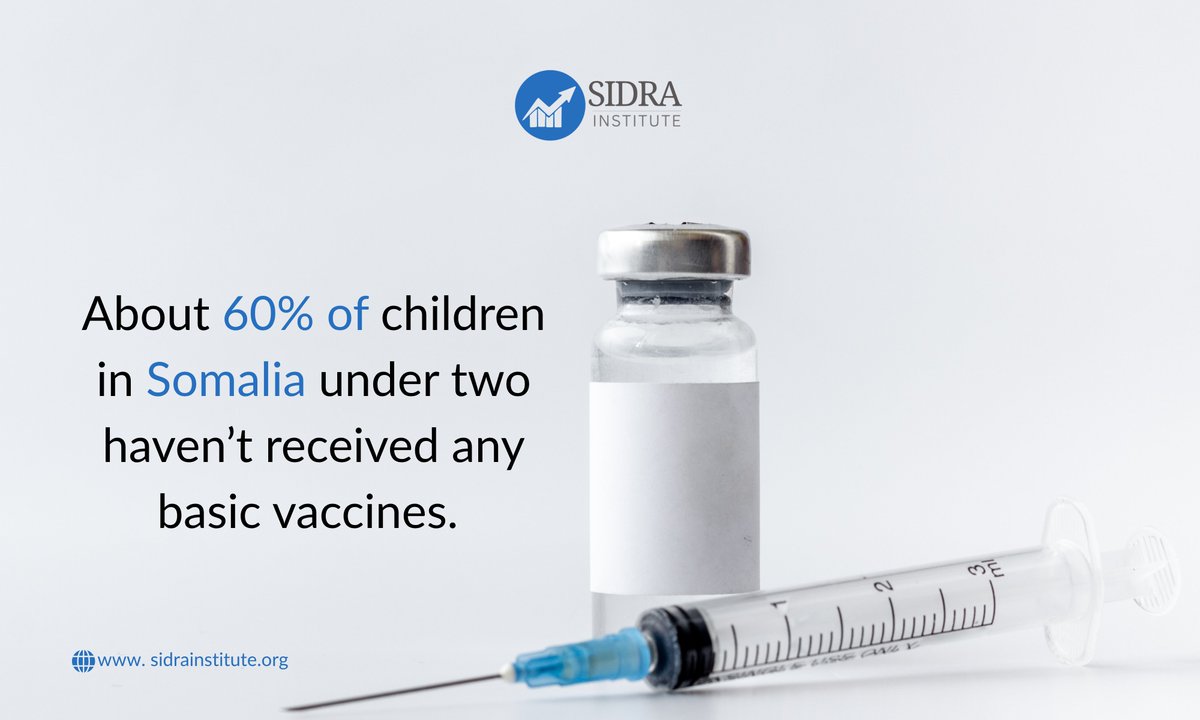
As we mark #ImmunizationWeek, it’s important to recognize that existing health and immunization policies in Somalia still have critical gaps—failing to specifically target zero-dose and under-immunized children and lacking tailored strategies to reach the most vulnerable populations. #SIDRAPublication #Somalia #Immunization
Read more➡️https://t.co/CQVTunn1me
Due to the weak institutional capacity of #Somali health authorities, the regulatory and enforcement framework for healthcare in both the public and private sectors is limited. This includes laws and regulations that provide the basis for licensing and accrediting health service providers and facilities; the import, export, and quality control of medicinal products and medical equipment; the registration and regulation of healthcare professionals; and mandatory health data reporting.
Our study found that, although existing health strategic policies and frameworks are limited, there are ongoing policy developments and reforms at both the Federal and State levels aimed at improving and strengthening health regulations in Somalia. The table below lists some of the key existing and missing health laws and regulations in Puntland State, Somalia. #SIDRAPublication #SomaliaHealth #HealthPolicy #HealthSystems #HealthRegulation #StrengtheningHealthSystems
Read more👉https://t.co/jcZEjfuXHY
Innovative solutions like tracking nomads with geospatial tools, combining human and animal health services, and alternative delivery in government-free zones are needed.
Children in #Somalia remain unvaccinated or "zero-dose" primarily due to a combination of systemic, sociocultural, geographic, and security-related factors. These include:
▶️Insecurity and Conflict: Ongoing violence and instability restrict access to certain areas, such as conflict zones controlled by groups like Al-Shabaab, making it difficult for health services to reach children.
▶️Limited and Fragmented Service Delivery: Health infrastructure is weak, with poor health infrastructure, shortages of health workers, and insufficient logistics and cold chain systems, leading to missed opportunities for vaccination.
▶️Poor Data and Monitoring: Limited reliability and quality of immunization coverage data hinder targeted interventions. Without accurate data on who is unvaccinated, efforts remain unfocused.
▶️Sociocultural Factors: Misinformation about vaccines, low parental education, and cultural beliefs lead to vaccine hesitancy and refusal.
▶️Geographic Barriers: Nomadic populations, remote rural areas, and populations living in hard-to-reach zones pose logistical challenges for vaccine delivery.
▶️Displacement and Mobility: Internally displaced persons and nomadic groups frequently move, complicating tracking and consistent vaccination efforts.
▶️Inadequate Policy Focus: Current policies do not sufficiently recognize or tailor interventions for zero-dose and missed populations, leading to gaps in reaching the most vulnerable.
#SIDRAPublication #ChildVaccination #Somalia #ChildHealth #Immunization #VaccinesSaveLives #SomaliChildren
Read more➡️https://t.co/ONpMk2gMSa
#EidAlFitr🌙 Mubarak. We wish you and your families peace, prosperity, and well-being on this blessed occasion. May this Eid bring renewed hope, stability, and continued progress for all.
Amid cuts to foreign aid programmes by donor countries, #Somalia’s government and stakeholders need to collaborate on implementing fiscal reforms, improving financial management, and mobilizing domestic revenue. Specifically, they need to strengthen revenue collection, promote public-private partnerships, and invest in key sectors such as agriculture, fisheries, and livestock. These efforts aim to reduce reliance on foreign aid, enhance economic resilience, and support sustainable development in Somalia. #SIDRAPublication #FiscalReforms #EconomicResilience #DomesticRevenue #PublicPrivatePartnerships #Agriculture #Fisheries #Livestock
Read more➡️https://t.co/xLUOAqrncN
The strategic risk assessment presented in our recent policy brief identified several potential risks associated with Israel's recognition of Somaliland. These risks pertain to issues of sovereignty, security, geopolitics, the economy, and diplomacy, and they may have significant implications for the stability of #Somalia and the broader region.
▶️Sovereignty: Internal divisions within Somalia, particularly between the Federal Government and Federal Member States such as Puntland and Jubaland, could be exploited by external actors, leading to weakened national unity.
▶️Security: The potential establishment of an Israeli military presence or new alliances may escalate extremist threats, particularly from Al-Shabaab and ISIS, potentially bringing conflict to previously stable regions.
▶️Geopolitical: The recognition could turn the Somali coast into a battleground for Middle Eastern proxy conflicts, especially involving Iran and Yemen’s Houthi movement, with the risk of missile attacks and maritime disruptions.
▶️Economic: Instability could disrupt vital maritime trade routes through the Red Sea, leading to higher insurance costs, rerouted shipping, and economic losses in global energy and container traffic.
▶️Diplomacy: The erosion of norms around recognition and territorial integrity, especially as no other country has followed Israel’s lead, might encourage further fragmentation, but remains unlikely in the current context. #SIDRAPublication #Somalia #HornOfAfrica #Geopolitics #RegionalSecurity
Read more➡️https://t.co/68SNx9D9m1
The possibility that #Israel could establish a military base in #Somaliland, particularly near the Bab el-Mandeb Strait, may provide Israel with a strategic advantage in monitoring and influencing one of the world’s most important maritime routes. However, such a development could also increase the risk of retaliatory attacks by opposing groups, including the use of missiles or unmanned aerial vehicles (drones).
A policy brief we recently published warns that this development could contribute to the expansion of regional conflicts, potentially undermining regional stability and disrupting the strategic importance and security of the Bab el-Mandeb maritime corridor. #SIDRAPublication #Somalia #HornOfAfrica #Geopolitics #RegionalSecurity
Read more👉https://t.co/68SNx9D9m1