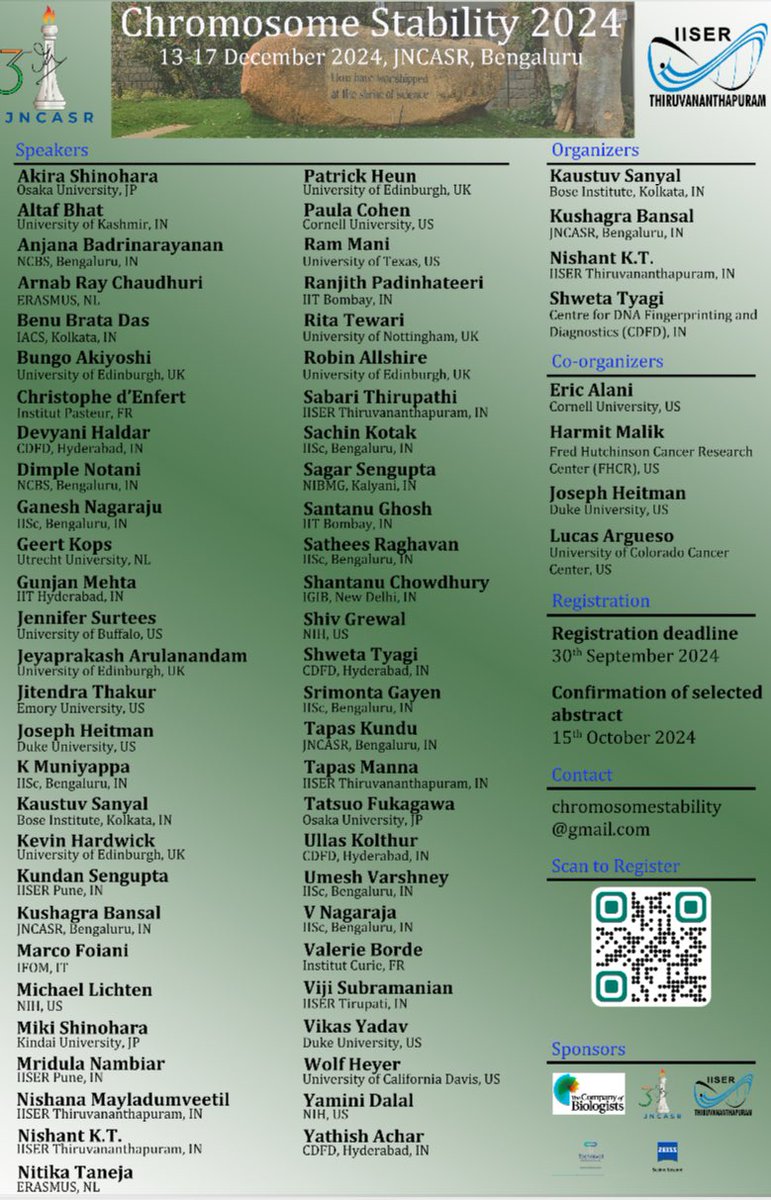
Registration is open for the Chromosome Stability 2024 to be held from 13-16 December @jncasr in Bangalore w/ @tvmiiser. Excellent opportunities to present your work and interact with top scientists in the field. https://t.co/YAPbNTBh7P
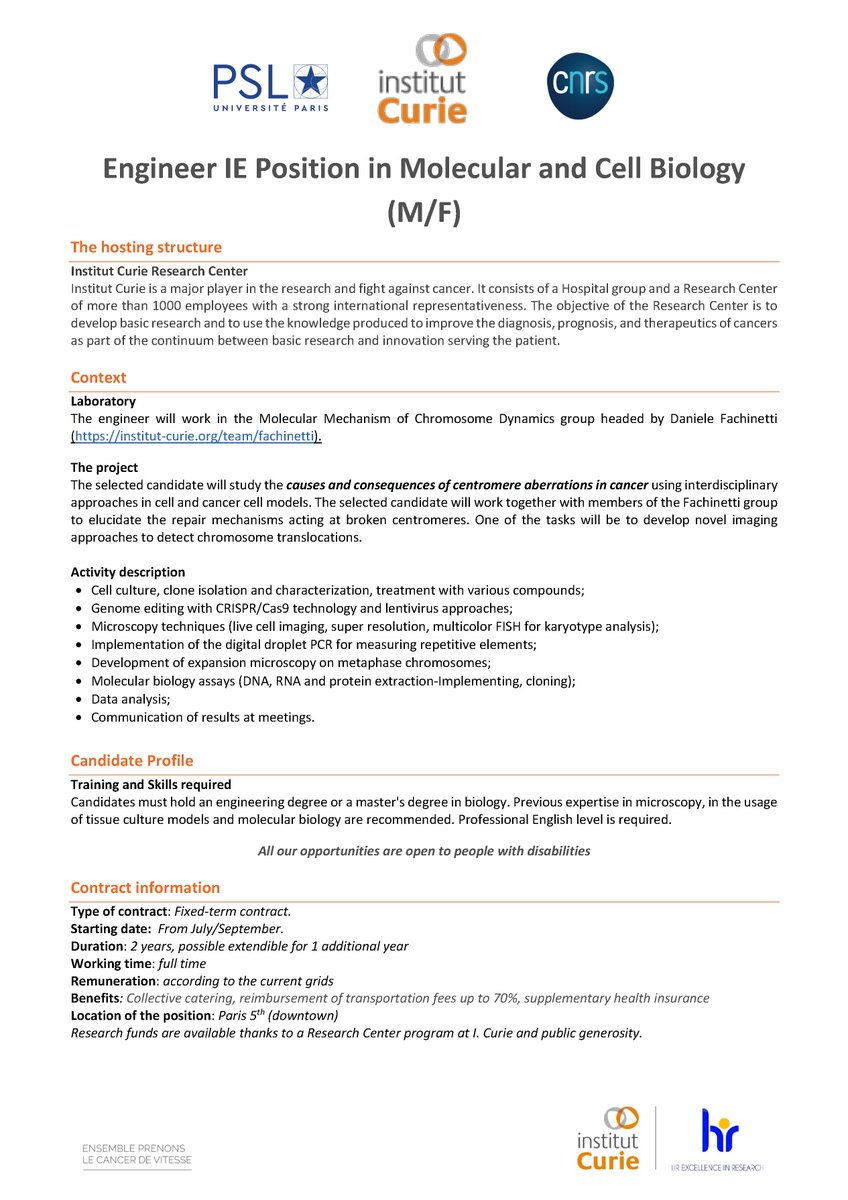
Our lab is looking for a technician/engineer to study the causes and consequences of centromere aberrations in cancer on a project supported by
@WorldwideCancer
See details attached. To apply please send your CV and cover letter (2 pages maximum). Please retweet
The Molecular Biology and Genetics Unit @jncasr is inviting applications to host Ramanujan/Ramalingaswamy Reentry/DBT-Wellcome Trust Intermediate fellows. Please follow this link
https://t.co/sE3XrsGhvt
Please RT and spread the word. @KaustuvSanyal
For anyone extracting PCR products from agarose gels (or who would like the option to do so occasionally), here’s a cheap and rapid homemade spin-column gel extraction method that’s reportedly good enough for Sanger sequencing without further purification.
The method, described by Abraham et al. (2017), is based on the observation that low concentrations of TAE (Tris-acetic acid-EDTA) buffer do not seem to inhibit PCR and Sanger sequencing. This means that a quick centrifugation of a gel slice through a filter could be enough to produce sequencing-ready DNA.
The authors made homemade spin columns by placing a small amount of cotton fiber (moistened with 0.5x TAE buffer), in a 0.5 mL centrifuge tube, and poked a hole in the bottom of the tube. This tube was then placed inside a 1.5 mL tube, and was then ready for use.
An electrophoresis gel was run using 0.5x TAE buffer, and successful amplicon bands cut out and placed in the homemade spin columns. The gel slices and columns were then centrifuged at 5200×g for 5 minutes to produce an extract used for Sanger sequencing reactions.
The authors reported a slight reduction in DNA yield compared to commercial gel extraction kits, but this didn’t impact results and their method was much cheaper and quicker. However, they did suggest that it’s best used for strong PCR bands, and it may not be quite as efficient as methods that totally remove TAE buffer. Their article can be found here:
Abraham et al. (2017). A quick and effective in-house method of DNA purification from agarose gel, suitable for sequencing. 3 Biotech, 7, 1-6.
https://t.co/kWBvXoB9d5
Interestingly, this method appears to be a hybrid of the classic “freeze-and-squeeze” method (where the agarose is frozen before centrifugation to extract DNA), for example as described by Tautz & Renz (1983)...
Tautz & Renz (1983). An optimized freeze-squeeze method for the recovery of DNA fragments from agarose gels. Analytical biochemistry, 132(1), 14-19.
https://t.co/mOuT0TrwR9 (subscription access).
… and Millipore’s Montage(TM) DNA Gel Extraction Kit, which uses proprietary filter columns plus a gel shredder to improve extraction efficiency without freezing. See Leonard et al. (1998) below for a description of the method using what is presumably a previous iteration of this kit:
Leonard et al. (1998). Preparation of PCR products for DNA sequencing. Biotechniques, 24(2), 314-317.
https://t.co/8R49Vo8bfK
Looking at all three protocols, two additional modifications to Abraham et al. (2017)'s method spring to mind:
⭐Replace the homemade spin column with a cut-down filter-pipette tip, making the method even cheaper and more accessible. You can find a great video by Rahul Patharkar on using filter-tip freeze-and-squeeze here: https://t.co/5naV4EFVk4 !
⭐Reduce the EDTA concentration in the TAE buffer to 1/10 of its normal concentration, in-line with Millipore’s Montage(TM) DNA Gel Extraction Kit recommendations.
In other words, you could try running a gel in a low EDTA TAE buffer to visualise amplicons, cut out gel bands, and centrifuge through filter tips to extract a (hopefully) Sanger sequencing-ready DNA extract.
As a disclaimer, Abraham et al. (2017) and Leonard et al. (1998) both used ethidium bromide in their gels. Other DNA stains might (or might not) have more of an impact on sequencing quality.
Also, if you do try it, I would also suggest testing on only a few samples to begin with just in case of failures!
And if you already use this method, or something similar, we'd love to know how works for you!
We are happy to present the official website of the DKW 2024 meeting - please spread the word and submit your abstracts! We have 20 slots for selected talks (prioritized for early career researchers). We hope to see many of you in Caux next year
https://t.co/pEdVcMG8BT
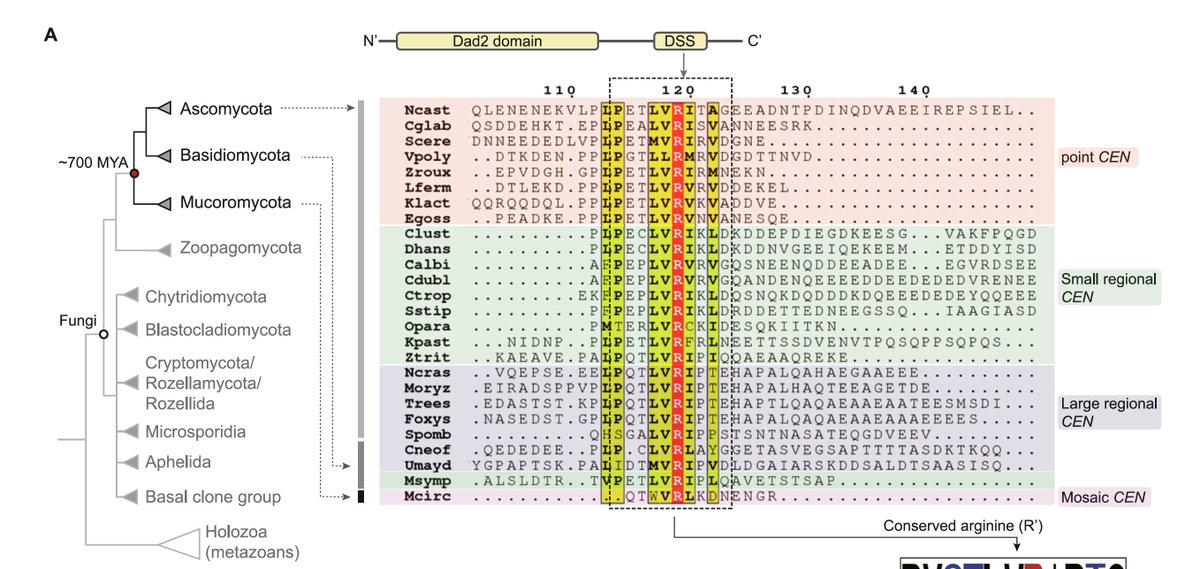
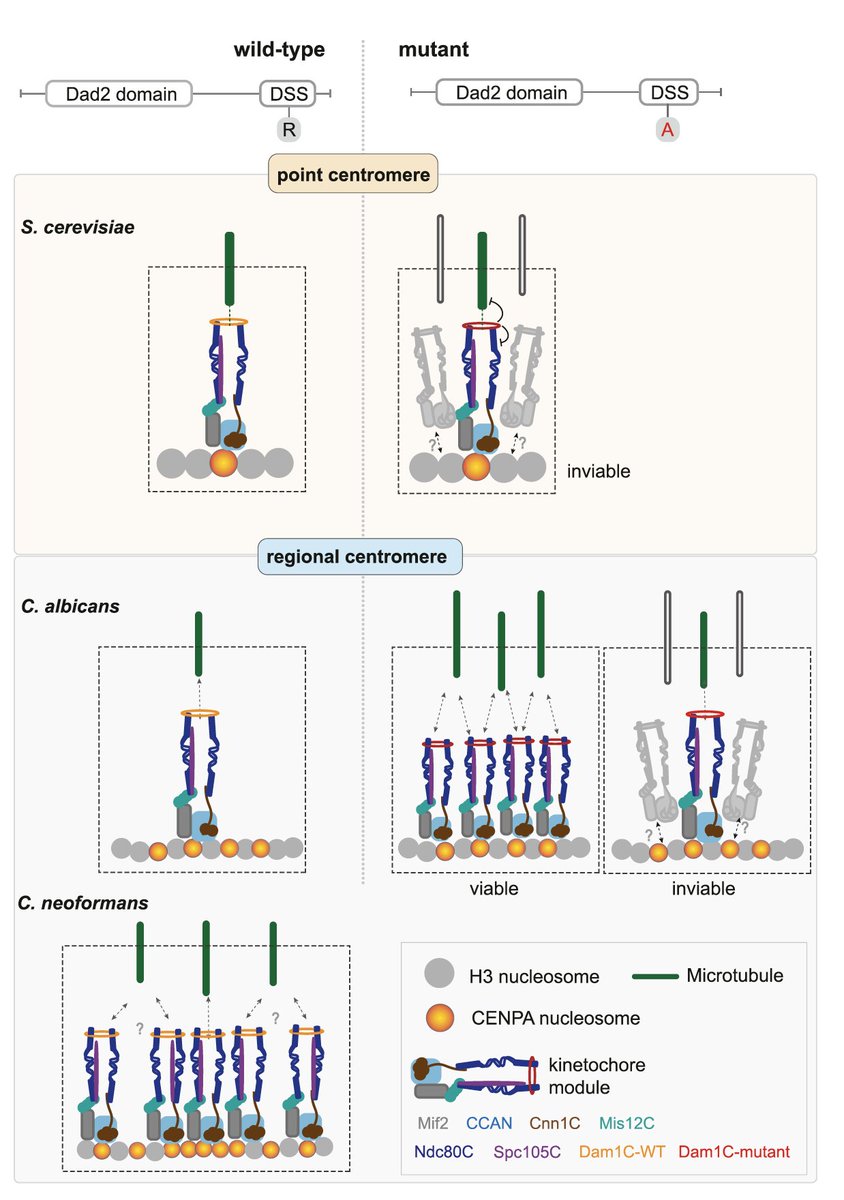
Have you ever wondered about the functional
importance of conserved aa residues in a protein
across an evolutionary time scale? @SRaam10 et al.
show in a @LSAjournal paper that longer centromeres
conditionally employ more kMTs to compensate
for the ill effects of mutations.
Three of the more costly and frequently used reagents in molecular biology are rolling circle amplification (RCA) mix, chemically competent MachOne (or other E. coli) cells, and Gibson assembly mix. Postdoc Julian Willis—who is starting his own lab in the UK soon—developed homemade recipes for each that reduce costs ~3x (or more at large-scale). Links to each recipe:
RCA mix:
https://t.co/Cmir57uM0J
Chemically competent MachOne cells:
https://t.co/kNYVxLIToA
Gibson assembly mix:
https://t.co/OFwXmmLDWB
Long post alert
Today I placed an order for the medicines at @pharmeasyapp for my parents. After a while a got the phone call from their pharmacist. Following conversation took place.
She: Sir, you have ordered sugar medicines. Along with that u shd also use XYZ. Contd.
@thuronyi LB is pointlessly dilute for plasmid production. I use 30 g/L yeast extract final "LB30" along with MgCl2. Replacing all tryptone with YE makes it even better, since only ⅓ of tryptone peptides are usable, but most of YE peptides are. My protocol page: https://t.co/2tkLSjloCY
@joachimgoedhart PEG method works very well for routine cloning. No heat shock needed, just incubate on ice for 30mins and proceed for recovery. https://t.co/12HSWVBJ3R
I wrote a quick @sci_find post on the absurdly cheap and simple PEG-based PCR precipitation protocol on Open Wetware with my slight modifications and some evidence of it actually working. Hope this helps!
https://t.co/gyDJgiLExB