We introduced a fully autonomous system for phase discovery 🤖
Machine learning has been a very effective tool for phase classification, especially when the order parameter is hard to derive or doesn’t exist. Naturally, one may ask: if you can classify well, shouldn’t you be able to search well too? Like many ML methods, a good classification model embeds sufficient knowledge to power new discoveries. We demonstrated this in many different systems (from simple ones to complicated ones) and they all work and scale!
We hope this work becomes the foundation for new ML-powered scientific discoveries!
yes we had the idea back in 2022, is differentiable programming still considered cool? Or should we call it “agent” 🙋♂️
Paper 📝 https://t.co/mLk0uJIjJz
Code 🗂️ https://t.co/2a88hoD1Z9
This has been a long journey exploring this direction, and thanks to all my patient collaborators: Shiyu Zhou, Yuxuan Zhang, Sebastian Johann Wetzel, @rgmelko ! #AI4Science
@Perimeter@UWaterloo@harvardphysics@EPFL_en
We present the importance of ML interpretability in physics. As ML is entering many scientific fields, many scientists independently discover the need for understanding their increasingly powerful ML models.
Excited to announce our review paper led by @S_J_Wetzel!
To our surprise (maybe not), many good old AI + physics papers by the physics community are largely ignored by the AI community. Not blaming anyone, but this is why we compile this review!
Link: https://t.co/4qPU7tJYwT
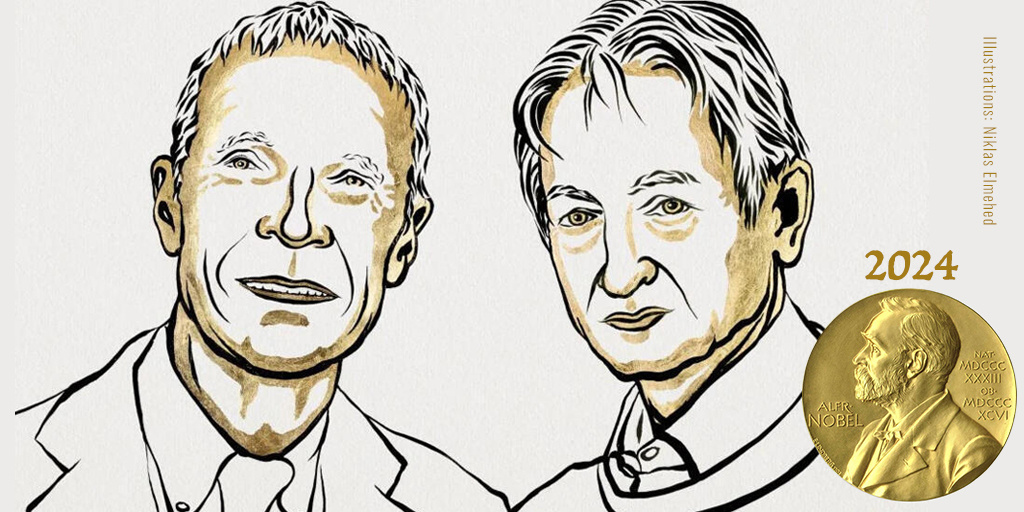
John J. Hopfield and Geoffrey E. Hinton win the 2024 Nobel Prize in Physics for their groundbreaking work in machine learning with neural networks. Hinton is the fourth Canadian laureate in a decade! PI congratulates both on their achievement!
Read more: https://t.co/kPITP3jGpO
Perimeter Institute is accepting applications for the 2024/25 Perimeter Scholars International (PSI) master’s program.
Application deadline: February 1, 2024.
Apply Now: https://t.co/xFuubFlV8n
#TheoreticalPhysics#GraduateProgram#PerimeterInstitute
If you are like me and you want to know what concept a neural network classifier learns in symbolic form, this might be of use😉
https://t.co/v7aZAbGGF3
Thank you @UWaterloo@Perimeter@MitacsCanada
@gert1107 @lingxiao225@KaiZhou17108130 Nice work! Did I understand correctly that your model learns the 2 parameters mu/g or kappa/lambda in the action and not a neural net with millions of parameters?
The deadline for applications to be a Perimeter Institute postdoc is Nov 6th! Apply now to work with me, i.e. sipping coffee in front of a chalkboard.
https://t.co/vDcQwYKcIe
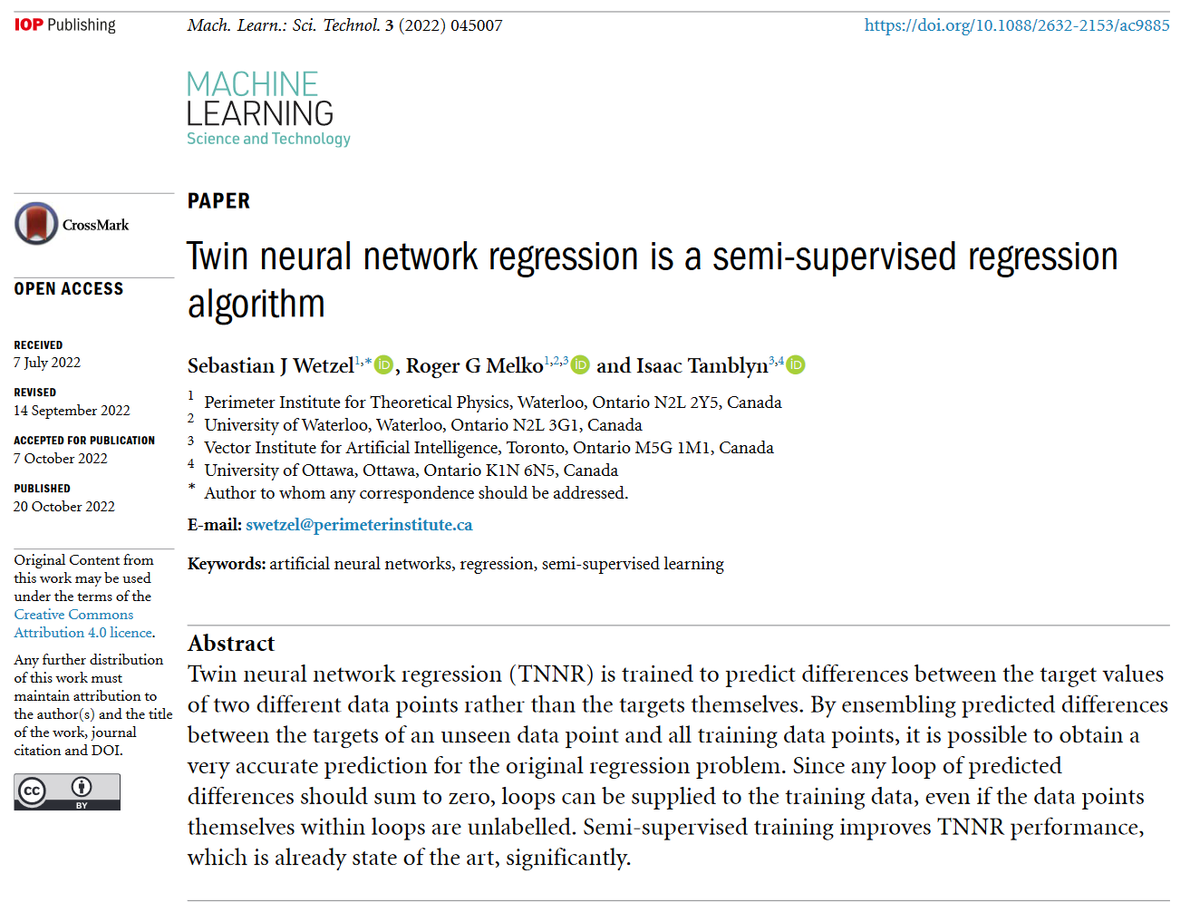
Between all the hype around LLMs, there is also room for solving traditional machine-learning problems.
https://t.co/jbrcNfpn57
Thx @UWaterloo@Perimeter@MitacsCanada
@IOPPublishing Thanks for making an effort to improve peer review. What I believe could also be a significant improvement would be if it would be possible to ask the editors and reviewers questions and clarifications about their review reports and how to improve the paper.
@rothkopfAK@AthinoA@TU_Muenchen My best guess is PCA picks up simulation artifacts or fluctuations, the PCA is averaged over 100 runs and is still noisy.
PIQuIL combines the powers of quantum computing and artificial intelligence to spark breakthroughs.
Starting at 11 am ET today, PIQuIL founder @rgmelko chairs a @Quantum_Days panel on the possibilities. Watch live: https://t.co/kJ7ylAqmWX
https://t.co/X2ElOle7xq