Mom, Runner, Foodie, Nutrition Epidemiologist, Registered Dietitian - Nat’l Sr. Director of Sci & Medicine @AHA, Clin Assoc Professor @CUNY - Tweets are my own
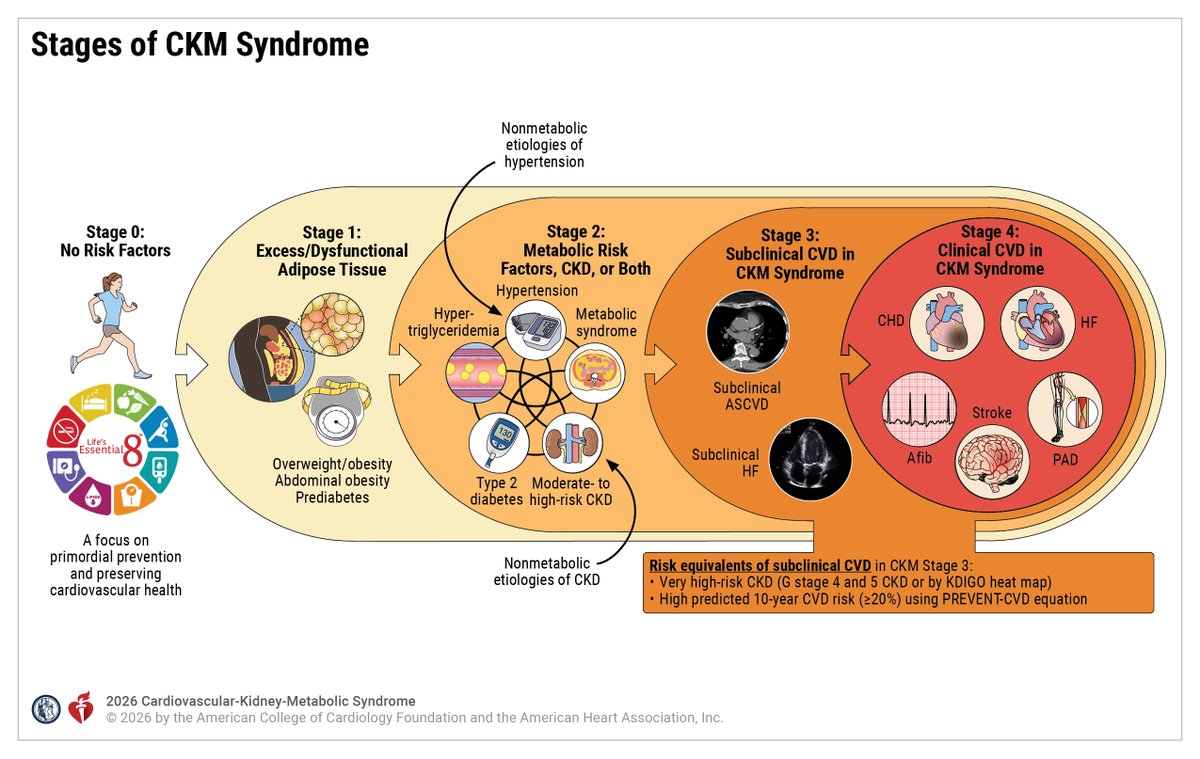
Published today, the first-ever clinical practice guideline on cardiovascular-kidney-metabolic syndrome from the American Heart Association and @ACCinTouch.
Cardiovascular-kidney-metabolic (CKM) syndrome staging is recommended for youths and adults to prevent CKM syndrome stage progression, to tailor therapy to absolute risk, to reduce cardiovascular events and loss of kidney function across the life course, and to promote CKM syndrome stage regression through lifestyle changes and weight loss.
The diagnosis of CKM syndrome stage requires assessment of metabolic health, kidney function, and cardiovascular risk factors, which enhances the identification of frequently unrecognized or asymptomatic CKM conditions.
✍🏼 @ChiadiNdumele@HeartDocSadiya@kardiologykazi@noshreza@virani_md@biykemb@NutritionHF@mandeepbajaj65@KatherineTuttl8@RangaswJ@lisaVWMD@KBreathettMD@EmoryFamMed@ShoaClarke@mad_sters@jmortonmd@sripalbangalore@AnumSaeedMD
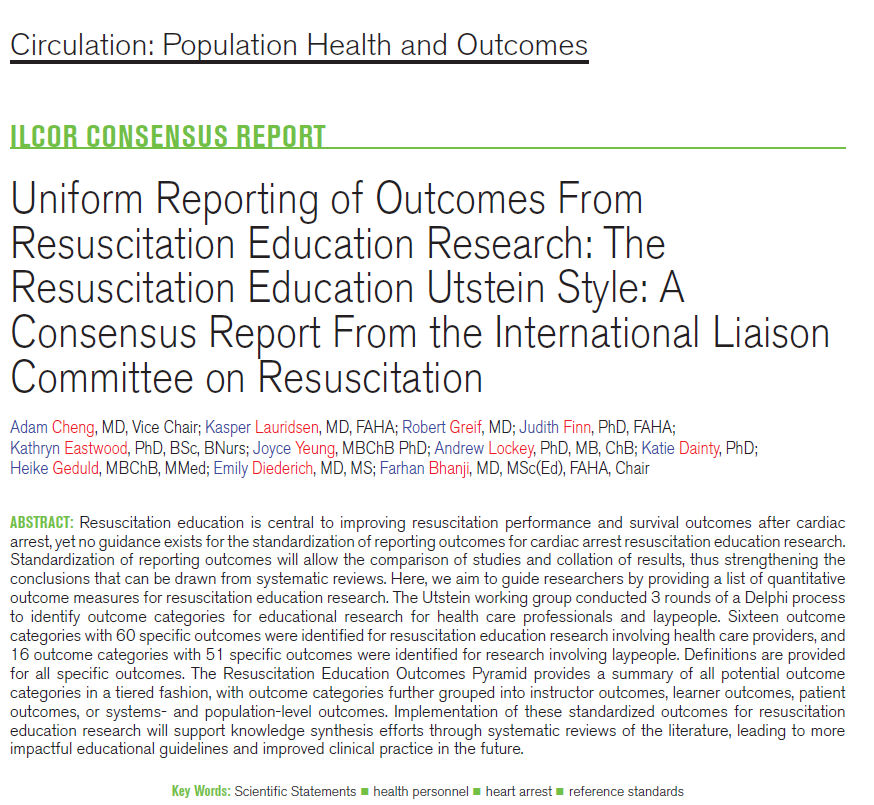
Published today, this consensus report:
➡️ Introduces the first global framework to standardize how outcomes in resuscitation education are reported and measured.
➡️ Strengthens the ability to compare studies, generate high-quality evidence, and inform future American Heart Association and @Ilcor_org guidelines.
➡️ Supports more effective training strategies that help improve resuscitation performance and save more lives
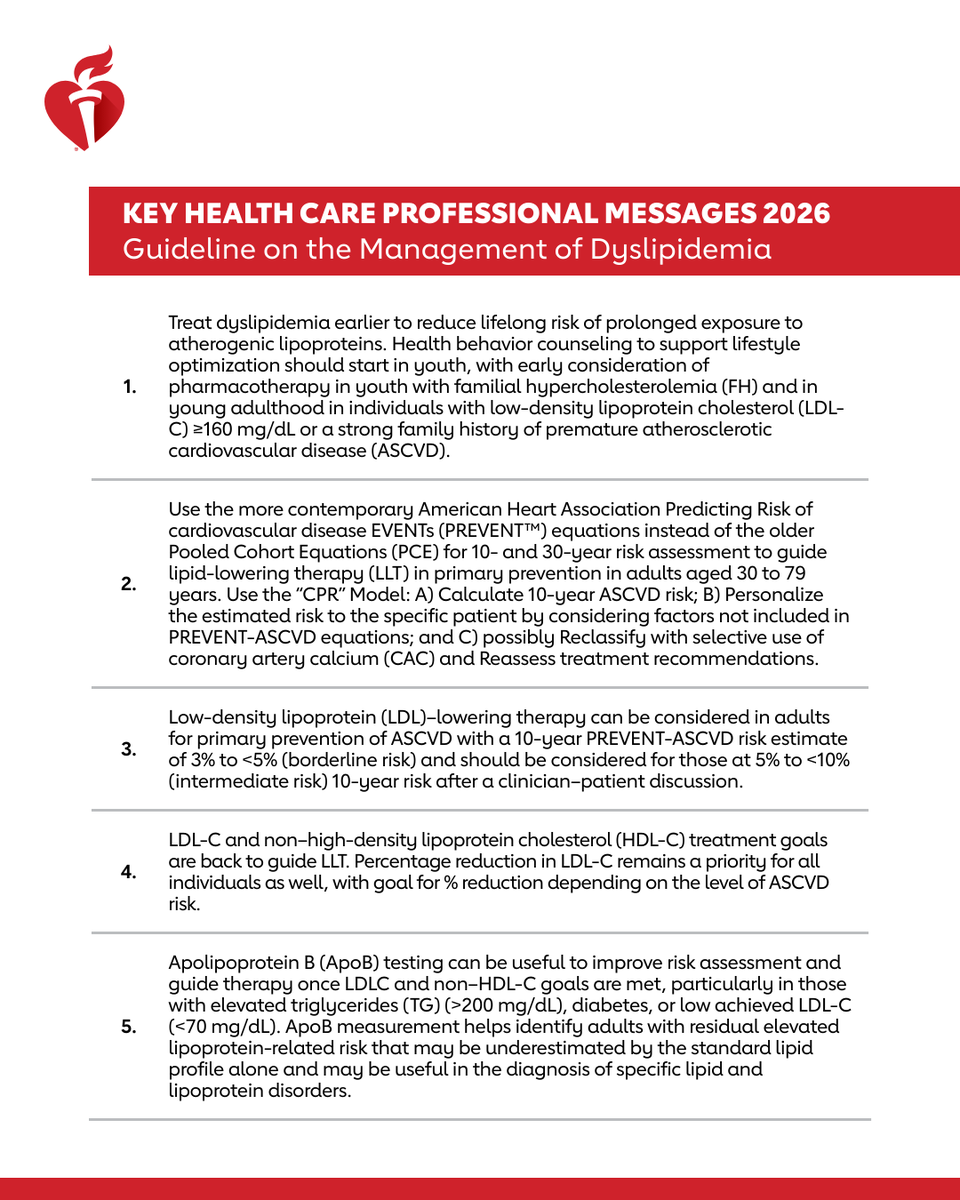
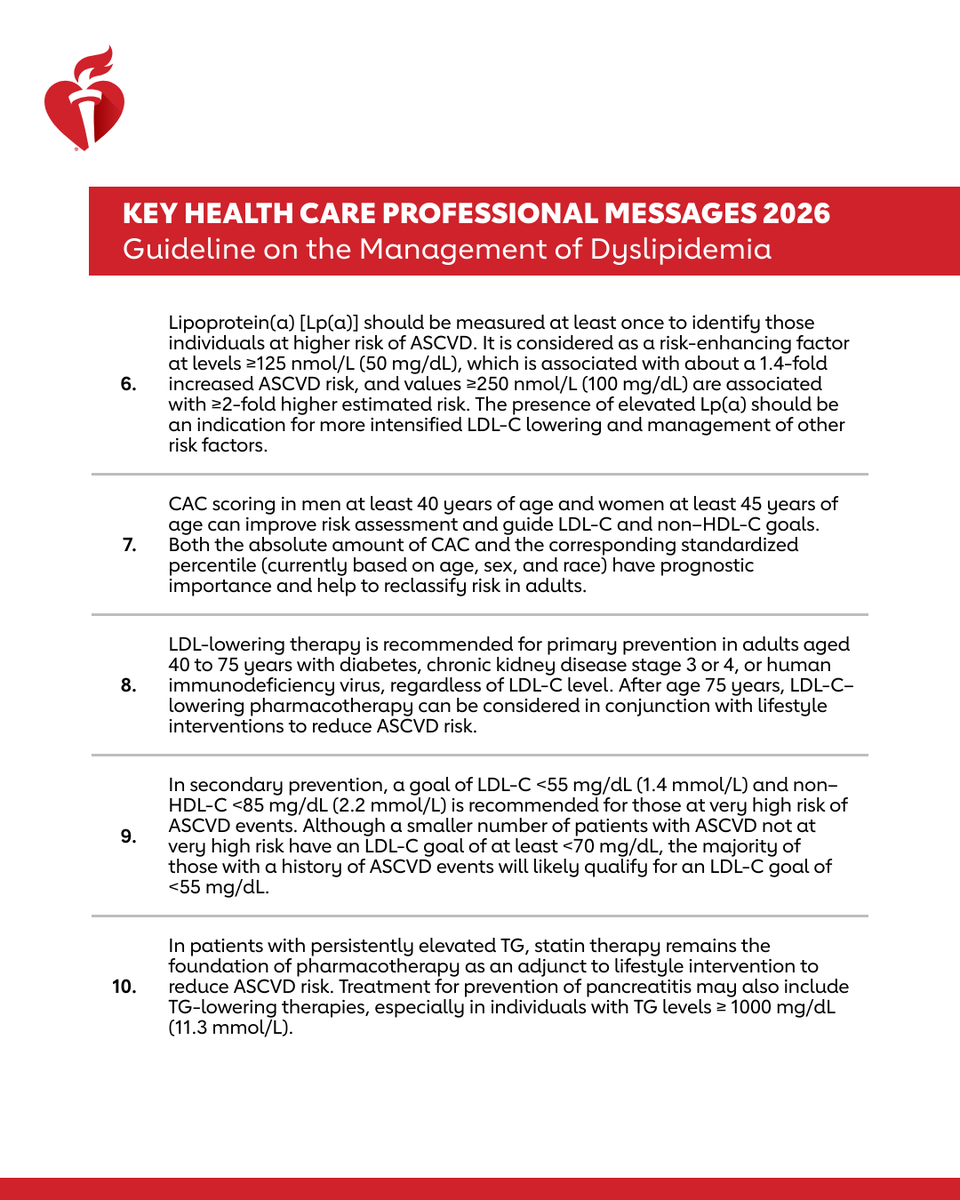
The 2026 Guideline on the Management of Dyslipidemia was recently published. Here are the top things for clinicians using PREVENT-ASCVD Equations for Risk-Based Lipid Management.
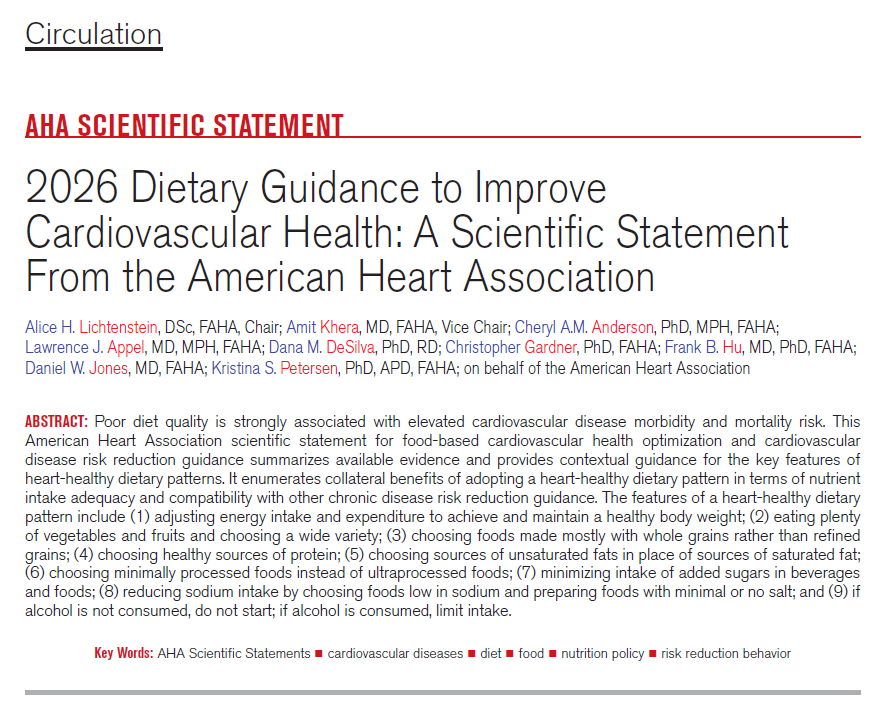
@dramitkhera recently co-authored a new American Heart Association scientific statement in Circulation highlighting the critical role of dietary patterns in cardiovascular health. Read the statement: https://t.co/V8PITlewpW
Published today, Evaluation and Management of the Child with Acute Decompensated Heart Failure: A Scientific Statement from the American Heart Association.
A structured, rapid approach combining clinical assessment, diagnostics, and tailored therapy (medications, respiratory support) is essential for stabilizing pediatric acute decompensated heart failure patients in the ER. Prompt recognition and systematic management is vital to limit clinical deterioration and may improve outcomes.
📷 Systematic evaluation and management of a patient presenting with acute decompensated heart failure in the emergency department, in the intensive care unit, and on the inpatient floor
The statement provides a concise update that summarizes food-based cardiovascular health optimization and CVD risk reduction guidance related to features of heart-healthy dietary patterns.
The nine features for heart-healthy dietary patterns across the life course are updated with the latest evidence, and apply regardless of where food is procured, prepared, or consumed.
This statement updates the Association’s dietary guidance last published in 2021 and reflects the most recent scientific evidence and expert consensus.
Published today, 2026 Dietary Guidance to Improve Cardiovascular Health: A Scientific Statement from the American Heart Association.
This statement:
➡️ Reinforces the importance of focusing on heart-healthy dietary patterns, rather than on single foods or nutrients.
➡️ Highlights the importance of adopting heart-healthy eating habits early in life and maintaining them across the life course.
➡️ Organizes the guidance into nine features to facilitate adoption of a dietary pattern that support cardiovascular health.
➡️ Recognizes the additional benefits that come with adoption of a heart-healthy dietary pattern beyond CVD.
📷 Features of a dietary pattern to promote cardiovascular health.
What a fabulous #EPILifestyle2026 ❤️ Grateful to @AHA President Dr. Stacey Rosen for her welcome remarks, and to our program co-chairs Drs. Palta and Sattler for the extraordinary program 🙏🏻 Until next year - see you in Boston again in 2027!!
Behind the scene interview with @WCCJJFitness David Kritchevsky Memorial Lecture: From Policy to Practice: Systems-Level Strategies to Improve Dietary Behaviors and Reduce Cardiovascular Risk @DrSoniaAngell@AHAScience@AHAMeetings
📢The 2026 Statistic Update is now available.
As impact from the COVID pandemic diminishes, heart disease and stroke still top the list of leading causes of death in the U.S., according to the American Heart Association’s 2026 Heart Disease and Stroke Statistics Update.
Together, heart disease and stroke accounted for more than a quarter of all deaths in the U.S. in 2023, the most current year for which data is available.
Although largely preventable, cardiovascular diseases, including all types of heart disease and stroke, claim more lives in the U.S. each year than all forms of cancer and accidental deaths — the #2 and #3 causes of death — combined.
Each year, the American Heart Association brings together in a single document the most up-to-date statistics related to CVD, stroke, and cardiovascular risk factors.
The 2026 Statistics Update also presents the latest data on a range of major clinical heart and circulatory disease conditions (including stroke, brain health, complications of pregnancy, kidney disease, congenital HD, rhythm disorders, subclinical atherosclerosis, CHD, HF, VHD, venous disease, and PAD) and the associated outcomes (including quality of care, procedures, and economic costs).
The 2026 update is now available.
The 2026 Heart Disease and Stroke Statistics: A Report of US and Global Data From the American Heart Association | Circulation is now available! @AHAScience@American_Heart#hotoffthepress
https://t.co/hVWWrOVG1B













![AHAScience's tweet photo. Key updates to this guideline include:
➡️ The use of the American Heart Association PREVENT-ASCVD equations to guide primary-prevention and lipid-lowering therapy decisions.
➡️ Testing Lp(a) at least once in a lifetime and selective apolipoprotein B measurement to improve risk assessment and guide treatment
➡️ The return of LDL-C and non-high-density lipoprotein cholesterol treatment goals (with lower targets for higher-risk groups)
➡️ Expanded use of coronary artery calcium scoring to reclassify risk[ME1.1]
✍🏼 @rblument1 @tygluckman @RonBlankstein @PamelaBMorris @pnatarajanmd @AnnMarieNavar @SethShayMartin @APRN_CNS @nyulangone @DrMichaelShapir @kgradneyrd @eugeniagianos @virani_md @KellieMcLain1 @ijeomaheartdoc @SamiaMoraMD @DrHeatherJohn @dmljmd](https://pbs.twimg.com/media/HDPXv0SXsAIEPMD.png)