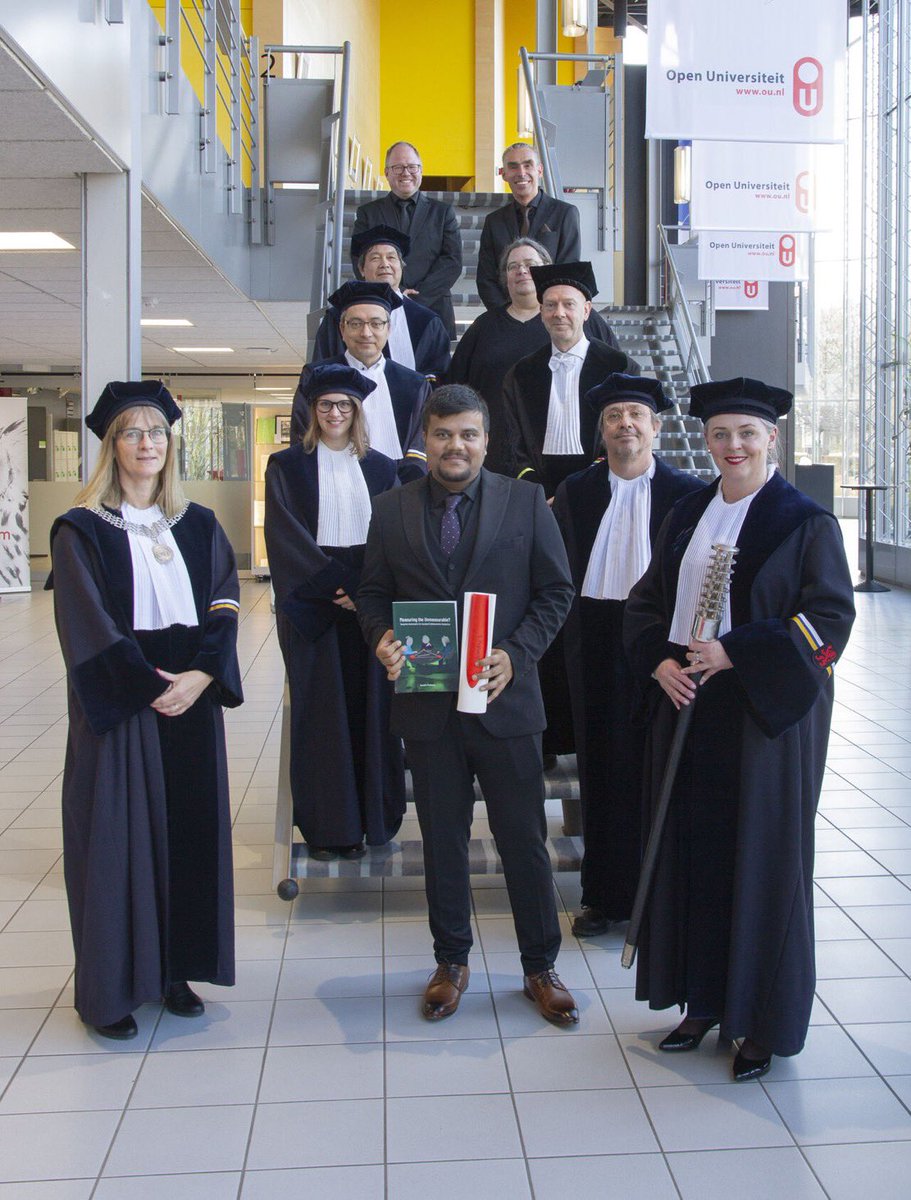
An experience of a lifetime when you end something significant! PhD done :)
Thank you everyone, thanks to my supervisors and the committee for this awesome experience! Especially, my supervisors made this time period a memorable one which will be etched in my memory forever.
10 WEBSITES EVERY STUDENT SHOULD USE BEFORE GRADUATION.
Bookmark every single one. Your university will never tell you about most of these.
1. https://t.co/Sw42cy7v6U
Upload every textbook, lecture, and PDF for a course. Ask questions across all of them. Built by Google DeepMind.
2. https://t.co/6w0IBtOEYB
Search scientific research fast. Ask any question and get answers with links to relevant papers in seconds.
3. https://t.co/OAhaYocdxH
The world's largest open library. Almost any textbook your professor assigned is on here for free.
4. https://t.co/Y3KvNzZ11m
Research assistant that cites every source. Replaces 90% of Google searches for academic work.
5. https://t.co/Po8bWb4d0Z
Free reference manager that builds your bibliography automatically. Saves 20+ hours per semester.
6. https://t.co/9kI8wuIEk1
Solves math, physics, chemistry, and engineering problems step by step. Shows the full working.
7. https://t.co/7rJwkujVhX
The job platform built specifically for students. 1.4 million employers actively recruiting on it right now.
8. https://t.co/0FjarSEgUe
Matches you to scholarships you actually qualify for. Over $3.4 billion awarded to students every year.
9. https://t.co/Gv2m8XhUiP
Free Barbara Oakley course taken by 4 million people. The science of how to actually study and remember.
10. https://t.co/GdrQtY6qs6
Free with most university logins. 16,000+ courses on everything from Excel to AI engineering.
The students who graduate with the biggest head start are not smarter. They just found the right tools earlier.
Anthropic Academy just dropped FREE AI courses that could replace a $10,000 degree.
$0. No catch. No gatekeeping.
Here are 6 AI courses that could separate you from everyone else in 2026:
🚨Breaking: Someone open sourced a knowledge graph engine for your codebase and it's terrifying how good it is.
It's called GitNexus. And it's not a documentation tool.
It's a full code intelligence layer that maps every dependency, call chain, and execution flow in your repo -- then plugs directly into Claude Code, Cursor, and Windsurf via MCP.
Here's what this thing does autonomously:
→ Indexes your entire codebase into a graph with Tree-sitter AST parsing
→ Maps every function call, import, class inheritance, and interface
→ Groups related code into functional clusters with cohesion scores
→ Traces execution flows from entry points through full call chains
→ Runs blast radius analysis before you change a single line
→ Detects which processes break when you touch a specific function
→ Renames symbols across 5+ files in one coordinated operation
→ Generates a full codebase wiki from the knowledge graph automatically
Here's the wildest part:
Your AI agent edits UserService.validate().
It doesn't know 47 functions depend on its return type.
Breaking changes ship.
GitNexus pre-computes the entire dependency structure at index time -- so when Claude Code asks "what depends on this?", it gets a complete answer in 1 query instead of 10.
Smaller models get full architectural clarity. Even GPT-4o-mini stops breaking call chains.
One command to set it up:
`npx gitnexus analyze`
That's it. MCP registers automatically. Claude Code hooks install themselves.
Your AI agent has been coding blind. This fixes that.
9.4K GitHub stars. 1.2K forks. Already trending.
100% Open Source.
(Link in the comments)
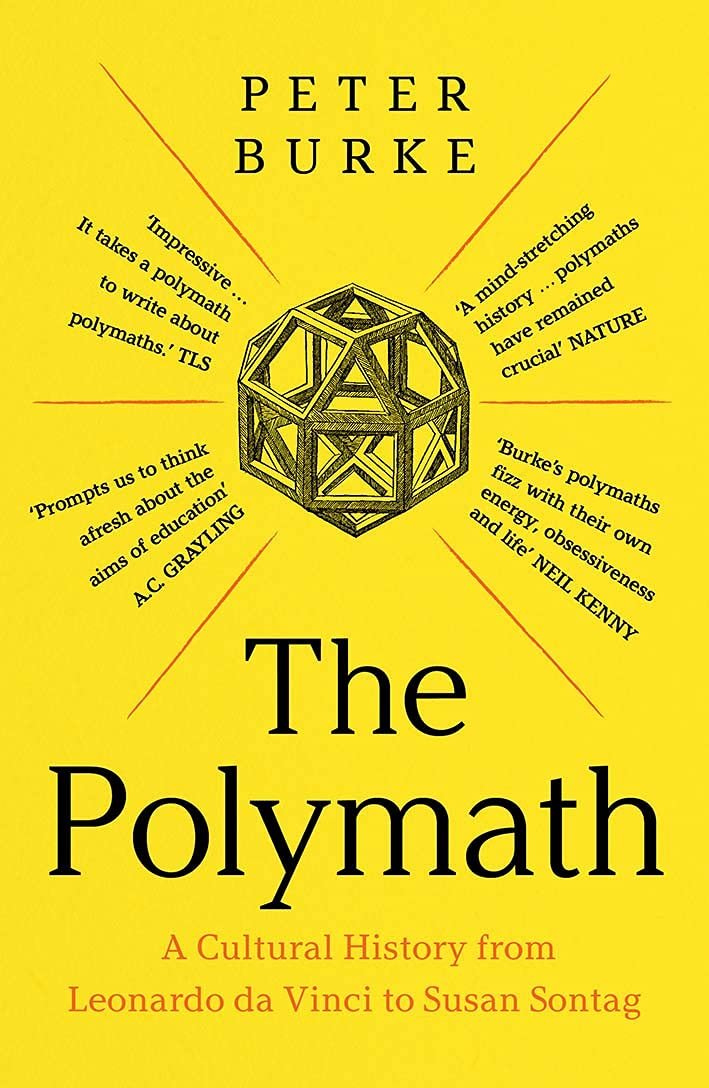
the polymath is not a person who collects hobbies.
it is a person who refuses artificial borders.
• art and science
• engineering and philosophy
• history and design
for most of history, these were not separate worlds.
the polymath by peter burke shows that broad thinkers shaped culture by moving between domains.
they borrowed methods
translated ideas
connected distant fields
specialists optimize inside systems.
polymaths redesign the map itself.
in an age of narrow expertise, synthesis becomes rare leverage.
🚨 The creator of Claude Code just shared a full walkthrough on how to actually use it the right way.
30 minutes. Free. Straight from the person who built it.
Watch the workshop and save it for later.
You’ll likely get more practical value from this than from most expensive coding courses online.
Most people are only scratching the surface of what Claude Code can do.
Then check out the guide below.
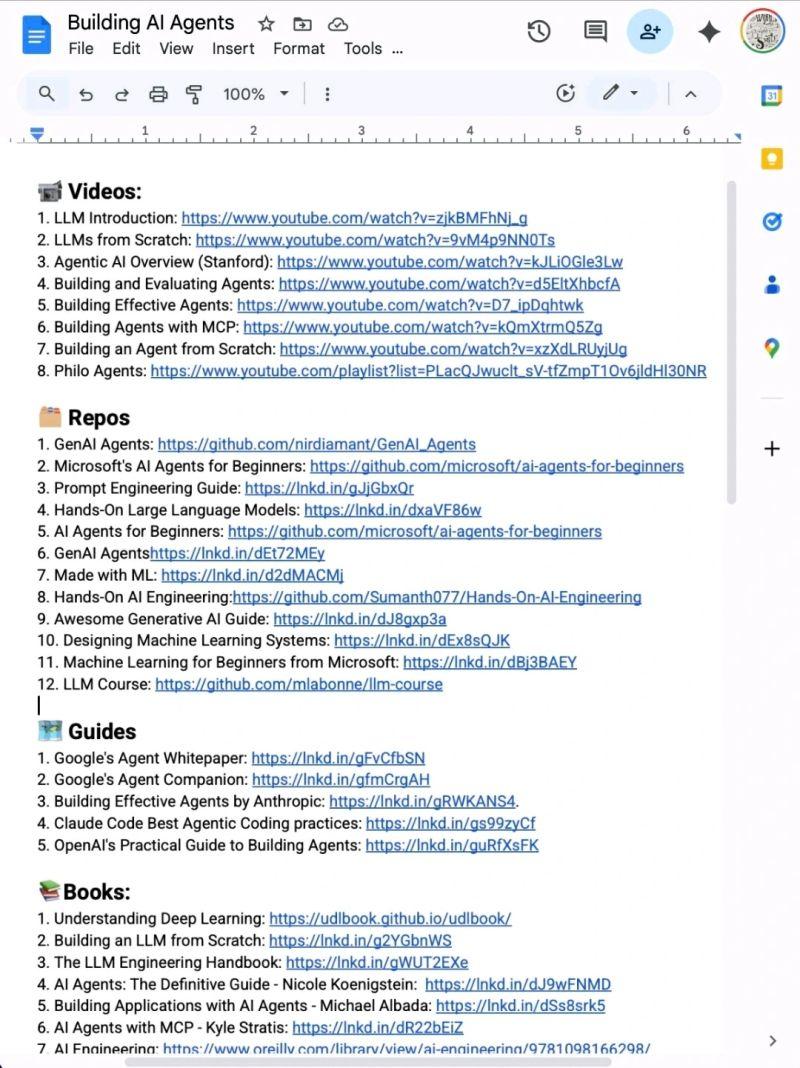
Stop wasting hours trying to learn AI. 📘📚
I have already done it for you.
With one list. Zero confusion. And no fluff
📹 Videos:
1. LLM Introduction: https://t.co/YkuDFVmW9e
2. LLMs from Scratch: https://t.co/u3kSz5SGuJ
3. Agentic AI Overview (Stanford): https://t.co/W6rzVHGSgC
4. Building and Evaluating Agents: https://t.co/sEl8vVax3F
5. Building Effective Agents: https://t.co/c7fD4aWFYO
6. Building Agents with MCP: https://t.co/GlMdR6htgA
7. Building an Agent from Scratch: https://t.co/kUQ9jPuI0R
8. Philo Agents: https://t.co/8JHvqw0DKn
🗂️ Repos
1. GenAI Agents: https://t.co/cyHPvOAjlK
2. Microsoft's AI Agents for Beginners: https://t.co/zFJAN74JQe
3. Prompt Engineering Guide: https://t.co/liUshX2XsP
4. Hands-On Large Language Models: https://t.co/TXFhbiboZY
5. AI Agents for Beginners: https://t.co/zFJAN74JQe
6. GenAI Agentshttps://lnkd.in/dEt72MEy
7. Made with ML: https://t.co/lkXP6itwK0
8. Hands-On AI Engineering:https://t.co/zB8EEctE4Y
9. Awesome Generative AI Guide: https://t.co/lF7CuIQHRw
10. Designing Machine Learning Systems: https://t.co/XlYUZYOoVi
11. Machine Learning for Beginners from Microsoft: https://t.co/hF5UzZoMJB
12. LLM Course: https://t.co/4tLAwy8fOQ
🗺️ Guides
1. Google's Agent Whitepaper: https://t.co/0OEKVLgF34
2. Google's Agent Companion: https://t.co/r0Dxe4VvDO
3. Building Effective Agents by Anthropic: https://t.co/I0ZyuwiOS3.
4. Claude Code Best Agentic Coding practices: https://t.co/HIBC2TwwAP
5. OpenAI's Practical Guide to Building Agents: https://t.co/1I8n0wnjHQ
📚Books:
1. Understanding Deep Learning: https://t.co/XEzhyAcWbq
2. Building an LLM from Scratch: https://t.co/4sZmBnHPEg
3. The LLM Engineering Handbook: https://t.co/IkAYNFkVNI
4. AI Agents: The Definitive Guide - Nicole Koenigstein: https://t.co/KsFnET47hx
5. Building Applications with AI Agents - Michael Albada: https://t.co/lJhMLtsLql
6. AI Agents with MCP - Kyle Stratis: https://t.co/C2lhD8uTDL
7. AI Engineering: https://t.co/34EyUiIVMv
📜 Papers
1. ReAct: https://t.co/kfQ8tWysne
2. Generative Agents: https://t.co/wbfqXq8KZK.
3. Toolformer: https://t.co/OQ7m49YWls
4. Chain-of-Thought Prompting: https://t.co/XeNgLQdTIL.
🧑🏫 Courses:
1. HuggingFace's Agent Course: https://t.co/tUZyPEGhni
2. MCP with Anthropic: https://t.co/wx1DAIWis0
3. Building Vector Databases with Pinecone: https://t.co/8XsQzDstTB
4. Vector Databases from Embeddings to Apps: https://t.co/9n6DvZGTMN
5. Agent Memory: https://t.co/OxFAaM0fp7
Repost for your network ♻️
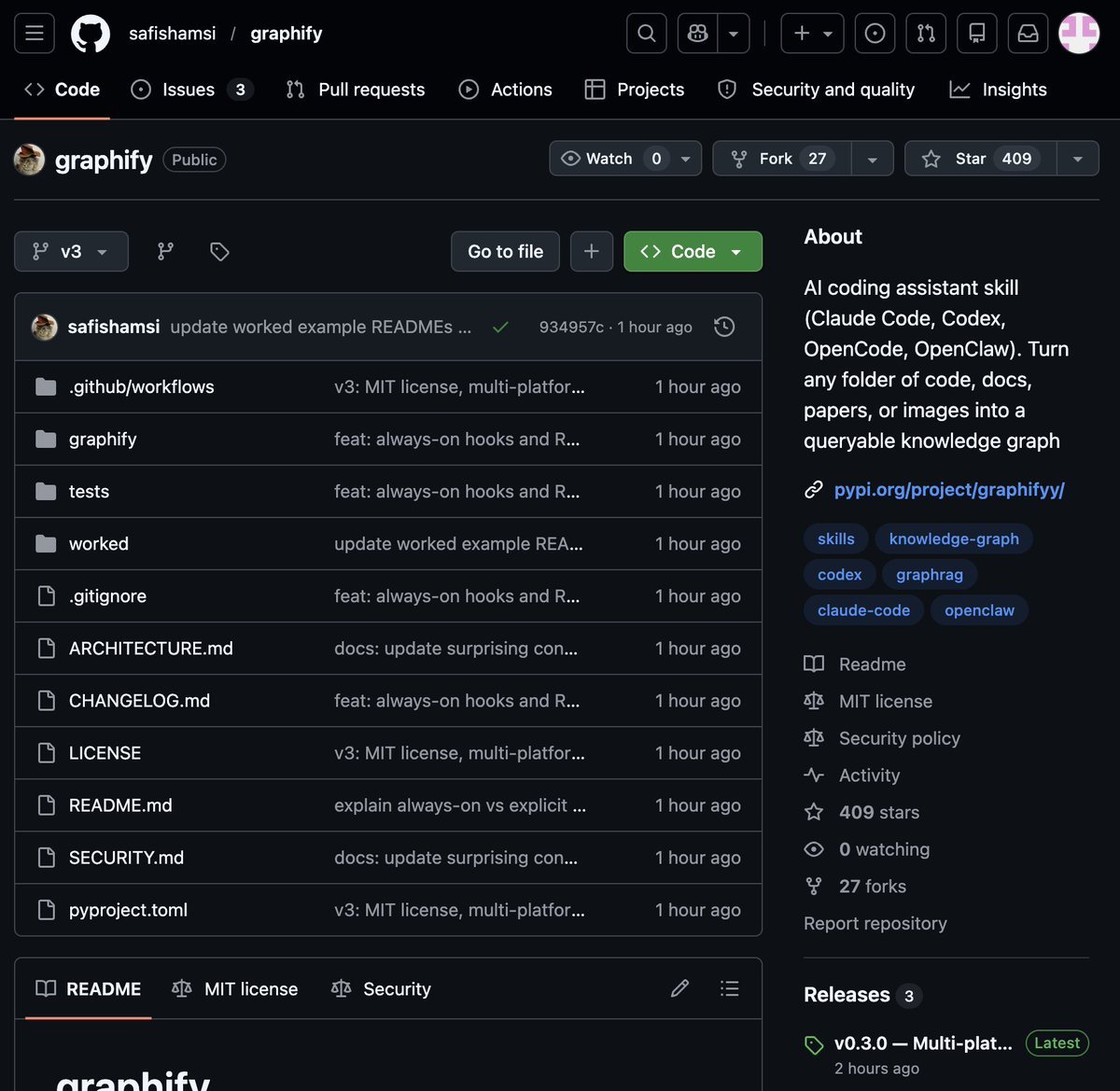
🚨 BREAKING: Someone just built the exact tool Andrej Karpathy said someone should build.
48 hours after Karpathy posted his LLM Knowledge Bases workflow, this showed up on GitHub.
It's called Graphify. One command. Any folder. Full knowledge graph.
Point it at any folder. Run /graphify inside Claude Code. Walk away.
Here is what comes out the other side:
-> A navigable knowledge graph of everything in that folder
-> An Obsidian vault with backlinked articles
-> A wiki that starts at index. md and maps every concept cluster
-> Plain English Q&A over your entire codebase or research folder
You can ask it things like:
"What calls this function?"
"What connects these two concepts?"
"What are the most important nodes in this project?"
No vector database. No setup. No config files.
The token efficiency number is what got me:
71.5x fewer tokens per query compared to reading raw files.
That is not a small improvement. That is a completely different paradigm for how AI agents reason over large codebases.
What it supports:
-> Code in 13 programming languages
-> PDFs
-> Images via Claude Vision
-> Markdown files
Install in one line:
pip install graphify && graphify install
Then type /graphify in Claude Code and point it at anything.
Karpathy asked. Someone delivered in 48 hours.
That is the pace of 2026.
Open Source. Free.
I made a Claude Code skill that turns any arxiv paper into working code.
Every line traces back to the paper section it came from & any implementation detail the paper skips will be flagged, and not assumed.
open sourcing it -
https://t.co/sSio4JfpIo
Stop wasting hours trying to learn AI. 📘📚
I have already done it for you.
With one list. Zero confusion. And no fluff
📹 Videos:
1. LLM Introduction: https://t.co/kJDquHyQuR
2. LLMs from Scratch: https://t.co/0tVKf67LWE
3. Agentic AI Overview (Stanford): https://t.co/F3eMqlyx7o
4. Building and Evaluating Agents: https://t.co/p2wAwQkmc1
5. Building Effective Agents: https://t.co/soZEzoU6eu
6. Building Agents with MCP: https://t.co/7rXLH619p4
7. Building an Agent from Scratch: https://t.co/JVVEvlwcvH
8. Philo Agents: https://t.co/oALtKeEhg1
🗂️ Repos
1. GenAI Agents: https://t.co/SzAvw64ZA3
2. Microsoft's AI Agents for Beginners: https://t.co/MYCOwStucr
3. Prompt Engineering Guide: https://t.co/zFZJT6V60r
4. Hands-On Large Language Models: https://t.co/S5E4390RIk
5. AI Agents for Beginners: https://t.co/MYCOwStucr
6. GenAI Agentshttps://lnkd.in/dEt72MEy
7. Made with ML: https://t.co/mAb4b9Li9o
8. Hands-On AI Engineering:https://t.co/2QvXB3WJhe
9. Awesome Generative AI Guide: https://t.co/dYaAsRgfO6
10. Designing Machine Learning Systems: https://t.co/jRxshvMgJt
11. Machine Learning for Beginners from Microsoft: https://t.co/6u48FQng1g
12. LLM Course: https://t.co/o0NnbEjH6X
🗺️ Guides
1. Google's Agent Whitepaper: https://t.co/cs0P2Tt165
2. Google's Agent Companion: https://t.co/Qnv3PsJZIx
3. Building Effective Agents by Anthropic: https://t.co/5ZfcMllO9N.
4. Claude Code Best Agentic Coding practices: https://t.co/zX9ep8ER0h
5. OpenAI's Practical Guide to Building Agents: https://t.co/uwdBKet060
📚Books:
1. Understanding Deep Learning: https://t.co/Rix5N440Y8
2. Building an LLM from Scratch: https://t.co/V20ES23ZH8
3. The LLM Engineering Handbook: https://t.co/avpqPTA0I8
4. AI Agents: The Definitive Guide - Nicole Koenigstein: https://t.co/8bgDLtebU0
5. Building Applications with AI Agents - Michael Albada: https://t.co/W70co41CCW
6. AI Agents with MCP - Kyle Stratis: https://t.co/vF8VqTeyfA
7. AI Engineering: https://t.co/eJrAoLMW0Z
📜 Papers
1. ReAct: https://t.co/SFgUispJcP
2. Generative Agents: https://t.co/q50bu1PPnQ.
3. Toolformer: https://t.co/CFssbdAXvQ
4. Chain-of-Thought Prompting: https://t.co/n84jvdyxWL.
🧑🏫 Courses:
1. HuggingFace's Agent Course: https://t.co/yhVP0jcs6w
2. MCP with Anthropic: https://t.co/w9LxesXtjx
3. Building Vector Databases with Pinecone: https://t.co/GeI4yarzHH
4. Vector Databases from Embeddings to Apps: https://t.co/eMrFYZaY8d
5. Agent Memory: https://t.co/hjbH72Qwqr
Repost for your network ♻️
Sebastian Raschka is one of the most respected researchers in ML/AI education. Period.
And now he's done something quietly brilliant.
He built an LLM Architecture Gallery - a single, browsable reference that maps out the internal architecture of every major open-weight model released in the last few years.
This is a serious research artifact, made free for everyone.
Here's what's inside:
🔹 GPT-2 XL (1.5B)
🔹 Llama 3 (8B)
🔹 OLMo 2 (7B)
🔹 Llama 3.2 (1B)
🔹 Qwen3 (4B, 8B, 32B)
🔹 DeepSeek V3/R1 (671B)
🔹 Kimi K2 (1 Trillion)
🔹 Gemma 3 (4B, 27B, 270M)
🔹 Mistral 3.1 Small (24B) & Mistral Large (673B)
🔹 Llama 4 Maverick (400B)
🔹 Qwen3 235B-A22B & Qwen3 Coder Flash
🔹 SmolLM (1B)
🔹 GPT-OSS (20B, 120B)
🔹 Grok 2.5 (270B)
🔹 GLM-4.5 (355B), GLM-5 (744B), GLM-4.7 (355B)
🔹 MiniMax-M2 (230B) & MiniMax-M2.5
🔹 Kimi Linear (48B-A3B)
🔹 OlMo 3 (7B) & OlMo 3 (32B)
🔹 Nemotron 3 Nano (20B-A3B) & Nemotron 3 Super
🔹 Xiaomi MiMo-V2-Flash (309B)
🔹 Arcee AI Trinity Large (400B)
🔹 Tiny Aya (3.35B)
🔹 Step 3.5 Flash (196B)
🔹 Nanbeige (4.1, 3B)
🔹 Qwen3.5 (997B)
🔹 Ling 2.5 (1T)
🔹 Sarvam (30B, 105B)
And for each model, he links:
→ The original tech report
→ The config[.]json (so you can verify every number yourself)
→ From-scratch implementations where available
But here's what makes it truly special.
He also added short concept explainers, so you're not just staring at boxes and arrows:
→ GQA (Grouped Query Attention)
→ MLA (Multi-head Latent Attention)
→ SWA (Sliding Window Attention)
→ QK-Norm
→ NoPE (No Positional Encoding)
→ Gated DeltaNet
This is the kind of resource that used to require buying 3 textbooks, reading 40 papers, and spending a weekend.
Now it's one link.
If you're studying LLMs, building on top of them, or just trying to understand how the field has evolved, this is a must-bookmark.
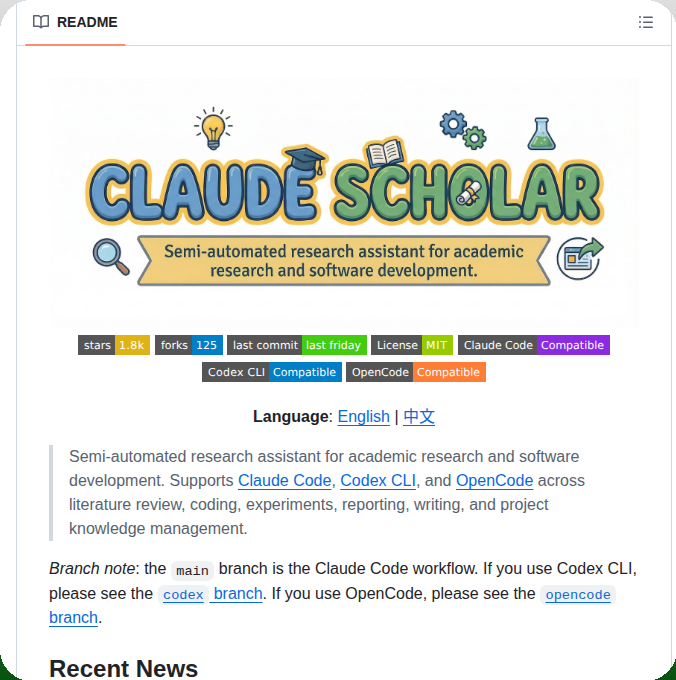
🚨 Professors are going to hate this.
Someone just open sourced an AI that writes research papers from idea to publication. Conference-ready. Citation-verified. Free.
It's called Claude Scholar.
An AI-powered research system that handles every step of the academic workflow. Idea to publication. Fully automated.
No advisor at 2am. No staring at blank LaTeX files. No crying during rebuttal season.
Here's what's inside this thing:
→ AI brainstorms research topics, reviews literature, and finds gaps nobody has explored
→ Runs statistical analysis on your experiments. t-tests, ANOVA, ablation studies. Publication-ready figures.
→ Writes your paper section by section. Abstract to conclusion. Conference-formatted.
→ Verifies every citation through multi-layer validation so AI never hallucinates a reference
→ Strips robotic AI language and adds human voice so reviewers can't tell
→ Self-reviews your draft with a 6-point quality checklist before you submit
→ Parses reviewer comments, classifies each one, and drafts your entire rebuttal
Here's the wildest part:
It supports NeurIPS, ICML, ICLR, ACL, AAAI, Nature, Science, Cell, and PNAS. Downloads the conference template, strips sample content, and gives you a clean LaTeX structure ready to write into.
The creator says it covers 90% of the academic research lifecycle.
Research assistants charge $30 to $60/hour. Conference paper consultants charge $5,000+. Graduate programs cost $50K/year.
This is free. All of it.
100% Open Source.
If you want to learn AI the right way, start here.
No shortcuts. No hype. No fluff.
Top 10 Stanford's Courses on AI & ML.
CS221: Artificial Intelligence
CS229: Machine Learning
CS229M: Machine Learning Theory
CS230: Deep Learning
CS234: Reinforcement Learning
CS224N: Natural Language Processing
CS231N: Deep Learning for Computer Vision
CME295: Large Language Models (LLMs)
CS236: Deep Generative Models
CS336: Language Modeling from Scratch
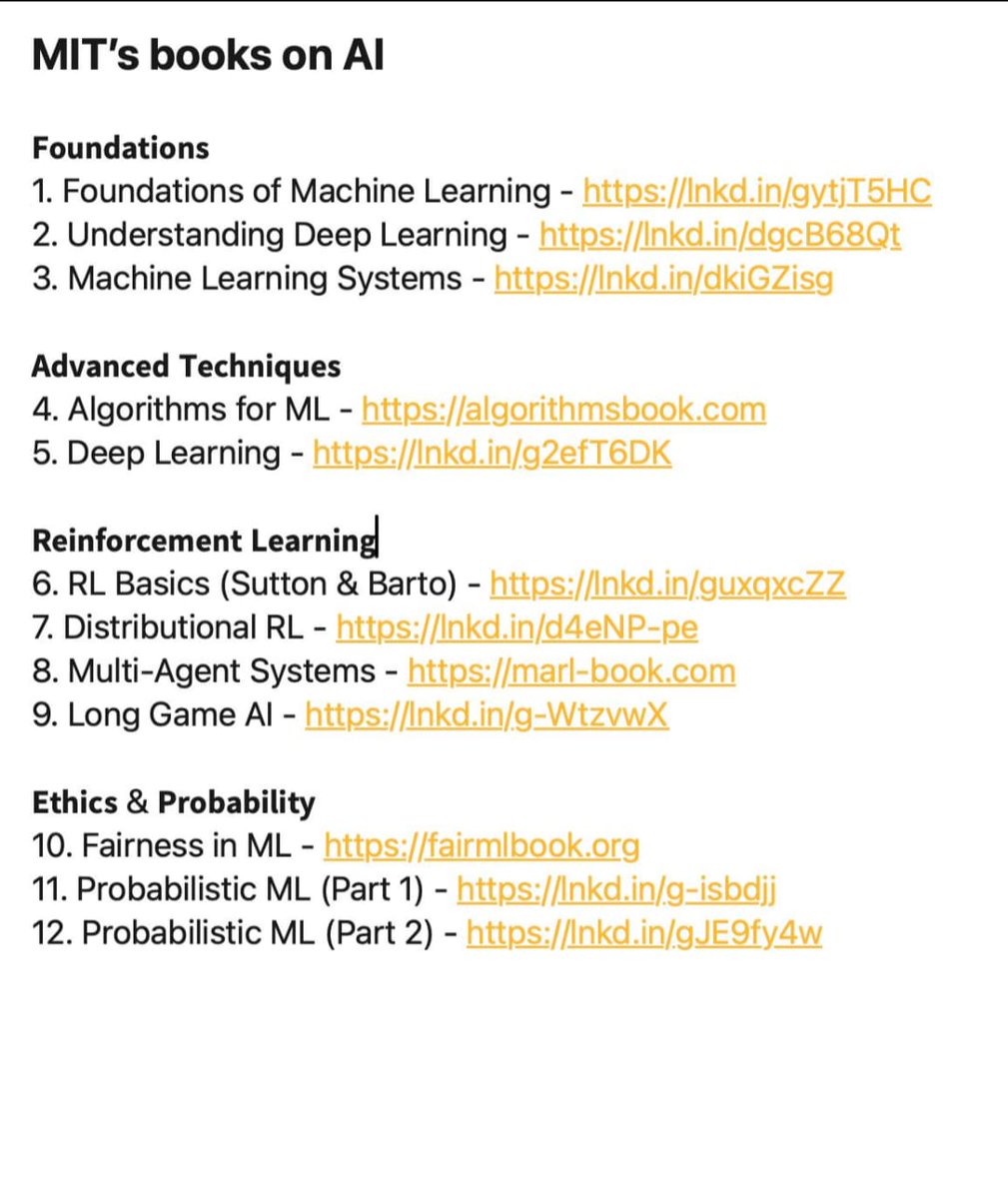
BREAKING: MIT just mass released their Al library for free. (Links included)
I went through these and honestly... this is better than most paid courses I've seen.
Here's the full list of books:
Foundations
1. Foundations of Machine Learning Core algorithms explained. Theory meets practice.
2. Understanding Deep Learning Neural networks demystified. Visual explanations included.
3. Machine Learning Systems Production-ready architecture. System design principles.
Advanced Techniques
4. Algorithms for ML Computational thinking simplified. Decision-making frameworks.
5. Deep Learning The definitive textbook. Covers everything deeply.
Reinforcement Learning
6. RL Basics (Sutton & Barto) The classic. Agent training fundamentals.
7. Distributional RL Beyond expected rewards. Advanced theory.
8. Multi-Agent Systems Agents working together. Coordination and competition.
9. Long Game Al Strategic agent design. Future-focused thinking.
Ethics & Probability
10. Fairness in ML Bias detection. Responsible Al practices.
11. Probabilistic ML (Part 1 & 2)
Links: https://t.co/mAcm6ULC6D
Most people pay thousands for bootcamps that teach half of this.
Bookmark it. Start anywhere. Just start.
Repost for others Follow for more insights on Al Agents.
MIT's books on Al
Foundations
1. Foundations of Machine Learning - https://t.co/UifOgQK4dQ
2. Understanding Deep Learning - https://t.co/cgSSJ1U1d6
3. Machine Learning Systems - https://t.co/wKrA6Pyf45
Advanced Techniques
4. Algorithms for ML - https://t.co/2hjtFqUJUz
5. Deep Learning - https://t.co/SqcIe2c7mL
Reinforcement Learning
6. RL Basics (Sutton & Barto) - https://t.co/96zwuZB4ZB
7. Distributional RL - https://t.co/fZ1PW2UJjs
8. Multi-Agent Systems - https://t.co/uUXuOUseJp
9. Long Game Al - https://t.co/GzFQ8Irunw
Ethics & Probability
10. Fairness in ML - https://t.co/PjE4eHZBSY
11. Probabilistic ML (Part 1) - https://t.co/6v4AgT0Esd
12. Probabilistic ML (Part 2) - https://t.co/WICHaw7WXU
Best YouTube Channels To Learn AI in 2026 (No BS)
1. Fundamentals – 3Blue1Brown
2. Deep Learning – Andrej Karpathy
3. AI Research – Yannic Kilcher
4. Practical AI – AssemblyAI
5. LLMs – AI Explained
6. ML Theory – StatQuest
7. Papers Simplified – Two Minute Papers
8. GenAI – Matthew Berman
9. AI Agents – Nicholas Renotte
10. Applied ML – Krish Naik
11. PyTorch – Aladdin Persson
12. Math for ML – Serrano Academy
13. Industry Insights – Lex Fridman
14. Real-world AI – DeepLearningAI
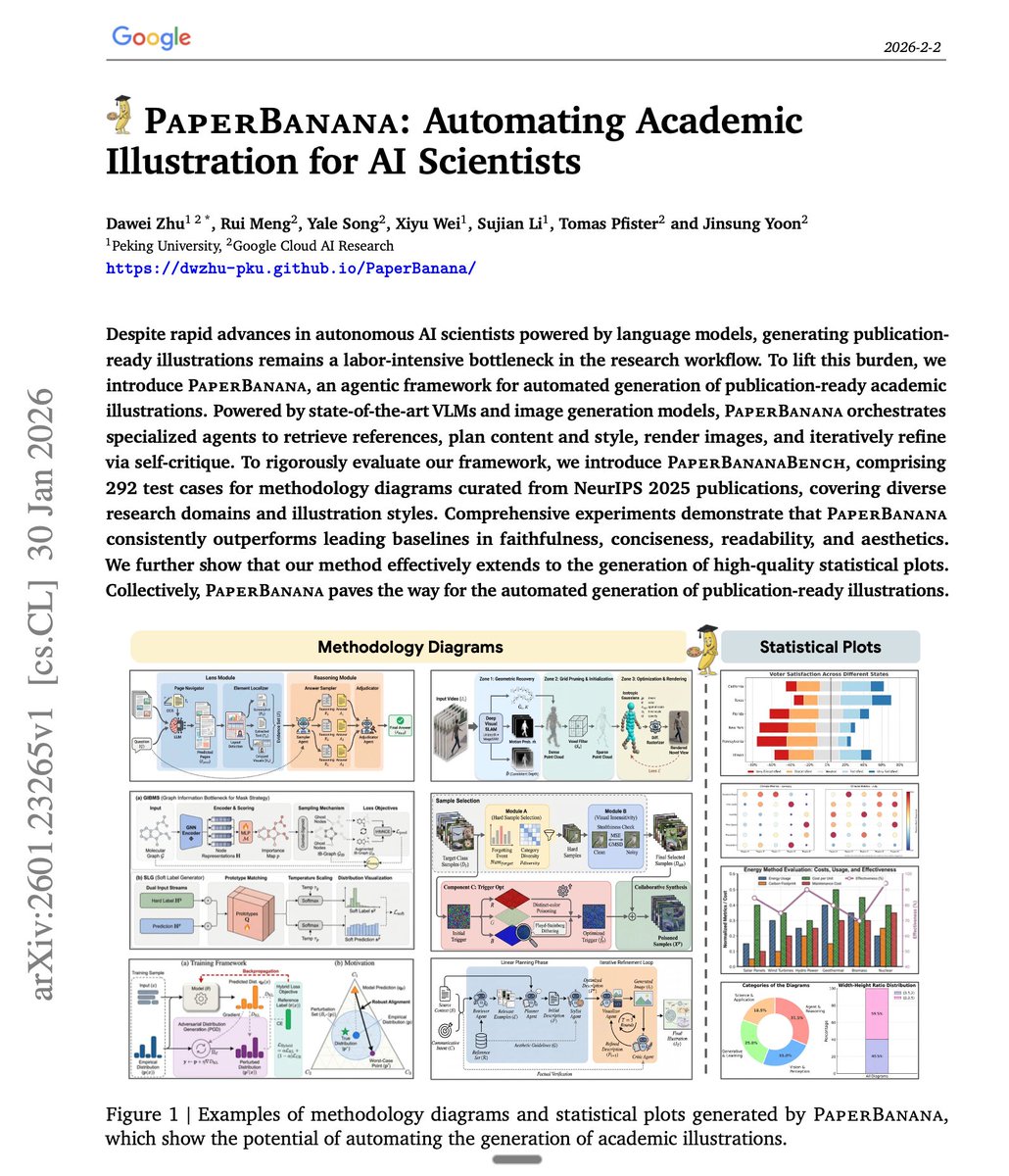
Google dropped another banger!
PaperBanana is an agentic framework that generates publication-ready academic illustrations from methodology descriptions.
no manual design, no Figma, just your method section and a caption.
RAG is broken and nobody's talking about it 🤯
Stanford just dropped a paper on "Semantic Collapse," proving that once your knowledge base hits ~10,000 documents, semantic search becomes a literal coin flip.
Here is why your RAG is failing:
Past 10,000 documents, your fancy AI search basically becomes a coin flip.
Every document you add gets turned into a high-dimensional embedding. At a small scale, similar docs cluster together perfectly. But add enough data, and the space fills up. Distances compress. Everything looks "relevant."
It’s the curse of dimensionality. In 1000D space, 99.9% of your data lives on the outer shell, almost equidistant from any query.
Stanford found an 87% precision drop at 50k docs. Adding more context actually makes hallucinations worse, not better. We thought RAG solved hallucinations… it just hid them behind math.
The fix isn’t re-ranking or better chunking. It’s hierarchical retrieval and graph databases.














![techNmak's tweet photo. Sebastian Raschka is one of the most respected researchers in ML/AI education. Period.
And now he's done something quietly brilliant.
He built an LLM Architecture Gallery - a single, browsable reference that maps out the internal architecture of every major open-weight model released in the last few years.
This is a serious research artifact, made free for everyone.
Here's what's inside:
🔹 GPT-2 XL (1.5B)
🔹 Llama 3 (8B)
🔹 OLMo 2 (7B)
🔹 Llama 3.2 (1B)
🔹 Qwen3 (4B, 8B, 32B)
🔹 DeepSeek V3/R1 (671B)
🔹 Kimi K2 (1 Trillion)
🔹 Gemma 3 (4B, 27B, 270M)
🔹 Mistral 3.1 Small (24B) & Mistral Large (673B)
🔹 Llama 4 Maverick (400B)
🔹 Qwen3 235B-A22B & Qwen3 Coder Flash
🔹 SmolLM (1B)
🔹 GPT-OSS (20B, 120B)
🔹 Grok 2.5 (270B)
🔹 GLM-4.5 (355B), GLM-5 (744B), GLM-4.7 (355B)
🔹 MiniMax-M2 (230B) & MiniMax-M2.5
🔹 Kimi Linear (48B-A3B)
🔹 OlMo 3 (7B) & OlMo 3 (32B)
🔹 Nemotron 3 Nano (20B-A3B) & Nemotron 3 Super
🔹 Xiaomi MiMo-V2-Flash (309B)
🔹 Arcee AI Trinity Large (400B)
🔹 Tiny Aya (3.35B)
🔹 Step 3.5 Flash (196B)
🔹 Nanbeige (4.1, 3B)
🔹 Qwen3.5 (997B)
🔹 Ling 2.5 (1T)
🔹 Sarvam (30B, 105B)
And for each model, he links:
→ The original tech report
→ The config[.]json (so you can verify every number yourself)
→ From-scratch implementations where available
But here's what makes it truly special.
He also added short concept explainers, so you're not just staring at boxes and arrows:
→ GQA (Grouped Query Attention)
→ MLA (Multi-head Latent Attention)
→ SWA (Sliding Window Attention)
→ QK-Norm
→ NoPE (No Positional Encoding)
→ Gated DeltaNet
This is the kind of resource that used to require buying 3 textbooks, reading 40 papers, and spending a weekend.
Now it's one link.
If you're studying LLMs, building on top of them, or just trying to understand how the field has evolved, this is a must-bookmark.](https://pbs.twimg.com/media/HEf5pCwasAEePjj.jpg)