How does end-to-end encryption work?
End-to-end encryption (E2EE) protects your messages and files from being accessed and manipulated by other people other than those you send them to.
𝗛𝗼𝘄 𝗶𝘁 𝘄𝗼𝗿𝗸𝘀:
𝟭) 𝗞𝗲𝘆𝘀 𝗴𝗲𝗻𝗲𝗿𝗮𝘁𝗲𝗱
In each app, every account has two keys: one is public and can be shared with anyone; the other should be kept secret. Although these keys are mathematically related, it's impossible to determine someone's private key from their public key.
𝟮) 𝗣𝘂𝗯𝗹𝗶𝗰 𝗸𝗲𝘆 𝗲𝘅𝗰𝗵𝗮𝗻𝗴𝗲
When two people begin a conversation, they exchange their public keys. Since public keys don't have to be kept secret, this can occur through any type of communication channel.
𝟯) 𝗘𝗻𝗰𝗿𝘆𝗽𝘁𝗶𝗼𝗻
When a user wants to send a message, it is protected using symmetric and asymmetric encryption. In asymmetric encryption, the public key is used for encryption, and the private key for decryption. Whereas symmetric encryption uses a single session key for both. In E2EE, the sender generates a unique session key and encrypts the data with it. Then, they encrypt the session key itself with the recipient's public key.
𝟰) 𝗗𝗮𝘁𝗮 𝘁𝗿𝗮𝗻𝘀𝗺𝗶𝘀𝘀𝗶𝗼𝗻
The encrypted message and session key are then sent over the internet. The encryption makes sure that only the sender and receiver can read the data, even if someone intercepts it during transmission.
𝟱) 𝗗𝗲𝗰𝗿𝘆𝗽𝘁𝗶𝗼𝗻
When an encrypted message is received, the receiver uses their private key to unlock the session key; which they then use to decrypt the message.
End-to-end encryption is only as powerful as the cryptographic algorithms used, and how well they are implemented. When done right, E2EE boosts the security of digital communications, protecting them from eavesdropping and tampering.
𝗥𝗮𝗯𝗯𝗶𝘁𝗠𝗤 vs 𝗞𝗮𝗳𝗸𝗮 vs 𝗔𝗰𝘁𝗶𝘃𝗲𝗠𝗤
Let's briefly look at how each of these stands out:
1️⃣ 𝗥𝗮𝗯𝗯𝗶𝘁𝗠𝗤
• 𝗟𝗮𝗻𝗴𝘂𝗮𝗴𝗲: Built on Erlang
• 𝗣𝗿𝗼𝘁𝗼𝗰𝗼𝗹𝘀: Supports a multitude of protocols, including AMQP, MQTT, and STOMP.
• 𝗘𝗮𝘀𝗲 𝗼𝗳 𝗨𝘀𝗲: Known for being developer-friendly.
• 𝗨𝘀𝗲-𝗰𝗮𝘀𝗲: Excellent for complex routing to multiple consumers.
2️⃣ 𝗞𝗮𝗳𝗸𝗮
• 𝗟𝗮𝗻𝗴𝘂𝗮𝗴𝗲: Built on Scala and Java
• 𝗣𝗿𝗼𝘁𝗼𝗰𝗼𝗹𝘀: Proprietary Kafka Protocol over TCP
• 𝗦𝗰𝗮𝗹𝗮𝗯𝗶𝗹𝗶𝘁𝘆: Highly scalable with the ability to handle huge volumes of data.
• 𝗨𝘀𝗲-𝗰𝗮𝘀𝗲: Perfect for real-time analytics and monitoring, data lakes, aggregating data from different sources.
3️⃣ 𝗔𝗰𝘁𝗶𝘃𝗲𝗠𝗤
• 𝗟𝗮𝗻𝗴𝘂𝗮𝗴𝗲: Built on Java
• 𝗣𝗿𝗼𝘁𝗼𝗰𝗼𝗹𝘀: Supports various protocols like AMQP, STOMP, MQTT, and more.
• 𝗙𝗹𝗲𝘅𝗶𝗯𝗶𝗹𝗶𝘁𝘆: Provides a lot of features and can be used in multiple configurations.
• 𝗨𝘀𝗲-𝗰𝗮𝘀𝗲: Often used in enterprise systems and excels in scenarios that require complex routing and transformations.
Credit: Brij kishore Pandey
SOLID principle is one of the most important design principles in OOP languages like Java, Python, C#, etc.
Sadly, most of the programmers find it super difficult to understand.
Here's the simplest guide to understand SOLID principles:
Parallelism, Concurrency, and AsyncIO in Python - by example
https://t.co/1vUrkMMz6a
Looks at how to speed up CPU-bound and IO-bound operations with multiprocessing, threading, and AsyncIO and when you should use each.
by @amal_ytics#Python
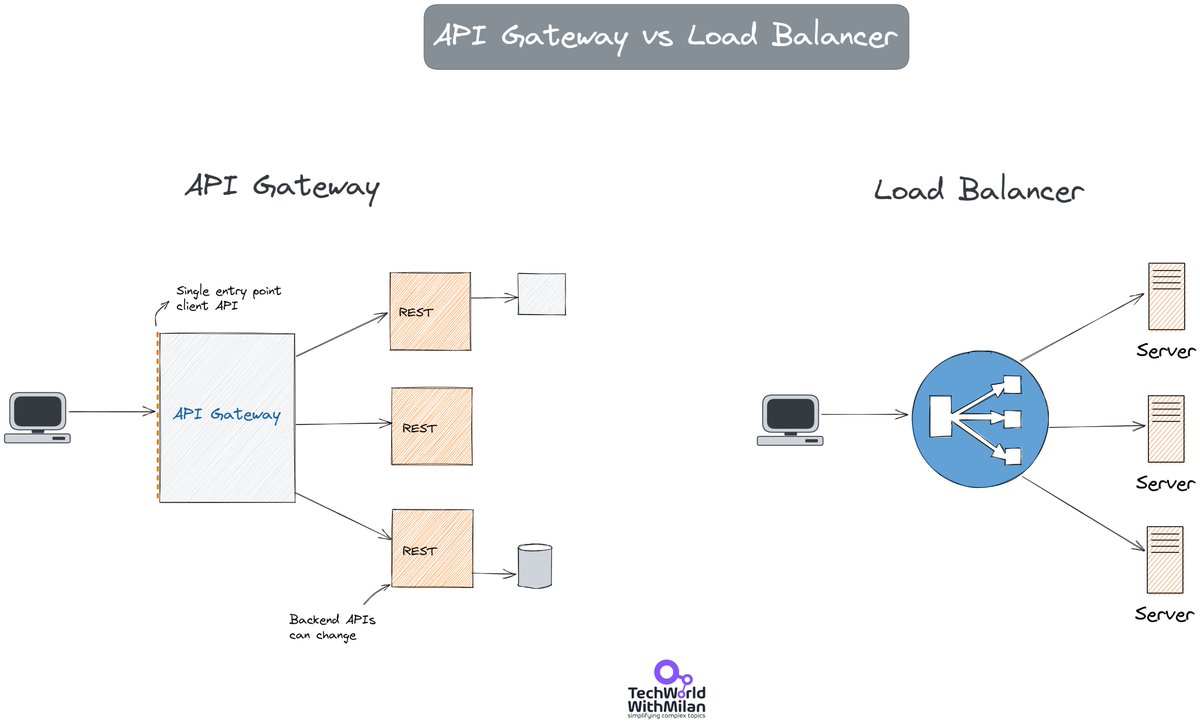
𝗔𝗣𝗜 𝗚𝗮𝘁𝗲𝘄𝗮𝘆 𝘃𝘀 𝗟𝗼𝗮𝗱 𝗕𝗮𝗹𝗮𝗻𝗰𝗲𝗿
Regarding a system design, we often need clarification about the roles of a Load Balancer and an API Gateway. Most of our resources are about their implementation rather than real-life use cases.
🔹 𝗔𝗣𝗜 𝗚𝗮𝘁𝗲𝘄𝗮𝘆 sits between a client and a group of backend services. It performs the function of a reverse proxy by accepting all application programming interface (API) calls, aggregating the different services needed to fulfill them, and returning the right outcome. 𝗨𝘀𝗲𝗿 𝗮𝘂𝘁𝗵𝗲𝗻𝘁𝗶𝗰𝗮𝘁𝗶𝗼𝗻, 𝗿𝗮𝘁𝗲 𝗹𝗶𝗺𝗶𝘁𝘀, 𝗮𝗻𝗱 𝘀𝘁𝗮𝘁𝗶𝘀𝘁𝗶𝗰𝘀 are typical duties that API gateways take care of on behalf of a system of API services. Also, the API gateway can handle faults (circuit breaker) but also do logging and monitoring.
🔹 𝗟𝗼𝗮𝗱 𝗕𝗮𝗹𝗮𝗻𝗰𝗲𝗿 is a service that distributes incoming traffic across many servers or resources. Usually, we have two or more web servers on the backend, and it 𝗱𝗶𝘀𝘁𝗿𝗶𝗯𝘂𝘁𝗲𝘀 𝗻𝗲𝘁𝘄𝗼𝗿𝗸 𝘁𝗿𝗮𝗳𝗳𝗶𝗰 𝗯𝗲𝘁𝘄𝗲𝗲𝗻 𝘁𝗵𝗲𝗺. Its primary purpose is to use resources optimally. As a result of an equal task allocation and the system's increased capacity, this can enhance the system's responsiveness and reliability. There are three load balancers at a high level: hardware-based, cloud-based, and software-based.
So, the main thing that differs these two is that an 𝗔𝗣𝗜 𝗚𝗮𝘁𝗲𝘄𝗮𝘆 𝗶𝘀 𝗳𝗼𝗰𝘂𝘀𝗲𝗱 𝗼𝗻 𝗿𝗼𝘂𝘁𝗶𝗻𝗴 𝗿𝗲𝗾𝘂𝗲𝘀𝘁𝘀 to the appropriate service and it handles requests for APIs, while a 𝗟𝗼𝗮𝗱 𝗯𝗮𝗹𝗮𝗻𝗰𝗲𝗿 𝗶𝘀 𝗳𝗼𝗰𝘂𝘀𝗲𝗱 𝗼𝗻 𝗱𝗶𝘀𝘁𝗿𝗶𝗯𝘂𝘁𝗶𝗻𝗴 𝗿𝗲𝗾𝘂𝗲𝘀𝘁𝘀 𝗲𝘃𝗲𝗻𝗹𝘆 between a group of servers and handles requests that are sent to a single IP address, which works at protocol or socket level (TCP, HTTP).
Some 𝗲𝘅𝗮𝗺𝗽𝗹𝗲𝘀 of API Gateways are Amazon API Gateway, Ocelot (.NET-based), Tyk, or Apache APISIX, while Load Balancers are Azure Load Balancer, HAProxy, or Seesaw.
_______
If you like my posts, please follow me, @milan_milanovic, and hit the 🔔 on my profile to get a notification for all my new posts.
Grow with me 🚀!
#technology #softwareengineering #cloudcomputing #techworldwithmilan #api
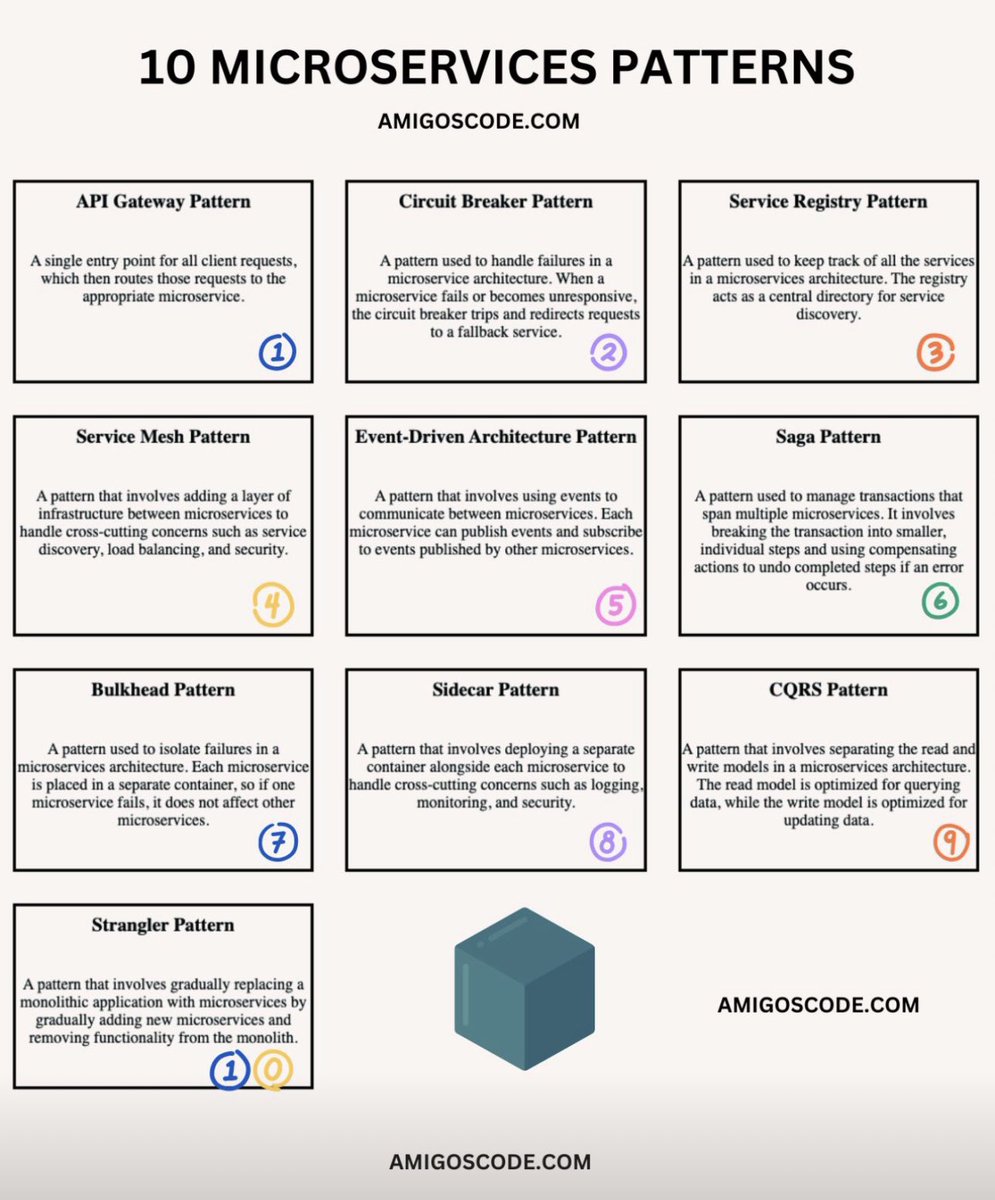
📚10 Microservices Patterns 📚
1. 🔍 Service Registry: This pattern involves managing the locations of services in a distributed system. It maintains a list of all available services and their locations, which can be queried by other services to find and communicate with them.
2. ⚡️ Circuit Breaker: This pattern is used to prevent cascading failures in a distributed system. It monitors the availability of a service and, if it detects a failure, it can quickly isolate the problematic service and prevent other services from being affected.
3. 🚪 API Gateway: This pattern provides a single entry point to a microservices-based system. It acts as a reverse proxy and routes incoming requests to the appropriate microservice. It can also perform authentication, rate limiting, and other security-related tasks.
4. 📝 Event Sourcing: This pattern involves capturing all changes to the state of a system as a series of events. These events can be used to reconstruct the current state of the system at any point in time. This pattern is useful for systems with complex business logic that require auditability, traceability, or compliance.
5. 🎭 Saga: This pattern is used to manage long-running transactions that involve multiple microservices. It ensures that all services involved in a transaction are completed successfully or rolled back in case of failures.
6. 📚 CQRS: This pattern separates the read and writes operations of a system. It uses separate models for reads and writes, which allows for the optimization and scalability of each. This pattern is particularly useful for systems with high read-and-write workloads.
7. 💾 Database per Service: This pattern involves using a separate database for each microservice. This ensures that each microservice has its own data store, which can be optimized for its specific needs. It also helps to prevent coupling between services.
8. 🕺 Saga Choreography: This pattern is similar to the Saga pattern, but instead of having a central orchestrator, each microservice involved in the transaction communicates directly with other services to coordinate the transaction.
9. 🕸️ Service Mesh: This pattern provides a dedicated infrastructure layer for managing communication between microservices. It adds features such as load balancing, service discovery, and security to the network layer, which can be used by any microservice in the system.
10. 🧳 Sidecar: This pattern involves deploying a separate process alongside a microservice, which handles certain tasks such as service discovery, load balancing, or communication with other services. This allows the microservice to focus on its core functionality, while the sidecar handles cross-cutting concerns.
👨💻 Join Amigoscode today for premium programming courses - https://t.co/Y65dNK5bQ6
ps: credits to the respective owner(s).
#programming #coding #webdevelopment #python #javascript #microservices #java #learntocode #beginnerprogramming #techindustry #opensource #developers
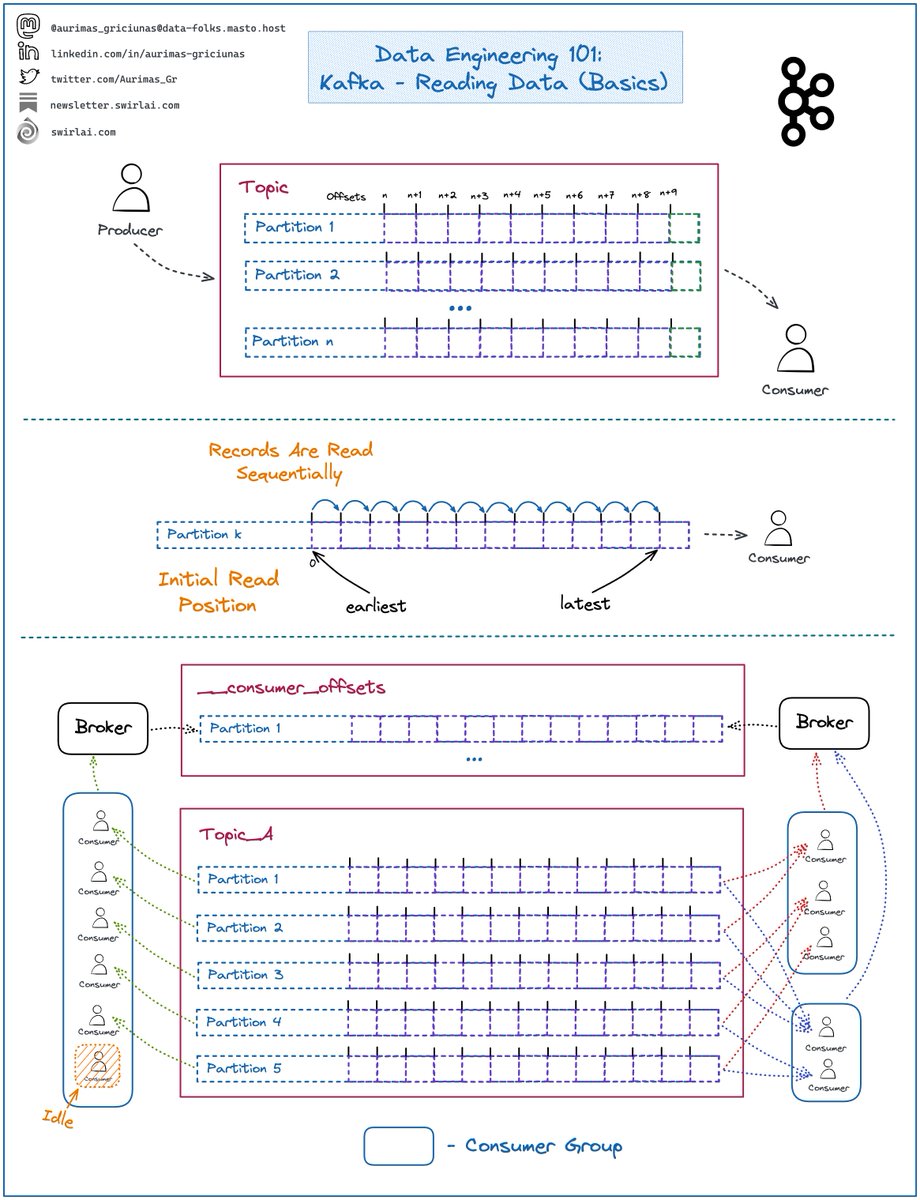
Some thoughts on 𝗥𝗲𝗮𝗱𝗶𝗻𝗴 𝗗𝗮𝘁𝗮 from 𝗞𝗮𝗳𝗸𝗮.
Kafka is an extremely important 𝗗𝗶𝘀𝘁𝗿𝗶𝗯𝘂𝘁𝗲𝗱 𝗠𝗲𝘀𝘀𝗮𝗴𝗶𝗻𝗴 𝗦𝘆𝘀𝘁𝗲𝗺 to understand, last time we covered Writing Data.
𝗦𝗼𝗺𝗲 𝗿𝗲𝗳𝗿𝗲𝘀𝗵𝗲𝗿𝘀:
➡️ Clients writing to Kafka are called 𝗣𝗿𝗼𝗱𝘂𝗰𝗲𝗿𝘀.
➡️ Clients reading the Data are called 𝗖𝗼𝗻𝘀𝘂𝗺𝗲𝗿𝘀.
➡️ Data is written into 𝗧𝗼𝗽𝗶𝗰𝘀 that can be compared to tables in Databases.
➡️ Messages sent to 𝗧𝗼𝗽𝗶𝗰𝘀 are called 𝗥𝗲𝗰𝗼𝗿𝗱𝘀.
➡️ 𝗧𝗼𝗽𝗶𝗰𝘀 are composed of 𝗣𝗮𝗿𝘁𝗶𝘁𝗶𝗼𝗻𝘀.
➡️ Each 𝗣𝗮𝗿𝘁𝗶𝘁𝗶𝗼𝗻 is a combination of and behaves as a write ahead log.
➡️ Data is written to the end of the 𝗣𝗮𝗿𝘁𝗶𝘁𝗶𝗼𝗻.
➡️ Each 𝗥𝗲𝗰𝗼𝗿𝗱 has an 𝗢𝗳𝗳𝘀𝗲𝘁 assigned to it which denotes its order in the 𝗣𝗮𝗿𝘁𝗶𝘁𝗶𝗼𝗻.
➡️ 𝗢𝗳𝗳𝘀𝗲𝘁𝘀 start at 0 and increment by 1 sequentially.
𝗥𝗲𝗮𝗱𝗶𝗻𝗴 𝗗𝗮𝘁𝗮:
➡️ Data is read sequentially per partition.
➡️ 𝗜𝗻𝗶𝘁𝗶𝗮𝗹 𝗥𝗲𝗮𝗱 𝗣𝗼𝘀𝗶𝘁𝗶𝗼𝗻 can be set either to earliest or latest.
➡️ Earliest position initiates the consumer at offset 0 or the earliest available due to retention rules of the 𝗧𝗼𝗽𝗶𝗰 (more about this in later episodes).
➡️ Latest position initiates the consumer at the end of a 𝗣𝗮𝗿𝘁𝗶𝘁𝗶𝗼𝗻 - no 𝗥𝗲𝗰𝗼𝗿𝗱𝘀 will be read initially and the 𝗖𝗼𝗻𝘀𝘂𝗺𝗲𝗿 will wait for new data to be written.
➡️ You could codify your consumers independently, but almost always the preferred way is to use 𝗖𝗼𝗻𝘀𝘂𝗺𝗲𝗿 𝗚𝗿𝗼𝘂𝗽𝘀.
𝗖𝗼𝗻𝘀𝘂𝗺𝗲𝗿 𝗚𝗿𝗼𝘂𝗽𝘀:
➡️ 𝗖𝗼𝗻𝘀𝘂𝗺𝗲𝗿 𝗚𝗿𝗼𝘂𝗽 is a logical collection of clients that read a 𝗞𝗮𝗳𝗸𝗮 𝗧𝗼𝗽𝗶𝗰 and share the state.
➡️ Groups of consumers are identified by the 𝗴𝗿𝗼𝘂𝗽_𝗶𝗱 parameter.
➡️ 𝗦𝘁𝗮𝘁𝗲 is defined by the offsets that every 𝗣𝗮𝗿𝘁𝗶𝘁𝗶𝗼𝗻 𝗶𝗻 𝘁𝗵𝗲 𝗧𝗼𝗽𝗶𝗰 is being consumed at.
➡️ 𝗦𝘁𝗮𝘁𝗲 of 𝗖𝗼𝗻𝘀𝘂𝗺𝗲𝗿 𝗚𝗿𝗼𝘂𝗽𝘀 is written by the 𝗕𝗿𝗼𝗸𝗲𝗿 (more about this in later episodes) to an internal 𝗞𝗮𝗳𝗸𝗮 𝗧𝗼𝗽𝗶𝗰 named __𝗰𝗼𝗻𝘀𝘂𝗺𝗲𝗿_𝗼𝗳𝗳𝘀𝗲𝘁𝘀.
➡️ There can be multiple 𝗖𝗼𝗻𝘀𝘂𝗺𝗲𝗿 𝗚𝗿𝗼𝘂𝗽𝘀 reading the same 𝗞𝗮𝗳𝗸𝗮 𝗧𝗼𝗽𝗶𝗰 having their own independent 𝗦𝘁𝗮𝘁𝗲𝘀.
➡️ Only one 𝗖𝗼𝗻𝘀𝘂𝗺𝗲𝗿 per 𝗖𝗼𝗻𝘀𝘂𝗺𝗲𝗿 𝗚𝗿𝗼𝘂𝗽 can be reading a 𝗣𝗮𝗿𝘁𝗶𝘁𝗶𝗼𝗻 at a single point in time.
𝗖𝗼𝗻𝘀𝘂𝗺𝗲𝗿 𝗚𝗿𝗼𝘂𝗽 𝗧𝗶𝗽𝘀:
❗️ If you have a prime number of 𝗣𝗮𝗿𝘁𝗶𝘁𝗶𝗼𝗻𝘀 in the 𝗧𝗼𝗽𝗶𝗰 - you will always have at least one 𝗖𝗼𝗻𝘀𝘂𝗺𝗲𝗿 per 𝗖𝗼𝗻𝘀𝘂𝗺𝗲𝗿 𝗚𝗿𝗼𝘂𝗽 consuming less 𝗣𝗮𝗿𝘁𝗶𝘁𝗶𝗼𝗻𝘀 than others unless number of 𝗖𝗼𝗻𝘀𝘂𝗺𝗲𝗿𝘀 equals number of 𝗣𝗮𝗿𝘁𝗶𝘁𝗶𝗼𝗻𝘀.
✅ If you want an odd number of 𝗣𝗮𝗿𝘁𝗶𝘁𝗶𝗼𝗻𝘀 - set it to a 𝗺𝘂𝗹𝘁𝗶𝗽𝗹𝗲 𝗼𝗳 𝗣𝗿𝗶𝗺𝗲 𝗡𝘂𝗺𝗯𝗲𝗿.
❗️ If you have more 𝗖𝗼𝗻𝘀𝘂𝗺𝗲𝗿𝘀 in the 𝗖𝗼𝗻𝘀𝘂𝗺𝗲𝗿 𝗚𝗿𝗼𝘂𝗽 then there are 𝗣𝗮𝗿𝘁𝗶𝘁𝗶𝗼𝗻𝘀 in the 𝗧𝗼𝗽𝗶𝗰 - some of the 𝗖𝗼𝗻𝘀𝘂𝗺𝗲𝗿𝘀 will be 𝗜𝗱𝗹𝗲.
✅ Make your 𝗧𝗼𝗽𝗶𝗰𝘀 large enough or have less 𝗖𝗼𝗻𝘀𝘂𝗺𝗲𝗿𝘀 per 𝗖𝗼𝗻𝘀𝘂𝗺𝗲𝗿 𝗚𝗿𝗼𝘂𝗽.
--------
Follow me to upskill in #MLOps, #MachineLearning, #DataEngineering, #DataScience and overall #Data space.
Also hit 🔔to stay notified about new content.
𝗗𝗼𝗻’𝘁 𝗳𝗼𝗿𝗴𝗲𝘁 𝘁𝗼 𝗹𝗶𝗸𝗲 💙, 𝘀𝗵𝗮𝗿𝗲 𝗮𝗻𝗱 𝗰𝗼𝗺𝗺𝗲𝗻𝘁!
Join a growing community of Data Professionals by subscribing to my 𝗡𝗲𝘄𝘀𝗹𝗲𝘁𝘁𝗲𝗿.
What are the most common 𝗨𝘀𝗲 𝗖𝗮𝘀𝗲𝘀 𝗳𝗼𝗿 𝗞𝗮𝗳𝗸𝗮?
We have covered lots of concepts around Kafka already. But what are the most common use cases for The System that you are very likely to run into as a Data Engineer?
𝗟𝗲𝘁’𝘀 𝘁𝗮𝗸𝗲 𝗮 𝗰𝗹𝗼𝘀𝗲𝗿 𝗹𝗼𝗼𝗸:
𝗪𝗲𝗯𝘀𝗶𝘁𝗲 𝗔𝗰𝘁𝗶𝘃𝗶𝘁𝘆 𝗧𝗿𝗮𝗰𝗸𝗶𝗻𝗴.
➡️ The Original use case for Kafka by LinkedIn.
➡️ Events happening in the website like page views, conversions etc. are sent via a Gateway and piped to Kafka Topics.
➡️ These events are forwarded to the downstream Analytical systems or processed in Real Time.
➡️ Kafka is used as an initial buffer as the Data amounts are usually big and Kafka guarantees no message loss due to its replication mechanisms.
𝗗𝗮𝘁𝗮𝗯𝗮𝘀𝗲 𝗥𝗲𝗽𝗹𝗶𝗰𝗮𝘁𝗶𝗼𝗻.
➡️ Database Commit log is piped to a Kafka topic.
➡️ The committed messages are executed against a new Database in the same order.
➡️ Database replica is created.
𝗟𝗼𝗴/𝗠𝗲𝘁𝗿𝗶𝗰𝘀 𝗔𝗴𝗴𝗿𝗲𝗴𝗮𝘁𝗶𝗼𝗻.
➡️ Kafka is used for centralized Log and Metrics collection.
➡️ Daemons like FluentD are deployed in servers or containers together with the Applications to be monitored.
➡️ Applications send their Logs/Metrics to the Daemons.
➡️ The Daemons pipe Logs/Metrics to a Kafka Topic.
➡️ Logs/Metrics are delivered downstream to storages like ElasticSearch or InfluxDB for Log/Metrics discovery respectively.
➡️ This is also how you would track your IoT Fleets.
𝗦𝘁𝗿𝗲𝗮𝗺 𝗣𝗿𝗼𝗰𝗲𝘀𝘀𝗶𝗻𝗴.
➡️ This is usually coupled with ingestion mechanisms already covered.
➡️ Instead of piping Data to a certain storage downstream we mount a Stream Processing Framework on top of Kafka Topics.
➡️ The Data is filtered, enriched and then piped to the downstream systems to be further used according to the use case.
➡️ This is also where one would be running Machine Learning Models embedded into a Stream Processing Application.
𝗠𝗲𝘀𝘀𝗮𝗴𝗶𝗻𝗴.
➡️ Kafka can be used as a replacement for more traditional messaging brokers like RabbitMQ.
➡️ Kafka has better durability guarantees and is easier to configure for several separate Consumer Groups to consume from the same Topic.
❗️Having said this - always consider the complexity you are bringing with introduction of a Distributed System. Sometimes it is better to just use traditional frameworks.
--------
Follow me to upskill in #MLOps, #MachineLearning, #DataEngineering, #DataScience and overall #Data space.
Also hit 🔔to stay notified about new content.
𝗗𝗼𝗻’𝘁 𝗳𝗼𝗿𝗴𝗲𝘁 𝘁𝗼 𝗹𝗶𝗸𝗲 👍, 𝘀𝗵𝗮𝗿𝗲 𝗮𝗻𝗱 𝗰𝗼𝗺𝗺𝗲𝗻𝘁!
Join a growing community of Data Professionals by subscribing to my 𝗡𝗲𝘄𝘀𝗹𝗲𝘁𝘁𝗲𝗿.