Designing robotic, sensing, and health technology using inspirations from nature's functional materials. Side-quester. #ActuallyAutistic#AuDHD#EDrecovery
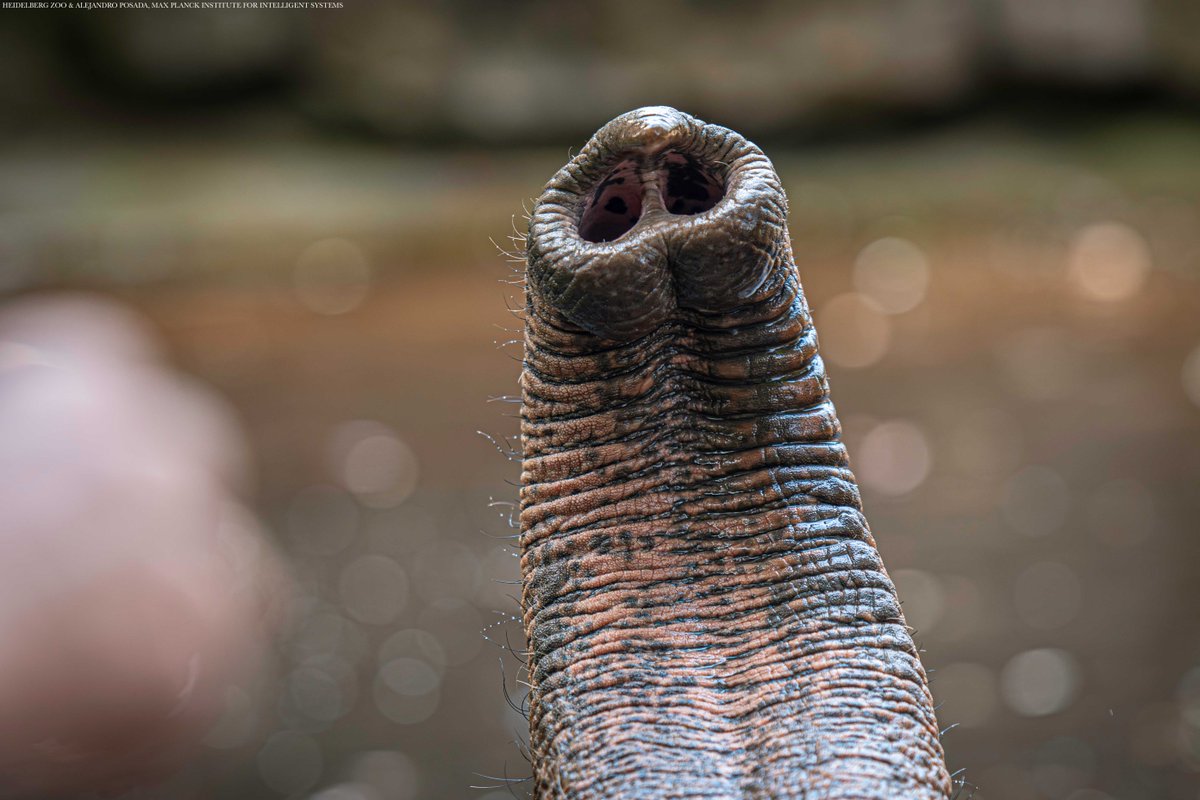
Hello world. One of my favorite fun facts to share about elephants…their trunks are covered in whiskers, with built-in intelligence! If that got your attention…check out our new paper in @ScienceMagazine https://t.co/2kxZQdzisQ
Got sick of Deutsche Bahn delays, so I built DelayBahn.
It uses historical train delay data to answer the questions that matter:
- How late is this train usually?
- Is there a more reliable alternative?
- Is that 7-min transfer actually realistic?
https://t.co/pTcGB3L5eI
An international team led by researchers at HU and @SKCM2_HU has found a way to detect early signs of skin aging, revealing that collagen’s hidden internal structure begins to unravel before the fibers themselves break apart.
https://t.co/8DHlwQgI1k
https://t.co/WrCn5WWGri
Our new paper is now out in Nature Communications🚀 The project has run for over 5 years, but now it's fruited.
https://t.co/amd6zMcpdg
We developed "ultralight soft electrostatic actuators" by introducing gaseous dielectrics as a third phase to solid-liquid-based actuators.
🫥If you are tired of flat, template-based illustrations (like BioRender), at our studio we design custom #icons, #illustrations, and #visual_elements to help you move beyond generic visuals and develop a recognizable style that adds individuality and character to your work and make your #presentations, grant #applications, and #papers truly stand out and spark attention!
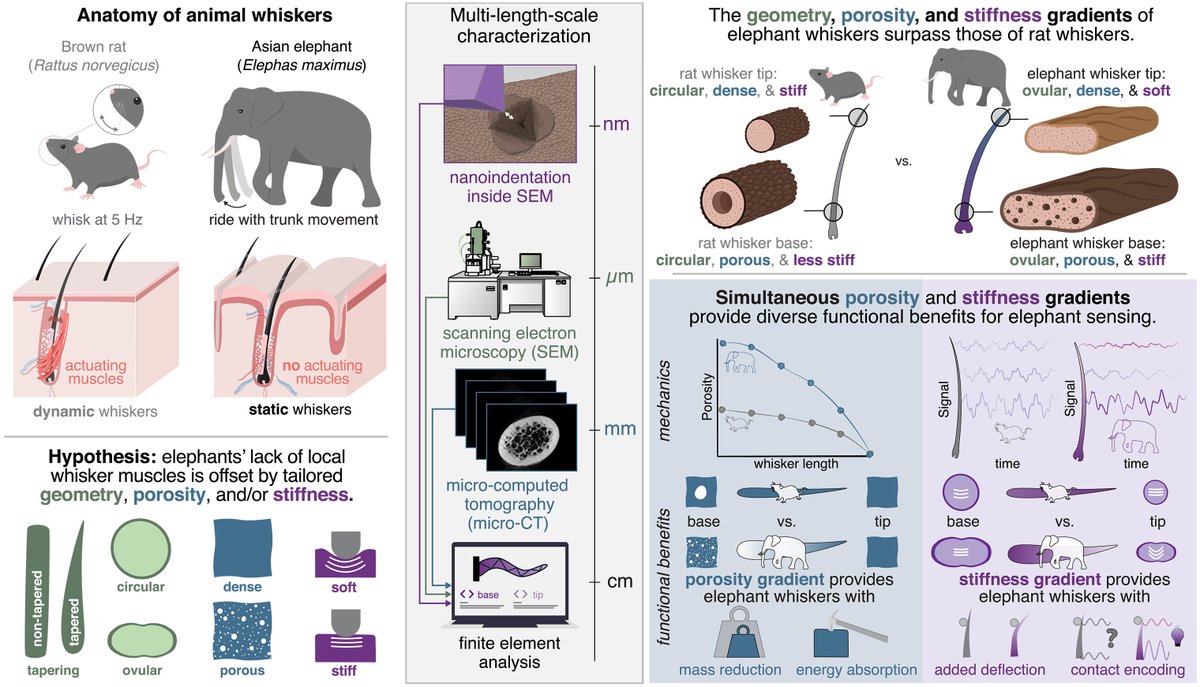
⭐ For this elephant-whisker project🐘 by @SchulzScience_ from @MPI_IS, we developed this graphical abstract and custom icons used throughout the paper. We were very careful to ensure that everything was scientifically precise and stylistically refined. For example, no proper illustration of whisker structure previously existed, so we conducted our own research to understand it thoroughly and create an accurate representation from scratch. 🐱 🐭 🐘
🤔 Sometimes, scientists hesitate to delegate visualizations to artists because they worry about receiving images that do not align with their vision. We understand that, as a researcher, you know your field and your subject matter best. That is why we listen carefully and immerse ourselves deeply in your topic (we actually read the papers before we start!). You can delegate the time-consuming process of drawing to us and free up your valuable time to focus on doing science ☺️
Check out this great paper published in @ScienceMagazine: https://t.co/WuzuZOSonT
An elephant’s trunk looks rugged, but it is also one of the most sensitive touch organs in the animal kingdom.
New research in Science reveals that this sensitivity is partly powered by whiskers whose material structure changes from base to tip. https://t.co/RpaFKx6NbX
An elephant’s trunk looks rugged, but it is also one of the most sensitive touch organs in the animal kingdom.
New research in Science reveals that this sensitivity is partly powered by whiskers whose material structure changes from base to tip. https://t.co/RpaFKx6NbX
Big news: @Meshcapade is now part of Epic Games. This is a perfect match for our technology and team and I am super excited about what we will build together.
I want to thank our many supporters who have provided funding and/or advice on our journey from 2018 to today, including @MP_Innovation, @maxplanckpress, @MPI_IS, @PerceivingSys, @matrixvc, @dcstalder, @dianaberlin, @HV_Capital, Zuzanna Czapinska, LBBW VC, @GoodwaterCap, CLO Virtual Fashion (@itsclo3d), @grbradsk, @lucvincent, @JeffDean, @ballmatthew, Andrew Hamel, Bill O’Farrell, Ammar Zakiullah, @Nicolas_Keller, Alex Diehl, @goodwinlaw, YPOG, @NVIDIA Inception Program, @msft4startups, and many more!
Most importantly, I want to thank my co-founders @naureenmahmood and Talha Zaman and the whole @Meshcapade team. There is nothing more rewarding than working with great people who you like and trust to build products that customers love using technology you believe in. Thank you, thank you, thank you. Now, on to the next phase!
https://t.co/fmMYXfSSoK
The hundreds of fine hairs that cover an elephant’s trunk are some of the most sophisticated whiskers in the animal kingdom, according to new research.
These key organs for elephants have been overlooked, but may explain their extraordinary dexterity. https://t.co/sLACJgpeOC
Feinfühliges Tastorgan
Warum Elefanten mit ihrem Rüssel so geschickt sind
=====
Functional gradients facilitate tactile sensing in elephant whiskers
https://t.co/uRSQM6tE0A
=====
Elefanten können mit ihrem Rüssel Erstaunliches leisten. Forschende haben jetzt herausgefunden, wie das geht – und wollen es Robotern beibringen.
In Kürze:
- Forschende haben herausgefunden, dass etwa tausend Tasthaare am Elefantenrüssel dessen erstaunliche Feinmotorik ermöglichen.
- Die Tasthaare haben eine steife Basis und eine gummiartige Spitze, wodurch Elefanten genau spüren können, wo Kontakt stattfindet.
- Die Erkenntnisse sollen genutzt werden, um Robotern mit ähnlichen Sensoren das präzise Fühlen beizubringen.
Der Rüssel von Elefanten ist eine gefährliche Waffe. Ein Schlag mit dem anderthalb Meter langen und etwa 130 Kilogramm schweren Muskelschlauch könnte locker einen Menschen töten. Gleichzeitig vollbringen Elefanten mit ihrem Rüssel feinmotorische Höchstleistungen: einen Tortilla-Chip aufheben zum Beispiel, ohne dass er dabei zerbricht; eine winzige Erdnuss behutsam aus der Hand eines Menschen nehmen oder einen einzelnen Grashalm auszupfen. «Der Elefantenrüssel ist eines der feinfühligsten Tastorgane im Tierreich», sagt Lena Kaufmann, Elefantenforscherin an der Berliner Humboldt-Universität.
Gemeinsam mit ihrem Kollegen Andrew Schulz vom Max-Planck-Institut für Intelligente Systeme in Stuttgart hat sie untersucht, wie die erstaunliche Feinmotorik von Elefanten möglich ist. Die Lösung des Rätsels liege in den etwa tausend Tasthaaren, die den Rüssel von Elefanten bedecken, schreiben die Forschenden in einer Studie, die gerade im Wissenschaftsjournal «Science» erschienen ist. «Die Haare haben ungewöhnliche Materialeigenschaften, die es den Elefanten ermöglichen, genau zu spüren, an welcher Stelle auf dem etwa fünf Zentimeter langen Haar der Kontakt stattfindet», sagt Schulz.
Anders als die Tasthaare von Mäusen und Ratten sind die von Elefanten nicht beweglich. Sie sind auch vollkommen anders aufgebaut, wie die Forschenden durch eine Reihe von Experimenten zeigen konnten. «Sie haben eine steife, plastikartige Basis, werden nach oben hin dünner und enden in einer gummiartigen Spitze», sagt Schulz. Doch wie und was fühlt ein Elefant damit?
Der Elefantenrüssel ist ein Multifunktionswerkzeug:
Um zumindest einen Eindruck davon zu bekommen, baute Schulz mithilfe eines 3D-Druckers ein Elefantentasthaar nach. Seine Chefin und Co-Autorin Katherine Kuchenbecker schlenderte damit dann durch das Institut und berührte Gegenstände mit verschiedenen Teilen des künstlichen Tasthaars. «Ich musste nicht hinschauen, um zu wissen, an welcher Stelle der Kontakt stattfand», sagt sie laut einer Presseerklärung. «Ich konnte es spüren.» Auf ähnliche Art und Weise nähmen Elefanten mithilfe ihrer Tasthaare wahr, wie nah oder weit weg ihr Rüssel von einem Gegenstand sei, sagt Andrew Schulz. Ingenieure sprechen von «verkörperter Intelligenz».
Dass der Elefantenrüssel ein Wunderwerk der Natur ist, war schon vor dieser Entdeckung klar. «Er ist ein Multifunktionswerkzeug», sagt Kaufmann. Die Tiere benutzen das Organ, das rein anatomisch eine Verwachsung der Nase mit der Oberlippe ist, zum Atmen, zum Riechen und als Saug- und Druckpumpe beim Trinken. Am Ende befinden sich zudem eine Art Finger: Verlängerungen, mit denen die Tiere greifen können. Beim Afrikanischen Elefanten sind es zwei, beim Asiatischen nur einer. Ausserdem spielt der Rüssel eine wichtige Rolle bei der Kommunikation. «Die Tiere berühren sich oft damit und bleiben so in Kontakt miteinander», sagt Kaufmann.
Die neuen Erkenntnisse über den hochpräzisen Tastsinn des Elefantenrüssels wollen die Forschenden nutzen, um Robotern das Fühlen beizubringen – etwa mit Sensoren, die ähnlich aufgebaut sind wie die Tasthaare der Elefanten. Die meisten Roboter sind nämlich noch weit davon entfernt, einen Tortilla-Chip so sanft aufheben zu können, wie ein Elefant es kann.
Quirks and Quarks with Bob McDonald - Feb. 13, 2026: Elephant whiskers increase their trunk sensitivity to better 'feel' their surroundings https://t.co/AGel9jcLzu
An elephant's trunk can surpass a human's height and lift trees -- a marvel of strength that's conversely so gentle it can grasp a tortilla chip without breaking it.
https://t.co/inJY23C5Yw
How does an elephant peel a banana? The answer involves whiskers, a new study says.
Researchers have studied rat and mouse whiskers, but these key organs for elephants have been largely overlooked and may help explain their extraordinary dexterity. https://t.co/sLACJgpeOC
Excited to have the opportunity to share my perspective on comparative biomechanics in a plenary at this year's @SICB_ meeting. Grateful to my mentors/collaborators/students for their support along the way, and very honored to receive the Gans Young Investigator Award!
I'm recruiting a PhD student to join the lab at @GeorgiaTech in Fall 2026! Broad taxonomic and topical freedom under the umbrella of vertebrate joint form and function. Information here: https://t.co/9OcmKYrOLe – please share 🦴🩻