Hi all! I am Sandy: German freelance scientific illustrator with strong educational background (PhD) in Molecular Infection Biology, Microbiology, & Cell Biology. I love to transform complex research data into appealing scientific visualizations.
https://t.co/rVwskLUnPU
Looking for a new approach to studying or eliminating phages? Check out our study introducing anti-phage ASOs (antisense oligos) out in @Nature today. https://t.co/9CL7Sb1YzX
I'm honored to receive an @ERC_Research Starting Grant! We'll study the molecular principles of RNA phages—from infection to replication to bacterial immunity. Interested in joining? Feel free to reach out! Formal job ads to follow. More info:
https://t.co/inXObhc3yt
#ERCStG
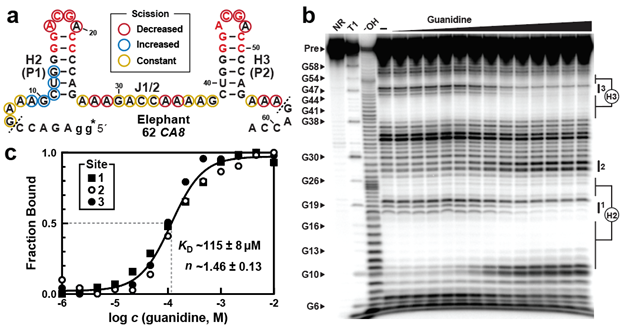
#Guanidine was known since the 1870s to affect muscle function. Vertebrates have guanidine-sensing #riboswitch RNAs linked to genes relevant to muscle disorders, including some for Ca2+ signaling and others relevant to #ataxia symptoms. @NatureComms https://t.co/TdoTLvIL0t
The Lithium for Alzheimer’s Paper Everyone is Talking About (🔗 in 8/8)
1/8) A major new paper published in @Nature from researchers at Harvard reinvigorated scientific interest in lithium for Alzheimer’s disease.
We will dive into the new data and end with practical takeaways that could change your daily routine to protect your brain.
And I promise to tell you what I’m doing personally, and what I’m and recommending for my family. But first, let’s lay the groundwork…
cc' @ChrisPalmerMD@janellison@louisanicola_@Metabolic_Mind@hubermanlab
Spectacular timelapse capturing an entire night from sunset to sunrise over the ALMA Observatory on the Chajnantor Plateau in the Chilean Atacama Desert.
📽: ESO/C. Malin
🤯Three (!!!) new papers today in @ScienceMagazine on the application of generative AI for the de novo design of peptide/HLA binding molecules! Completely unique 3D structure and binding mode compared with natural TCRs and TCR mimics! Links to papers 👇
Decades of work, custom-built equipment, promising cancer research - all damaged or lost in a single night. Help the Weizmann Institute bring science back to life. DONATE NODecades of work, custom-built equipment, promising cancer research - all damaged or lost in a single night. Help the Weizmann Institute bring science back to life. DONATE NODecades of work, custom-built equipment, promising cancer research - all damaged or lost in a single night. Help the Weizmann Institute bring science back to life. DONATE NODecades of work, custom-built equipment, promising cancer research - all damaged or lost in a single night. Help the Weizmann Institute bring science back to life. DONATE NOW
Thrilled to share our new paper in @ScienceMagazine! We found that when bacteria can’t digest available nutrients—but their neighbours can—they switch from competitors to become bonafide predators, wielding their T6SS to kill & feast on prey. 🦠🔬 ⚔️
https://t.co/XfNwrnlLCy
Scientists believe that the Milky Way is not only flying at 600 km/s, but also “flapping its wings”.
In this image taken with the European Southern Observatory’s Very Large Telescope, the butterfly-shaped nebula NGC 2899 appears to float in the vacuum of space. But this cosmic gas bubble, located between 3,000 and 6,500 light-years away, is not as serene as the winged insect it resembles. In fact, this planetary nebula was formed by the death of one of the two stars that astronomers believe reside at its center.
Astronomers believe that one of the two stars shed its outer layers at the end of its life, while the other is now dancing in a stream of gas from its neighbor, creating this stunning cosmic butterfly. The gas extends up to two light-years from the nebula’s center, glowing against the backdrop of the Milky Way. This gas can reach temperatures of over 10,000 degrees, thanks to radiation from the parent stars buried within.
A 2021 #ScienceReview showed how the rapidly changing soundscape of modern oceans impacts marine life globally—and how mitigating these impacts is key to achieving a healthier ocean.
Learn more on #WorldOceansDay: https://t.co/HH4hguybLL
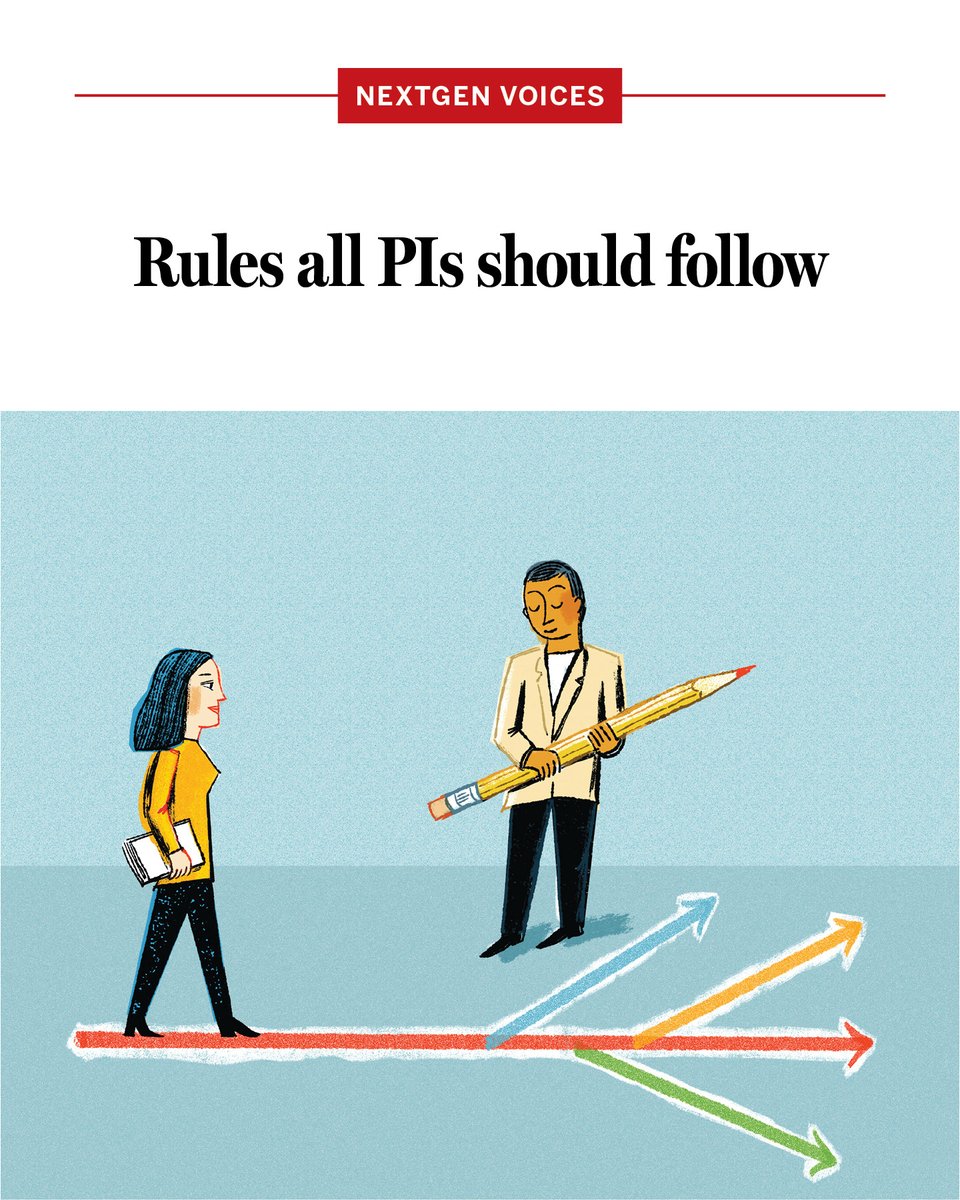
#NextGenSci asked young scientists to write a rule that all principal investigators should be required to follow to improve the experience of young scientists in their lab.
Check out their answers on #NationalHigherEducationDay: https://t.co/18ao7BZeFT