Watching @ProfBrianCox at the Cambridge Corn Exchange for my Birthday. It’s such an amazing and captivating talk. Walked on stage like a rockstar! Can’t wait for the second half.
How does our warming planet look by latitude zone? (Hint: It's not uniform.) This updated @NASAViz visualization now goes up to 2022 and is available in both degrees Celsius and Fahrenheit. Learn more and download the video: https://t.co/LkplZteZxa
Congratulations to Otis Brunner from @OISTedu, winner of the Student Talk Prize for his #BES2022 presentation on Simulating Dispersal & Metacommunity Dynamics at Hydrothermal Vents.
@7SeasofScience has been awarded £500 kindly donated by @PRstatistics to attend their training.
Imaging such a large vertical structure was challenging as ~70% image overlap is required for 3D reconstruction. It required 5 persons during 4h, 2 persons piloted the ROV while 3 were trying to keep track of the portions covered.
Join us this Wednesday for a deep dive into what we've learned about hydrothermal vents since their 1977 discovery—and what they can teach us about the origins of life on Earth.
Sign up for this free virtual @UNOceanDecade event at https://t.co/7XB8kKwnyM
Deep-sea #mining damages hydrothermal vents, endangering unique marine species. A new @Ecol_Evol study by #OIST, @JAMSTEC_PR and partners shows that vents are connected, and mining of key vents could impact other sites far across the ocean. https://t.co/fYJNAjPTnS @MitaraiUnit
Bacteria that live in #hydrothermalVents must tolerate extreme heat, high pressure and toxic metals. A recent study reveals how bacteria deal with toxic metals and could lead to new ways of removing metal pollutants from the #environment. @Environmicrobi https://t.co/gvXqYuD5oX
The team is currently investigating the underwater epicenter of the Fukishima seaquake near the Japan trench. This video from the sub shows the vertical cliff caused by the quake (ignore the date, which is incorrect). It was a massive dislocation, over 40 meters we believe.
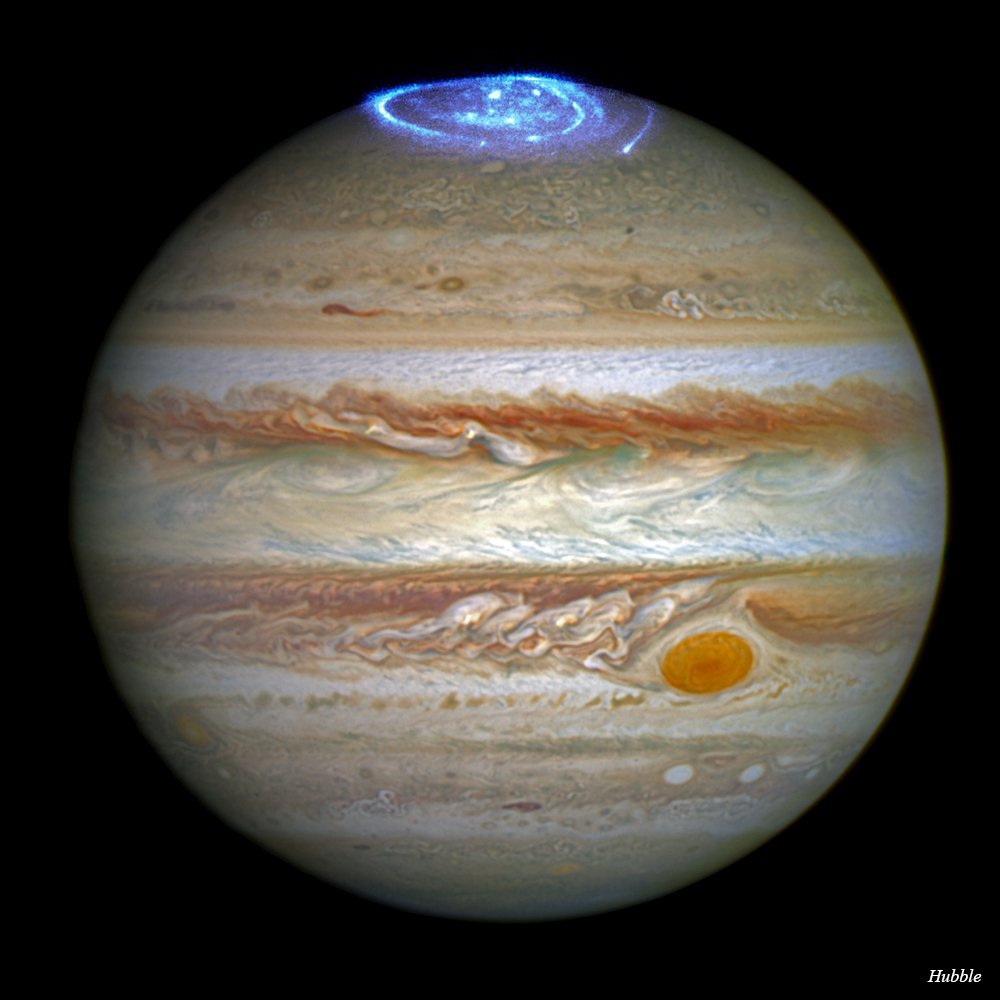
Looking good, Jupiter!
Like Earth, this giant planet has northern and southern lights called aurorae.
You can see them near Jupiter’s north and south poles, as observed in ultraviolet by Hubble (left) and infrared by @NASAWebb (right): https://t.co/buRNFiC1NU
We've confirmed more than 5,000 planets beyond our solar system. If we add sound for each new world, you can hear the pace of discovery during 30+ years of science. Tones are changed by the planets' distance from their stars. https://t.co/Q72MwrjTwX