I made a new interactive oscilloscope simulator for my high school electronics students. They can adjust V/DIV, TIME/DIV, triggering and practice getting stable waveforms and taking measurements.
https://t.co/6BPV4OVvNS
@rdotapps Next school year I’ll use this to introduce oscilloscopes before students use real ones hands-on. I intend to supplement hands-on labs with versions of this that present data I’ve captured from real circuits. I currently have two physical oscilloscopes for my class to share.
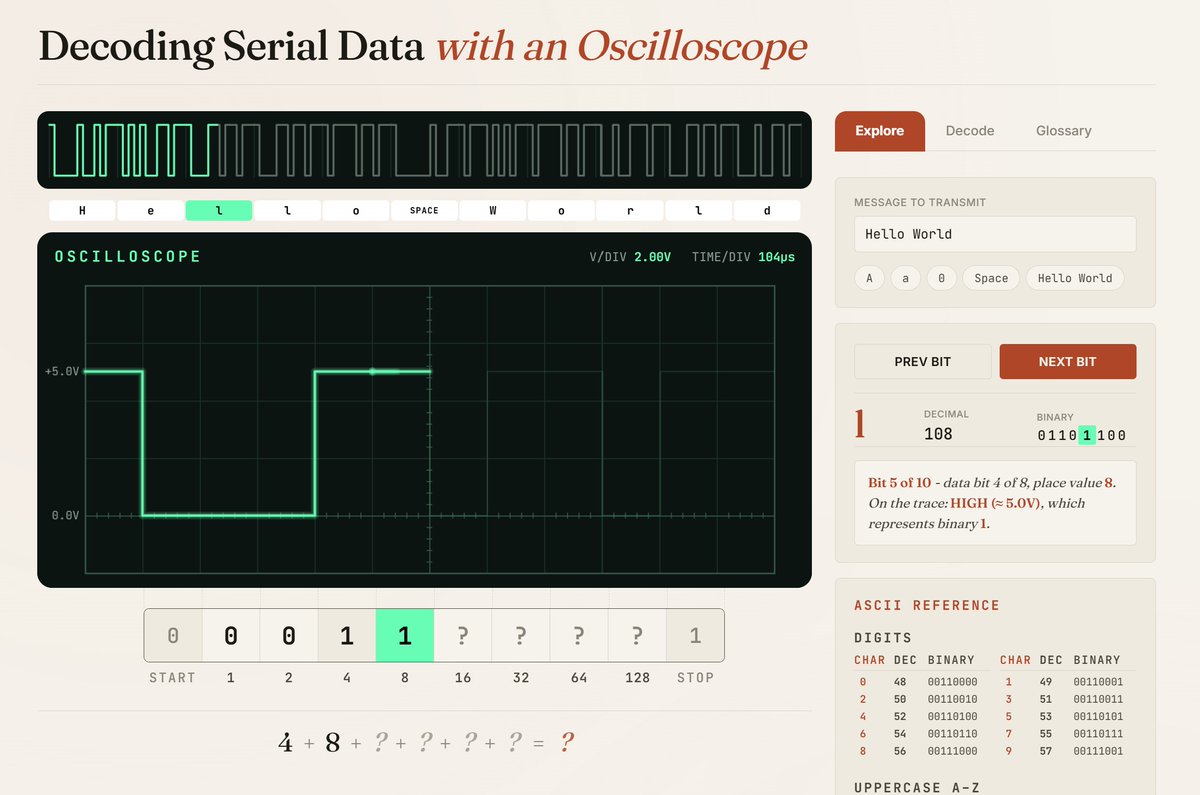
I made a new interactive tool that lets my high school electronics students decode UART serial data directly from an oscilloscope trace.
They step through real waveforms bit-by-bit, watch voltage turn into ASCII characters, and then decode a few puzzles.
https://t.co/HI55ZFavh7
I made a new interactive "Center of Gravity and Pitch Stability" simulator for my high school engineering students. It lets you move the center of gravity on a plane and instantly see how stable it flies. We start designing RC airplanes later this week! ✈️
https://t.co/wby3jQu0fj
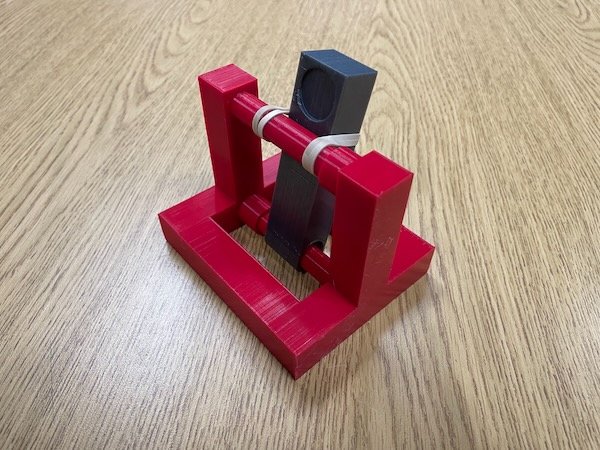
Fostering practical skills is key. My High School Principles of Engineering class starts with 3D-printed penny catapults, a fun introduction to 3D modeling, measuring with a caliper, and begin to think criticaly about mechanical systems. Read my write up: https://t.co/QNIF4gUKUW
@dailystem The ability to troubleshoot - they learn to approach problems with a methology as they apply their knowledge, conduct reseach, and develop resilience.