Yamaha has developed a self-balancing motorcycle that can drive itself and even follow its owner around.
The MOTOROiD 2 uses facial recognition, gesture controls, and an active balancing system that keeps the bike upright even without a rider.
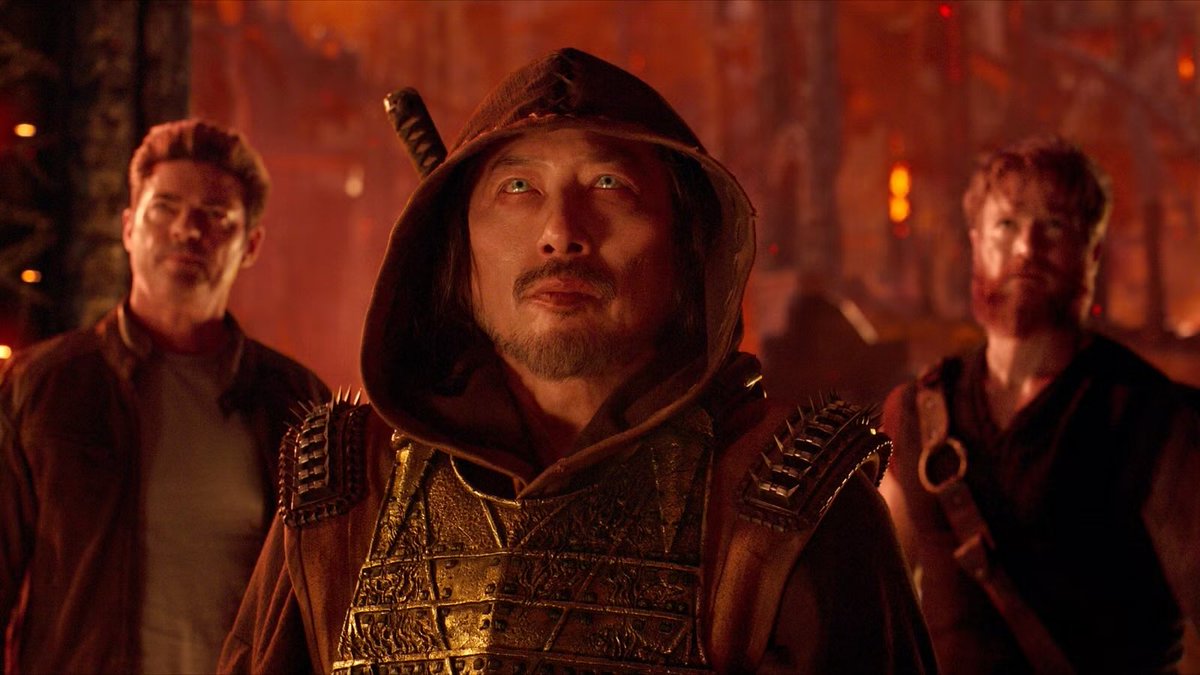
Mortal Kombat II opened to $17M Friday. Weekend tracking: $40-42M per Deadline, $48M per Gold Derby.
Warner Bros. set their internal projection at $35M.
CinemaScore: B. PostTrak definite recommend: 72%. IMAX and premium formats delivering nearly half the weekend gross.
The studio that sandbagged expectations by $15M already commissioned Part 3 before this one opened.
R-rated action film. No political agenda. Karl Urban as Johnny Cage. Neck-and-neck with Devil Wears Prada 2 for #1.
Hollywood keeps being surprised when films that don’t lecture their audiences perform well. Why?
$BTC: Many failed to predict the correct move for Bitcoin and that’s because BTC is moving in a sideway box since February with a local top of 83-85k region, everyone was proven wrong and my long from 71k remains open while short from 120k is open as well!
New UK screen time rules just dropped — and they’re stricter than most parents expected.
From 27 March 2026, England says: zero solo screens for under-2s (except quick video calls with family), and max one hour a day for 2–5 year olds — no screens at meals or the hour before bed. Co-view everything, stick to slow-paced content, and ditch fast social-media clips and AI toys completely.
The science is sobering: toddlers’ brains process info up to 10 times slower than adults. Fast-paced screens push them into fight-or-flight mode — racing heart, surging energy — while they’re sitting still. Researchers at the University of East London say this mismatch can wire kids for more tantrums and emotional struggles later. Using screens to calm meltdowns? It often backfires long-term.
As a parent, it’s brutal — we all know that explosion the second you take the tablet away.
But this feels like evidence finally catching up with what our gut has been telling us.
How are you handling screens with little ones — strict limits, co-viewing, or mostly winging it?
Every time the market feels the worst, it’s the beginning of something better.
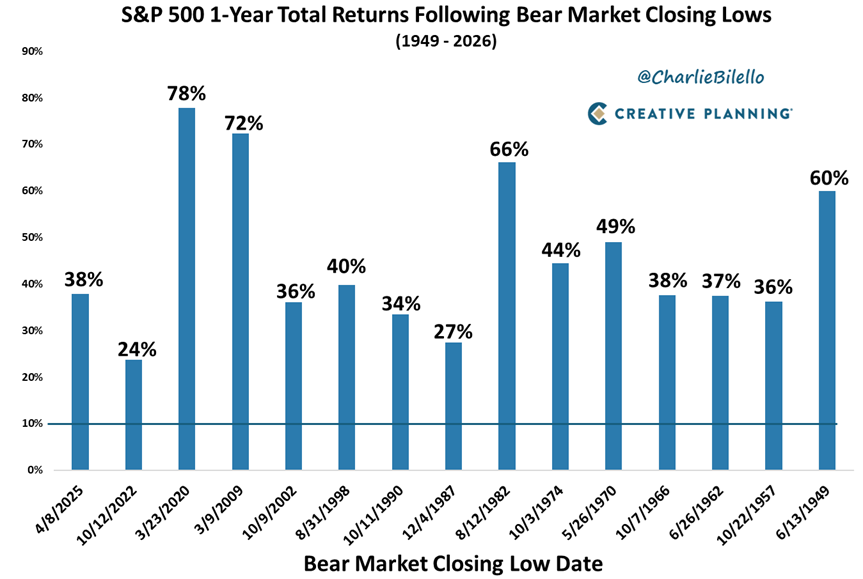
Since 1949, the S&P 500 has returned +38% on average in the year after bear market lows.
The hardest time to invest is when the biggest opportunities appear.
There is no way of knowing how often Parliament votes against what the public actually wants. Until now.
https://t.co/QpJCcn3FBH tracks every bill going through Parliament. You vote. We compare it to how your MP voted. The gap speaks for itself.
Fidelity (@DigitalAssets) just published one of the most significant pieces of bitcoin research to date.
"Getting Off Zero: Evaluating Bitcoin in 2026"
@ChrisJKuiper argues that a 0% bitcoin allocation now requires justification. The default has flipped.
5 key findings 🧵👇
Just migrated from $WAR to $WAR MIGRATION on @MigrateFun!
Locked in for WAR Migration 🔒
🫨 429M+ tokens already migrated
⏳ 0 days left to grab your share
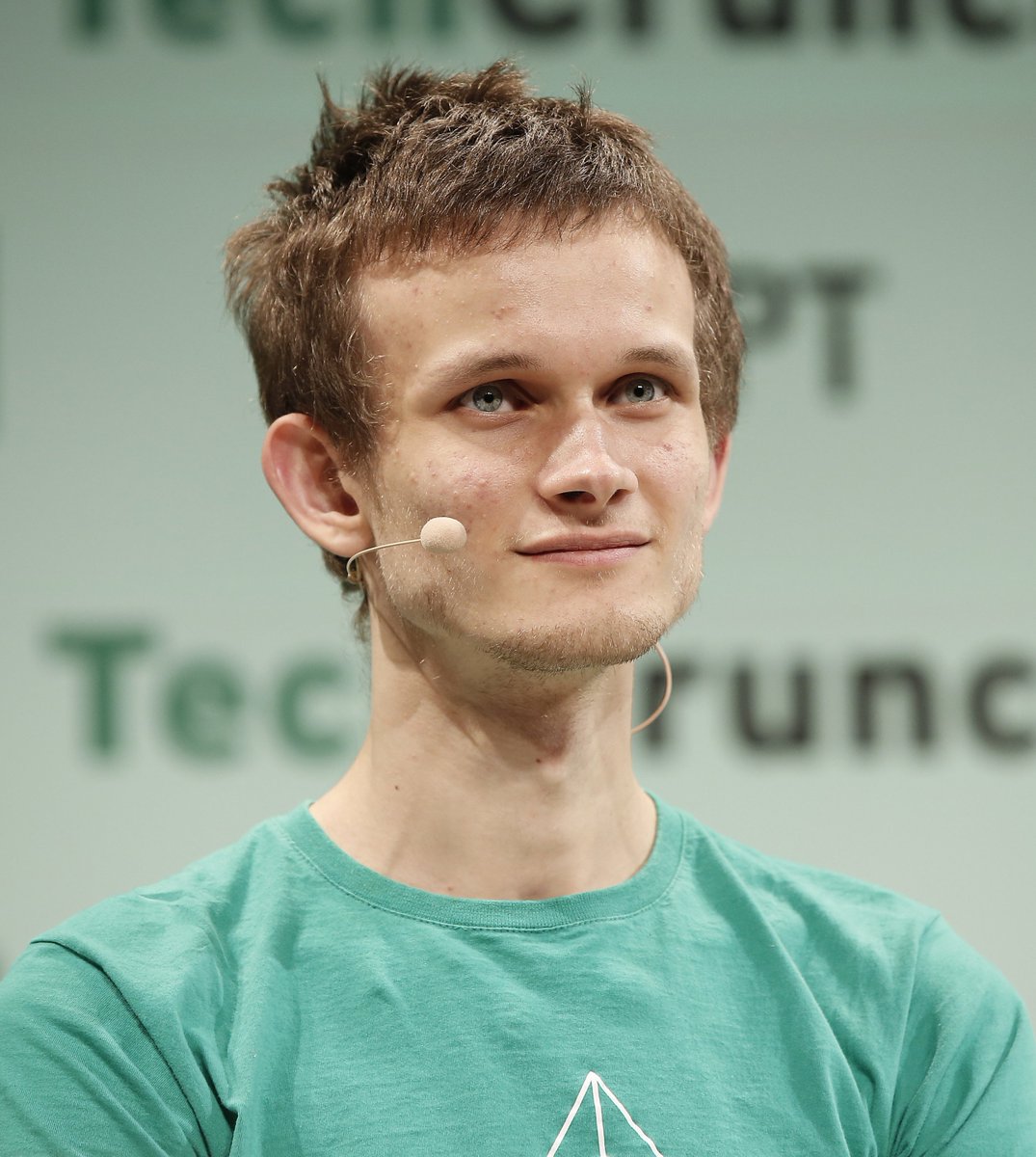
A $500 billion blockchain exists because a 15 year old cried himself to sleep over a World of Warcraft update
In 2010, Blizzard nerfed Vitalik Buterin's favorite Warlock spell in World of Warcraft
His own words: "I cried myself to sleep, and on that day I realized what horrors centralized services can bring"
Quit the game. A year later his dad showed him Bitcoin.
He couldn't mine it and couldn't afford to buy it.
So he started writing articles for a crypto blog for 5 BTC each, worth about $3.50 at the time.
Those 5 BTC are worth $335,000 today for ONE article.
Co-founded Bitcoin Magazine at 17.
Applied for a job at Ripple.
They accepted him but couldn't sponsor his visa.
At 19 he proposed major changes to Bitcoin.
The community said no.
So he wrote his own whitepaper. Called it Ethereum.
30 developers reached out within weeks.
Dropped out of college. Got a $100K Thiel Fellowship. Sold ETH at $0.31 in the ICO and raised $18 million.
One person spent $310,000 on 1 million ETH in that sale worth around $4.3 billion at peak.
Another one invested $263 and got 850 ETH now worth over $1.7 million.
Ethereum launched when Vitalik was 21. Peak market cap: over $500 billion.
All because Blizzard nerfed a Warlock spell.
I usually ignore Bitcoin critics.
Ninety-nine percent of the time, it’s the right move. I’ve spent years thinking through the objections, stress-testing the thesis, and running the numbers. I don’t feel the need to rehash the same arguments just to prove something to someone online.
But every once in a while, one is worth engaging - not because it rattles me, but because it sharpens my own thinking.
This week, an early architect of the internet argued that Bitcoin likely doesn’t implode. He admitted the network works, the code runs, and it probably survives. But survival, in his view, doesn’t justify a premium valuation. His thesis is that over time enthusiasm wanes, capital rotates elsewhere, and what remains is a niche asset supported by committed believers rather than something foundational to the global monetary system.
It’s a serious critique, resting on two core claims: Bitcoin isn’t a widely used currency, and it isn’t a store of value.
If the scoreboard is whether you can buy coffee with it at Starbucks, then sure - Bitcoin hasn’t won that battle. But that framing ignores something important: most holders don’t want to spend it. They view it as a savings asset that’s still monetizing. Stronger money tends to be hoarded, not circulated. Gold didn’t fail because people weren’t buying groceries with it - reserve assets sit underneath systems; they’re held, not swiped.
On the store-of-value point, judging Bitcoin by a single 12-month window misses the broader arc. Over 15+ years, through multiple cycles and sharp drawdowns, the long-term trajectory has been upward as adoption and infrastructure expand. Gold earned its reputation because of its properties - scarcity, durability, portability, and divisibility. Bitcoin offers those properties in digital form and improves on them, with verifiable fixed supply, frictionless global transfer, and native cross-border settlement without intermediaries.
Ultimately, the disagreement isn’t about whether Bitcoin can fail - it’s about how probable that outcome really is. I’ve always said this is an asymmetric bet: it either embeds itself into the global financial system over time, or it stagnates and becomes marginal.
When I look at how institutions are positioning, how governments are talking about it, and how the surrounding infrastructure keeps expanding, it looks far more like integration than irrelevance.
These debates won’t be decided in threads. They’ll be decided over decades. I’m comfortable holding Bitcoin while time does the scoring.
The 60/40 portfolio is a bet on a world that’s already dead.
Most people are SHORT the singularity and don't even know it.
If your wealth depends on human cognitive labor SaaS, consulting, law, finance, admin you're betting AI stays dumb forever.
That bet expires soon.
THE FIRST PRINCIPLE
Value ALWAYS migrates to the bottleneck.
Yesterday: Intelligence was scarce → long education, credentials, cognitive labor
Tomorrow: Intelligence is infinite → long everything intelligence CONSUMES
The bottleneck shifts from THOUGHTS → PHYSICS
THE POST-SCARCITY PORTFOLIO
Bitcoin (40%): When AI fakes any document, voice, and identity, cryptographic proof becomes the last truth anchor. You can't prompt-engineer 21 million.
Energy (30%): Not betting scarcity lasts forever betting ASI gets hungry before it solves its own hunger. Time arbitrage on deployment lag.
Hard Tech (20%): Software copies at light speed. Hardware copies at the speed of concrete. Long the toll booths: fabs, rare earths, data centers.
Cash (10%): The transition will be violent. Liquidity = optionality when the old system breaks.
If ASI goes fast and hard, portfolios are irrelevant anyway.
This is a bet on the transition the window where ASI is undeniable but not yet omnipotent.
THE DEEPEST INSIGHT
Post-singularity, the ultimate scarcity is AGENCY who directs the ASI. Nearly un-investable, except through assets that preserve sovereignty outside the system.
✅ Long Physics
✅ Long Math
❌ Short Labor
The window where ASI is undeniable but underestimated is measured in months.
By the time it's consensus, the trade is gone.
#DYOR